

Selling a business represents one of the most significant financial decisions an owner will make in their lifetime. Many business owners traditionally turn to brokers and intermediaries to facilitate transactions, but an increasing number are exploring the private business for sale by owner route. This approach offers greater control over the sales process, enhanced confidentiality, and the potential to save substantial fees while finding the right strategic fit. Understanding the nuances of selling privately requires careful planning, the right tools, and a strategic approach to connecting with qualified buyers who share your vision for the company's future.
Understanding the Private Business for Sale by Owner Approach
When you choose to list a private business for sale by owner, you're taking direct control of every aspect of the transaction. This method eliminates traditional broker fees, which typically range from 8% to 12% of the final sale price, representing significant savings for owners of established businesses.
The owner-direct approach provides several distinct advantages beyond cost savings. You maintain complete confidentiality throughout the initial stages of buyer outreach, controlling exactly who learns about the potential sale and when. You also preserve the ability to communicate your business's unique value proposition directly, ensuring buyers understand the strategic opportunities without third-party interpretation.
However, this approach requires owners to understand what selling a business without a broker truly entails. The responsibilities shift entirely to you, including:
- Valuing your business accurately
- Creating compelling marketing materials
- Identifying and vetting potential buyers
- Managing confidentiality throughout negotiations
- Coordinating due diligence processes
- Structuring deal terms and navigating legal requirements
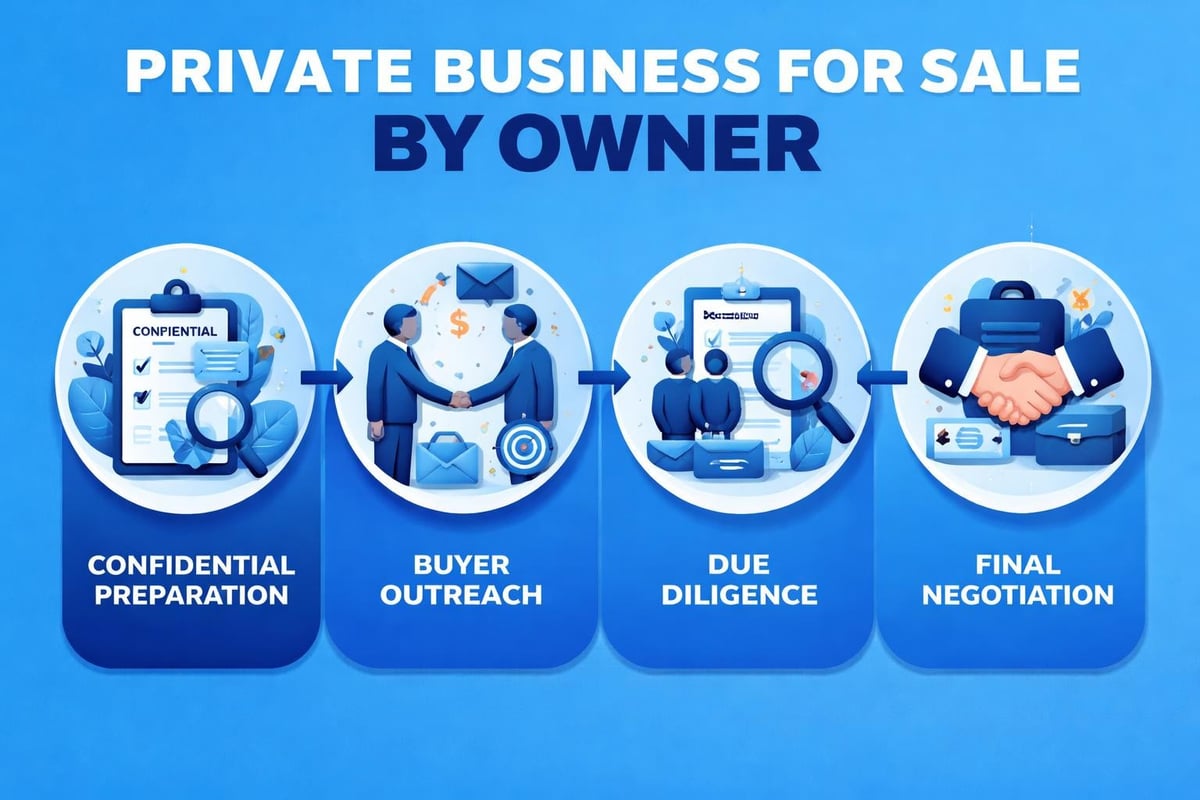
Traditional M&A Process Versus Owner-Direct Sales
The traditional M&A process typically involves hiring a business broker or investment banker who lists your business on public marketplaces, contacts their network of buyers, and manages the transaction for a percentage of the sale price. While this provides professional guidance, it also introduces layers of intermediaries between you and potential buyers.
In contrast, the private business for sale by owner model enables direct communication from the outset. You can evaluate buyer fit based on strategic alignment rather than simply financial capacity. This proves particularly valuable when your priority extends beyond maximum sale price to include factors like employee retention, company culture preservation, or continuation of customer relationships.
Preparing Your Business for a Private Sale
Successful private sales begin long before you start conversations with buyers. Business owners should ideally begin preparation 12 to 24 months before their intended sale date, addressing operational, financial, and strategic issues that affect valuation.
Financial Documentation and Valuation
Buyers will scrutinize your financial performance with exceptional detail. Organize at least three years of financial statements, tax returns, and supporting documentation. Consider engaging a CPA to prepare reviewed or audited statements, as these carry significantly more weight than internally prepared financials.
Accurate business valuation forms the foundation of realistic pricing expectations. While you can research industry multiples and comparable sales, engaging a professional appraiser provides credibility during negotiations. Valuation methods vary by industry but commonly include:
| Valuation Method | Best For | Typical Range |
|---|---|---|
| Revenue Multiple | Service businesses, SaaS | 1x-3x annual revenue |
| EBITDA Multiple | Manufacturing, established companies | 3x-6x EBITDA |
| Asset-Based | Real estate intensive, retail | Book value + adjustments |
| Discounted Cash Flow | Predictable revenue streams | NPV of future cash flows |
Operational Readiness and Strategic Positioning
Buyers purchasing a private business for sale by owner evaluate operational strength alongside financial performance. Documented systems and processes demonstrate that the business can thrive without the current owner's daily involvement. Create standard operating procedures for critical functions and ensure key employees have clearly defined roles.
Strategic positioning matters enormously when identifying the right strategic fit for your business. Consider what type of buyer would benefit most from acquiring your company. Growth-oriented companies in adjacent markets may value your customer relationships and market position differently than financial buyers focused purely on cash flow returns.
Finding Qualified Buyers Without Public Listings
One of the greatest challenges when pursuing a private business for sale by owner transaction involves identifying qualified buyers while maintaining confidentiality. Public business-for-sale marketplaces expose your intentions broadly, potentially alerting competitors, employees, and customers before you're ready.
Proprietary Matching Platforms
Modern technology has created alternatives to traditional broker networks and public marketplaces. Platforms designed for acquisition matching enable business owners to connect with pre-qualified buyers in a confidential, controlled environment. These systems prioritize strategic fit before revealing sensitive business information.
In a typical scenario, a manufacturing company owner seeking retirement might specify preferences for buyers with industry expertise, employee retention commitments, and financial capacity within a specific range. The platform's matching algorithm identifies buyers who meet these criteria, facilitating introductions only when mutual interest exists. This approach maintains confidentiality while efficiently connecting compatible parties.
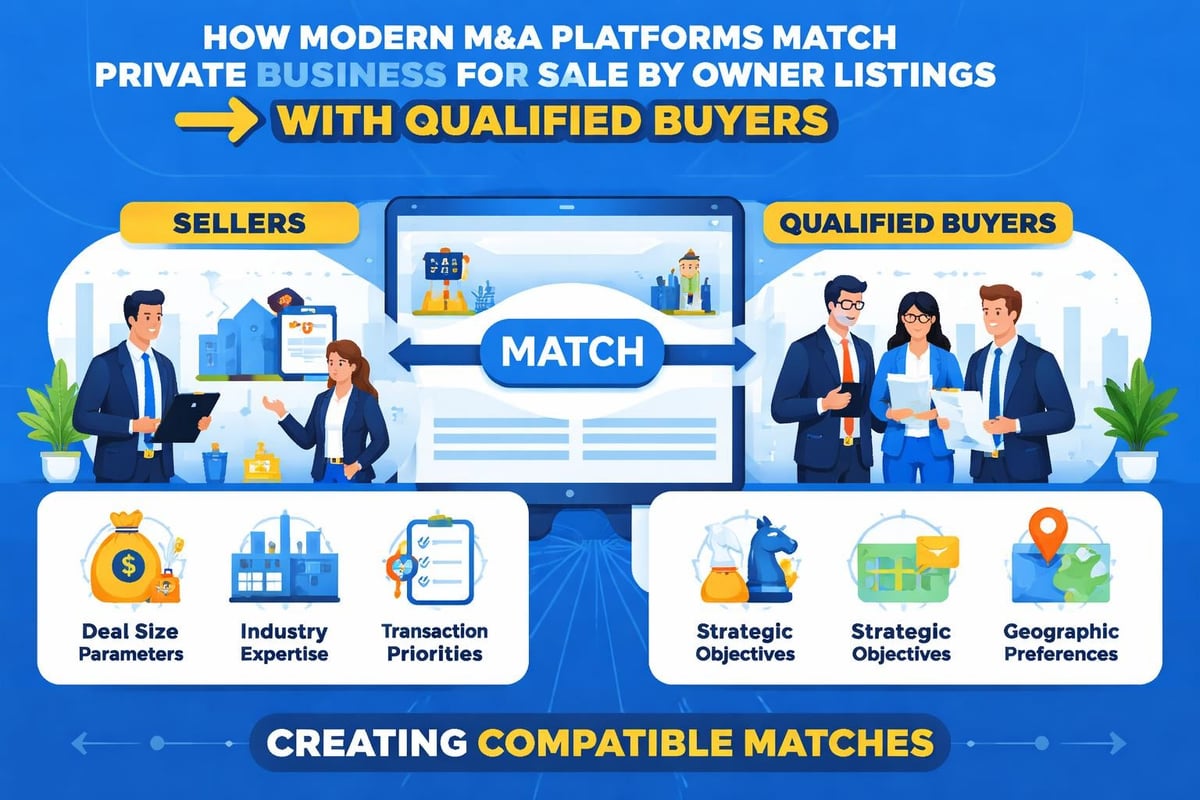
The semi-proprietary nature of these platforms offers significant advantages over public listings. Rather than broadcasting your sale intentions widely, you control who receives information about your business and when. This targeted approach reduces risk while increasing the probability of finding buyers genuinely aligned with your priorities.
Direct Outreach and Network Leverage
Your existing network may contain potential buyers you haven't considered. Strategic acquirers often emerge from:
- Competitors seeking market share expansion
- Suppliers pursuing vertical integration
- Customers interested in securing supply chains
- Industry colleagues building portfolios
- Private equity groups focused on your sector
When conducting direct outreach, initial conversations should focus on general strategic discussions rather than immediately proposing a sale. This preserves confidentiality while gauging interest and compatibility. Once mutual interest develops, you can introduce the acquisition possibility within the context of strategic benefits.
Managing Confidentiality Throughout the Process
Confidentiality remains paramount when selling a private business for sale by owner. Premature disclosure can damage employee morale, trigger customer concerns, alert competitors to potential vulnerability, and strengthen buyer negotiating positions.
Non-Disclosure Agreements and Information Control
Every serious buyer should sign a comprehensive non-disclosure agreement (NDA) before receiving specific business information. Your NDA should clearly define confidential information, specify permitted uses, outline return or destruction requirements, and establish remedies for breaches.
Structure information disclosure in stages, revealing increasingly sensitive details as buyer commitment deepens:
- Initial stage: Industry, general size parameters, growth trajectory (no identifying details)
- Qualified interest: Financial summaries, customer concentration information, competitive advantages
- Letter of Intent: Detailed financials, customer lists, operational specifics
- Due diligence: Complete access to all business information and documentation
Virtual Data Rooms for Secure Document Sharing
Once you progress beyond initial discussions, managing document requests becomes complex. Email attachments and file-sharing services lack the security and tracking capabilities necessary for sensitive M&A transactions. Understanding the benefits of proper data room providers helps owners make informed decisions about document management.
Virtual data rooms (VDRs) provide secure, organized repositories for due diligence documents. Quality VDR solutions offer granular permission controls, detailed activity tracking, watermarking capabilities, and professional organization. The Aligned IQ VDR specifically serves lower middle-market transactions with competitive pricing that makes enterprise-grade security accessible to privately sold businesses. Notably, this VDR solution becomes complimentary for Aligned IQ M&A sellers after completing a match on the platform.
Negotiating and Structuring the Deal
Once you identify a qualified buyer for your private business for sale by owner, negotiations move from strategic discussions to specific deal terms. This phase requires clarity about your priorities and flexibility on secondary issues.
Key Deal Terms Beyond Purchase Price
While purchase price receives the most attention, deal structure often matters more for net proceeds and transaction success. Critical terms include:
Payment Structure: All-cash deals provide certainty but seller financing may enable higher total valuations. Typical scenarios might include 60-80% cash at closing with the remainder as an earn-out or promissory note tied to future performance.
Transition Period: Buyers typically require seller involvement post-closing. Define duration (commonly 30-90 days), time commitment, and compensation clearly in the purchase agreement.
Representations and Warranties: You'll guarantee certain facts about the business. Understanding reasonable scope protects you from unlimited liability while providing buyers necessary assurances.
| Deal Term Component | Seller Preference | Buyer Preference | Typical Compromise |
|---|---|---|---|
| Cash at Closing | 100% | 60-70% | 75-85% cash |
| Transition Support | Minimal | 6-12 months | 60-90 days |
| Non-Compete Period | 1-2 years | 5-7 years | 3-5 years |
| Working Capital Adjustment | None | Significant reserve | Normalized target |
Letters of Intent and Purchase Agreements
The Letter of Intent (LOI) establishes framework terms before incurring significant legal expenses. While typically non-binding except for exclusivity and confidentiality provisions, LOIs shape final agreements substantially. Review LOI terms carefully with experienced M&A counsel before signing.
The definitive purchase agreement transforms LOI framework into binding commitments. This complex legal document requires professional representation. Don't attempt to save money by handling purchase agreement drafting yourself. The costs of selling without proper support often exceed broker fees when deals collapse due to inadequate legal structure.
Due Diligence Management for Owner-Direct Sales
Due diligence represents the buyer's comprehensive investigation of your business before finalizing the purchase. When selling a private business for sale by owner, you manage this process directly rather than relying on broker coordination.
Organizing Due Diligence Materials
Proactive organization significantly accelerates due diligence. Create a comprehensive due diligence checklist covering financial, legal, operational, and commercial aspects of your business. Typical categories include:
- Financial statements and tax returns (3-5 years)
- Customer and supplier contracts
- Employment agreements and benefit plans
- Intellectual property documentation
- Real estate leases and equipment titles
- Litigation history and insurance claims
- Regulatory compliance documentation
- Sales and marketing materials
Using a VDR streamlines this process by allowing you to upload documents once and grant buyer access to relevant folders as diligence progresses. The tracking capabilities also provide valuable intelligence about buyer focus areas based on which documents receive the most attention.
Responding to Due Diligence Requests
Buyers will inevitably request additional information beyond your initial document upload. Respond promptly and completely to maintain transaction momentum. However, don't interpret every request as reasonable. Some buyers use extensive due diligence requests as negotiating tactics or to gain competitive intelligence without genuine purchase intent.
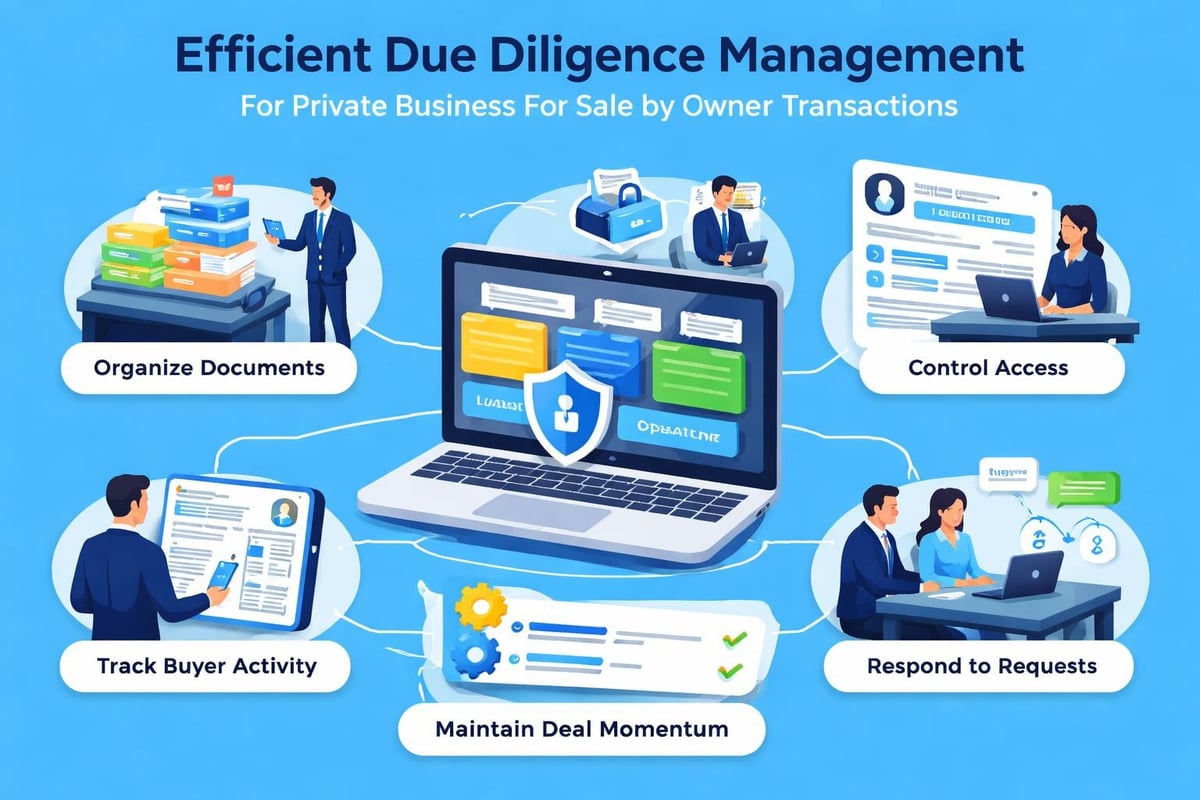
Distinguish between legitimate clarification requests and excessive demands. Your legal counsel can help evaluate whether requests exceed reasonable scope for your business size and complexity.
Platform Solutions for Private Business Sales
Technology has transformed how owners approach private business for sale by owner transactions. Modern platforms address traditional challenges around buyer identification, confidentiality management, and process efficiency.
Match-Making Based on Strategic Fit
Deal sourcing platforms represent a fundamental shift from traditional business-for-sale marketplaces. Rather than listing businesses publicly with basic details, these platforms use sophisticated matching algorithms to connect compatible buyers and sellers privately.
The Aligned IQ M&A platform exemplifies this approach by prioritizing strategic alignment before financial discussions. The system matches parties based on transaction priorities, deal size parameters, industry experience, and strategic objectives. This ensures conversations begin with fundamentally compatible parties rather than requiring sellers to filter numerous inquiries from poorly matched prospects.
Buyers benefit equally from this approach. Rather than cold-contacting businesses that may not be for sale, buyers create profiles showcasing their acquisition criteria, industry expertise, and value proposition as potential acquirers. The platform then identifies businesses where ownership might eventually consider a strategic exit to the right partner.
For business owners exploring whether to pursue the owner-direct sales process, these platforms provide middle ground between expensive broker representation and completely independent sales efforts. You maintain control and confidentiality while accessing qualified buyer networks and structured processes.
Virtual Data Rooms for Lower Middle Market Transactions
Historically, secure virtual data rooms carried pricing accessible only to large transactions with substantial professional budgets. This forced sellers of smaller businesses to rely on insecure document-sharing methods or pay enterprise pricing disproportionate to deal size.
The Aligned IQ VDR addresses this gap by providing enterprise-grade security with pricing structured for lower middle-market transactions. The platform offers comprehensive features including unlimited users, detailed activity tracking, customizable permissions, and professional support at rates competitive with generic file-sharing services.
Significantly, sellers who complete matches through the Aligned IQ M&A platform receive complimentary VDR access for their transaction. This integrated approach eliminates one of the major costs typically associated with independent sales while ensuring proper security and organization throughout due diligence.
Understanding Your Service Provider Options
Even when pursuing a private business for sale by owner approach, most owners benefit from selective professional support. The key involves understanding which services add value worth their cost versus which you can handle independently.
Legal and Tax Advisory
Never attempt complex M&A transactions without qualified legal counsel. Attorney fees represent an investment in protecting your interests, not an expense to minimize. Experienced M&A attorneys identify issues in purchase agreements that seem innocuous but create significant liability, structure deals to optimize tax treatment, and negotiate terms that affect your post-closing obligations and risk.
Similarly, engage tax advisors early in the process. Deal structure significantly impacts after-tax proceeds. Understanding tax implications of asset versus stock sales, installment payment structures, and allocation of purchase price across different asset categories can add substantial value.
M&A Advisors and Fractional Support
Some owners engage M&A advisors on limited-scope arrangements rather than traditional full-service broker agreements. These approaches to modern M&A support might include:
- Success fees only: Advisors who assist with negotiations and documentation for a percentage of the final sale price, without upfront listing fees
- Hourly consulting: Experienced M&A professionals who provide guidance on specific issues as they arise
- Flat-fee services: Defined deliverables like business valuation, marketing materials, or buyer identification for fixed fees
The optimal approach depends on your experience, available time, and transaction complexity. A typical scenario might involve an owner handling initial buyer identification through a platform like Aligned IQ M&A, then engaging legal counsel once an LOI is negotiated, and bringing in a tax advisor to structure the final agreement optimally.
Timing and Market Considerations
Successfully selling a private business for sale by owner requires understanding both optimal personal timing and favorable market conditions. These factors don't always align perfectly, requiring owners to balance competing priorities.
Personal Readiness Indicators
Consider whether you're truly ready to exit your business. Common triggers include:
- Retirement plans with specific timelines
- Health considerations affecting your ability to manage operations
- Strategic opportunities where sale proceeds enable other ventures
- Market position concerns suggesting now represents peak valuation
- Succession challenges with no clear internal transition path
Premature sales often leave value unrealized. If you're considering sale primarily due to burnout or temporary market challenges, exploring alternatives like hiring a CEO or restructuring operations might prove more beneficial than selling below optimal value.
Market Conditions and Industry Cycles
Broader economic conditions and industry-specific cycles significantly impact valuations and buyer availability. Monitor several indicators:
Acquisition appetite in your sector, reflected in recent comparable transactions and active buyer populations. The presence of well-capitalized private equity platforms focused on your industry suggests strong buyer demand.
Interest rate environments affect buyer financing costs and return requirements. Lower rates generally support higher valuations as buyers can afford more leverage while meeting return targets.
Industry consolidation trends create opportunities when strategic buyers aggressively pursue market share. Understanding whether your sector is fragmenting or consolidating helps time market entry.
While perfect timing proves impossible to achieve, understanding these factors enables informed decisions about when to begin the sales process versus continuing to build value.
Tax Implications and Structure Optimization
The tax consequences of selling your business often equal or exceed broker fees saved through owner-direct sales. Understanding basic tax principles helps you evaluate deal structures and engage advisors effectively.
Asset Versus Stock Sales
This fundamental decision dramatically affects tax liability. In asset sales, buyers purchase specific business assets rather than ownership interests. This typically benefits buyers through stepped-up basis and favorable depreciation treatment but creates higher tax liability for sellers who pay ordinary income rates on certain assets.
Stock sales (or membership interest sales for LLCs) typically benefit sellers through long-term capital gains treatment on the entire transaction. However, buyers resist stock purchases due to inherited liabilities and less favorable tax treatment.
Your entity structure affects available options. C-corporations face potential double taxation in asset sales. S-corporations and LLCs generally avoid this issue but face other considerations around basis and allocation.
Installment Sales and Deferred Compensation
Receiving the full purchase price at closing triggers immediate tax liability on the entire gain. Structuring payments over multiple years through installment sales defers tax recognition, potentially reducing overall liability if future tax rates decrease or gains can be spread across lower brackets.
However, installment sales carry collection risk. You've sold the business but haven't received full payment, creating exposure if the buyer's operations deteriorate. Proper security interests and personal guarantees mitigate but don't eliminate this risk.
The Role of Strategic Fit in Private Sales
One of the most compelling advantages of the private business for sale by owner approach involves the ability to prioritize strategic fit alongside financial considerations. When you control the process, you can evaluate buyers based on criteria beyond purchase price.
Defining Your Strategic Priorities
Before engaging potential buyers, clarify what matters most beyond financial return. Common priorities include:
- Employee retention and treatment: Will key team members remain employed under new ownership?
- Brand and legacy preservation: Does the buyer respect what you've built and plan to maintain core values?
- Customer relationship continuity: Will customers receive consistent service quality and relationship management?
- Community impact: For businesses with local significance, does the buyer commit to maintaining community presence?
- Growth trajectory: Does the buyer have resources and vision to realize the business's full potential?
In a typical scenario, a founder might prioritize finding a buyer with complementary capabilities who can accelerate growth rather than simply maximizing immediate sale price. Understanding strategic fit enables these qualitative factors to inform decision-making alongside quantitative financial analysis.
Evaluating Buyer Compatibility
The Aligned IQ M&A platform facilitates this evaluation by enabling buyers to showcase their acquisition criteria, industry experience, and value proposition before specific deal discussions begin. This transparency helps sellers assess compatibility early in the process rather than discovering misalignment after investing substantial time in negotiations.
Consider creating a buyer scorecard that weights your priorities and objectively evaluates each potential acquirer. This structured approach prevents emotional decision-making while ensuring your core objectives receive appropriate consideration.
Selling a private business for sale by owner offers substantial benefits in control, confidentiality, and cost savings when approached strategically with proper tools and selective professional support. Modern platforms have transformed this process by enabling confidential connections between strategically aligned buyers and sellers without broad public exposure. Aligned IQ provides both the match-making platform to identify compatible buyers based on strategic fit and transaction priorities, plus the secure virtual data room infrastructure to manage due diligence professionally. Whether you're exploring eventual exit options or actively pursuing sale discussions, take a tour to discover how prioritizing strategic alignment creates better outcomes for all parties in the M&A process.
No responses yet