
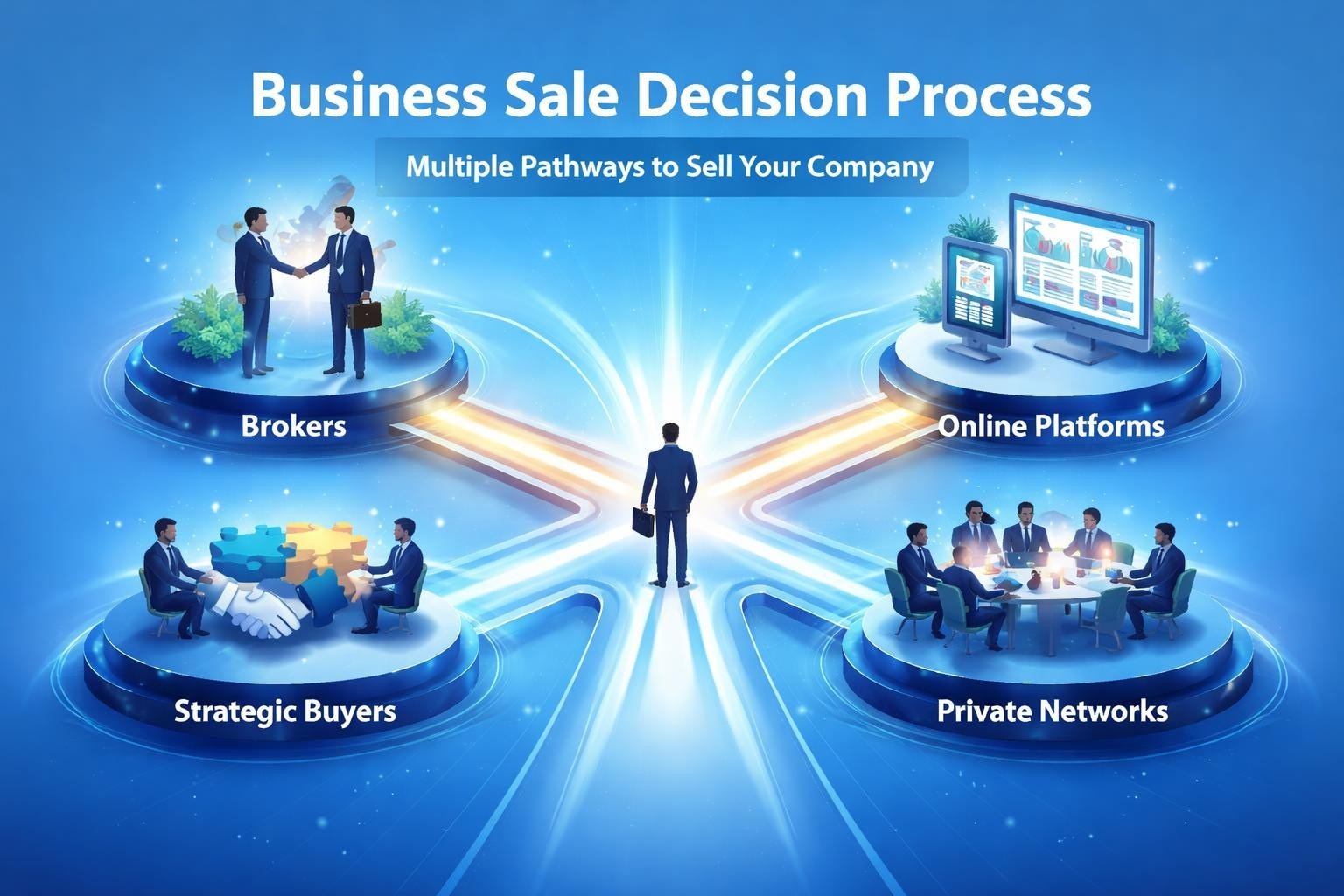
Deciding to sell your business is a significant milestone, but the question "where do I sell my business" often creates more confusion than clarity. In 2026, business owners have more options than ever before, ranging from traditional business brokers and online marketplaces to sophisticated match-making platforms that prioritize strategic fit. Each channel offers distinct advantages, and understanding these differences is essential for maximizing value while maintaining confidentiality throughout the transaction process. The right venue depends on your business size, industry, timeline, and specific transaction goals.
Understanding Your Business Sale Options in 2026
When business owners ask where do I sell my business, they're really asking about the most effective channel for connecting with qualified buyers who understand their industry and share their vision. The landscape has evolved significantly beyond the traditional intermediary model.
Traditional business brokers remain a popular choice, particularly for smaller transactions in the lower middle market. These professionals typically work on commission and handle everything from valuation to buyer vetting. You can find certified professionals through the International Business Brokers Association, which maintains strict professional standards.
Online business-for-sale marketplaces have gained traction over the past decade. These platforms allow owners to list their businesses publicly or semi-publicly, reaching a broad audience of potential buyers. However, this approach often sacrifices confidentiality and strategic alignment for reach.
Private M&A platforms represent the newest evolution in business sales. These proprietary networks focus on matching buyers and sellers based on strategic fit, transaction priorities, and industry expertise rather than simply broadcasting availability. This approach addresses the fundamental question of where do I sell my business by creating a curated environment that prioritizes quality connections over quantity.
The Traditional M&A Process and Its Limitations
The conventional answer to where do I sell my business has historically involved hiring a business broker or investment banker who follows a standardized process. This typically includes business valuation, marketing materials preparation, buyer outreach, and transaction management.
Standard Broker Approach
Business brokers advertise your company through multiple channels, often including public listings on websites searchable by anyone. The U.S. Small Business Administration provides guidance on working with brokers and understanding the sale process.
In a typical scenario, a broker might list a manufacturing business on several platforms simultaneously, field inquiries from dozens of potentially unqualified buyers, and spend months coordinating information requests before identifying serious candidates. This process exposes your confidential information broadly and can alert competitors, employees, and customers to your sale intentions.
Key Drawbacks of Traditional Methods
- Confidentiality risks from broad marketing approaches
- Time-consuming qualification of buyers with misaligned goals
- High commission costs ranging from 8-12% for smaller deals
- Limited strategic matching beyond basic industry categories
- Pressure to accept the first reasonable offer rather than the best fit
Understanding these limitations helps answer where do I sell my business more strategically. Many owners discover too late that reaching the largest number of buyers doesn't necessarily produce the best outcome.
Modern Alternatives for Selling Your Business
The evolution of M&A technology has created sophisticated alternatives that address the shortcomings of traditional methods. When considering where do I sell my business in 2026, examining these modern platforms reveals new possibilities.
Semi-Proprietary Matching Platforms
Unlike public marketplaces, semi-proprietary platforms like Aligned IQ M&A create private environments where buyers and sellers connect based on comprehensive compatibility criteria rather than simple industry tags. This approach transforms the question of where do I sell my business into a more nuanced discussion about finding the right strategic partner.
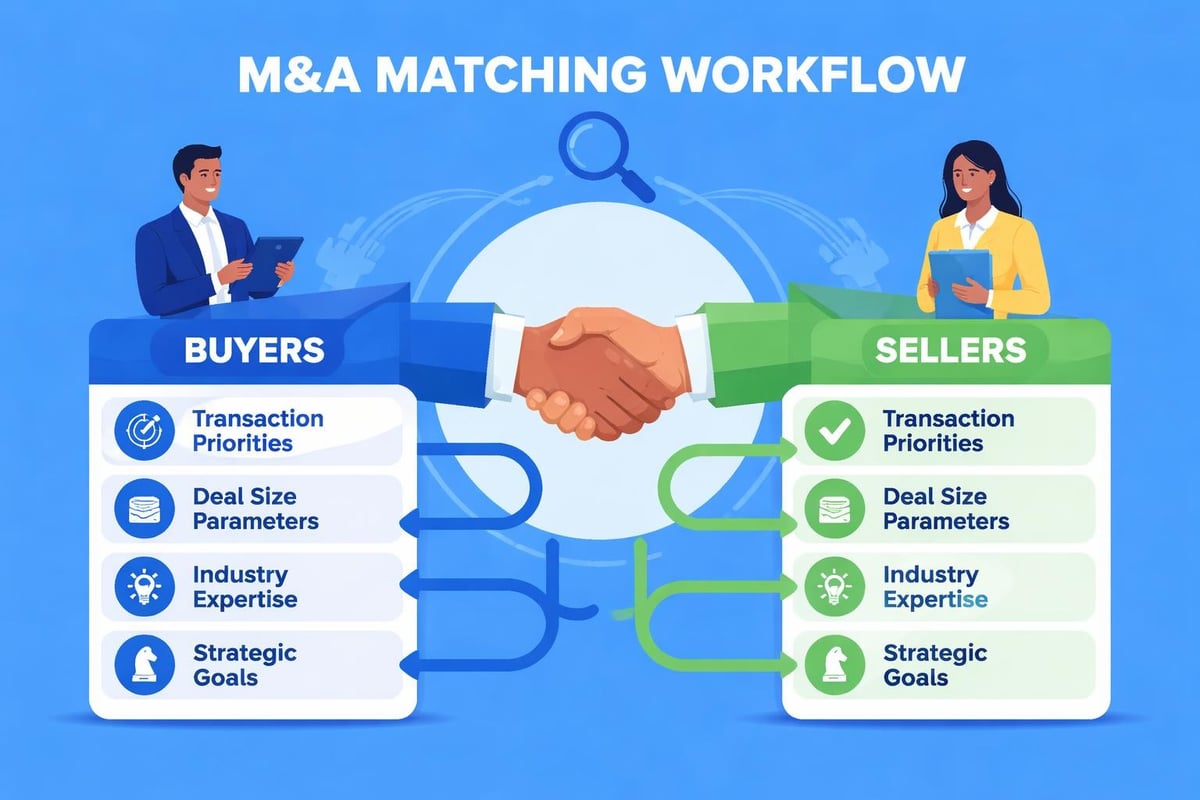
How Matching Technology Works:
- Sellers create confidential profiles outlining transaction priorities, deal size parameters, and strategic preferences
- Buyers showcase their acquisition criteria, industry experience, and value proposition as potential partners
- Proprietary algorithms identify matches based on strategic fit before revealing identifying information
- Qualified matches receive controlled introductions to explore mutual interest privately
- Both parties proceed only when alignment is confirmed across multiple dimensions
This methodology prioritizes quality over quantity, ensuring that when you decide where do I sell my business, you're connecting with buyers who truly understand your industry and share your vision for the company's future.
Benefits of Platform-Based Sales
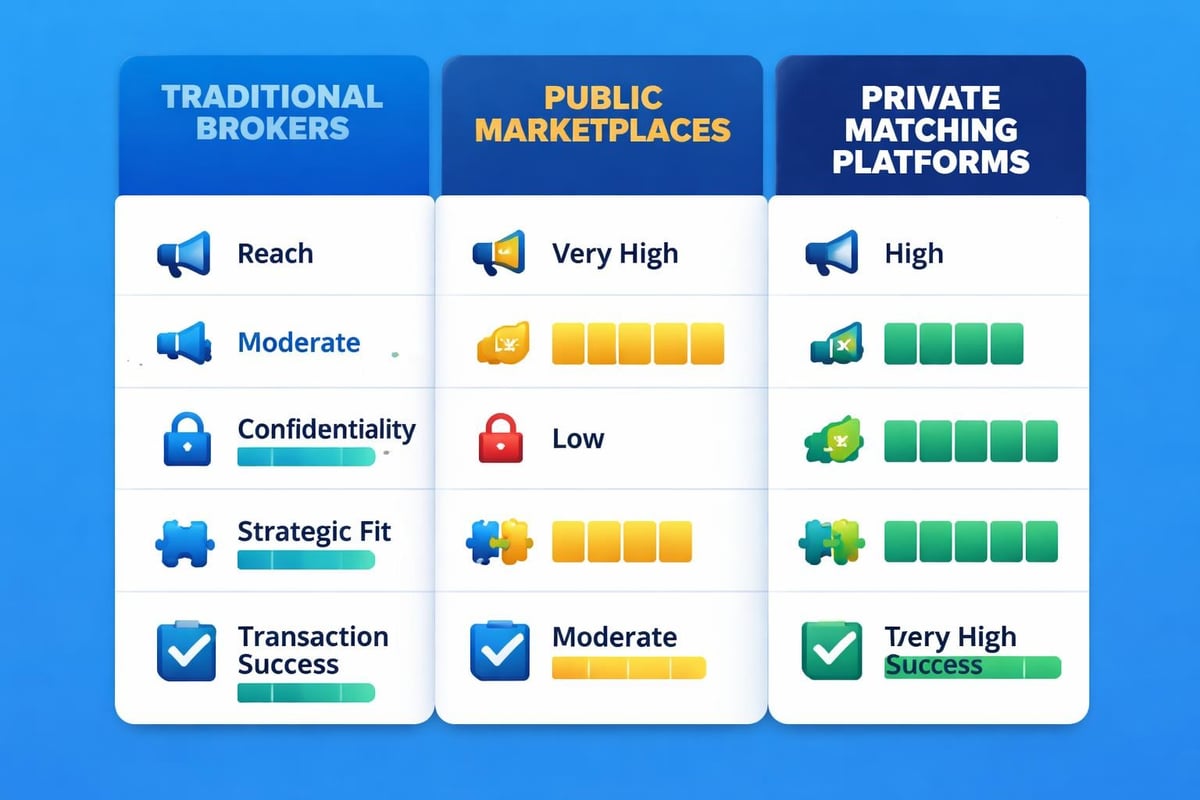
| Traditional Brokers | Public Marketplaces | Private Matching Platforms |
|---|---|---|
| High commissions | Broad exposure | Strategic fit prioritization |
| Limited buyer pool | Confidentiality concerns | Controlled introductions |
| Standardized process | Unqualified inquiries | Curated buyer networks |
| One-size-fits-all | Spray-and-pray approach | Priority-based matching |
| Transactional focus | Volume-driven | Relationship-oriented |
The platform model reduces the time wasted on unqualified buyers while maintaining strict confidentiality throughout initial stages. In a typical scenario, a business owner might receive three highly qualified match notifications rather than fifty generic inquiries, with each match representing genuine strategic alignment.
Evaluating Regional and Specialized Options
Geographic considerations often influence where do I sell my business, particularly for companies with strong local presence or regional customer bases. Specialized brokers understand local market dynamics and maintain networks of regional buyers.
Regional Business Brokers
California market specialists like California Business Brokers focus exclusively on transactions within the state, offering deep knowledge of California regulations and buyer preferences.
Southwest-focused firms such as Business Brokers of Arizona concentrate on the unique characteristics of businesses in growing Sun Belt markets.
Charlotte and regional operators like Charlotte Business Brokers serve specific metropolitan areas with specialized expertise.
These regional specialists answer where do I sell my business for owners who prioritize local buyers or believe geographic proximity enhances strategic fit. However, this approach inherently limits your buyer pool and may miss qualified acquirers from other regions.
Industry-Specific Considerations
Certain industries benefit from specialized intermediaries who understand sector-specific valuation methods, regulatory requirements, and buyer motivations. Manufacturing businesses, healthcare practices, and technology companies each require different approaches to the sale process.
When determining where do I sell my business, industry expertise often matters more than geographic focus. A buyer with deep manufacturing experience located across the country may offer better strategic fit than a local financial buyer unfamiliar with operational complexities.
The Role of M&A Service Providers
Professional service providers play essential roles throughout the transaction process, regardless of where do I sell my business. These specialists include attorneys, accountants, valuation experts, and M&A advisors who guide both buyers and sellers.
Service Provider Integration
Modern platforms recognize that successful transactions require coordination among multiple parties. Aligned IQ M&A allows M&A service providers to participate directly, receiving compensation for sell-side referrals while showcasing their professional services to potential clients.
This integration benefits sellers in several ways:
- Trusted advisor participation throughout the matching and due diligence process
- Referral incentives that align service provider interests with successful outcomes
- Professional credibility that enhances buyer confidence
- Streamlined coordination across legal, financial, and operational workstreams
In a typical scenario, a business attorney might refer a client to the platform, remain involved throughout negotiations, and earn referral compensation while providing ongoing legal counsel. This arrangement addresses where do I sell my business while maintaining trusted advisor relationships.
Virtual Data Room Requirements
Once you've identified qualified buyers, secure document sharing becomes critical. The traditional M&A process often involves expensive virtual data room (VDR) subscriptions that add thousands of dollars to transaction costs.
Aligned IQ VDR provides competitively priced secure data rooms specifically designed for lower middle-market transactions. The platform offers complimentary VDR access for Aligned IQ M&A sellers after completing a match, eliminating a major cost barrier. For other buyers, sellers, intermediaries, or M&A service providers, transparent pricing ensures affordability without sacrificing security or functionality.
Prioritizing Strategic Fit Over Speed
The pressure to answer where do I sell my business quickly often leads owners to choose channels that prioritize speed over strategic alignment. This approach frequently produces suboptimal outcomes, including failed transactions during due diligence or buyer-seller conflicts post-closing.
Why Strategic Fit Matters Most
Cultural alignment between buyer and seller significantly impacts post-acquisition success. When leadership philosophies clash or operational approaches conflict, even financially sound deals can fail to deliver expected value.
Industry expertise ensures buyers understand your business model, competitive dynamics, and growth opportunities without extensive education. This knowledge accelerates due diligence and reduces deal risk.
Transaction priorities must align across dimensions like timeline flexibility, employee retention, brand preservation, and earnout structures. Misalignment in any area can derail negotiations even after significant time investment.
The Matching Advantage
Platforms that prioritize strategic fit before revealing company identities protect confidentiality while ensuring serious buyer interest. This approach answers where do I sell my business by focusing on compatibility rather than simply market exposure.
In a typical scenario, a third-generation family business might prioritize buyer commitment to employee retention and community involvement over maximum purchase price. A matching platform identifies buyers who share these values, while a traditional broker might simply seek the highest bidder regardless of post-acquisition intentions.
Confidentiality and Risk Management
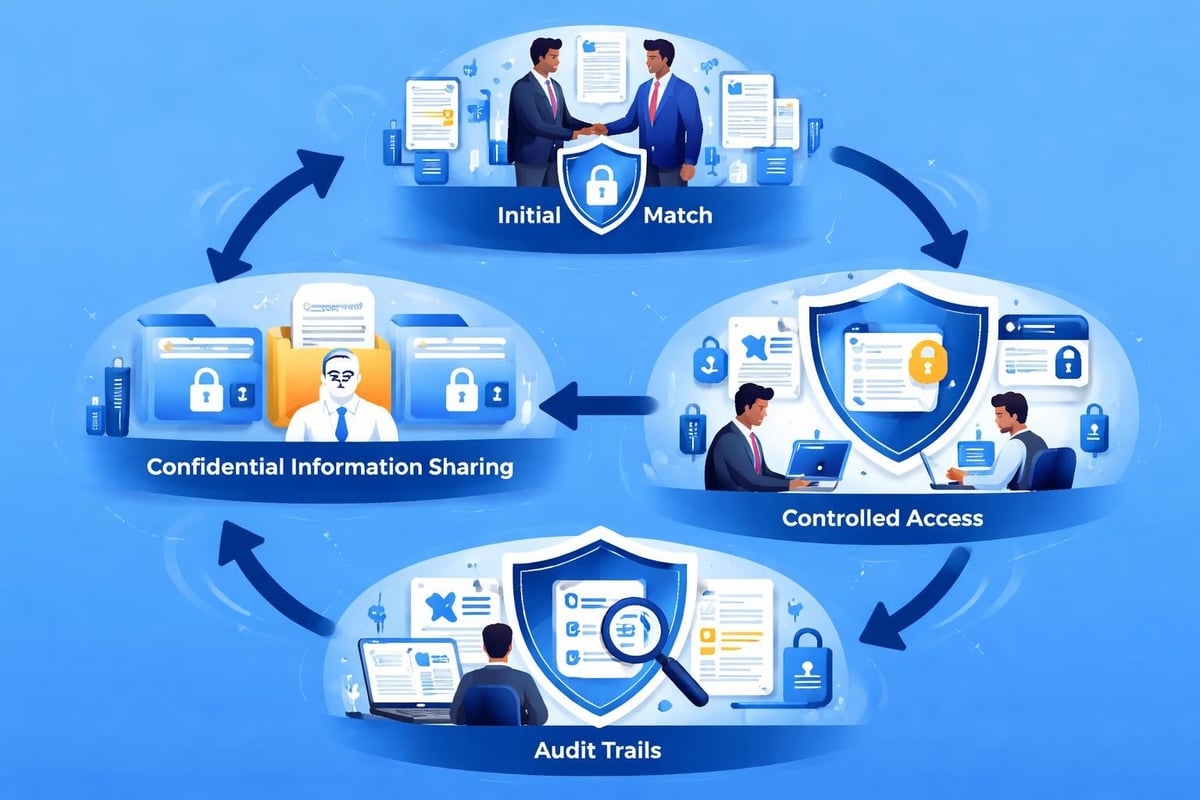
Business owners rightly worry about confidentiality when deciding where do I sell my business. Public listings or broad broker marketing can trigger unwanted consequences including employee uncertainty, customer concerns, and competitor intelligence gathering.
Confidentiality Protection Strategies
Anonymous marketing materials describe your business without revealing identifying information, allowing initial buyer interest assessment without exposure.
Controlled disclosure processes release sensitive information only after buyers sign non-disclosure agreements and demonstrate serious qualification.
Proprietary matching algorithms evaluate compatibility before sharing company names, protecting identity until mutual interest is established.
Secure communication channels ensure all discussions occur through encrypted platforms rather than unsecured email.
The role of business brokers traditionally included confidentiality management, but modern platforms enhance this protection through technology-enabled access controls and graduated information disclosure.
Low-Risk Sale Approaches
Modern M&A platforms reduce risk by allowing sellers to explore the market confidentially before committing to full-scale sale processes. Business owners can create profiles, receive match notifications, and evaluate buyer credentials without publicly announcing sale intentions.
This low-risk approach transforms the question of where do I sell my business into an ongoing strategic consideration rather than a one-time, high-stakes decision. Owners maintain optionality while building relationships with potential acquirers long before they're ready to transact.
Cost Considerations Across Sale Channels
Transaction costs significantly impact net proceeds when selling your business. Understanding fee structures across different channels helps you make informed decisions about where do I sell my business.
Fee Structure Comparison
| Channel Type | Typical Fees | Additional Costs | Total Cost Range |
|---|---|---|---|
| Traditional Brokers | 8-12% commission | Legal, accounting, VDR | 10-15% of deal value |
| Investment Bankers | 2-5% + retainer | Due diligence, VDR | 3-8% + $50-200K retainer |
| Online Marketplaces | Listing fees + success fees | Self-managed costs | Variable, often hidden fees |
| Matching Platforms | Subscription or success-based | Reduced intermediary costs | Typically lower overall |
Virtual data room expenses deserve special attention. Traditional VDR providers charge premium prices that smaller transactions struggle to justify. When evaluating where do I sell my business, factor in that complimentary VDR access through platforms like Aligned IQ M&A can save $5,000-$15,000 per transaction.
Value Versus Cost
The cheapest option rarely delivers the best outcome. When determining where do I sell my business, focus on which channel delivers qualified buyers most likely to complete transactions at fair valuations while preserving confidentiality.
In a typical scenario, paying a 10% broker commission might seem expensive, but if the broker delivers only marginally qualified buyers who require extensive education about your industry, the time cost and deal risk may exceed the commission savings from lower-cost alternatives. Conversely, a platform that delivers three highly qualified, strategically aligned buyers justifies its cost through efficiency and reduced risk.
Taking the Next Steps in Your Sale Journey
Answering where do I sell my business requires honest assessment of your priorities, timeline, and desired outcome. The right channel aligns with your specific circumstances rather than following a one-size-fits-all approach.
Preparing for Successful Sale
Before selecting your sales channel, complete these foundational steps:
- Obtain professional valuation to establish realistic price expectations
- Organize financial records spanning at least three years
- Document operational processes to demonstrate transferability
- Identify deal-breakers in terms of buyer characteristics and transaction structure
- Assemble advisory team including attorney, accountant, and potentially M&A advisor
These preparations position you to engage effectively regardless of which channel you ultimately choose for where do I sell my business.
Exploring Platform Options
Modern M&A platforms offer sophisticated tools for exploring sale options without immediate commitment. Creating a confidential seller profile allows you to:
- Assess market interest in your business type and size
- Understand buyer expectations in your industry
- Receive match notifications when qualified buyers emerge
- Evaluate strategic fit before revealing company identity
- Build relationships with potential acquirers over time
This exploratory approach reduces pressure while increasing the likelihood of finding the right buyer when you're ready to transact. Taking a tour of platforms like Aligned IQ M&A reveals how match-making technology has transformed the answer to where do I sell my business from a limited list of brokers to a strategic ecosystem of qualified buyers actively seeking businesses like yours.
Determining where to sell your business in 2026 requires balancing confidentiality, strategic fit, cost efficiency, and transaction certainty across multiple channel options. Rather than defaulting to traditional brokers or public marketplaces, explore modern platforms that prioritize compatibility and reduce risk through intelligent matching. Aligned IQ offers a proprietary environment where sellers connect with pre-qualified buyers based on strategic alignment, transaction priorities, and industry expertise, transforming M&A into a collaborative process that serves everyone's goals. Take a tour to discover how match-making technology can identify your ideal buyer while maintaining complete confidentiality throughout the process.
No responses yet