
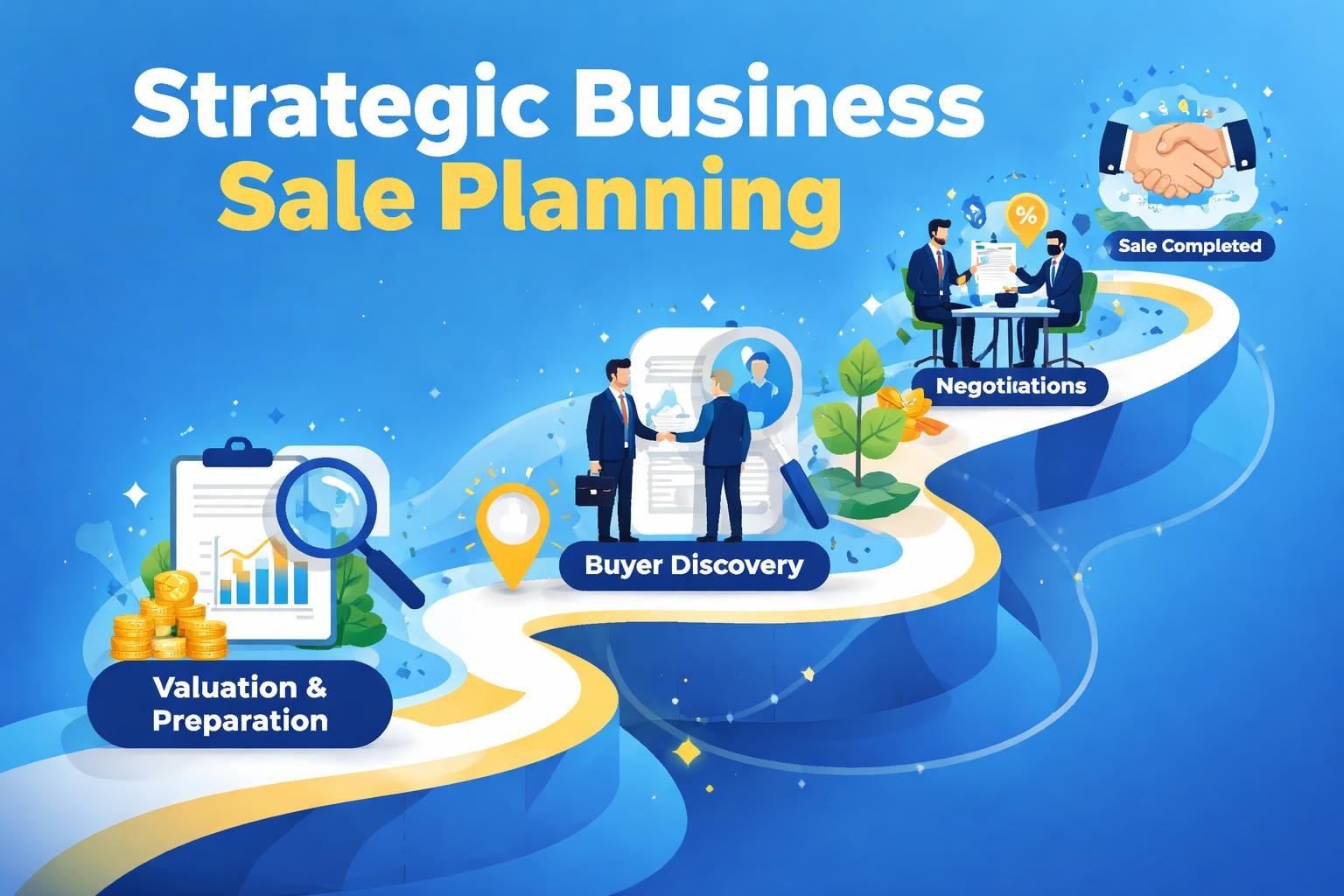
Selling a small business represents one of the most significant financial decisions an entrepreneur will make in their lifetime. Whether you're ready to retire, pursue new opportunities, or simply cash in on years of hard work, understanding how can I sell my small business successfully requires careful planning, strategic execution, and access to the right resources. The M&A landscape has evolved considerably in 2026, with technology-driven platforms transforming how buyers and sellers connect while maintaining the confidentiality and strategic alignment essential for successful transactions.
Understanding Your Business Value Before You Sell
Before exploring how can I sell my small business, you must establish an accurate valuation. This foundational step influences everything from pricing strategies to negotiation positioning.
Professional Valuation Methods
Business valuation involves multiple approaches that provide different perspectives on your company's worth. The income approach examines future earnings potential and cash flow projections, while the market approach compares your business to similar companies recently sold. The asset-based approach calculates the value of tangible and intangible assets minus liabilities.
Common valuation multiples include:
- EBITDA (Earnings Before Interest, Taxes, Depreciation, and Amortization) multiples
- Revenue multiples for specific industries
- Discounted cash flow analysis
- Book value adjustments
The U.S. Small Business Administration provides comprehensive guidance on valuation methodologies appropriate for different business types and sizes. Working with a certified business appraiser or M&A advisor ensures you receive an objective assessment rather than an emotional estimate.
Factors That Impact Your Business Worth
Multiple variables influence how buyers perceive value beyond simple financial metrics. Customer concentration, recurring revenue streams, competitive positioning, and growth trajectory all affect marketability. A business heavily dependent on the owner's personal relationships may require a longer transition period, which can impact valuation.
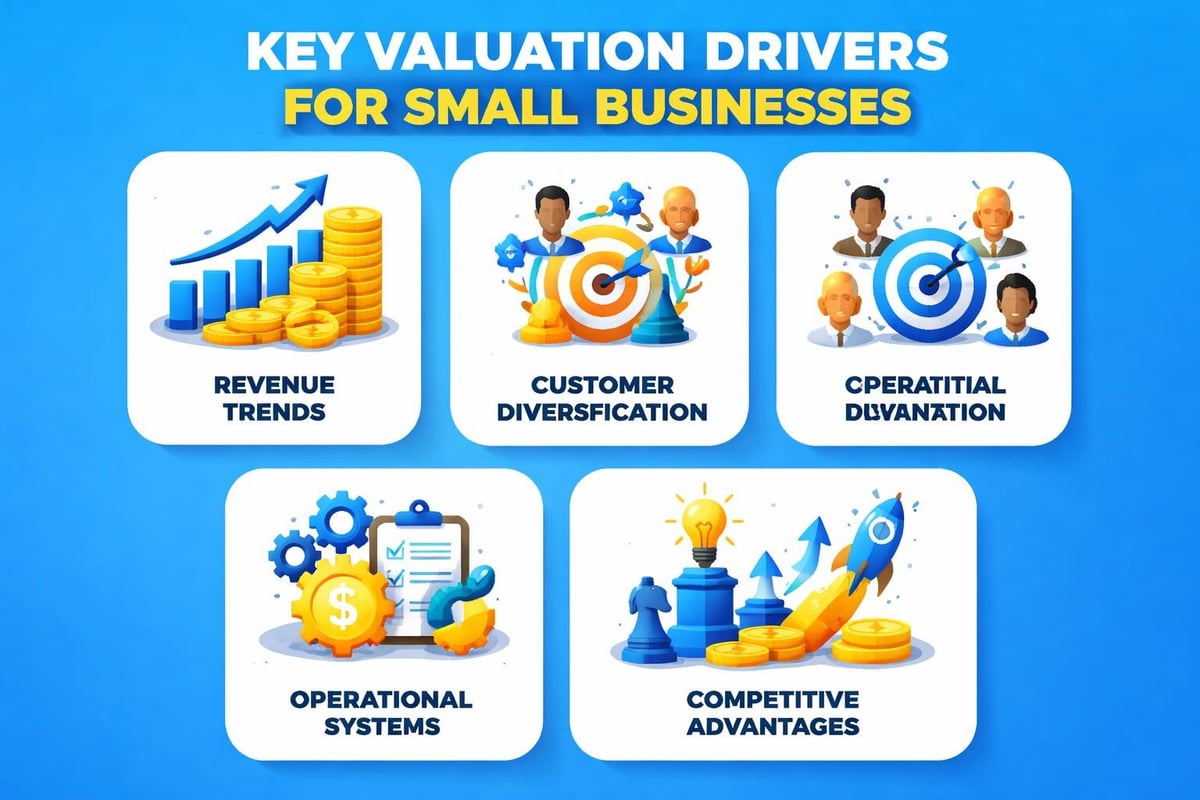
Industry-specific dynamics also matter significantly. A software business with 90% gross margins commands different multiples than a manufacturing company with 25% margins. Understanding these nuances helps set realistic expectations for your eventual sale price.
Preparing Your Business for Sale
The preparation phase determines how quickly you can sell and at what price. In a typical scenario, business owners who invest 12-24 months optimizing their operations before listing achieve significantly better outcomes than those rushing to market.
Financial Documentation and Organization
Clean, audited financial statements provide the foundation for buyer confidence. Organize at minimum three years of tax returns, profit and loss statements, balance sheets, and cash flow statements. Consider engaging a CPA to prepare reviewed or audited financials, which carry more weight than internally prepared documents.
| Financial Document | Recommended Preparation | Buyer Impact |
|---|---|---|
| Tax Returns | 3-5 years complete | Verifies reported income |
| P&L Statements | Monthly for 36+ months | Shows revenue trends |
| Balance Sheets | Current and historical | Reveals asset strength |
| Cash Flow Analysis | Detailed projections | Demonstrates sustainability |
| Customer Contracts | Organized by value | Proves revenue stability |
Eliminate personal expenses running through the business and document all add-backs that increase true owner earnings. This normalization process reveals the actual profitability available to a buyer.
Operational Systems and Transferability
Buyers seek businesses that can operate without constant owner involvement. Document standard operating procedures, employee responsibilities, vendor relationships, and customer management processes. The more systematized your operations, the more attractive your business becomes.
Preparing your business for sale includes addressing any legal issues, renewing key contracts, and ensuring intellectual property protection. These elements reduce buyer risk and facilitate smoother due diligence.
Identifying and Reaching Potential Buyers
Understanding how can I sell my small business requires knowing who might buy it and how to reach them confidentially. The buyer landscape includes strategic acquirers, financial buyers, individual entrepreneurs, and family offices.
Types of Business Buyers
Strategic buyers operate in your industry or adjacent markets and seek synergies through acquisition. They often pay premium prices because they can combine operations, eliminate redundancies, and expand market share. In a typical scenario, a regional distributor might acquire a competitor to gain territory and customer relationships.
Financial buyers include private equity firms, family offices, and investment groups focused on returns rather than operational synergies. These buyers evaluate cash flow generation and growth potential as their primary criteria.
Individual buyers and first-time entrepreneurs represent another significant segment, particularly for businesses valued under $5 million. These buyers often bring industry experience and seek owner-operator opportunities.
Modern M&A Platforms vs Traditional Methods
The traditional M&A process involves hiring business brokers or investment bankers who market your business through their networks. While effective, this approach can be costly (typically 10-15% commission) and may limit exposure to qualified buyers.
Modern deal sourcing platforms have transformed how buyers and sellers connect. Unlike traditional methods where confidentiality concerns limit broad marketing, proprietary platforms enable secure, private connections based on strategic fit criteria.
The Aligned IQ M&A platform offers business owners a unique approach by prioritizing strategic alignment before deep engagement. Rather than broadcasting your business to a broad market, the platform's match-making process connects you with pre-qualified buyers whose transaction priorities, deal size parameters, and industry expertise align with your specific situation. This confidential environment protects your business reputation while you explore potential partnerships.
Maintaining Confidentiality Throughout the Sale Process
One of the most frequently asked questions about how can I sell my small business centers on maintaining confidentiality. Premature disclosure can damage customer relationships, cause employee anxiety, and weaken your negotiating position.
Implementing Confidentiality Protocols
Use non-disclosure agreements (NDAs) before sharing any identifying information about your business. Create blind profiles that describe your business generically without revealing the name, location, or distinctive characteristics until appropriate.
Limit information sharing on a need-to-know basis throughout your organization. In most cases, only trusted advisors and key management should be aware of sale discussions until a definitive agreement is reached.
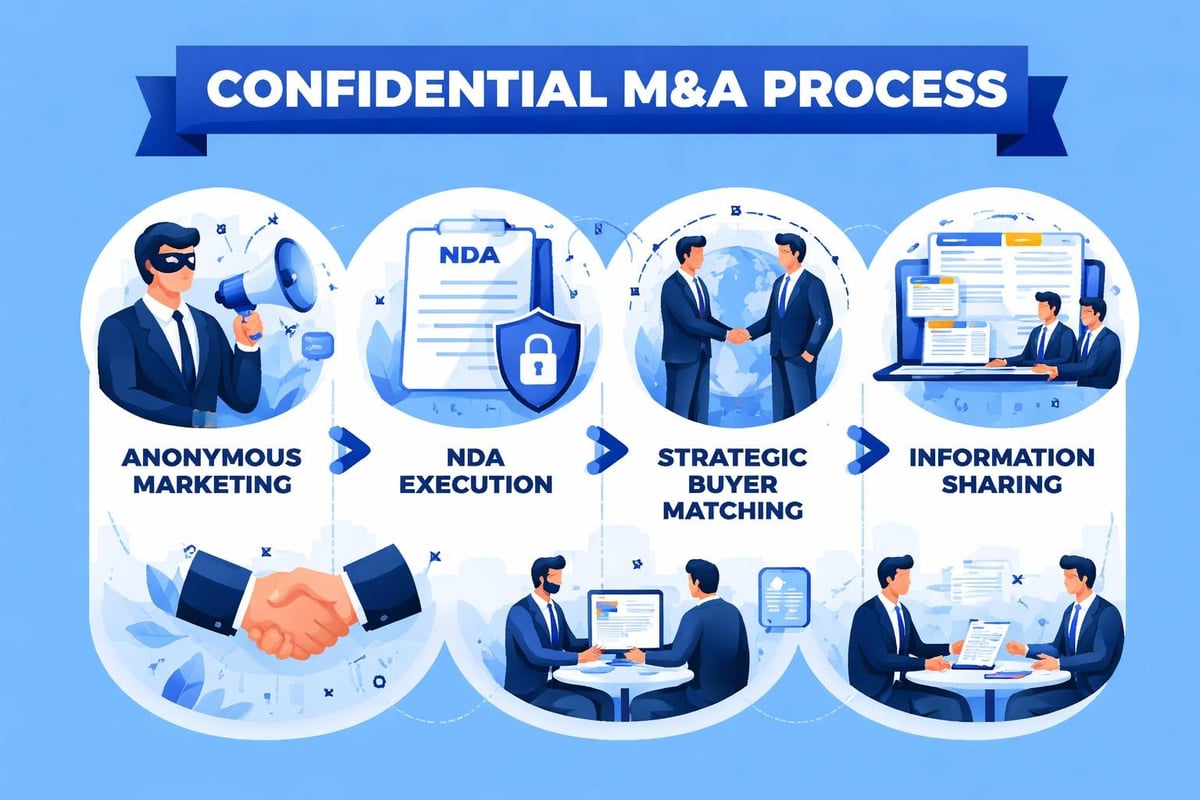
The proprietary nature of platforms like Aligned IQ for business owners provides inherent confidentiality advantages over public business-for-sale listings. Sellers control information disclosure timing and can verify buyer qualifications before revealing sensitive details.
The Due Diligence and Negotiation Phase
Once you've identified serious buyers through your chosen method of connection, the due diligence process begins. This investigative period allows buyers to verify your representations and assess risks.
Preparing for Buyer Due Diligence
Anticipate extensive document requests covering financials, contracts, employee agreements, intellectual property, regulatory compliance, and operational metrics. Organize these materials in advance to demonstrate professionalism and accelerate the process.
Key due diligence categories include:
- Financial verification – detailed examination of revenue sources, expense categories, and profitability drivers
- Legal review – contracts, litigation history, regulatory compliance, and intellectual property rights
- Operational assessment – systems, processes, key employee dependencies, and capacity constraints
- Market analysis – competitive positioning, customer concentration, and growth opportunities
- Cultural fit evaluation – management philosophy, employee relationships, and community involvement
Virtual Data Rooms for Secure Information Sharing
Managing due diligence requires secure document sharing that protects confidential information while providing buyer access. Virtual data rooms (VDRs) have become the industry standard for M&A transactions.
The Aligned IQ VDR offers lower middle-market participants a competitively priced solution with transparent pricing that makes enterprise-level security accessible to smaller transactions. For sellers who match through the Aligned IQ M&A platform, the VDR is complimentary after match completion, eliminating a significant transaction cost while ensuring professional-grade security.
Traditional VDR providers often charge prohibitive fees for smaller deals, creating barriers to proper information management. The Aligned IQ VDR addresses this gap specifically for the lower middle market, providing granular permission controls, audit trails, and encryption standards previously available only on large transactions.
Structuring the Deal and Terms
How can I sell my small business profitably extends beyond the headline purchase price to encompass deal structure, payment terms, and post-closing obligations. These elements significantly impact your actual proceeds and ongoing involvement.
Asset Sales vs Stock Sales
In an asset sale, the buyer purchases specific assets and assumes selected liabilities, providing them liability protection from unknown claims. This structure is most common for smaller businesses and often preferred by buyers for tax advantages.
Stock sales transfer ownership of the entire entity, including all assets and liabilities. Sellers often prefer this structure because it may qualify for favorable capital gains treatment and creates a cleaner exit.
| Deal Structure Element | Seller Perspective | Buyer Perspective |
|---|---|---|
| Cash at Closing | Immediate liquidity, clean exit | Requires more capital upfront |
| Seller Financing | Receives interest, spreads tax burden | Reduces upfront capital needs |
| Earnouts | Potential for higher total price | Aligns seller's interests with performance |
| Employment Transition | Ensures smooth handoff, continued income | Retains institutional knowledge |
Earnouts and Contingent Payments
Earnout provisions tie a portion of the purchase price to future performance metrics. While they can bridge valuation gaps, they also create ongoing seller involvement and potential disputes. Clearly define measurement criteria, calculation methods, and dispute resolution procedures if including earnouts.
Seller financing, where you hold a note for part of the purchase price, provides buyers with more favorable terms while potentially increasing your total proceeds through interest payments. However, this increases your risk if the business underperforms post-sale.
Closing the Transaction Successfully
The final steps in answering how can I sell my small business involve executing definitive agreements, satisfying closing conditions, and completing the ownership transfer.
Essential Legal Documentation
Work with experienced M&A attorneys to draft or review the purchase agreement, which governs every aspect of the transaction. This document includes purchase price, payment terms, representations and warranties, indemnification provisions, and post-closing obligations.
Additional agreements may include non-compete clauses, employment or consulting agreements, intellectual property assignments, and real estate leases. Each document requires careful review to protect your interests while facilitating a smooth closing.
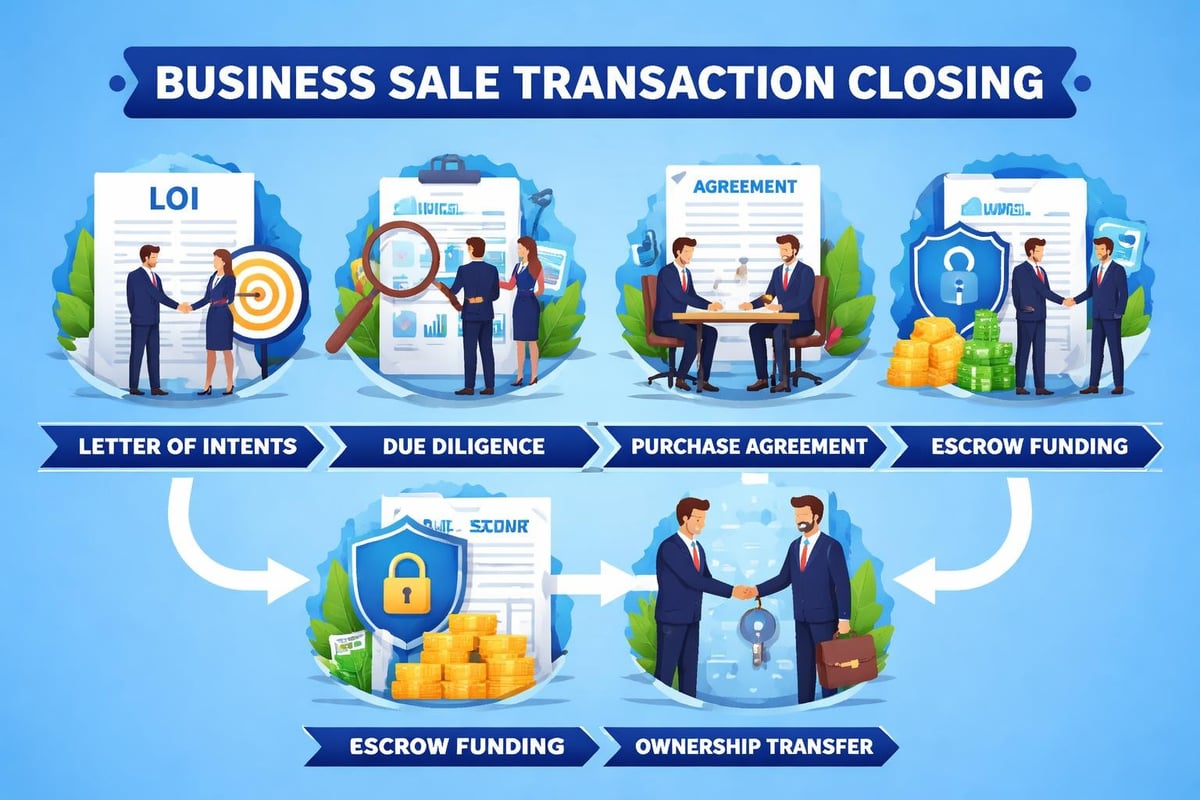
Understanding the complete closing process helps you anticipate requirements and avoid last-minute complications. Typical closings require 60-120 days from letter of intent to final funding, depending on complexity and financing arrangements.
Post-Closing Transition Planning
Most transactions include a transition period where you help the new owner understand operations, customer relationships, and industry dynamics. Define the scope, duration, and compensation for this involvement upfront to prevent misunderstandings.
Consider how the sale affects employees, customers, and vendors. Thoughtful communication planning preserves relationships and protects the business value you've worked to build.
Leveraging Modern M&A Technology for Better Outcomes
The evolving M&A technology landscape provides sellers with unprecedented control over their exit process. Understanding these tools helps you answer how can I sell my small business more effectively in 2026.
The Strategic Fit Advantage
Traditional business sale processes focus heavily on financial metrics before considering whether the buyer and seller share compatible visions for the business future. This approach often leads to failed transactions after significant time and expense investment.
Prioritizing strategic fit earlier in the process yields better outcomes for both parties. When buyers and sellers align on growth philosophy, management approach, employee treatment, and customer service standards, transactions proceed more smoothly and post-acquisition integration succeeds more often.
The Aligned IQ M&A platform's matching algorithm evaluates transaction priorities, deal size compatibility, and industry expertise before facilitating introductions. This approach differs fundamentally from browsing generic business-for-sale listings where strategic alignment remains unknown until deep in negotiations.
Service Provider Integration
Many business owners lack M&A transaction experience and benefit from professional guidance. M&A service providers including attorneys, accountants, business brokers, and advisors play crucial roles in successful transactions.
Modern platforms integrate these professionals into the process rather than replacing them. Aligned IQ enables service providers to receive referral compensation for seller introductions while showcasing their capabilities to potential clients. This ecosystem approach ensures sellers access expertise when needed while maintaining control over their process.
Tax Implications and Financial Planning
Selling your business creates significant tax consequences that impact your actual proceeds. Professional tax planning, ideally beginning 12-24 months before sale, can preserve substantial wealth.
Capital Gains vs Ordinary Income
The tax treatment of your sale proceeds depends on deal structure, asset classification, and holding periods. Long-term capital gains rates (typically 15-20% at the federal level) apply to assets held longer than one year, while ordinary income tax rates (up to 37% federally) apply to short-term gains and certain asset categories.
Allocation of purchase price among asset categories affects both buyer and seller tax positions. Buyers prefer allocating more to depreciable assets, while sellers prefer capital gains treatment. These competing interests require negotiation and often result in compromise.
Tax planning strategies include:
- Installment sales spreading recognition over multiple years
- Qualified Small Business Stock (QSBS) exclusions for eligible C corporations
- Charitable remainder trusts for philanthropic goals
- 1031 exchanges for real estate components
- Opportunity Zone investments for capital gains deferral
Wealth Preservation After the Sale
Planning for life after the sale involves more than tax minimization. Consider estate planning, investment diversification, retirement income needs, and philanthropic goals as part of your comprehensive exit strategy.
Working with financial advisors, tax professionals, and estate planning attorneys helps you preserve and grow the wealth created through your business sale. Many owners who built businesses successfully struggle with wealth management in different asset classes, making professional guidance particularly valuable.
Timeline and Realistic Expectations
Understanding how can I sell my small business requires realistic timeline expectations. The process rarely happens as quickly as owners hope.
Preparation Through Closing Timeline
A typical well-planned business sale follows this approximate timeline:
- Months 1-6: Preparation phase including valuation, financial organization, and operational optimization
- Months 7-9: Marketing to potential buyers and initial discussions
- Months 10-12: Letter of intent negotiation and execution
- Months 13-16: Due diligence, purchase agreement negotiation, and financing arrangement
- Months 17-18: Final closing and transition period initiation
This 18-month timeline assumes no major complications. Complex businesses, regulatory requirements, or financing challenges can extend the process significantly.
Common Delays and How to Avoid Them
Financial discrepancies discovered during due diligence represent the most common transaction delay. Maintain rigorous financial records and address inconsistencies before marketing your business.
Unrealistic valuation expectations also derail transactions. If your asking price significantly exceeds market comparables, qualified buyers won't engage seriously. Accept market feedback and adjust accordingly rather than waiting indefinitely for your price.
Inadequate buyer qualification wastes time on prospects who lack financing or decision-making authority. Platforms that pre-qualify participants based on transaction capacity and expertise eliminate this inefficiency.
Successfully selling your small business requires strategic preparation, professional guidance, and access to qualified buyers who share your vision for the company's future. The modern M&A landscape offers business owners unprecedented control over their exit process while maintaining the confidentiality essential for protecting enterprise value. Aligned IQ transforms the traditional M&A process by prioritizing strategic fit and facilitating private connections between sellers and pre-qualified buyers through our proprietary matching platform. Take a tour today to discover how our approach to buyer-seller alignment, combined with complimentary VDR access for matched sellers, creates a more collaborative and successful path to achieving your exit goals.
No responses yet