
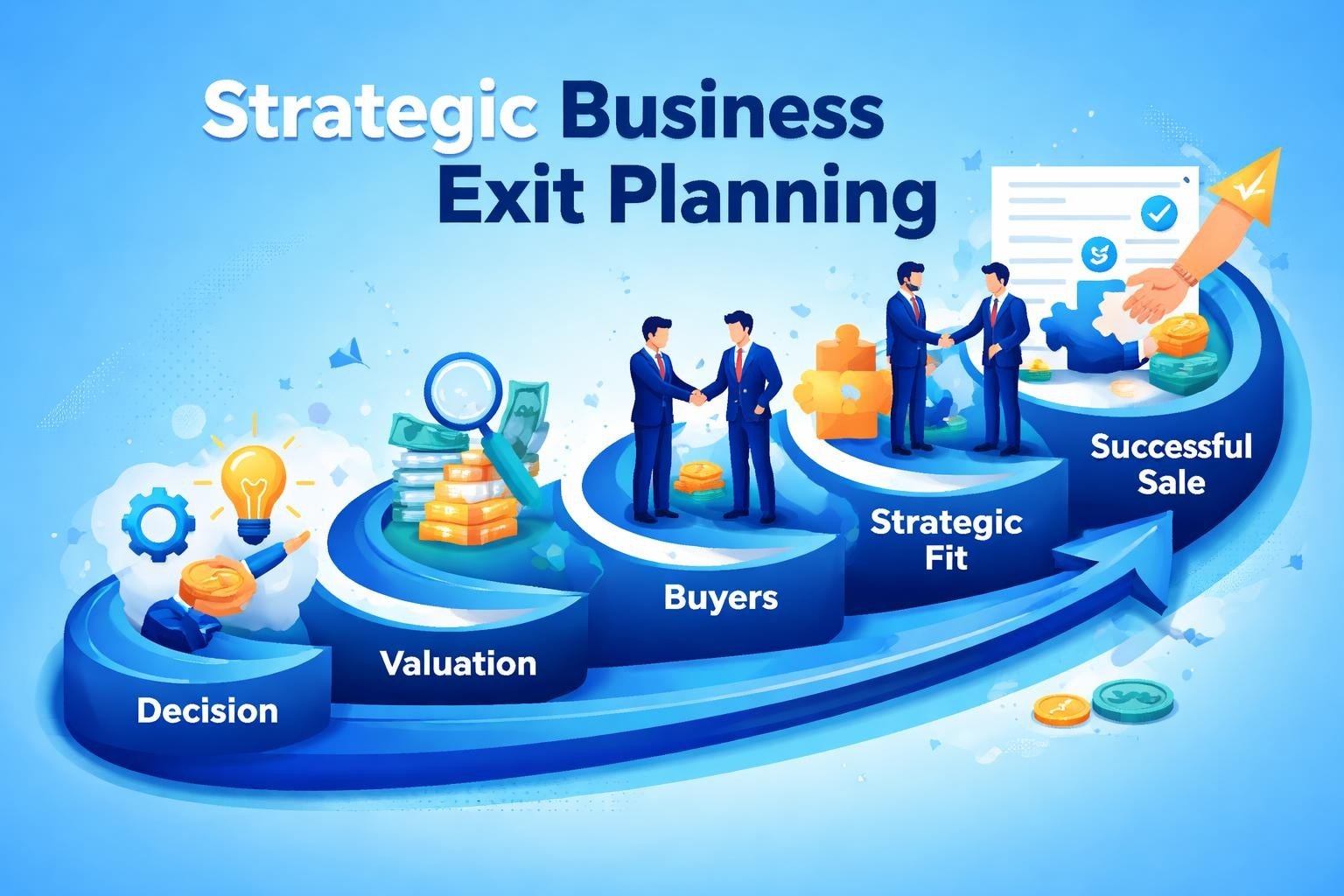
The moment you think "I want to sell my company" marks the beginning of a transformational journey that requires careful planning, strategic execution, and the right support systems. Whether you're pursuing retirement, exploring new ventures, or capitalizing on market opportunities, successfully selling a business demands much more than simply finding a buyer willing to write a check. In 2026, business owners have access to innovative platforms and methodologies that prioritize strategic alignment over transactional speed, fundamentally changing how companies change hands in the lower middle market. Understanding this evolving landscape is essential for maximizing value and ensuring your exit aligns with your long-term objectives.
Understanding Your Motivations for Selling
Business owners who want to sell my company typically fall into several distinct categories, each with unique priorities and timelines. Retirement remains the most common driver, with Baby Boomer business owners continuing to reach exit age and seeking succession solutions. Others pursue strategic exits when market conditions favor sellers or when growth opportunities exceed their current capabilities or risk tolerance.
Personal circumstances frequently accelerate sale decisions. Health concerns, partnership disputes, or family considerations can create urgent timelines that require expedited processes. Meanwhile, some entrepreneurs simply recognize that their skills lie in building businesses rather than scaling them, making a sale the logical next step in their professional evolution.
Market timing considerations include:
- Industry consolidation trends creating premium valuations
- Economic cycles favoring seller's markets
- Technological disruptions requiring significant capital investment
- Regulatory changes impacting operational complexity
- Competitive pressures demanding resources beyond current capacity
The motivation behind your decision significantly influences your approach to the sale process. Owners planning retirement typically prioritize transaction certainty and legacy preservation, while those pursuing new opportunities often emphasize speed and favorable terms that free capital quickly.

Preparing Your Business for Maximum Value
Once you want to sell my company, preparation becomes paramount to achieving optimal outcomes. According to the U.S. Small Business Administration’s comprehensive guide, businesses that undergo systematic preparation before going to market command significantly higher valuations and experience smoother transaction processes.
Financial Documentation and Organization
Clean, organized financial records form the foundation of any successful sale. Buyers conducting due diligence scrutinize historical performance, looking for consistent revenue patterns, healthy profit margins, and transparent accounting practices.
| Financial Preparation Element | Timeline | Impact on Valuation |
|---|---|---|
| Three years audited financials | 6-12 months | High credibility boost |
| Tax return reconciliation | 2-3 months | Eliminates deal delays |
| Normalized EBITDA calculation | 1-2 months | Accurate valuation basis |
| Working capital analysis | 1 month | Smooth closing adjustments |
| Quality of earnings report | 3-4 months | Buyer confidence increase |
Business owners should work with experienced accountants to "normalize" earnings by removing one-time expenses, owner-specific compensation, and non-operational items. This normalized EBITDA provides the clearest picture of sustainable cash flow, which buyers use to determine fair market value.
Operational Systematization
Businesses overly dependent on owner involvement present significant risk to buyers. Preparing your business for sale requires documenting processes, training key personnel, and demonstrating that operations can continue seamlessly under new ownership.
In a typical scenario, a manufacturing company owner documented all production processes, cross-trained supervisors, and implemented standard operating procedures six months before listing. This systematization increased the business's appeal to multiple buyer types and ultimately contributed to a valuation premium.
Understanding Valuation Methods and Expectations
When business owners want to sell my company, realistic valuation expectations prevent disappointment and failed transactions. The comprehensive 8-step guide from Northwest Bank emphasizes that professional business valuation provides objective, defensible pricing that aligns seller expectations with market realities.
Common Valuation Approaches
Multiple methodologies exist for determining business value, with most transactions using a combination of approaches to triangulate fair market value:
- Multiple of EBITDA: Most common in lower middle market, typically ranging from 3x to 7x depending on industry, growth trajectory, and risk factors
- Revenue multiples: Used in high-growth or asset-light businesses where profitability remains inconsistent
- Asset-based valuation: Relevant for businesses with significant tangible assets or real estate holdings
- Discounted cash flow: Projects future earnings and discounts to present value, favored by sophisticated buyers
- Comparable transactions: Analyzes recent sales of similar businesses in the same industry and geography
Industry-specific factors dramatically impact valuation ranges. Technology-enabled businesses typically command higher multiples than traditional services, while businesses with recurring revenue models receive premiums over transaction-based operations.
Factors That Enhance Business Value
Strategic buyers often pay premiums when acquisitions provide synergies, market access, or capabilities they cannot easily build internally. Understanding what drives value for different buyer types helps sellers position their companies effectively.
Value-enhancing characteristics include:
- Diversified customer base with minimal concentration risk
- Proprietary technology, processes, or intellectual property
- Strong management team not dependent on owner
- Recurring revenue contracts providing predictable cash flow
- Scalable operations with documented growth opportunities
- Established market position with competitive advantages
Navigating the Traditional M&A Process vs. Modern Approaches
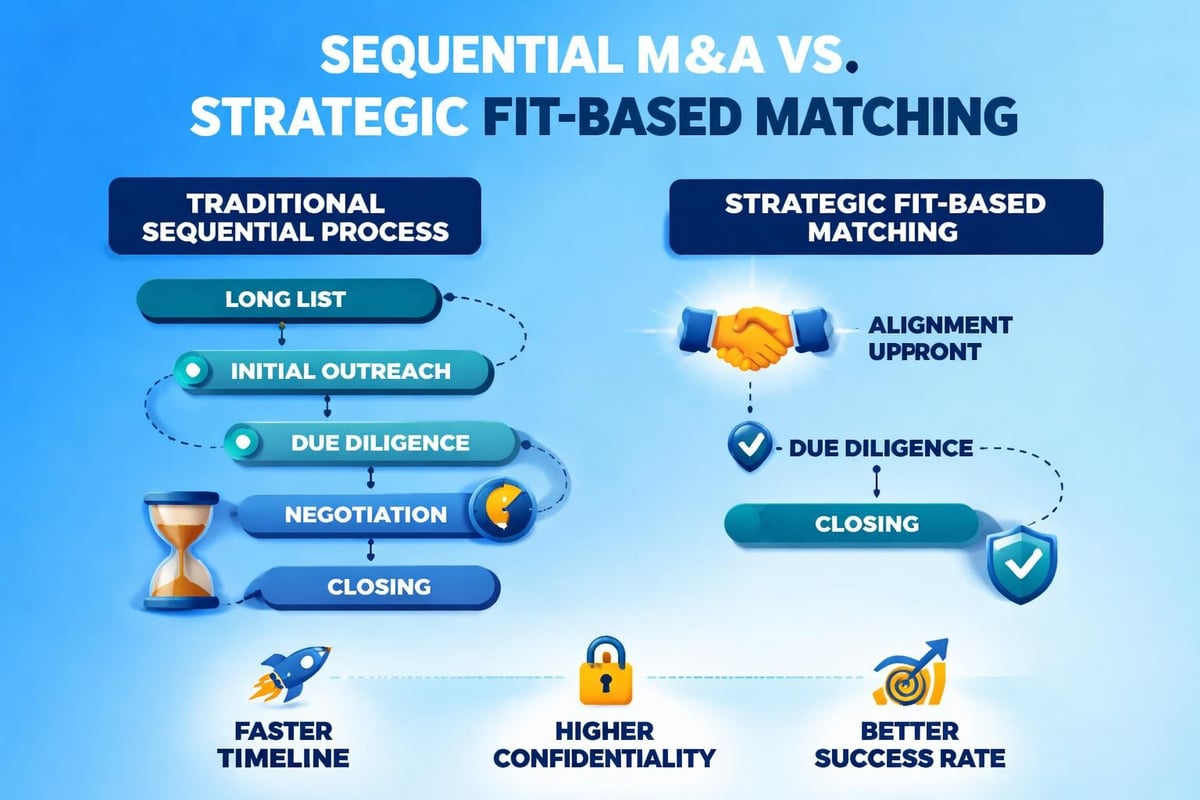
The conventional process when you want to sell my company involves hiring intermediaries, preparing comprehensive information memorandums, conducting broad market outreaches, and managing sequential buyer discussions. While this approach works, it presents challenges including high costs, confidentiality risks, and misaligned incentives.
Traditional M&A advisors typically charge retainer fees plus success-based commissions ranging from 5% to 12% of transaction value. The process emphasizes generating multiple offers through competitive tension, sometimes at the expense of finding truly compatible buyers who align with the seller's strategic vision.
The Strategic Fit Revolution
Forward-thinking platforms are transforming how buyers and sellers connect by prioritizing strategic alignment before diving into extensive due diligence. Rather than focusing exclusively on price maximization, this approach recognizes that successful acquisitions require cultural compatibility, shared vision, and complementary capabilities.
Aligned IQ’s approach to strategic fit represents this evolution, matching parties based on transaction priorities, industry expertise, and deal parameters before extensive engagement begins. This methodology reduces wasted time, protects confidentiality through selective disclosure, and increases the likelihood of successful transactions that satisfy all parties.
Identifying and Evaluating Potential Buyers
Different buyer categories pursue acquisitions for distinct reasons, and understanding these motivations helps sellers identify ideal counterparties when they want to sell my company. The insights from the Chamber of Commerce highlight that buyer type significantly influences transaction structure, valuation approach, and post-closing integration.
Strategic Buyers
Competitors, suppliers, or companies in adjacent markets pursue strategic acquisitions to achieve synergies, eliminate competition, or expand capabilities. These buyers often pay premium valuations because they can realize cost savings and revenue enhancements unavailable to financial buyers.
Strategic buyers typically move quickly once they identify attractive targets, but they present confidentiality challenges. Sharing sensitive information with competitors requires careful management through staged disclosure processes and robust non-disclosure agreements.
Financial Buyers and Private Equity
Private equity platforms seek businesses that fit their investment thesis, typically emphasizing strong cash flow, growth potential, and professional management teams. These buyers leverage acquisitions with debt, targeting specific return thresholds over three to seven-year holding periods.
Financial buyers evaluate opportunities through quantitative lenses, focusing on financial metrics, scalability, and exit opportunities. They typically maintain existing management teams and provide resources for accelerated growth, making them attractive partners for owners seeking to partially cash out while maintaining involvement.
Individual Buyers and Search Funds
Entrepreneurial individuals, often supported by search fund capital, pursue acquisitions as alternatives to starting businesses from scratch. These buyers bring operational expertise and energy but may require seller financing or creative deal structures to bridge valuation gaps.
| Buyer Type | Typical Valuation | Speed to Close | Confidentiality Risk | Post-Sale Involvement |
|---|---|---|---|---|
| Strategic Competitor | Premium (6-8x EBITDA) | Fast (3-6 months) | High | Usually none |
| Private Equity | Market (4-6x EBITDA) | Moderate (4-8 months) | Low | Often retained as advisor |
| Individual/Search Fund | Market to Discount | Slow (6-12 months) | Low | Sometimes required |
| Family Office | Market | Moderate | Low | Flexible |
Leveraging Technology for Confidential Deal Exploration
Modern platforms enable business owners who want to sell my company to explore opportunities confidentially without broadcasting availability to competitors, employees, or customers. This discretion proves especially valuable for owners in early exploration stages who want to understand market interest before committing to formal sale processes.
Proprietary matching platforms allow sellers to create anonymous profiles highlighting business characteristics, financial performance ranges, and transaction preferences without revealing identity. Qualified buyers can express interest based on these profiles, with identities disclosed only after mutual interest and appropriate confidentiality protections.
The Role of Virtual Data Rooms
Once serious buyer discussions begin, secure information exchange becomes critical. Traditional physical data rooms have been replaced by virtual data rooms (VDRs) that provide controlled access to sensitive documents, track user activity, and maintain comprehensive audit trails.
Aligned IQ VDR provides lower middle-market participants with institutional-grade security at accessible price points. The platform offers complimentary VDR access for sellers who complete matches through Aligned IQ M&A, reducing transaction costs and streamlining the due diligence process. For other market participants, competitive pricing makes enterprise-level security available without the enterprise-level cost.
The advantages of purpose-built M&A virtual data rooms include:
- Granular permission controls: Restrict access to specific documents or folders based on deal stage
- Activity tracking: Monitor which buyers review which documents and for how long
- Q&A management: Centralize buyer questions and seller responses with organized threading
- Version control: Maintain document history and ensure parties access current information
- Redaction capabilities: Protect sensitive information while sharing necessary context
- Secure communications: Keep all transaction-related discussions in auditable channels
Structuring Deals to Meet Seller Objectives
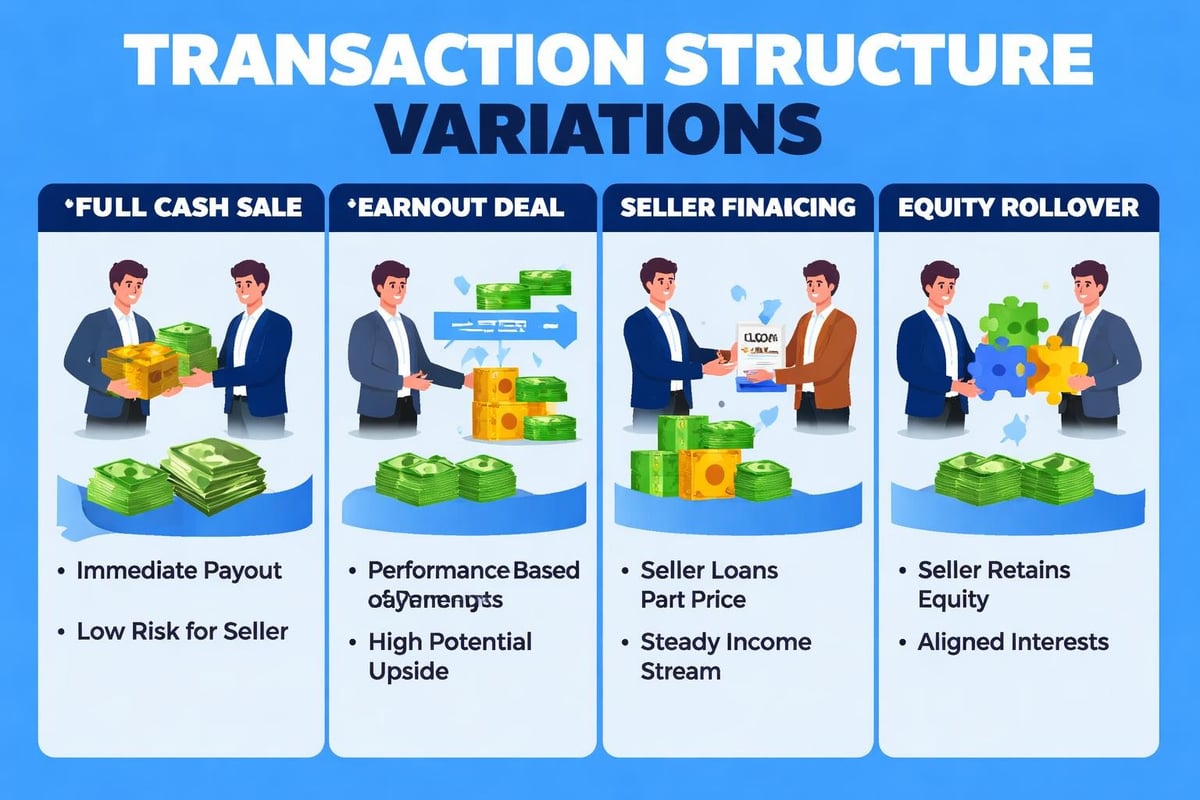
When business owners want to sell my company, they often assume complete exits represent the only option. In reality, transaction structures have evolved to accommodate diverse seller objectives, from immediate liquidity to gradual transitions that preserve legacy and minimize tax impact.
Asset vs. Stock Sales
Tax implications differ dramatically between asset and stock sales. Stock sales typically favor sellers with lower capital gains tax treatment on the entire transaction, while buyers prefer asset purchases that allow stepped-up basis and associated tax benefits.
According to Forbes Burton’s guide on selling a business, negotiating this fundamental structure requires understanding each party's tax position and identifying creative solutions that optimize combined tax efficiency.
Earnouts and Performance-Based Consideration
Earnouts bridge valuation gaps by making portions of the purchase price contingent on future performance. These structures work well when sellers have confidence in continued growth but buyers need risk mitigation given uncertainty.
In a typical scenario, a software company sold for a base price of $10 million plus earnouts of up to $3 million based on customer retention and revenue growth over 24 months. This structure provided the seller with upside participation while giving the buyer protection against customer attrition.
Key earnout considerations:
- Clear, measurable metrics that both parties can track objectively
- Seller influence over earnout achievement through consulting or advisory roles
- Dispute resolution mechanisms for earnout calculation disagreements
- Balance between seller upside and buyer protection
Seller Financing
Buyers increasingly request seller financing as part of transaction structure, particularly when institutional lending proves challenging or expensive. While this keeps sellers at risk, it can facilitate deals that otherwise wouldn't close and often commands premium valuations.
Seller notes typically range from 10% to 30% of purchase price, with terms of three to five years and interest rates reflecting market conditions plus a premium for subordination to senior debt.
Managing the Due Diligence Process
Once sellers and buyers agree on preliminary terms, comprehensive due diligence begins. This investigative phase allows buyers to verify seller representations, identify risks, and confirm that the business operates as presented. The comprehensive guide from UpFlip emphasizes that sellers should approach due diligence proactively, anticipating buyer concerns and preparing thorough responses.
Due Diligence Categories
Buyer teams examine every aspect of the business, typically organized into distinct workstreams:
- Financial due diligence: Verification of historical financials, revenue recognition policies, expense classifications, and working capital needs
- Legal due diligence: Review of contracts, litigation history, intellectual property rights, regulatory compliance, and employment agreements
- Operational due diligence: Assessment of facilities, equipment condition, supply chain relationships, and production capabilities
- Commercial due diligence: Validation of customer relationships, market position, competitive dynamics, and growth opportunities
- Technology due diligence: Evaluation of systems, cybersecurity, technical debt, and digital infrastructure
Business owners who want to sell my company should prepare for intense scrutiny during this phase. Organizing materials in advance, maintaining organized virtual data rooms, and designating knowledgeable team members to respond to inquiries accelerates the process and builds buyer confidence.
Common Due Diligence Issues
Certain findings consistently create transaction complications or price adjustments. Understanding these risk areas allows sellers to address issues proactively before they derail negotiations.
Customer concentration represents a frequent concern. Businesses deriving more than 20% of revenue from single customers face valuation discounts unless long-term contracts or strong relationships mitigate risk. Similarly, pending litigation, regulatory investigations, or compliance gaps create uncertainty that buyers address through price reductions, escrows, or indemnification requirements.
Choosing the Right M&A Support Resources
Professional guidance proves invaluable when business owners want to sell my company, but selecting the right advisors requires understanding different service models and how they align with specific situations. Business News Daily’s overview notes that the quality of your advisory team directly impacts transaction outcomes.
M&A Advisors and Investment Bankers
Traditional intermediaries provide comprehensive services including valuation, marketing, buyer identification, negotiation support, and transaction management. They typically work on retainer plus success fees, with compensation structures creating incentives to maximize purchase price.
For businesses with enterprise values exceeding $10 million, investment bankers access broader buyer networks and bring sophisticated deal expertise. Smaller businesses often work with business brokers or M&A advisors who specialize in lower middle-market transactions.
Attorneys and Tax Advisors
Experienced M&A attorneys protect seller interests through purchase agreement negotiation, representations and warranties review, and closing document preparation. They identify legal risks, propose protective provisions, and ensure compliance with securities regulations and other legal requirements.
Tax advisors structure transactions to minimize tax liability, considering federal and state income taxes, capital gains treatment, and potential tax elections that optimize after-tax proceeds.
Modern Platform Approaches
Deal sourcing platforms complement traditional advisory services by providing direct access to qualified buyers in confidential, controlled environments. These platforms reduce dependence on intermediary networks while maintaining confidentiality and allowing sellers to control disclosure timing.
Aligned IQ M&A exemplifies this evolution, offering proprietary matchmaking that connects sellers with compatible buyers based on strategic fit criteria. This approach reduces the spray-and-pray marketing common in traditional processes, protecting confidentiality while increasing the probability of successful transactions.
Maintaining Business Performance During Sale Process
A critical challenge when you want to sell my company involves maintaining operational focus and financial performance throughout the potentially lengthy sale process. Buyers scrutinize recent performance trends, with declining metrics creating cold feet or justifying price reductions.
Strategies for sustaining performance include:
- Limiting the number of people aware of sale exploration to prevent employee uncertainty
- Maintaining regular business planning and investment despite upcoming ownership transition
- Setting internal performance milestones that keep management teams focused on execution
- Avoiding management distractions by delegating transaction coordination to dedicated resources
- Continuing customer relationship development and avoiding signals that ownership commitment is wavering
In a typical scenario, a distribution company maintained business-as-usual operations by limiting transaction involvement to the CEO and CFO while other executives focused on executing the annual business plan. This approach preserved momentum and prevented the performance decline that often occurs when entire management teams become consumed with deal activities.
The confidential, low-risk environment provided by platforms prioritizing strategic fit helps sellers explore opportunities without the full-scale disruption of traditional sale processes. Sellers can gauge market interest, understand valuation ranges, and identify compatible buyers before launching resource-intensive formal processes.
The Value of Strategic Fit in Successful Transactions
Transaction success extends beyond closing deals at attractive prices. Long-term value creation requires cultural compatibility, aligned growth visions, and complementary capabilities that make combinations greater than the sum of parts.
Sellers who prioritize strategic fit when they want to sell my company often discover that slight valuation discounts relative to highest offers pay dividends through smoother integrations, preserved company cultures, and protected employee interests. This approach particularly benefits owners who care about business legacy and employee welfare beyond purely financial considerations.
Assessing Cultural Compatibility
Cultural alignment proves difficult to quantify but dramatically impacts post-acquisition success. Sellers should evaluate potential buyers across dimensions including decision-making styles, risk tolerance, employee development philosophies, and customer service commitments.
Conversations exploring "how we do things here" reveal compatibility or friction points better than financial discussions. Sellers might ask about buyer approaches to employee retention, capital investment philosophies, or integration timelines to assess alignment.
The Platform Investment Approach
Platform investment strategies represent a specialized form of acquisition where private equity-backed companies acquire smaller businesses to build scale and capabilities. These buyers often provide particularly good fits for sellers valuing employee stability and business continuity since platforms typically maintain local operations and existing teams.
Understanding buyer strategies, whether organic growth, geographic expansion, or capability acquisition, helps sellers identify parties whose success depends on preserving what makes the acquired business valuable.
Successfully navigating the journey when you want to sell my company requires strategic preparation, realistic expectations, and the right resources to identify compatible buyers while protecting confidentiality. Modern approaches that prioritize strategic fit over transactional speed create better outcomes for all parties by ensuring cultural alignment and shared vision before extensive due diligence and negotiation. Aligned IQ transforms this process through proprietary matchmaking that connects buyers and sellers based on transaction priorities, deal parameters, and strategic compatibility, while Aligned IQ VDR provides secure, affordable infrastructure for managing due diligence after successful matches. Take a tour to discover how strategic fit-based matching can help you find the perfect counterparty for your M&A goals.
No responses yet