

Selling a business is one of the most significant financial decisions an owner will make, and choosing the right platform can determine whether you achieve your exit goals or face months of frustration. The digital landscape has transformed how business transactions occur, with specialized platforms now offering everything from basic listings to sophisticated matchmaking algorithms. Finding the best website to sell your business requires understanding your priorities, whether that's confidentiality, strategic alignment, valuation optimization, or access to qualified buyers who understand your industry.
Understanding Digital Business Sale Platforms
The market for business sale platforms has evolved dramatically over the past decade. Traditional methods of selling through brokers or investment bankers still exist, but digital platforms now offer unprecedented access to potential buyers while maintaining varying levels of privacy and control.
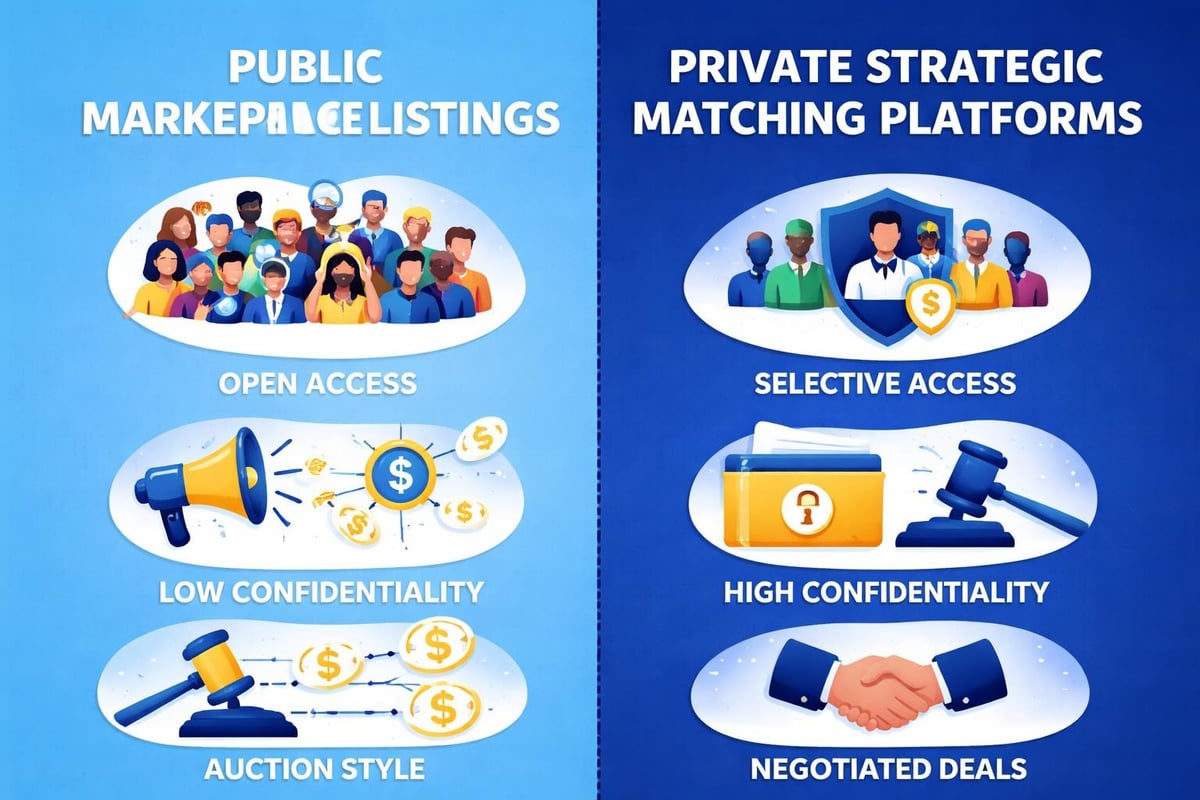
Different platforms serve different needs. Some function as public marketplaces where anyone can browse listings, similar to classified ads for businesses. Others operate as semi-proprietary networks where access is controlled and matching is curated based on specific criteria. The preparation required to sell your business varies depending on which type of platform you choose.
Public Marketplaces vs. Private Matching Platforms
Public marketplaces typically offer:
- Broad exposure to numerous potential buyers
- Lower upfront costs or commission-based pricing
- Self-service listing creation
- Limited buyer vetting
- Minimal confidentiality controls
Private matching platforms provide:
- Curated buyer networks with verified credentials
- Enhanced confidentiality and secure information sharing
- Strategic alignment before financial disclosure
- Relationship-focused transaction processes
- Professional support throughout the journey
The best website to sell your business depends on whether you prioritize maximum visibility or strategic fit with the right counterparty.
Key Features to Evaluate in Business Sale Platforms
When comparing platforms, several critical features distinguish exceptional services from basic listing sites. Understanding these elements helps you select the best website to sell your business based on your specific circumstances.
Buyer Qualification and Vetting
Not all interested parties have the financial capacity or strategic rationale to complete a transaction. Platforms that verify buyer credentials, financial capability, and relevant industry experience save sellers considerable time. In a typical scenario, a manufacturing business owner might receive dozens of inquiries on a public marketplace, but only two or three from genuinely qualified buyers who understand the industry's operational complexities.
Strategic Matching Algorithms
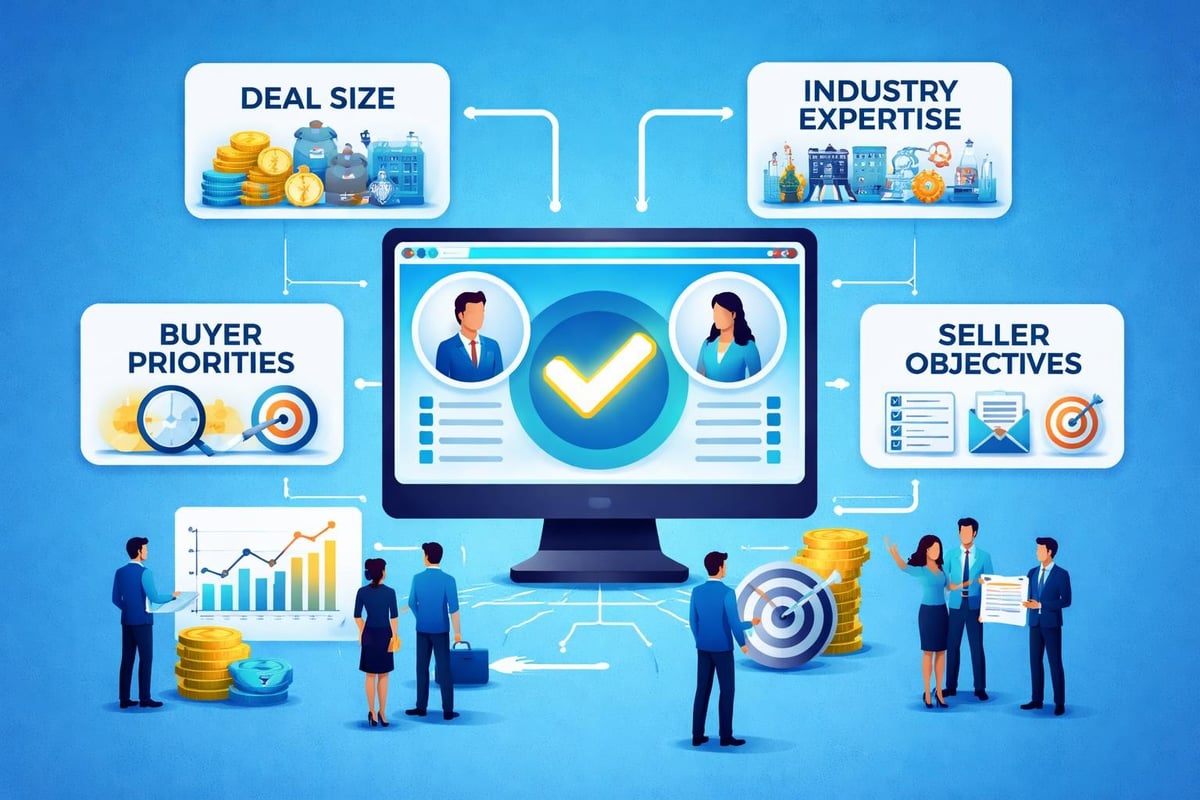
Advanced platforms use proprietary technology to match sellers with buyers based on transaction priorities, deal size parameters, industry expertise, and strategic objectives. This approach differs significantly from traditional processes where financial metrics drive initial conversations. By prioritizing strategic fit first, both parties can assess compatibility before investing substantial time in due diligence.
Confidentiality and Security Measures
Maintaining confidentiality throughout the sale process protects business value, employee morale, and customer relationships. The best platforms offer:
| Security Feature | Benefit | Impact on Transaction |
|---|---|---|
| Anonymous initial profiles | Explore options without disclosure | Preserves competitive position |
| Controlled information release | Share details only with qualified buyers | Reduces risk of data leaks |
| Secure document sharing | Protected financial and operational data | Maintains compliance requirements |
| Non-disclosure agreements | Legal protection before sharing sensitive information | Professional transaction framework |
Business owners concerned about competitors discovering their sale intentions should prioritize platforms with robust confidentiality controls. According to common mistakes sellers make, inadequate confidentiality planning can derail transactions or damage business operations.
Comparing Traditional vs. Modern M&A Approaches
The traditional M&A process typically begins with hiring an intermediary who creates a comprehensive information memorandum, identifies potential buyers, and manages the transaction. This approach works well for larger transactions but can be cost-prohibitive and time-consuming for lower middle-market businesses.
Modern digital platforms offer an alternative that transforms M&A into a more collaborative, efficient process. Rather than treating the transaction as purely financial, these platforms recognize that successful acquisitions require alignment on vision, culture, operational philosophy, and growth strategy.
The Aligned IQ M&A Platform Difference
Aligned IQ M&A represents a new category in business sale platforms. As a B2B web platform, it creates a private environment where potential business buyers and sellers meet to explore deals before committing to the full traditional process. The proprietary matching process considers factors beyond simple financial metrics.
How the Matching Process Works
Users create profiles outlining their transaction priorities, preferred deal sizes, industry experience, and strategic objectives. The platform's algorithm identifies potential matches based on these criteria, allowing both parties to evaluate fit before extensive financial disclosure. This approach particularly benefits owners who want to ensure their business continues under leadership that shares their values and vision.
In a typical scenario, a business owner seeking succession might prioritize finding a buyer with specific industry expertise who plans to retain key employees and maintain company culture. Traditional processes often discover these misalignments only after substantial time investment in due diligence. Aligned IQ M&A brings these conversations forward, saving both parties time and resources.
Benefits for Business Sellers
- Controlled exposure: Maintain confidentiality while exploring exit options
- Strategic alignment first: Assess compatibility before detailed financial discussions
- Buyer showcase profiles: Review buyer backgrounds, acquisition history, and operating philosophy
- Reduced risk: Evaluate multiple potential counterparties without public disclosure
- Complementary tools: Access to virtual data room after match completion
The platform transforms what has traditionally been an adversarial negotiation into a collaborative exploration of mutual benefit. For business owners planning their eventual exit, this represents the best website to sell your business when strategic fit matters as much as valuation.
Virtual Data Rooms and Transaction Support
Once a potential match is identified and both parties decide to proceed with detailed due diligence, secure document sharing becomes essential. Virtual data rooms (VDRs) have become standard tools in M&A transactions, but costs can vary dramatically across providers.
Aligned IQ VDR Solution
Aligned IQ VDR provides a secure virtual data room specifically designed for lower middle-market transactions. The platform serves buyers, sellers, M&A advisors, investment bankers, and other transaction professionals with enterprise-grade security at accessible price points.
Key features include:
- Military-grade encryption for document security
- Granular permission controls for different user types
- Activity tracking and audit trails
- Q&A management tools
- Mobile access for on-the-go reviews
- Unlimited users and storage on most plans
What distinguishes Aligned IQ VDR is the pricing structure designed for smaller transactions. While enterprise VDR solutions often cost thousands of dollars monthly, Aligned IQ VDR offers competitive pricing that makes professional-grade tools accessible to lower middle-market deals. Sellers who match through the Aligned IQ M&A platform receive complimentary VDR access, further reducing transaction costs.
For comparison shopping, the competitive pricing structure at Aligned IQ VDR demonstrates the value proposition compared to traditional providers. Additional context on data room costs helps transaction participants budget appropriately.
Specialized Platforms for Different Business Types
The best website to sell your business varies based on your industry, business model, and transaction size. Different platforms specialize in particular segments.
E-commerce and Online Businesses
Digital businesses often sell through specialized marketplaces that understand website metrics, traffic analytics, and online revenue models. These platforms typically focus on:
- SaaS companies
- Content websites and blogs
- E-commerce stores
- Mobile applications
- Amazon FBA businesses
Resources like Business News Daily’s review of platforms can help online business owners identify suitable marketplaces. However, even digital businesses benefit from strategic matching when the buyer's operational expertise and growth plans align with the seller's vision.
Traditional Brick-and-Mortar Businesses
Physical businesses require different evaluation criteria. Location, lease terms, equipment condition, and local market dynamics all factor into valuations. Platforms serving these businesses need buyer networks with geographic relevance and industry-specific knowledge.
In a typical scenario, a regional manufacturing company might need a buyer who understands supply chain logistics, equipment maintenance cycles, and local labor market conditions. Generic business-for-sale websites may generate inquiries, but finding qualified buyers requires more targeted approaches.
Industry-Specific Considerations
| Industry | Key Buyer Qualifications | Platform Requirements |
|---|---|---|
| Manufacturing | Equipment expertise, supply chain knowledge | Industry-specific buyer network |
| Healthcare | Regulatory compliance understanding, licensing | Privacy-focused platforms |
| Technology | Product roadmap vision, technical capabilities | Innovation-oriented buyers |
| Professional Services | Client relationship management skills | Cultural fit emphasis |
| Retail | Location strategy, inventory management | Local market knowledge |
For specialized industries like automotive M&A, finding buyers with relevant experience becomes paramount. The best website to sell your business in these cases is one with a qualified, industry-specific buyer network.
Maximizing Value Through Platform Selection
Choosing where to list your business impacts not just whether you find a buyer, but the ultimate transaction value. Platform selection influences negotiation dynamics, buyer competition levels, and perceived business quality.
Platform Reputation Effects
Listing on a premium, curated platform signals to buyers that your business meets certain quality thresholds. In a typical scenario, a buyer viewing businesses on a platform known for rigorous seller vetting might offer stronger initial terms than the same buyer finding the same business on a general classified site.
The strategies for finding buyers vary in effectiveness, and platform choice directly impacts the quality of buyer conversations. Professional presentation, supported by the platform's credibility, enhances perceived value.
Service Provider Networks
Some platforms extend beyond simple buyer-seller matching to include M&A service providers. Aligned IQ M&A enables service providers to showcase professional capabilities, receive referral compensation for sell-side introductions, and participate in the transaction ecosystem. This creates a comprehensive environment where sellers access not just buyers but the full range of transaction support services.
For sellers unfamiliar with the M&A process, having vetted attorneys, accountants, and advisors accessible through the same platform streamlines the journey. The best website to sell your business provides not just buyer access but comprehensive transaction support.
Pricing Models and Cost Considerations
Platform costs vary widely, from free listings with success fees to subscription models and upfront charges. Understanding the total cost structure helps sellers budget appropriately and avoid surprises.
Common Pricing Structures
- Success fees: Percentage of sale price (typically 5-15%)
- Listing fees: Flat upfront charge to post business
- Subscription models: Monthly or annual platform access
- Hybrid approaches: Combination of upfront and success fees
- Complimentary access: No direct charges, revenue from other services
Aligned IQ M&A operates on a model that aligns platform success with user success. Rather than charging upfront listing fees that create barriers for quality sellers, the focus remains on facilitating successful matches. The complimentary VDR access for matched sellers further demonstrates this alignment.
When evaluating the best website to sell your business from a cost perspective, consider total transaction expenses including platform fees, legal costs, accounting services, and any intermediary compensation. Sometimes paying slightly more for a platform that attracts higher-quality buyers yields better net proceeds than choosing the cheapest option.
Privacy Considerations for Current Business Owners
One of the most challenging aspects of selling a business is maintaining confidentiality while seeking buyers. Employees, customers, suppliers, and competitors can all react negatively to sale news, potentially damaging business value before a transaction closes.
Anonymous Exploration Options
The best platforms for current owners still operating their businesses offer anonymous initial profiles. Sellers can describe their business, industry, financial performance, and strategic value without identifying the specific company. Only after mutual interest is established and NDAs are executed do parties exchange identifying information.
This approach differs dramatically from public marketplace listings where business names, locations, and specific details appear openly. For owners concerned about how to sell a company while protecting ongoing operations, privacy-focused platforms prove essential.
Confidentiality Best Practices
- Use generic industry descriptions initially
- Avoid sharing customer lists until late due diligence
- Require NDAs before detailed financial disclosure
- Limit facility tours to serious, qualified buyers
- Time announcements carefully around transaction closing
Aligned IQ M&A's private, semi-proprietary nature serves owners prioritizing discretion. The platform's controlled access prevents casual browsing by competitors or others without legitimate acquisition interest.
The Role of Strategic Buyers vs. Financial Buyers
Understanding buyer motivations helps sellers choose platforms that attract their preferred counterparty type. Strategic buyers and financial buyers approach acquisitions differently, and the best website to sell your business depends partly on which type you prefer.
Strategic Buyers
Strategic buyers operate in your industry or adjacent markets. They acquire businesses to:
- Expand geographic reach
- Add complementary products or services
- Acquire customer relationships
- Gain proprietary technology or processes
- Eliminate competition
These buyers often pay premiums for strategic value beyond pure financial returns. They understand industry-specific nuances and can move quickly through due diligence. However, they may have strong opinions about post-acquisition changes.
Financial Buyers
Financial buyers, including private equity firms and search funds, focus primarily on financial returns. They seek businesses with:
- Strong, predictable cash flows
- Growth potential through operational improvements
- Scalability opportunities
- Professional management teams
Understanding whether you prefer a strategic or financial buyer helps identify the best website to sell your business. Platforms like Aligned IQ M&A that allow buyers to showcase their acquisition philosophy and operational approach help sellers make informed decisions about counterparty fit. Resources about private equity platforms can further clarify the landscape.
Due Diligence Support and Transaction Tools
Beyond initial matching, comprehensive platforms support the entire transaction lifecycle. Due diligence represents the most intensive phase, where buyers verify representations and sellers demonstrate business quality.
Essential Transaction Tools
| Tool Type | Purpose | Impact on Deal Success |
|---|---|---|
| Virtual Data Room | Secure document sharing | Protects confidentiality, enables efficient review |
| Financial Templates | Standardized presentation | Improves buyer comprehension, reduces questions |
| Q&A Management | Organize buyer inquiries | Streamlines communication, tracks responses |
| Collaboration Features | Multi-party coordination | Facilitates advisor involvement, reduces delays |
| Progress Tracking | Monitor diligence completion | Maintains momentum, identifies bottlenecks |
The integration of these tools within a single platform ecosystem accelerates transactions and reduces coordination friction. Sellers juggling multiple point solutions across email, file-sharing services, and project management tools face higher risks of communication breakdowns or document version confusion.
Aligned IQ VDR's design specifically addresses lower middle-market needs where transaction parties may lack dedicated M&A staff. Intuitive interfaces and straightforward organization help users without extensive VDR experience manage professional-grade due diligence processes. Comparing options through resources on best data room providers reveals significant capability and pricing variations.
Timeline Considerations and Platform Efficiency
The time required to sell a business varies based on multiple factors, but platform selection directly impacts transaction velocity. Efficient platforms with qualified buyer networks and comprehensive tools typically facilitate faster transactions than fragmented approaches.
Typical Transaction Timeline Phases
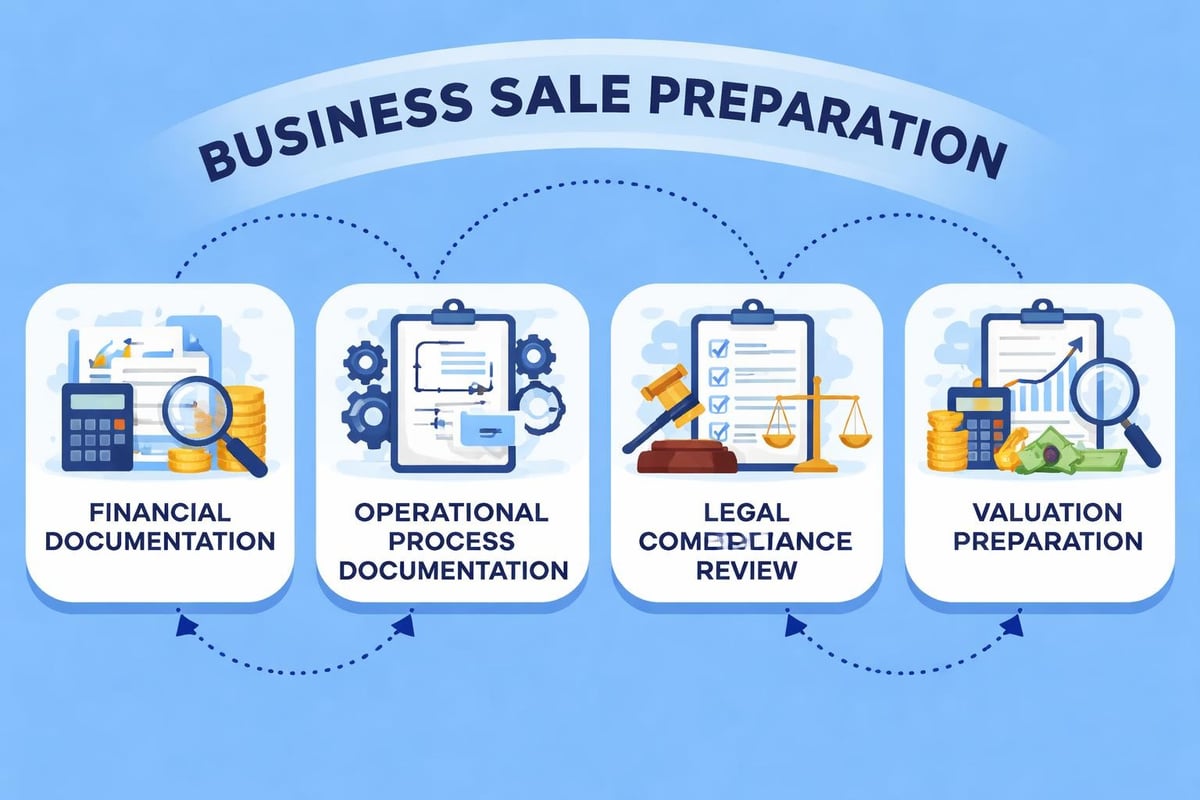
- Preparation (1-3 months): Financial organization, documentation compilation, valuation analysis
- Marketing (1-6 months): Buyer identification, initial conversations, match evaluation
- Due Diligence (2-4 months): Detailed information review, verification, negotiation
- Closing (1-2 months): Legal documentation, final approvals, transaction completion
The best website to sell your business compresses the marketing phase through intelligent matching while providing tools that accelerate due diligence. In a typical scenario, a seller might spend six months on a public marketplace fielding unqualified inquiries, whereas a strategic matching platform might identify serious buyers within weeks.
However, speed should not compromise quality. Rushing transactions with mismatched buyers often leads to failed deals or post-closing regret. Platforms that balance efficiency with thoroughness deliver superior outcomes.
Evaluating Platform Credibility and Track Record
Not all business sale platforms deliver on their promises. Evaluating credibility helps avoid wasting time on ineffective services or, worse, platforms that compromise confidentiality or misrepresent capabilities.
Credibility Indicators
- Transaction history: Documented completed deals, not just listings
- User testimonials: Verified reviews from actual buyers and sellers
- Industry recognition: Coverage in reputable business publications
- Professional affiliations: Memberships in M&A or industry organizations
- Transparent processes: Clear explanations of how matching and fees work
- Security certifications: Documented data protection and privacy compliance
Newer platforms may lack extensive track records but can demonstrate credibility through team expertise, technology capabilities, and transparent operations. The best website to sell your business combines proven results with innovative approaches that address traditional process limitations.
Aligned IQ M&A's foundation in addressing strategic fit challenges demonstrates thought leadership in reimagining M&A processes. Rather than simply digitizing traditional approaches, the platform fundamentally restructures how buyers and sellers discover alignment, representing genuine innovation in the space.
Platform Selection Strategy
Choosing the best website to sell your business requires matching your specific needs with platform capabilities. A systematic evaluation process helps identify the optimal fit.
Selection Framework
Begin by defining your priorities:
- Confidentiality requirements: How important is privacy during the process?
- Transaction timeline: What is your ideal closing timeframe?
- Buyer type preference: Strategic, financial, or either?
- Deal size: What is your expected valuation range?
- Industry specialization: Do you need industry-specific buyer networks?
- Support level needed: How much guidance do you require?
- Cost sensitivity: What fee structures work within your budget?
Next, research platforms serving your business category and transaction size. Request demonstrations, review fee structures, and understand matching or listing processes. For guidance on the overall process, resources about buying businesses for sale provide buyer perspectives that help sellers understand the other side of transactions.
Finally, consider hybrid approaches. You might use a strategic matching platform like Aligned IQ M&A for qualified buyer access while maintaining a presence on a broader marketplace for additional visibility. However, be cautious about overexposure that signals desperation or raises confidentiality concerns.
Selecting the right platform to sell your business fundamentally shapes your transaction experience and ultimate success. The shift from traditional processes to strategic matching platforms represents a meaningful evolution in how M&A transactions unfold, particularly for lower middle-market businesses seeking qualified buyers who align with their vision and values. Aligned IQ M&A offers business owners a confidential, strategic approach to exploring exit options through proprietary matching technology that prioritizes fit before financial details, while Aligned IQ VDR provides the secure infrastructure needed to complete transactions efficiently once the right counterparty is identified. Take a tour of the platform to discover how strategic matching can transform your exit journey into a collaborative process focused on finding your ideal counterparty.
No responses yet