

The decision to buy and sell business assets represents one of the most significant transactions in any entrepreneur's journey. Whether you're a business owner planning an exit strategy or an acquirer seeking growth opportunities, understanding the modern landscape of mergers and acquisitions has become increasingly critical. Traditional approaches to business transactions often emphasized financials first, but today's market demands a more strategic, collaborative approach that prioritizes compatibility and confidentiality. The emergence of specialized platforms has transformed how parties connect, evaluate opportunities, and execute deals while maintaining discretion throughout the process.
The Modern Buy and Sell Business Landscape
The traditional M&A process has evolved significantly over the past decade. Business owners and buyers now have access to sophisticated tools that streamline what was once an exclusively relationship-driven, intermediary-dependent process. Buying or selling a business requires careful consideration of legal, financial, and strategic factors that extend far beyond simple valuation metrics.
Today's buy and sell business environment emphasizes several key priorities:
- Strategic alignment between buyer capabilities and seller objectives
- Confidentiality protection throughout early-stage discussions
- Transparent communication about deal expectations and timelines
- Efficient matching based on industry expertise and transaction size
- Collaborative due diligence that respects both parties' interests
The lower middle market, in particular, has seen remarkable innovation in how transactions occur. Private equity firms, strategic buyers, and individual entrepreneurs now leverage technology to identify opportunities that align with their specific acquisition criteria without broadcasting their intentions publicly.
Understanding Transaction Priorities
A successful buy and sell business transaction begins with clarity around priorities. Buyers must articulate their growth objectives, integration capabilities, and value creation strategies. Sellers need to identify what matters most beyond purchase price, including cultural fit, employee retention, legacy preservation, and timing flexibility.
In a typical scenario, a manufacturing business owner planning retirement might prioritize finding a buyer who will maintain the workforce and brand reputation rather than simply accepting the highest bid. Conversely, a strategic buyer might value operational synergies and market expansion opportunities more than immediate profitability metrics.

Strategic Fit Over Financial Metrics Alone
The shift toward prioritizing strategic compatibility represents a fundamental change in how professionals approach the buy and sell business process. While financial performance remains essential, understanding whether two organizations can successfully merge operations, cultures, and visions has become equally important.
| Traditional Approach | Modern Strategic Approach |
|---|---|
| Price-focused negotiations | Value alignment discussions |
| Intermediary-dependent introductions | Direct, confidential connections |
| Sequential due diligence | Parallel strategic assessment |
| Transaction-oriented timeline | Relationship-building process |
| Public listings and broad marketing | Proprietary matchmaking |
This evolution recognizes that failed integrations often stem from incompatible strategic visions rather than financial miscalculations. When parties assess compatibility early, they avoid investing time and resources in transactions unlikely to succeed.
The Role of Proprietary Matching Platforms
Proprietary and semi-proprietary platforms have emerged as powerful alternatives to traditional business brokers and public listings. These specialized environments allow serious buyers and sellers to connect based on substantive criteria while maintaining confidentiality. Unlike public marketplaces where business listings can compromise competitive positions, deal sourcing platforms offer discrete environments for initial exploration.
The matching process typically considers:
- Transaction size parameters that align with buyer capacity and seller expectations
- Industry experience and expertise demonstrating relevant operational knowledge
- Geographic preferences affecting management transition and integration logistics
- Growth strategies indicating how the acquirer plans to develop the business
- Timeline flexibility accommodating both parties' planning horizons
For business owners who haven't yet committed to selling, these platforms provide low-risk environments to explore options confidentially. They can assess market interest and potential strategic partners without triggering employee concerns, customer anxiety, or competitor speculation.
Preparing to Buy and Sell Business Assets
Preparation separates successful transactions from disappointing outcomes. Planning for a business sale should ideally begin two to five years before the anticipated transaction date. This timeline allows owners to optimize operations, resolve outstanding issues, and position the business attractively.
For Sellers: Building Transaction Readiness
Business owners considering eventual exits should focus on several key preparation areas. Financial documentation must be comprehensive, accurate, and professionally presented. Operational systems should demonstrate sustainability without the current owner's daily involvement. Customer concentration risks need mitigation through diversification efforts.
Critical preparation steps include:
- Organizing financial records with consistent accounting practices
- Documenting standard operating procedures and institutional knowledge
- Addressing legal compliance issues and resolving pending litigation
- Strengthening management teams to demonstrate continuity capability
- Improving profitability metrics through operational efficiency gains
- Establishing recurring revenue streams that enhance predictability
In a typical scenario, a software services company might spend three years transitioning client relationships from the founder to account managers, implementing project management systems, and creating service delivery playbooks. These efforts significantly enhance the business's attractiveness to potential acquirers while reducing perceived transition risks.
For Buyers: Developing Acquisition Capabilities
Successful acquirers approach the buy and sell business market with clear investment theses and operational capabilities. Lower middle-market PE firms exemplify this disciplined approach by defining specific industry verticals, transaction sizes, and value creation strategies before actively sourcing deals.
Buyer preparation requires:
- Capital readiness with financing sources secured or identified
- Integration planning capabilities for post-acquisition execution
- Industry knowledge demonstrating operational value-add potential
- Professional advisors including legal counsel, accountants, and consultants
- Clear investment criteria guiding opportunity evaluation and decision-making

The Confidential Matchmaking Advantage
Traditional business sale processes often involve broad marketing campaigns that can undermine business value. When employees learn about potential sales through rumors or public listings, productivity suffers. Customers may seek alternative suppliers fearing service disruptions. Competitors gain intelligence about vulnerabilities and strategic intentions.
Confidential, proprietary matchmaking addresses these risks by connecting pre-qualified parties privately. This approach benefits both sides of buy and sell business transactions through several mechanisms.
Privacy Protection for Sellers
Business owners exploring exit options need environments where they can investigate possibilities without committing to public sales processes. Confidential platforms allow them to:
- Gauge market interest without broadcasting availability
- Evaluate potential buyers based on strategic compatibility criteria
- Maintain operational focus without distraction from speculation
- Control information flow protecting competitive intelligence
- Preserve optionality by avoiding public "shopworn" perceptions
The proprietary nature of these connections means that only serious, qualified buyers gain access to opportunity information. This selectivity protects seller interests while ensuring that connections represent genuine strategic possibilities rather than casual inquiries.
Enhanced Positioning for Buyers
Serious acquirers also benefit from confidential, curated matching processes. Rather than competing in crowded auctions where price becomes the primary differentiator, they can demonstrate their strategic value proposition directly to business owners. This positioning is particularly valuable for private equity platforms seeking to build relationships with potential portfolio companies.
Buyer advantages include:
- Direct communication with decision-makers without intermediary filters
- Opportunities to showcase operational expertise and value creation strategies
- Reduced competition from casual tire-kickers and unqualified prospects
- Earlier access to opportunities before broad market awareness
- Relationship development timelines that build trust and understanding
Navigating Due Diligence Efficiently
Once strategic fit is established, the buy and sell business process enters the due diligence phase. This critical period involves comprehensive investigation of financial performance, operational systems, legal compliance, and market positioning. Accurate financial reporting proves essential, as incomplete or misleading information can derail transactions or trigger post-closing disputes.
Modern due diligence requires secure environments for document exchange and review. Virtual data rooms have become standard infrastructure for this phase, replacing physical document repositories and unsecured file-sharing systems.
The Virtual Data Room Evolution
Secure virtual data rooms provide controlled access to sensitive business information during due diligence. These specialized platforms offer several advantages over general file-sharing services:
| Feature | Business Value |
|---|---|
| Granular access controls | Restrict specific documents to authorized parties |
| Activity tracking | Monitor who views which documents and when |
| Q&A management | Organize buyer questions and seller responses systematically |
| Audit trails | Document compliance with confidentiality obligations |
| Secure communication | Enable discussions without email exposure risks |
The Aligned IQ VDR represents a cost-effective solution specifically designed for lower middle-market transactions. Unlike enterprise-focused solutions with prohibitive pricing structures, it offers competitive rates accessible to businesses and advisors across various transaction sizes. Buyers, sellers, M&A advisors, investment bankers, and other professionals can access secure collaboration environments without budget constraints that sometimes force parties toward less secure alternatives.
Importantly, Aligned IQ M&A sellers receive complimentary VDR access after completing a match through the platform, streamlining the transition from strategic discussions to detailed due diligence. For others seeking standalone VDR services, competitive pricing ensures that security and professionalism remain accessible regardless of transaction size.
Structuring Due Diligence Effectively
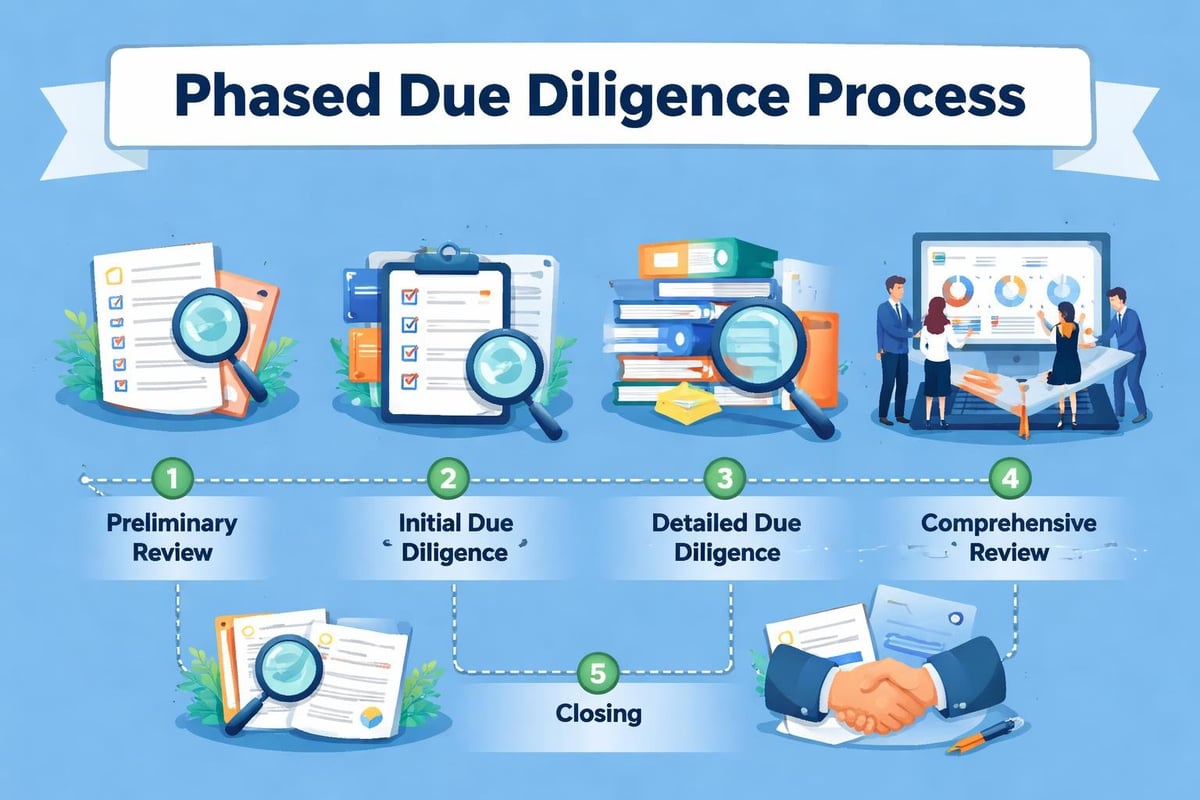
The step-by-step M&A process typically follows a logical progression from preliminary information exchange through comprehensive investigation. Efficient due diligence balances thoroughness with momentum, recognizing that extended timelines increase risk of deal fatigue and changed circumstances.
Recommended due diligence organization:
- Preliminary information including executive summaries and high-level financials
- Financial documentation with tax returns, audited statements, and projections
- Operational materials covering processes, systems, and key relationships
- Legal documents including contracts, compliance records, and intellectual property
- Human resources information detailing organizational structure and compensation
- Market analysis demonstrating competitive positioning and growth opportunities
In a typical scenario, a buyer might access preliminary information during initial strategic fit discussions, then receive expanded financial data upon signing a letter of intent, followed by comprehensive access to all materials during the formal due diligence period.
Valuation and Deal Structure Considerations
Understanding business valuation methodologies helps both parties approach the buy and sell business negotiation with realistic expectations. While sellers often anchor to market multiples or comparable transactions, buyers focus on cash flow sustainability and return on investment calculations.
Common valuation approaches include:
- Earnings multiples based on EBITDA or seller's discretionary earnings
- Asset-based valuation emphasizing tangible and intangible asset values
- Discounted cash flow projecting future performance and calculating present value
- Comparable transaction analysis using recent deals in similar industries
- Market approach considering public company multiples with appropriate adjustments
Deal structure significantly impacts economics for both parties. Asset purchases offer buyers tax advantages and limited liability exposure, while stock purchases may provide sellers with preferential capital gains treatment. Earnouts, seller financing, and employment agreements introduce additional complexity requiring careful negotiation.
Creative Structuring for Win-Win Outcomes
The most successful buy and sell business transactions recognize that price represents only one element of overall value. Thoughtful structuring addresses both parties' priorities while managing risk appropriately.
Structural considerations include:
- Transition support periods with seller involvement ensuring knowledge transfer
- Earnout provisions tying future payments to performance milestones
- Non-compete agreements protecting buyer investments in goodwill and relationships
- Working capital adjustments reflecting normal operational requirements
- Indemnification provisions allocating risk for pre-closing liabilities
- Escrow arrangements securing seller representations and warranties
The Role of M&A Service Providers
Professional advisors contribute significant value throughout the buy and sell business lifecycle. Investment bankers, M&A advisors, business brokers, attorneys, and accountants each bring specialized expertise that improves outcomes while reducing risks.
For sellers, understanding where to sell a business involves evaluating various channels and advisor relationships. Traditional intermediaries provide valuable services but may not suit every situation, particularly when owners prioritize confidentiality and strategic fit over broad market exposure.
Emerging Service Provider Models
Modern M&A platforms are creating new opportunities for service providers to participate in transactions while adding value for buyers and sellers. Rather than traditional exclusive engagement models, these approaches offer flexibility and aligned incentives.
M&A service providers can now:
- Receive referral compensation for introducing qualified sellers to matching platforms
- Showcase professional capabilities to potential clients considering transactions
- Access deal flow within their areas of expertise and geographic focus
- Provide specialized services during due diligence, structuring, and closing phases
- Build relationships with active buyers seeking advisor partnerships
This ecosystem approach recognizes that not every business owner needs full-service intermediary representation. Some prefer managing their own processes while engaging specialists for specific tasks like developing acquisition strategies or conducting quality of earnings analyses.
Technology's Transformative Impact
The digitization of M&A processes has democratized access to opportunities previously available only through extensive professional networks. Business owners can now explore options confidentially, and buyers can systematically evaluate prospects aligned with their investment criteria.
Technology enables:
- Systematic opportunity screening based on quantitative and qualitative criteria
- Asynchronous communication accommodating busy schedules across time zones
- Document organization with version control and access management
- Process transparency through status tracking and milestone monitoring
- Data security protecting sensitive information throughout discussions
Platforms like Aligned IQ M&A demonstrate how technology can transform the buy and sell business experience by prioritizing strategic fit before detailed financial negotiations. This approach mirrors broader market trends toward relationship-based transactions that consider cultural compatibility, operational synergies, and long-term value creation potential.
The matching process considers transaction priorities, deal size parameters, and industry expertise to connect parties with genuine strategic alignment. This foundation creates more productive discussions and higher success rates compared to price-focused auction processes.
Best Practices for Modern M&A Success
Achieving successful outcomes in today's buy and sell business environment requires combining traditional due diligence rigor with modern collaborative approaches. Parties who embrace transparency, maintain realistic expectations, and prioritize strategic compatibility consistently achieve better results than those focused exclusively on financial engineering.
For Business Owners Considering Exit Options
Owners exploring eventual exits should take proactive steps to understand their options without committing to public sales processes. Early exploration provides valuable market intelligence and relationship-building opportunities that enhance outcomes when formal transactions begin.
Recommended owner actions:
- Investigate confidential platforms offering low-risk exposure to potential buyers
- Assess current business positioning through objective valuation exercises
- Address operational weaknesses that might concern sophisticated acquirers
- Build relationships with potential strategic partners before needing immediate exits
- Consult advisors about tax planning and personal financial preparation
Understanding how to sell a business effectively requires time and thoughtful preparation that shouldn't begin only when owners face urgent exit timelines.
For Acquirers Seeking Quality Opportunities
Serious buyers differentiate themselves through professional presentation, clear communication, and demonstrated industry expertise. Rather than approaching sellers with generic acquisition interest, successful acquirers articulate specific value propositions explaining why their ownership would benefit the business, employees, and customers.
Buyer best practices include:
- Developing detailed investment theses with specific screening criteria
- Creating professional buyer profiles showcasing relevant experience and capabilities
- Responding promptly to opportunities matching acquisition parameters
- Maintaining confidentiality throughout discussions regardless of outcome
- Building advisor teams capable of executing transactions efficiently
The competitive landscape for quality businesses demands that buyers present themselves as attractive partners rather than simply interested purchasers. Platform acquisition strategies exemplify this approach by demonstrating how acquired businesses fit into broader growth plans with operational support and strategic resources.
Successfully navigating the buy and sell business landscape requires understanding modern alternatives to traditional processes that prioritize strategic fit, maintain confidentiality, and leverage technology for efficiency. Whether you're a business owner exploring exit options or an acquirer seeking quality opportunities, Aligned IQ provides the proprietary matching platform and secure collaboration tools needed to find your perfect transaction counterparty. Take a Tour to discover how our approach transforms M&A into a more strategic, confidential, and successful process for all parties involved.
No responses yet