
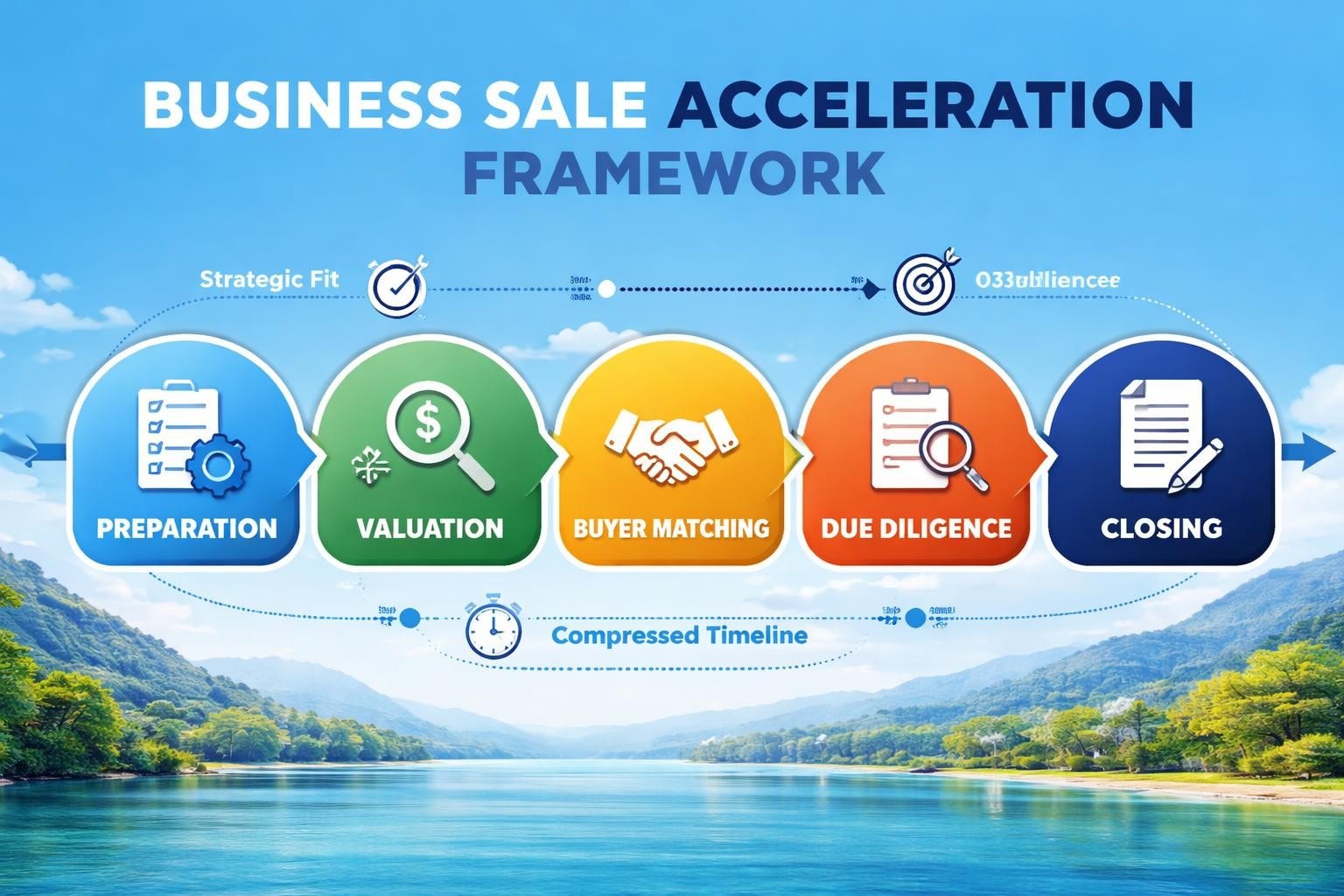
Selling a business presents one of the most significant financial decisions an owner will make. Whether driven by retirement, market conditions, or strategic opportunities, many owners seek to understand how to sell a business quickly without sacrificing value or settling for an unsuitable buyer. The traditional M&A process often stretches across 6-18 months, but with proper preparation, strategic positioning, and the right partner identification approach, business owners can substantially accelerate their timeline while achieving their transaction goals. Modern platforms and methodologies now enable sellers to prioritize strategic fit from the outset, reducing wasted time with incompatible buyers and streamlining the path to closing.
Establish Your Timeline and Transaction Objectives
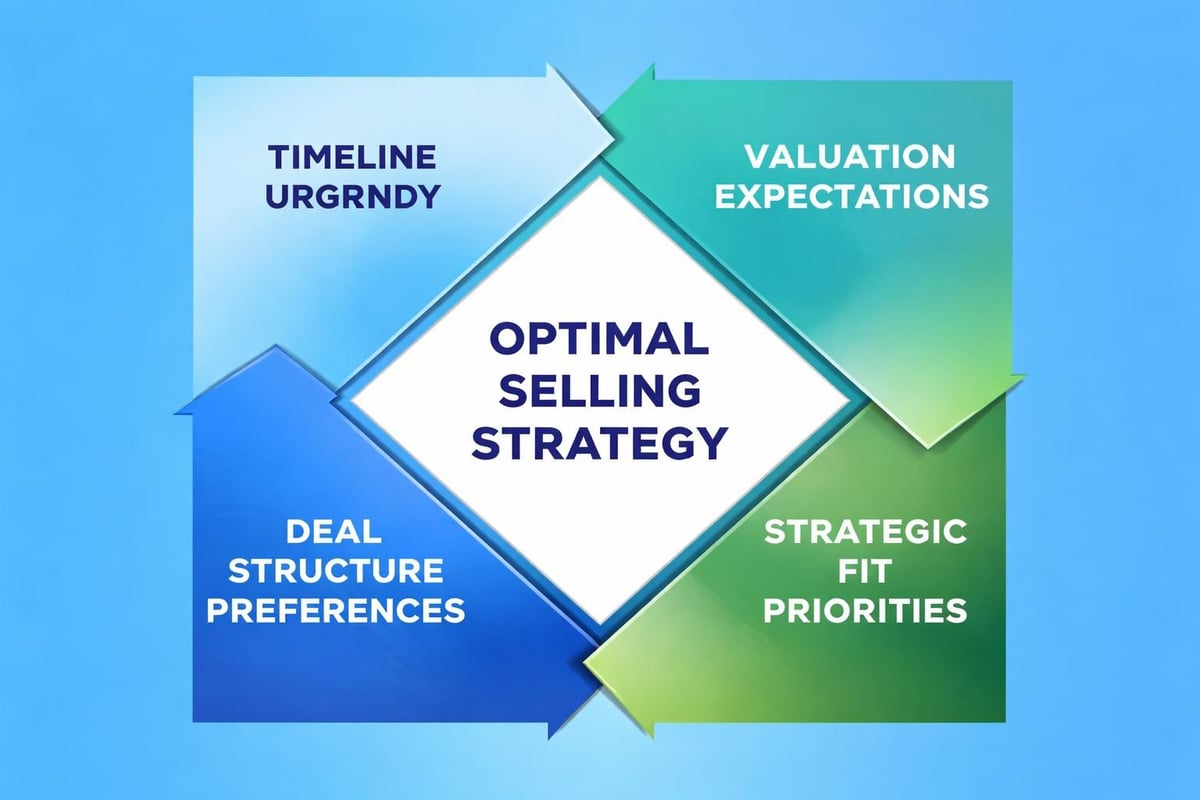
Before diving into the mechanics of how to sell a business quickly, owners must clearly define their timeline expectations and core transaction objectives. A realistic assessment of your constraints directly impacts which acceleration strategies will prove most effective.
Define Your Sale Drivers and Constraints
Identifying why you're selling and your hard deadlines shapes every subsequent decision. Health concerns, partnership dissolution, or competitive market windows create genuine urgency. Conversely, general retirement planning typically allows more flexibility, even when you want to move quickly.
Key considerations include:
- Minimum acceptable valuation and deal structure preferences
- Tax implications based on timing and structure
- Transition involvement you're willing to provide
- Non-negotiable deal terms versus flexible points
- Confidentiality requirements during the process
Business owners who begin planning their exit two to five years in advance gain substantial advantages in optimizing tax strategies and ensuring smooth transitions. However, even owners with compressed timelines can execute successful transactions by focusing on the highest-impact preparation activities.
Align Your Team and Advisors Early
Assembling your advisory team before actively marketing your business prevents delays when offers arrive. Engage an experienced M&A attorney, CPA familiar with transaction structuring, and potentially a quality of earnings specialist.
This groundwork ensures you're positioned to move rapidly once a qualified buyer emerges. Your advisors can simultaneously begin preparing necessary documentation while you focus on operational enhancements and buyer identification.
Obtain a Professional Business Valuation
Understanding your business's realistic market value represents a critical step in how to sell a business quickly. Overpricing creates extended marketing periods and eventual price reductions that signal desperation. Underpricing leaves money on the table and may actually raise buyer concerns about hidden issues.
Obtaining a formal valuation assessment using multiple methodologies provides defensible pricing that accelerates negotiations. Professional valuations typically employ asset-based, income-based (DCF), and market-based (comparable transactions) approaches to triangulate fair market value.
Choose the Appropriate Valuation Approach
Different businesses and industries favor particular valuation methods. Asset-heavy businesses with tangible property may emphasize book value with adjustments. Service businesses and those with strong recurring revenue typically command multiples of EBITDA or seller's discretionary earnings (SDE).
| Valuation Method | Best Suited For | Typical Timeline |
|---|---|---|
| Asset-Based | Manufacturing, real estate-heavy businesses | 2-4 weeks |
| EBITDA Multiple | Established businesses with consistent earnings | 3-6 weeks |
| SDE Multiple | Small businesses, owner-operator models | 2-4 weeks |
| Discounted Cash Flow | High-growth businesses with scalable models | 4-8 weeks |
Understanding different valuation methods enables you to position your asking price competitively while maintaining realistic expectations. Professional valuations also provide credibility with serious buyers, reducing time spent justifying your price.
Address Value Gaps Proactively
Your valuation may reveal gaps between your expectations and market reality. Rather than rejecting these findings, use them to identify enhancement opportunities. Sometimes simple adjustments to financial presentation, customer concentration, or operational documentation substantially improve perceived value.
Prepare Comprehensive Due Diligence Materials
The due diligence phase frequently becomes the longest portion of the M&A process. Sellers who pre-emptively assemble organized, thorough documentation dramatically accelerate this critical period and demonstrate operational sophistication that enhances buyer confidence.
Organize Financial Records and Operational Data
Compile three to five years of complete financial statements, tax returns, and supporting schedules. Include detailed revenue analysis by customer, product line, and geography. Document all key contracts, lease agreements, employment arrangements, and intellectual property registrations.
Essential due diligence materials include:
- Audited or reviewed financial statements (if available)
- Monthly management reports and KPI tracking
- Customer concentration analysis and retention metrics
- Employee roster with roles, compensation, tenure
- Vendor agreements and supply chain documentation
- Marketing assets and customer acquisition cost data
- Technology systems inventory and licenses
- Compliance documentation and permits
Modern virtual data rooms enable secure, organized presentation of these materials while tracking buyer engagement. The Aligned IQ VDR offers competitively-priced secure document sharing that becomes complimentary for sellers after matching through the Aligned IQ M&A platform, with transparent pricing for other participants.
Clean Up Operational and Legal Issues
Address known problems before buyers discover them. Resolve outstanding litigation, cure regulatory violations, formalize verbal agreements, and document informal processes. Each unresolved issue becomes a negotiation point that delays closing or reduces your valuation.

Optimize Operations and Financial Presentation
Buyers acquire future cash flows, not past performance. Demonstrating that your business operates efficiently without requiring your constant involvement significantly enhances attractiveness and expedites how to sell a business quickly by reducing buyer concerns about transition risk.
Strengthen Management Team and Processes
Document standard operating procedures for all critical functions. Cross-train employees to eliminate single points of failure. If you currently perform essential functions, begin delegating them to capable team members well before marketing your business.
A strong management team that can operate independently signals lower transition risk and often commands premium valuations from strategic buyers seeking plug-and-play acquisitions.
Present Normalized and Adjusted Financials
Work with your CPA to prepare normalized EBITDA or SDE calculations that remove one-time expenses, excessive owner compensation, and discretionary spending. Clearly document each adjustment with supporting rationale.
Buyers appreciate transparency in financial presentation. A typical scenario might involve an owner taking $250,000 in compensation when market rate for a hired CEO would be $150,000. This $100,000 difference represents an adjustment that increases business value by the applicable multiple.
Quality of earnings analysis by an independent firm adds credibility to your adjustments and can prevent last-minute valuation disputes that derail transactions.
Identify and Target Strategic Buyers
Traditional business sales often involve broadcasting availability through public listings or business brokers, attracting numerous unqualified inquiries that consume time without advancing toward closing. Strategic buyer identification focuses effort on parties with genuine capacity, interest, and strategic rationale for acquiring your specific business.
Prioritize Strategic Fit Over Broad Marketing
Understanding how to sell a business quickly requires recognizing that the perfect buyer combines financial capacity with strategic alignment. A buyer seeking your customer relationships, geographic footprint, technology, or talent can justify premium valuations and move expeditiously through diligence.
Modern deal sourcing platforms enable targeted matching based on transaction priorities, deal size parameters, and industry expertise rather than mass marketing. This approach preserves confidentiality while connecting with serious buyers who view your business as strategic rather than opportunistic.
Leverage Private, Proprietary Buyer Networks
The Aligned IQ M&A platform operates as a proprietary environment where vetted buyers and sellers engage confidentially before broadly marketing businesses. This match-making methodology prioritizes strategic fit through detailed profiles covering transaction objectives, industry experience, operational expertise, and deal structure preferences.
Unlike traditional processes where sellers field inquiries from marginally qualified buyers, this approach connects owners with counterparties whose acquisition criteria align with what the business offers. Buyers on private equity platforms and similar networks actively seek specific business profiles, enabling more efficient conversations.
Evaluate Buyer Qualification Rigorously
Not all interested parties can actually close transactions. Establish minimum qualification standards including verified capital access, relevant acquisition experience, and decision-making authority.
Request proof of funds or financing commitment letters early. Understand buyer timelines and internal approval processes. Buyers representing larger organizations may require board approval or committee review that extends timelines, while individual buyers or small funds often move more quickly.
Structure the Deal for Efficiency
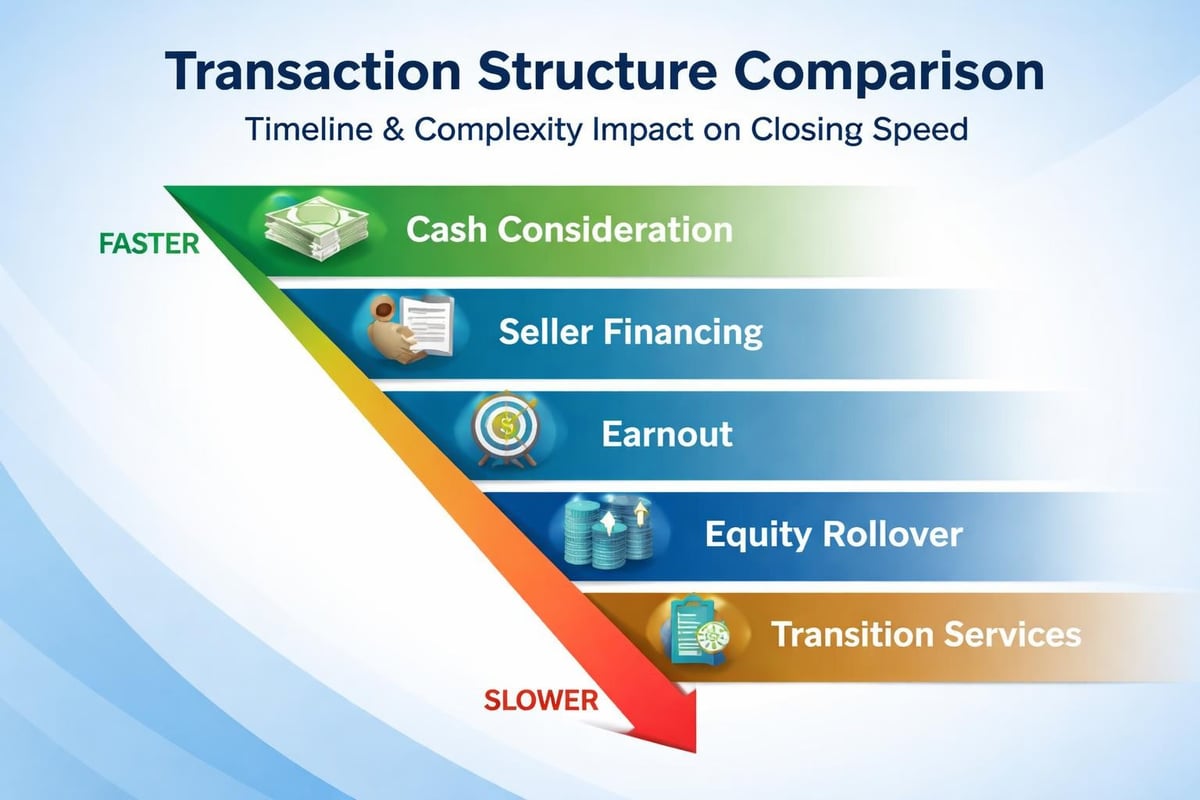
Deal structure significantly impacts how to to sell a business quickly. Complex earnouts, extensive seller financing, or convoluted equity rollovers introduce negotiation complexity and due diligence requirements that extend timelines.
Simplify Transaction Structure When Possible
All-cash deals at closing typically proceed fastest, eliminating ongoing relationship requirements and reducing legal complexity. However, current market conditions and buyer profiles may necessitate creative structures.
When incorporating earnouts or seller notes, establish clear, objective performance metrics tied to factors within buyer control. Ambiguous earnout terms generate disputes that delay closing while parties negotiate protective provisions.
| Structure Element | Fast-Close Approach | Complexity Impact |
|---|---|---|
| Consideration | Primarily cash at closing | Low |
| Seller Financing | Minimal or none | Low-Medium |
| Earnouts | Avoided or simple metrics | Medium-High |
| Equity Rollover | Minority stake only if strategic | Medium |
| Non-Compete | Standard market terms | Low |
| Transition Period | Defined, limited duration | Low-Medium |
Address Tax Implications Early
Engage your tax advisor to model various deal structures and their implications. Asset sales versus stock sales carry different tax consequences for buyers and sellers. Understanding these tradeoffs enables you to negotiate structure efficiently rather than revisiting terms after reaching agreement on price.
Some sellers discover too late that their preferred structure creates unacceptable tax consequences, forcing renegotiation that damages trust and momentum. Common surprises business owners face often include unanticipated tax treatments and the emotional challenge of transferring ownership.
Navigate Due Diligence Efficiently
Once you've identified a qualified buyer and agreed on preliminary terms, efficient due diligence execution becomes paramount to maintaining momentum and understanding how to sell a business quickly without sacrificing thorough evaluation.
Establish Clear Due Diligence Protocols
Define the scope, timeline, and process for due diligence upfront. Create a checklist of required materials and information requests. Establish regular check-in meetings to address questions and maintain momentum.
Designate a point person responsible for coordinating buyer requests and internal responses. This prevents buyers from pulling multiple employees in different directions, disrupting operations while creating inefficient information flow.
Due diligence management best practices:
- Set firm deadlines for information requests and responses
- Use virtual data rooms to centralize document access and tracking
- Prepare FAQ documents addressing common questions
- Schedule focused management presentations rather than ad hoc meetings
- Track open items systematically to ensure nothing falls through gaps
- Maintain operations focus to preserve business performance
Manage Confidentiality Throughout the Process
Premature disclosure of sale intentions creates employee uncertainty, customer concern, and competitor opportunities. Limit information access to essential personnel under confidentiality agreements.
The Aligned IQ M&A platform's private, secure matching environment enables confidential buyer exploration before broadly exposing sale intentions. This controlled approach protects business value while identifying serious buyers worthy of deeper engagement.
Execute Strong Negotiation and Closing
Final negotiation and closing represent where many transactions stall despite substantial progress. Clear communication, reasonable positions, and experienced guidance help parties navigate final hurdles efficiently.
Focus on Material Terms, Not Minor Details
Distinguish between meaningful deal points and minor details that don't warrant extended negotiation. Parties who become entrenched over immaterial issues waste time and damage relationship quality needed for successful transitions.
Understanding what constitutes proven steps to expedite the sale includes recognizing when to concede minor points to maintain momentum on core objectives.
Prepare for Closing Contingencies
Even well-negotiated transactions encounter last-minute issues. Third-party consents, regulatory approvals, or financing conditions may require additional time. Build modest timeline buffers and maintain alternative options until final signatures occur.
Work closely with legal counsel to prepare closing documents early rather than waiting until all business terms are finalized. Parallel processing of documentation while finalizing minor points compresses overall timeline.
Maintain Business Performance Through Closing
Business deterioration during the sale process provides buyers justification to renegotiate or walk away. Maintain operational focus and continue investing in customer relationships, employee development, and business infrastructure.
A typical scenario involves an owner who mentally checks out once a letter of intent is signed, only to watch revenue decline during the three-month diligence period. This performance drop either kills the deal or results in significant price reduction.
Leverage Technology and Modern M&A Approaches
Traditional M&A processes evolved in an era of limited information flow and inefficient matching mechanisms. Modern technology and platforms now enable substantially faster, more targeted transactions that benefit both buyers and sellers.
Utilize Strategic Matching Platforms
Rather than broadcasting availability through public channels or engaging brokers who contact every possible buyer, strategic matching platforms connect sellers with pre-qualified buyers whose acquisition criteria align with what your business offers.
Aligned IQ transforms traditional M&A by prioritizing strategic fit before extensive process engagement. The platform matches users based on transaction priorities, deal size requirements, and industry expertise, ensuring conversations begin with aligned expectations.
This approach differs fundamentally from traditional processes where sellers invest substantial time with buyers who ultimately lack genuine strategic interest or whose criteria mismatch what the business offers.
Implement Secure, Efficient Communication Tools
Modern virtual data rooms, secure messaging, and electronic signature platforms eliminate logistical delays that previously extended transactions. Documents that once required physical delivery and wet signatures now move instantaneously.
The Aligned IQ VDR provides lower middle-market participants with enterprise-grade security and functionality at competitive pricing, becoming complimentary for sellers who match through the platform. This eliminates cost barriers to professional-quality deal execution.
Understand Buyer Perspectives and Motivations
Appreciating what drives buyer decision-making enables sellers to position businesses more effectively and anticipate concerns that might otherwise derail momentum or extend timelines unnecessarily.
Recognize Different Buyer Categories
Strategic corporate buyers, private equity firms, individual entrepreneurs, and family offices each bring distinct priorities, timelines, and evaluation criteria to potential acquisitions.
Strategic buyers often move fastest when they identify strong market fit, as they can integrate acquisitions into existing operations quickly. However, they may face longer internal approval processes through corporate hierarchies.
Financial buyers like private equity funds conduct rigorous diligence but operate within defined investment criteria that enable rapid decisions once key boxes are checked. Individual buyers may lack institutional resources but can make autonomous decisions without committee approval.
Address Buyer Risk Concerns Proactively
Buyers fundamentally purchase future cash flows while assuming various risks. Customer concentration, key person dependency, market disruption threats, and regulatory exposure all factor into their evaluation and valuation.
Demonstrating how you've mitigated these risks through customer diversification efforts, management team development, technology investments, or compliance programs substantially enhances attractiveness and justifies premium valuations.
Understanding how to sell a business quickly requires combining thorough preparation, realistic pricing, strategic buyer identification, and efficient process execution. The most successful sellers recognize that speed without sacrificing value comes from prioritizing strategic fit and engaging qualified buyers through targeted, confidential channels rather than broad marketing to marginally interested parties. Aligned IQ's unique match-making platform connects business sellers with buyers whose acquisition criteria, industry expertise, and transaction priorities align with what your business offers, creating more efficient paths to successful deals. Take a tour to discover how prioritizing strategic fit from the outset can transform your M&A experience and help you achieve your transaction goals with the right partner.
No responses yet