

Deciding to sell your business represents one of the most significant financial decisions you'll make as an owner. The question "where to sell my company" has evolved considerably beyond traditional brokers and word-of-mouth referrals. Today's business owners have access to specialized platforms, digital marketplaces, and innovative match-making services that streamline the entire process. Understanding your options and selecting the right channel impacts not only your sale price but also the quality of potential buyers, transaction timeline, and overall success of your exit strategy.
Traditional Channels for Selling Your Business
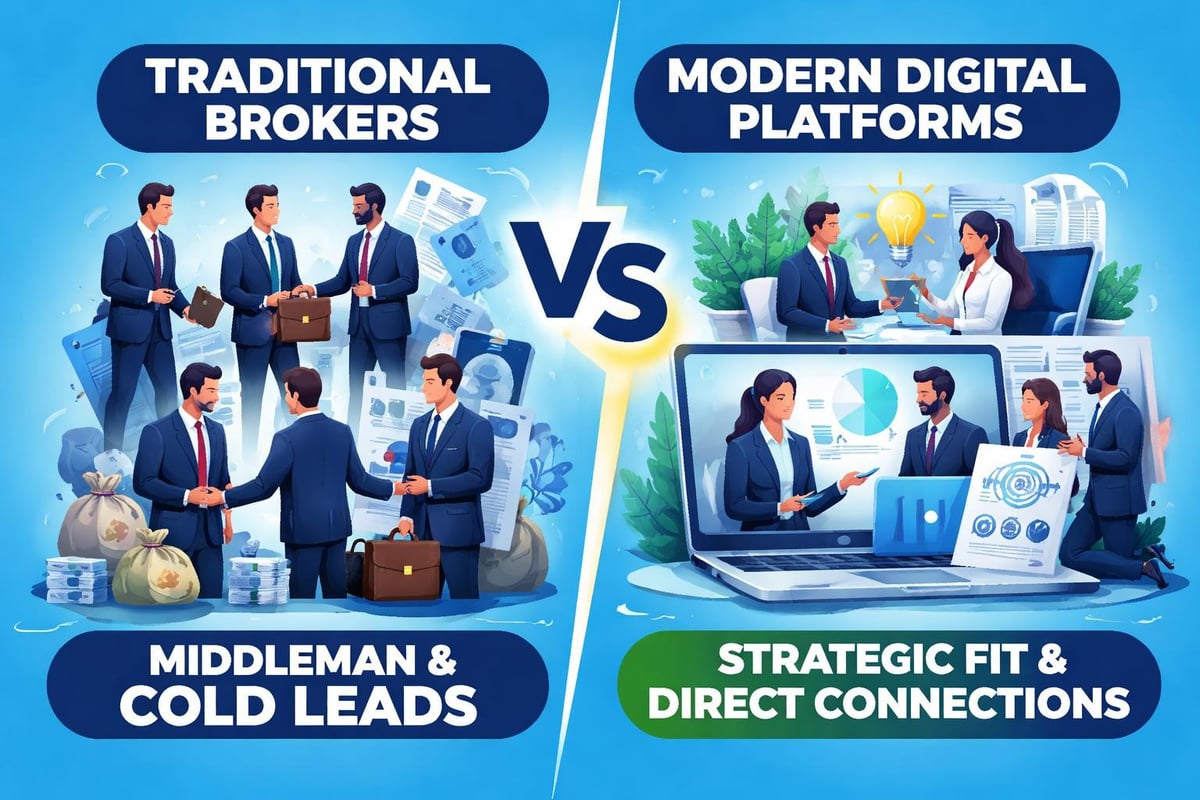
When business owners first consider where to sell their company, many default to familiar, established channels. Business brokers have long served as intermediaries, maintaining networks of potential buyers and handling much of the transaction workflow. These professionals typically charge commissions ranging from 8% to 12% of the sale price, with minimum fees that can make smaller transactions less economically viable.
Investment bankers represent another traditional option, particularly suited for larger middle-market transactions. They bring sophisticated financial modeling, valuation expertise, and access to institutional buyers. However, their services come with substantial fees and often require businesses with revenues exceeding $10 million to justify the engagement.
Direct Outreach to Competitors
Some owners explore direct conversations with competitors or strategic acquirers in their industry. This approach offers maximum confidentiality initially but carries significant risks. Sharing sensitive information with competitors can backfire if negotiations fail, and identifying genuinely interested parties without broad market exposure proves challenging.
Key advantages of traditional channels:
- Established reputation and track record
- Professional guidance throughout the process
- Access to vetted buyer networks
- Negotiation expertise
Notable limitations:
- High transaction costs
- Lengthy engagement timelines
- Limited control over buyer selection
- Potential conflicts of interest
Online Marketplaces and Listing Platforms
The digital transformation has introduced numerous online platforms where business owners can list their companies for sale. According to research on various online platforms for buying and selling businesses, these marketplaces range from general-purpose sites to industry-specific exchanges.
Public listing platforms allow sellers to create detailed profiles showcasing their business metrics, growth trajectory, and asking price. While these sites increase visibility to a broad audience of potential buyers, they present challenges regarding confidentiality and buyer qualification. Every visitor can browse listings, making it difficult to maintain discretion during the sale process.
Understanding Marketplace Limitations
Traditional online marketplaces operate on a broadcast model where sellers expose their businesses to thousands of visitors. This approach may generate inquiries, but it creates substantial work filtering serious buyers from casual browsers. Many platforms charge listing fees, success fees, or both, adding to transaction costs without guaranteeing buyer quality.
The question of where to sell my company becomes more nuanced when considering these trade-offs between exposure and confidentiality. Business owners must balance the desire for broad market reach against the risks of publicly announcing their intent to sell.
The Match-Making Approach to Business Sales
Innovative platforms have introduced a fundamentally different model for connecting buyers and sellers. Rather than public listings and broad exposure, match-making platforms prioritize strategic alignment before revealing identities or sensitive information. This approach transforms the traditional M&A process by emphasizing fit over volume.
Aligned IQ M&A operates on this principle, creating a semi-proprietary environment where potential buyers and sellers can explore opportunities privately. The platform matches participants based on transaction priorities, deal size preferences, and industry expertise rather than simply broadcasting availability. This methodology addresses a critical gap in the traditional question of where to sell my company by focusing on quality connections rather than maximum exposure.
How Strategic Matching Works
The match-making process begins with both buyers and sellers creating detailed profiles that outline their objectives, experience, and transaction parameters. Advanced algorithms analyze these inputs to identify potential matches that align on key criteria. Only when mutual interest exists do parties exchange information and begin substantive conversations.
In a typical scenario, a manufacturing business owner seeking retirement might specify preferences for a buyer who will retain key employees and maintain the company culture. The platform would match this seller with buyers who have explicitly stated such intentions, filtering out pure financial buyers seeking immediate restructuring.
| Traditional Listings | Match-Making Platforms |
|---|---|
| Public exposure | Private, confidential matching |
| Broadcast to all | Selective introductions |
| Seller qualifies buyers | Platform pre-qualifies matches |
| High inquiry volume | Focused, relevant connections |
| Limited strategic screening | Prioritizes strategic fit |
This approach fundamentally changes where to sell my company from a marketing challenge to a strategic partner search.
Evaluating Platform Features and Services
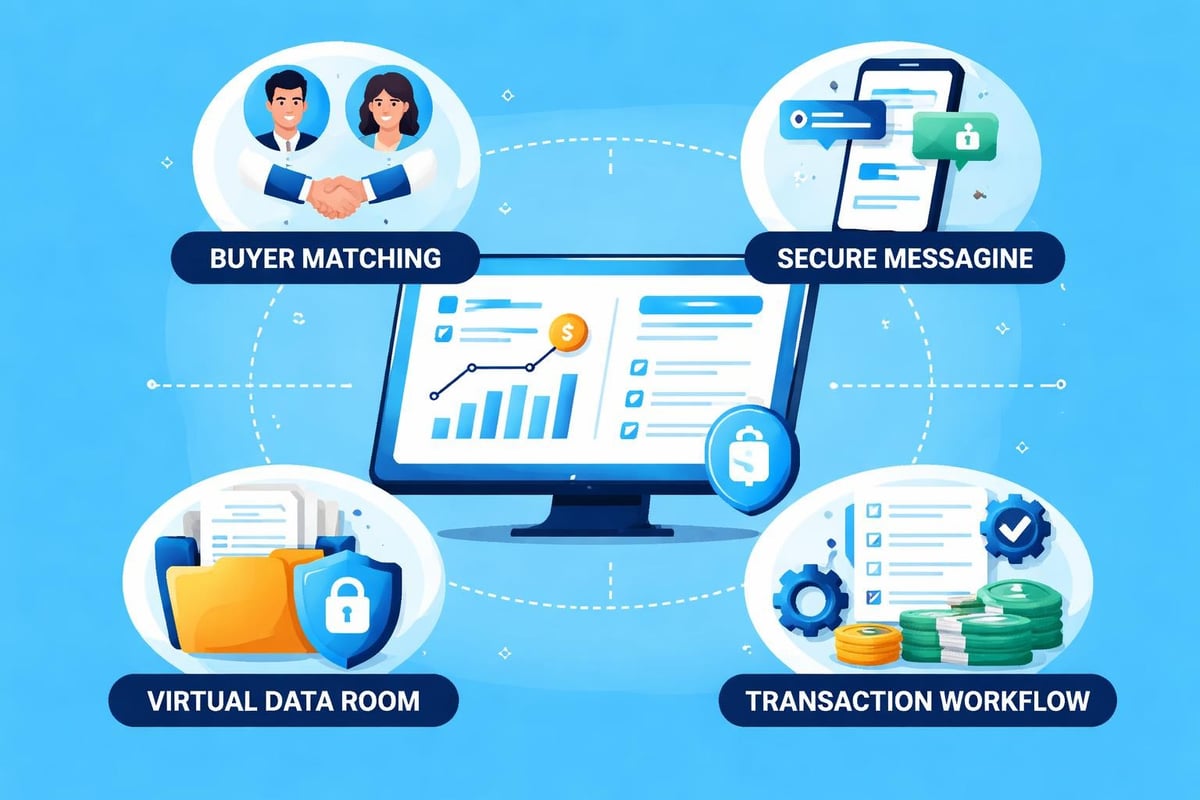
Selecting where to sell your company requires careful evaluation of platform capabilities beyond basic listing functions. Modern M&A platforms offer integrated services that support the entire transaction lifecycle, from initial matching through due diligence and closing.
Virtual Data Room Integration
Due diligence represents one of the most time-consuming and sensitive phases of any business sale. Understanding data room costs helps sellers budget appropriately while recognizing that secure document sharing is non-negotiable in professional transactions.
Aligned IQ VDR provides a competitively priced virtual data room solution specifically designed for lower middle-market transactions. For Aligned IQ M&A users, the VDR becomes complimentary after completing a match, eliminating a significant cost barrier. Other buyers, sellers, M&A advisors, investment bankers, and service providers can access the platform at transparent, competitive rates available at https://vdr.alignediq.net/pricing.
Essential platform features to evaluate:
- Buyer qualification processes – How does the platform vet participants?
- Confidentiality protections – What safeguards protect sensitive information?
- Transaction support tools – Does it include templates, checklists, and workflow management?
- Communication capabilities – Can parties interact securely within the platform?
- Industry specialization – Does the platform understand your sector's unique characteristics?
Strategic Fit: The Critical Success Factor
Experienced business owners recognize that price represents only one dimension of a successful sale. Strategic fit between buyer and seller often determines whether a transaction creates lasting value or becomes a costly mistake for both parties. When considering where to sell my company, prioritizing strategic alignment over highest bidder mentality typically produces superior outcomes.
Defining Your Ideal Buyer Profile
Before selecting a selling platform, articulate what matters most beyond purchase price. Consider operational continuity, employee retention, brand preservation, growth investment, and cultural compatibility. Different platforms attract different buyer types, making this clarity essential to channel selection.
Private equity platforms appeal to sellers comfortable with financial buyers and potential operational changes. Conversely, platforms emphasizing strategic buyers attract owners prioritizing business continuity and industry expertise. Understanding these distinctions helps answer where to sell my company based on your specific priorities.
In a typical scenario, a family-owned distribution company might value a buyer with complementary geographic coverage over one offering 10% more but planning immediate automation that would eliminate jobs. Traditional marketplaces rarely facilitate this nuanced matching, while specialized platforms can incorporate these preferences into their algorithms.
Confidentiality Considerations in Platform Selection
Maintaining confidentiality throughout the sale process protects business value, employee morale, customer relationships, and competitive positioning. The choice of where to sell my company directly impacts your ability to control information flow and timing of disclosures.
Public marketplaces inherently sacrifice some confidentiality for broader exposure. While sellers can use blind profiles initially, the process of fielding inquiries often requires revealing identity to unqualified or competitive parties. This exposure can damage business value if word spreads prematurely about the potential sale.
Confidentiality best practices when selecting a platform:
- Verify platform policies on information sharing and disclosure
- Understand who can view your profile and business details
- Confirm NDA enforcement before detailed discussions
- Evaluate platform track record on maintaining discretion
- Consider semi-proprietary vs. fully public environments
Aligned IQ M&A addresses confidentiality concerns through its match-making structure, where sellers maintain control over information disclosure throughout the process. Parties only connect after mutual interest is established based on strategic criteria, reducing exposure to casual browsers or competitors conducting market research.
Comparing Costs Across Selling Options
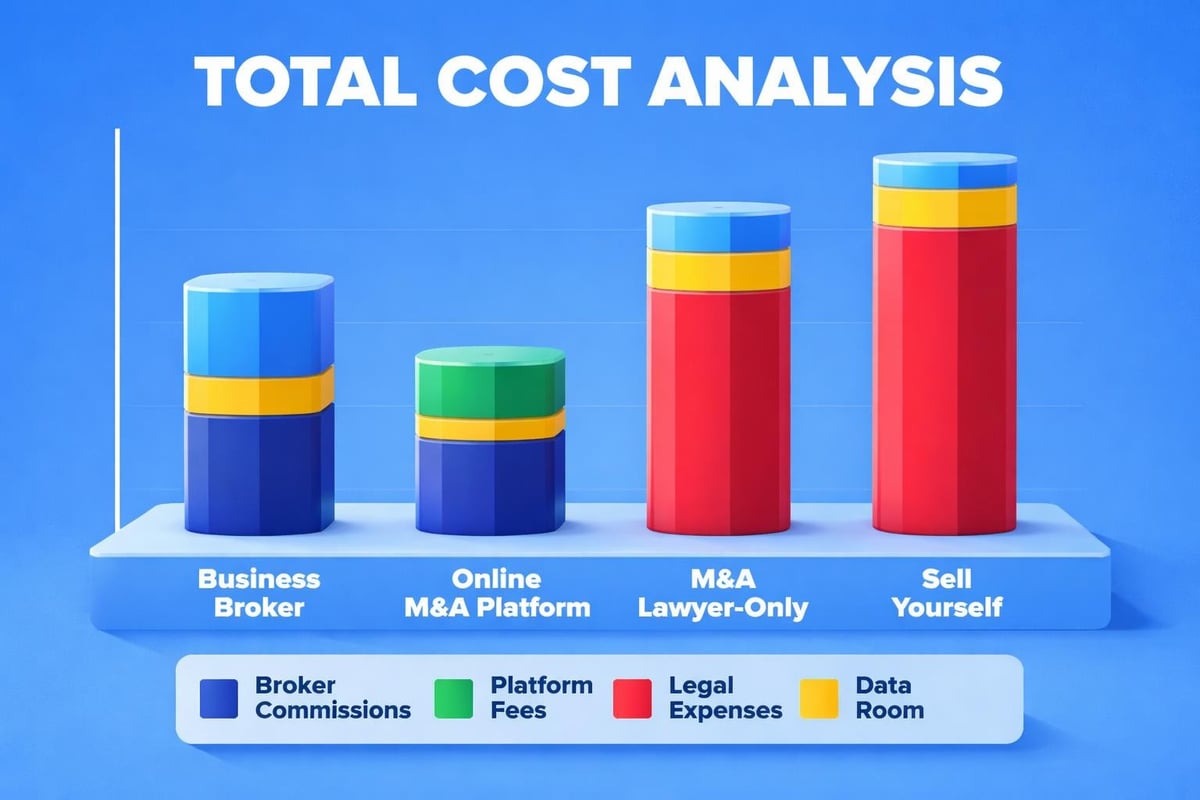
Financial considerations extend beyond sale price to include platform fees, service provider costs, and time investment required. When evaluating where to sell my company, total cost of ownership across the selling process provides more accurate comparison than headline commission rates alone.
| Selling Channel | Typical Fees | Additional Costs | Time Investment |
|---|---|---|---|
| Business Brokers | 8-12% commission | Legal, accounting | Low (delegated) |
| Investment Bankers | 2-5% + retainer | Due diligence, legal | Medium |
| Public Marketplaces | Listing + success fees | VDR, legal | High (self-managed) |
| Match-Making Platforms | Varies by model | Reduced through integration | Medium |
The Chamber of Commerce guide on selling a business emphasizes that seemingly lower-cost options often create hidden expenses through extended timelines, failed negotiations, or inadequate buyer screening. Comprehensive platforms that integrate services may offer better total value despite higher upfront costs.
The Role of M&A Service Providers
Professional advisors play essential roles in complex transactions, regardless of where to sell your company. Attorneys, accountants, valuation specialists, and M&A advisors each contribute expertise that protects your interests and facilitates smoother transactions. The platform you select should accommodate or integrate these professionals rather than creating friction.
Some platforms, including Aligned IQ M&A, create specific opportunities for M&A service providers to participate in the ecosystem. Advisors can receive compensation for sell-side referrals and showcase their professional services to platform participants. This model aligns incentives and ensures sellers have access to qualified professional support when needed.
Coordinating Professional Support
In a typical scenario, a business owner might engage an attorney for purchase agreement review, an accountant for tax structuring, and a valuation specialist for fairness opinion. Platforms that provide secure collaboration spaces, document management, and communication tools simplify coordination among these parties and reduce duplicate work.
The integration between Aligned IQ M&A and Aligned IQ VDR exemplifies this coordination. After a match is completed, sellers receive complimentary access to a secure virtual data room where they can organize documents, control access permissions, and track due diligence activity. Their advisors can be granted appropriate access levels, creating a centralized workspace that reduces email exchanges and version control issues.
Alternative Exit Strategies and Selling Venues
While digital platforms and traditional intermediaries dominate discussions about where to sell my company, several alternative paths deserve consideration depending on circumstances. Employee stock ownership plans (ESOPs), management buyouts, and family succession each represent viable exit strategies that may not require external platforms or brokers.
Industry associations and trade groups sometimes facilitate discreet introductions between members exploring transactions. These channels offer high relevance and built-in trust but limited reach. Similarly, professional networks and peer groups can surface potential buyers, though formalizing these relationships requires careful navigation to avoid damaging relationships if negotiations fail.
Alternative selling channels:
- Direct approach to known strategic buyers
- Industry association transaction services
- Family office networks for financial buyers
- ESOP structuring for employee ownership
- Management-led buyouts with external financing
According to HubSpot’s insights into selling a business, many successful transactions combine multiple channels. An owner might use a match-making platform to identify strategic buyers while simultaneously exploring ESOP options with current management. This parallel path approach increases likelihood of completing a transaction on favorable terms.
Buyer Perspectives on Acquisition Platforms
Understanding where buyers search for acquisition opportunities provides sellers valuable insight into channel selection. Serious acquirers increasingly utilize deal sourcing platforms that offer proprietary or semi-proprietary access to opportunities before they reach public marketplaces.
Buyers value platforms that allow them to showcase their capabilities, track record, and acquisition criteria proactively. Rather than competing in auctions or responding to broadly marketed opportunities, strategic buyers prefer environments where sellers can evaluate them as potential partners before engaging in negotiations. This dynamic shifts the traditional power balance and creates more collaborative initial conversations.
The Buyer Showcase Advantage
Aligned IQ M&A provides buyers with profiles that demonstrate their industry expertise, transaction history, post-acquisition approach, and value-creation philosophy. This transparency helps sellers assess cultural fit and strategic alignment before investing time in detailed discussions. When considering where to sell my company, platforms that facilitate this mutual evaluation process typically generate higher-quality matches and more successful closings.
Sophisticated buyers recognize that proprietary deal flow offers competitive advantages over broadly marketed opportunities. They actively seek platforms and relationships that provide early access to potential acquisitions, making semi-proprietary environments attractive to both parties in a transaction.
Technology Infrastructure and User Experience
The technical capabilities of selling platforms significantly impact transaction efficiency and user satisfaction. When evaluating where to sell my company, consider how platform design facilitates or hinders the complex workflows inherent in business transactions.
Modern M&A platforms should provide:
- Secure messaging for confidential communications between parties
- Document management with version control and access permissions
- Workflow automation for scheduling, reminders, and milestone tracking
- Mobile accessibility for reviewing updates and responding to inquiries
- Analytics dashboards showing match quality, activity levels, and engagement metrics
The distinction between Aligned IQ M&A (the match-making platform) and Aligned IQ VDR (the virtual data room) illustrates specialized tools serving different transaction phases. The matching platform focuses on identification and initial evaluation, while the VDR supports detailed due diligence once parties decide to pursue a transaction seriously.
Platforms offering integrated solutions reduce the friction of switching between systems, exporting and importing data, and coordinating among multiple service providers. This integration becomes particularly valuable in complex transactions involving multiple advisors, extensive documentation, and lengthy negotiation periods.
Timing Your Market Entry
Market conditions influence the optimal answer to where to sell my company, but platform selection should align with your timeline and readiness. Some channels require extensive preparation and documentation before launching, while others allow more gradual entry and relationship building.
Business owners contemplating eventual exit within two to five years might benefit from match-making platforms that emphasize relationship development over immediate transactions. Creating a profile, engaging with potential buyers, and understanding market expectations requires minimal commitment but provides valuable market intelligence.
Conversely, owners facing urgent liquidity needs or unexpected circumstances may require channels offering faster time-to-market, even if broader exposure increases complexity and reduces control. Understanding your timeline constraints helps narrow platform options to those aligned with your schedule.
Timeline considerations by channel:
| Timeline | Recommended Channels | Rationale |
|---|---|---|
| 2-5 years | Match-making platforms | Build relationships, no pressure |
| 6-18 months | Full-service brokers | Structured process with support |
| 3-6 months | Public marketplaces | Maximum immediate exposure |
| Under 3 months | Direct outreach | Limited time for formal process |
Reviewing resources like guidance on how to buy a business for sale from the buyer perspective provides insight into their evaluation processes and timelines, helping sellers set realistic expectations regardless of chosen channel.
Making Your Final Platform Decision
Synthesizing all these considerations into a final decision about where to sell my company requires honest assessment of priorities, resources, and constraints. No single platform serves every seller's needs optimally, making this a highly personalized choice.
Begin by ranking your priorities: confidentiality, speed, price maximization, strategic fit, transaction support, cost minimization, or control over process. These rankings immediately eliminate some options and elevate others. A seller prioritizing confidentiality and strategic fit will gravitate toward semi-proprietary match-making platforms, while one focused purely on price maximization might prefer broad marketplace exposure despite the trade-offs.
Creating Your Selection Criteria
Develop specific evaluation criteria based on your business characteristics and transaction goals:
- Business size – Does the platform serve your revenue and valuation range?
- Industry focus – Does it attract buyers familiar with your sector?
- Geographic scope – Are you seeking local, national, or international buyers?
- Buyer type preference – Strategic, financial, individual, or no preference?
- Service integration – Do you need comprehensive support or specific tools only?
- Technology requirements – What level of digital sophistication do you require?
Taking a systematic approach to this decision increases confidence in your channel selection and reduces the likelihood of needing to change platforms mid-process, which can damage credibility with potential buyers and extend timelines significantly.
Finding the right answer to where to sell your company ultimately depends on balancing exposure with confidentiality, cost with service quality, and speed with strategic fit. The evolution from traditional brokers and public marketplaces to sophisticated match-making platforms has expanded options while increasing the complexity of channel selection. Aligned IQ addresses this challenge through its innovative approach that prioritizes strategic alignment, maintains confidentiality through semi-proprietary matching, and integrates essential transaction tools including complimentary virtual data room access for matched sellers. Whether you're planning your exit years in advance or responding to an immediate opportunity, take a tour to discover how the platform's unique methodology can connect you with the ideal counterparty for your M&A goals.
No responses yet