

Acquiring a company represents one of the most significant strategic decisions business leaders make. Whether you're expanding market share, acquiring talent, or diversifying your portfolio, understanding the various ways to acquire a company is essential for successful growth. The landscape of business acquisitions has evolved considerably, with modern platforms now complementing traditional methods to create more efficient, transparent deal-making processes. This comprehensive guide explores the strategic approaches, financing structures, and acquisition methodologies that define successful transactions in 2026.
Understanding Core Acquisition Structures
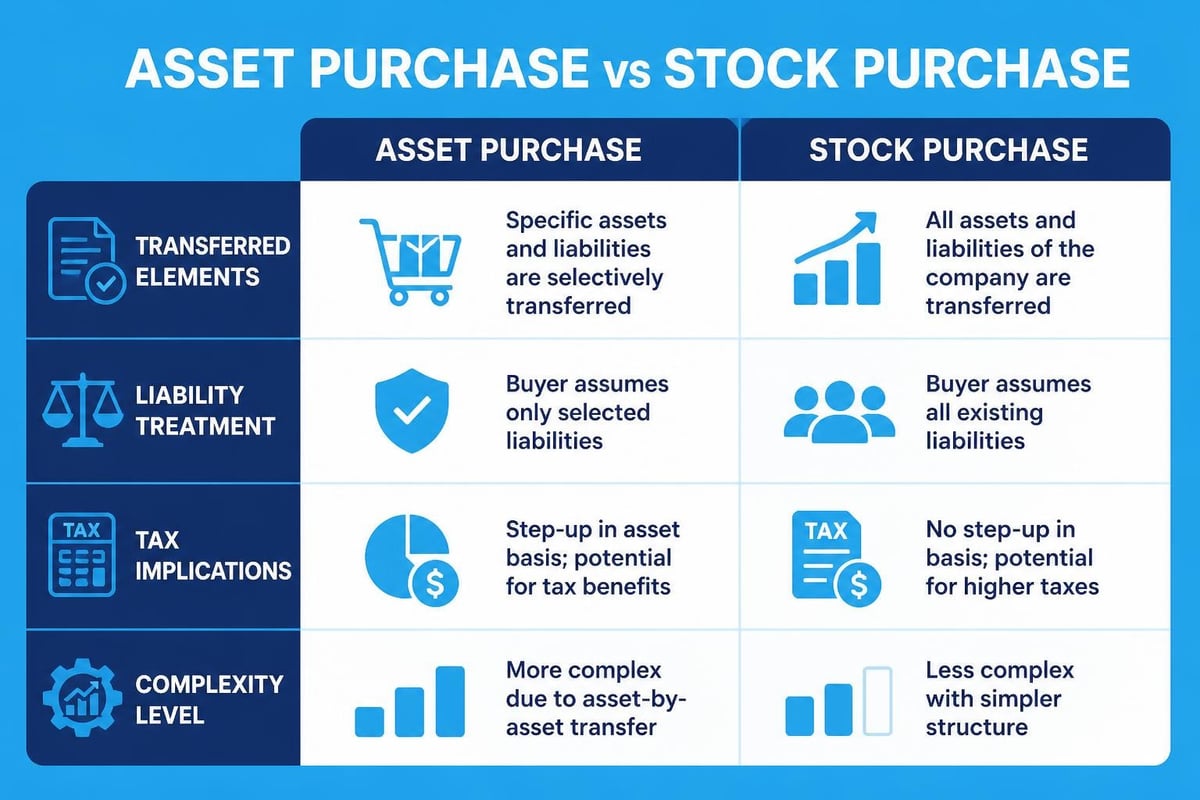
The foundation of any successful acquisition begins with selecting the appropriate transaction structure. Two primary ways to acquire a company dominate the landscape: asset purchases and stock purchases, each offering distinct advantages depending on your strategic objectives.
Asset Purchase Agreements
An asset purchase allows buyers to selectively acquire specific assets and liabilities from a target company. This approach provides significant flexibility in choosing what you want and avoiding what you don't.
Key advantages of asset purchases include:
- Selective liability assumption, protecting buyers from unknown obligations
- Step-up in tax basis for acquired assets, creating future depreciation benefits
- Greater control over which contracts, leases, and obligations transfer
- Clearer separation from the seller's historical liabilities
The asset purchase structure particularly appeals to buyers targeting specific industry sectors where intellectual property, customer relationships, or physical assets represent the primary value drivers. However, this approach requires individual transfer of assets, which can complicate transactions involving numerous contracts or regulatory licenses.
Stock Purchase Transactions
Stock purchases involve acquiring the ownership interests in the target company itself, transferring control while maintaining the legal entity. This represents one of the most straightforward ways to acquire a company from a structural perspective.
| Aspect | Asset Purchase | Stock Purchase |
|---|---|---|
| Tax Basis | Step-up available | No step-up |
| Liability Transfer | Selective | Comprehensive |
| Complexity | Higher (individual transfers) | Lower (entity transfer) |
| Third-Party Consents | Often required | Less frequently required |
| Seller Preference | Less favorable (tax treatment) | More favorable (capital gains) |
Stock transactions streamline the transfer process since contracts, licenses, and permits generally remain with the existing entity. This structure works exceptionally well for businesses with valuable regulatory approvals or long-term customer contracts where renegotiation could prove problematic.
Strategic Acquisition Approaches
Beyond transaction structure, buyers must consider the broader strategic approach to identifying and executing acquisition opportunities. The method you choose significantly impacts timeline, cost, and ultimate success probability.
Traditional Merger and Acquisition Process
The conventional M&A pathway involves engaging intermediaries such as investment bankers or business brokers who facilitate introductions between parties. This established method has served the market for decades, though it carries certain limitations.
Traditional process characteristics:
- Broad market outreach through broker networks
- Standardized valuation and marketing approaches
- Sequential introduction to multiple potential buyers
- Limited early-stage information about strategic fit
- Higher transaction costs due to intermediary fees
While this approach provides market exposure, it often prioritizes financial metrics over strategic alignment, potentially leading to mismatched expectations or failed negotiations. According to research on acquisition trends, strategic fit between acquiring and target companies significantly influences long-term success.
Platform-Based Match-Making
Modern acquisition platforms have transformed how buyers and sellers connect by prioritizing strategic compatibility before diving into detailed negotiations. This represents an increasingly popular way to acquire a company that emphasizes mutual fit.
In a typical scenario, a buyer seeking to expand within the transportation and logistics sector creates a profile outlining their transaction priorities, industry expertise, and cultural values. The platform's matching algorithm identifies sellers with complementary objectives, facilitating introductions based on substantive alignment rather than simply broadcasting availability.
Platform advantages include:
- Pre-qualified matches based on strategic criteria
- Confidential exploration before public market exposure
- Reduced intermediary costs in early stages
- Direct communication between principals
- Enhanced focus on long-term integration potential
This approach particularly benefits lower middle-market transactions where traditional broker engagement may not be cost-effective, yet sophisticated matching can identify overlooked synergies.
Financing Methods for Acquisitions
Understanding available financing options represents a critical component of the ways to acquire a company successfully. Your capital structure directly impacts deal feasibility, post-acquisition flexibility, and return on investment.
All-Cash Transactions
Cash acquisitions provide clean, straightforward closings without ongoing obligations to sellers. Buyers with substantial capital reserves or access to debt financing can move quickly and negotiate favorable terms when offering certainty of closing.
Cash purchase considerations:
- Immediate liquidity requirement
- No ongoing seller involvement
- Simplified post-closing operations
- Higher upfront capital requirement
- Potential tax efficiency for buyers through entity structure
For businesses exploring business valuation methodologies, cash transactions enable straightforward calculations without contingent consideration or earnout provisions complicating the analysis.

Seller Financing Arrangements
Seller financing has emerged as one of the most practical ways to acquire a company, particularly in the lower middle market. This structure involves the seller accepting payment over time rather than receiving full proceeds at closing.
In a typical scenario, a buyer might pay 60-70% at closing through cash or traditional financing, with the seller holding a note for the remaining balance. This arrangement demonstrates seller confidence in the business's sustainability and aligns both parties' interests in successful transition.
As detailed in guidance on financing small business acquisitions, seller notes typically feature:
- Three to seven-year repayment terms
- Interest rates tied to prevailing market conditions
- Subordination to senior lenders
- Potential earn-out provisions based on performance
- Personal guarantees from buyers
Small Business Administration Loans
SBA loans provide government-backed financing specifically designed to facilitate business acquisitions. The SBA 7(a) program represents one of the most accessible ways to acquire a company for qualified buyers lacking substantial personal capital.
| Feature | SBA 7(a) Loan | Conventional Bank Loan |
|---|---|---|
| Down Payment | 10-15% | 20-40% |
| Maximum Loan Amount | $5 million | Varies widely |
| Guarantee | Government-backed | None |
| Term Length | Up to 25 years | Typically 5-10 years |
| Approval Time | 60-90 days | 30-60 days |
SBA financing enables buyers to preserve working capital while still completing acquisitions. The longer repayment terms reduce monthly obligations, improving post-acquisition cash flow stability during the critical transition period.
Deal Sourcing and Target Identification
Identifying the right acquisition target may be the most crucial of all ways to acquire a company successfully. Your sourcing strategy determines the quality of opportunities you evaluate and ultimately acquire.
Direct Outreach Strategies
Proactive buyers often identify specific companies they wish to acquire and approach owners directly. This method works particularly well when you've identified clear strategic synergies or market opportunities.
Direct outreach benefits:
- Target companies perfectly aligned with your strategy
- Reduced competition from other buyers
- Potential for negotiated terms before broad market exposure
- Relationship-building opportunity before transaction discussions
- Lower transaction costs without broad intermediary involvement
For guidance on systematic approaches, consider reviewing resources on deal sourcing methodologies that outline structured processes for identifying and approaching potential targets.
Industry-Specific Search Focus
Concentrating your search within particular industries or sectors where you possess expertise represents one of the most effective ways to acquire a company. Specialization enables deeper due diligence and more accurate valuation.
In a typical scenario, a buyer with extensive experience in the green industry focuses exclusively on landscaping, lawn care, or horticultural businesses. This focused approach allows leveraging industry knowledge during negotiations and identifying operational improvements others might miss.
Research on investment opportunity identification suggests that data-driven frameworks focusing on specific performance indicators within defined industries significantly improve acquisition success rates.
Strategic Partnership Evolution
Some of the most successful acquisitions begin as strategic partnerships or commercial relationships. This organic pathway allows both parties to evaluate cultural fit and operational compatibility before discussing ownership transfer.
Partnership-to-acquisition advantages include:
- Extended evaluation period reducing uncertainty
- Established working relationships between teams
- Demonstrated operational synergies
- Reduced integration risk post-closing
- Natural transition for employees and customers
Due Diligence and Valuation
Regardless of which ways to acquire a company you pursue, comprehensive due diligence remains non-negotiable. This investigative phase validates assumptions, uncovers risks, and informs final pricing and structure decisions.
Financial Due Diligence
Financial investigation forms the foundation of acquisition due diligence. Buyers must verify historical performance, understand working capital requirements, and validate projected cash flows.
Critical financial review areas:
- Three to five years of historical financial statements
- Quality of earnings analysis adjusting for non-recurring items
- Working capital analysis and normalization
- Customer concentration and revenue stability assessment
- Debt obligations and off-balance-sheet liabilities
- Tax compliance and potential exposure review
The comprehensive acquisition process emphasizes financial validation as the cornerstone of informed decision-making.
Operational and Legal Review
Beyond financials, operational and legal due diligence identifies hidden risks that could impact post-acquisition performance or create unexpected liabilities.
| Due Diligence Category | Key Investigation Areas |
|---|---|
| Operations | Processes, systems, capacity utilization, supplier relationships |
| Legal | Contracts, litigation, compliance, intellectual property |
| Human Resources | Employee agreements, benefits, culture, key person dependencies |
| Commercial | Customer contracts, market position, competitive dynamics |
| Technology | Systems infrastructure, cybersecurity, technical debt |
Professional advisors specializing in due diligence through closing can identify issues that generalists might overlook, potentially saving buyers from costly mistakes.
Valuation Methodologies
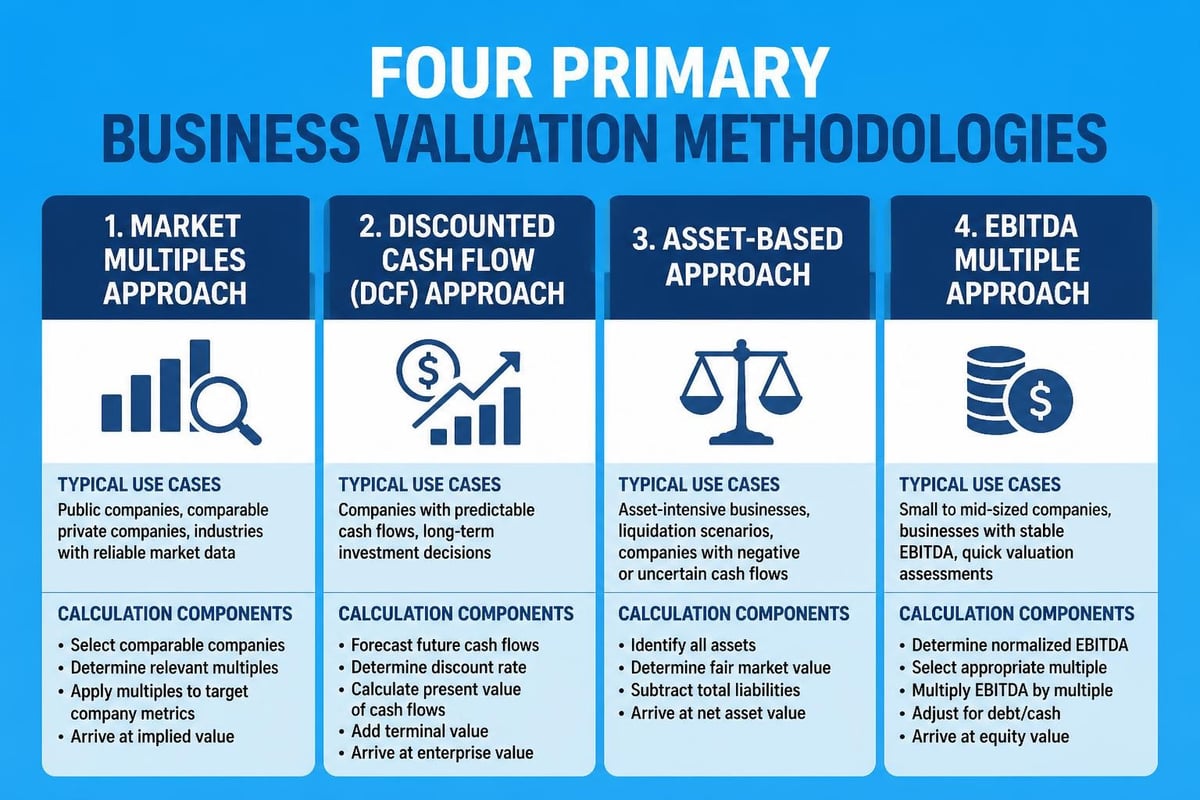
Determining fair value represents a critical juncture where buyer and seller interests converge. Multiple valuation approaches exist, with most transactions considering several methodologies.
Common valuation methods include:
- Market Multiple Approach: Comparing target metrics to similar transaction precedents
- Discounted Cash Flow: Projecting future cash flows and discounting to present value
- Asset-Based Valuation: Calculating net asset value adjusted for fair market values
- Revenue Multiple: Industry-specific multiples applied to normalized revenue
- EBITDA Multiple: Most common for profitable businesses, varies by industry and size
Merger Structures and Strategic Combinations
Beyond traditional purchases, mergers represent distinct ways to acquire a company that create combined entities rather than simple ownership transfers. These structures suit scenarios where both organizations bring complementary strengths.
Horizontal Mergers
Horizontal mergers combine competitors or companies operating at the same supply chain level. This consolidation strategy pursues market share expansion, cost synergies, and competitive positioning enhancement.
In a typical scenario, two regional competitors in the media and advertising sector merge to create broader geographic coverage, eliminate duplicate overhead, and strengthen negotiating position with vendors and clients.
Vertical Integration Acquisitions
Vertical acquisitions involve companies at different supply chain stages. Manufacturers might acquire distributors (forward integration) or suppliers (backward integration) to control more of their value chain.
Vertical integration benefits:
- Reduced supply chain costs and dependencies
- Improved quality control across production stages
- Enhanced margin capture by eliminating intermediary markups
- Greater strategic flexibility in pricing and distribution
- Competitive advantage through integrated capabilities
Acquihire Transactions
Technology and specialized service sectors have popularized acquihires, where talent acquisition drives the transaction more than business operations. Research on acquihire phenomena reveals competitive dynamics where firms acquire startups primarily for human capital rather than products or market position.
Negotiation and Purchase Agreement Development
After identifying targets and completing initial due diligence, negotiating definitive agreements represents the culmination of the acquisition process. These legal documents memorialize all transaction terms and allocate risk between parties.
Letter of Intent Essentials
Most acquisitions begin with a non-binding Letter of Intent (LOI) outlining proposed terms before incurring significant legal expenses on definitive documentation.
Critical LOI provisions include:
- Proposed purchase price and structure (asset vs. stock)
- Payment terms and financing contingencies
- Exclusivity period preventing seller from soliciting other buyers
- Due diligence scope and timeline
- Key assumptions and deal-breaker conditions
- Target closing date and major milestones
The LOI stage allows both parties to confirm alignment on fundamental terms before investing heavily in legal documentation and detailed due diligence.
Purchase Agreement Negotiations
The definitive purchase agreement represents the legally binding contract governing the transaction. Skilled negotiators balance protecting their interests while maintaining relationship goodwill for post-closing success.
Major agreement sections requiring careful negotiation:
- Purchase price adjustments based on working capital or performance
- Representations and warranties about business condition
- Indemnification provisions allocating post-closing risk
- Escrow or holdback arrangements securing seller obligations
- Non-compete and non-solicitation restrictions
- Transition services and seller involvement post-closing
Resources on buying a business successfully emphasize thorough agreement review with experienced legal counsel before execution.
Modern Deal Facilitation Platforms
The ways to acquire a company have expanded significantly with purpose-built platforms designed to streamline the match-making and transaction process. These technologies address traditional M&A inefficiencies while maintaining confidentiality and security.
Strategic Fit Prioritization
Unlike traditional approaches emphasizing financial metrics first, modern platforms can prioritize strategic fit by matching based on transaction priorities, cultural values, and long-term objectives. This reordering of the evaluation process reduces wasted effort on fundamentally incompatible parties.
In a typical scenario, a buyer seeking to acquire a business in real estate specifies their preferred deal size, geographic focus, integration approach, and growth strategy. The platform identifies sellers with complementary exit timelines, compatible operational philosophies, and matching transaction expectations before detailed financial discussions begin.
Confidential Exploration Benefits
Privacy concerns often prevent business owners from exploring exit options through traditional channels where broad market exposure could alarm employees, customers, or competitors. Platform-based approaches enable confidential exploration before public disclosure.
Confidentiality advantages include:
- Controlled information sharing based on mutual interest
- Anonymous initial profiling before identity disclosure
- Staged revelation as relationship develops
- Protection from market speculation during exploration
- Reduced risk to ongoing business operations
This measured approach particularly benefits sellers who may be years from actual transaction but want to understand options and build relationships with potential future buyers.
Virtual Data Room Integration
Comprehensive platforms integrate secure virtual data rooms where parties can exchange sensitive information during due diligence. Modern VDR solutions designed for lower middle-market transactions offer enterprise-grade security at accessible price points.
For businesses comparing options, reviewing data room providers helps identify solutions balancing robust security features with user-friendly interfaces. Competitively priced options like those available at https://vdr.alignediq.net/pricing demonstrate that sophisticated transaction infrastructure need not require enterprise-level budgets.
Private Equity and Institutional Buyer Approaches
Understanding how private equity firms approach acquisitions provides valuable insights for all buyers, as these professional investors have refined systematic processes for identifying, evaluating, and closing transactions.
Platform and Add-On Acquisition Strategy
Private equity funds frequently pursue platform acquisitions establishing footholds in attractive industries, then executing multiple add-on acquisitions to build scale and market position.
Platform acquisition characteristics:
- Strong management teams capable of leading consolidation
- Scalable business models accommodating rapid growth
- Fragmented industries offering roll-up opportunities
- Defensible competitive positions or unique capabilities
- Proven financial performance demonstrating business model viability
Following platform establishment, add-on acquisitions leverage existing infrastructure, creating synergies that enhance returns. This staged approach represents one of the most proven ways to acquire a company within a structured investment thesis.
Buy and Build Strategies
The buy-and-build approach combines operational improvements at acquired companies with strategic add-ons, creating value through both organic growth and inorganic expansion.
| Value Creation Lever | Implementation Approach |
|---|---|
| Operational Efficiency | Process standardization, technology implementation, procurement optimization |
| Revenue Synergies | Cross-selling, geographic expansion, new market entry |
| Strategic Add-Ons | Tuck-in acquisitions, capability additions, market consolidation |
| Multiple Expansion | Building scale and market position justifying higher exit multiples |
Acquiring Public Companies
For larger transactions, acquiring public companies introduces additional complexity through regulatory requirements, shareholder considerations, and public disclosure obligations.
Friendly vs. Hostile Approaches
Public company acquisitions can proceed through negotiated transactions with board approval (friendly) or direct shareholder offers bypassing board recommendations (hostile).
Friendly acquisition process:
- Confidential approach to target board
- Negotiated letter of intent and exclusivity
- Board approval and recommendation to shareholders
- Public announcement and proxy materials
- Shareholder vote and regulatory approvals
- Closing and integration
Hostile approaches involve public tender offers directly to shareholders, often triggering defensive measures like poison pills or white knight alternatives. These contested situations increase costs, extend timelines, and complicate post-closing integration.
Tender Offers and Merger Structures
Public company acquisitions typically employ tender offers (purchasing shares directly from shareholders) or merger structures (combining entities through board-approved transactions requiring shareholder votes).
Tender offer advantages include:
- Faster completion without shareholder meeting requirements
- Flexibility to proceed with majority control before 100% ownership
- Direct shareholder appeal bypassing board resistance
- Conditional structures protecting buyer interests
However, merger structures provide cleaner outcomes, eliminating minority shareholders through mandatory exchange provisions and avoiding ongoing public company compliance for stub positions.
Strategic Considerations for Acquisition Success
Beyond transaction mechanics, certain strategic considerations significantly influence which ways to acquire a company will prove most successful for your particular circumstances.
Industry and Market Analysis
Thorough understanding of target industry dynamics, competitive positioning, and market trends separates successful acquisitions from disappointing ones. Macro factors including regulatory changes, technological disruption, and market consolidation directly impact acquisition value.
Critical analysis dimensions:
- Industry growth trajectory and cyclicality
- Competitive intensity and barriers to entry
- Regulatory environment and compliance requirements
- Technology trends and disruption risks
- Customer concentration and switching costs
- Supplier dynamics and input cost stability
Integration Planning
Integration planning should begin during due diligence, not after closing. The most successful acquirers develop detailed integration roadmaps addressing systems, processes, people, and culture before transaction completion.
In a typical scenario, an acquirer identifies critical systems requiring immediate integration (payroll, banking) versus those allowing longer transition periods (CRM, ERP). This prioritization prevents overwhelming teams while capturing urgent synergies.
Integration best practices include:
- Designated integration team with clear accountability
- Communication plan for employees, customers, and vendors
- Quick wins demonstrating transaction value
- Cultural assessment and change management
- System and process standardization timeline
- Performance metrics tracking integration success
Risk Management and Contingency Planning
Even thoroughly vetted acquisitions carry risks. Sophisticated buyers identify potential issues and develop contingencies before problems materialize.
Common acquisition risks requiring mitigation:
- Customer attrition following ownership change
- Key employee departure during transition
- Integration complications exceeding projections
- Market deterioration affecting performance
- Hidden liabilities emerging post-closing
- Cultural incompatibility impeding collaboration
Purchase agreement provisions including escrows, earnouts, and indemnification help allocate these risks between buyers and sellers based on negotiating leverage and specific circumstances.
Acquisition Strategy Development
Successfully implementing any of the ways to acquire a company requires strategic planning extending beyond individual transactions to comprehensive acquisition programs aligned with corporate objectives.
Defining Acquisition Criteria
Clear acquisition criteria prevent wasted effort evaluating unsuitable opportunities. Leading acquirers develop written investment theses specifying target characteristics, deal structures, and success metrics.
Comprehensive criteria frameworks address:
- Industry sectors and geographic markets of interest
- Minimum and maximum transaction sizes
- Preferred business models and customer bases
- Financial performance thresholds (revenue, EBITDA, growth)
- Cultural and operational compatibility requirements
- Strategic rationale and synergy expectations
Resources on acquisition strategy frameworks provide structured approaches to developing and implementing systematic acquisition programs.
Building Acquisition Capabilities
Companies pursuing multiple acquisitions benefit from developing institutional capabilities rather than treating each transaction as standalone events. Building dedicated corporate development functions or acquisition teams creates competitive advantages in sourcing, evaluating, and integrating transactions.
Capability development areas include:
- Dedicated sourcing and pipeline management
- Standardized due diligence processes and checklists
- Valuation models and financial analysis tools
- Legal and regulatory expertise
- Integration playbooks and best practices
- Post-acquisition performance tracking
This systematic approach transforms acquisitions from occasional events into core competencies driving sustained growth.
Selecting the right approach among the various ways to acquire a company depends on your strategic objectives, financial resources, industry expertise, and risk tolerance. Whether pursuing traditional broker-facilitated transactions, direct outreach to target companies, or modern platform-based matching, success requires thorough planning, comprehensive due diligence, and skilled execution. For buyers and sellers seeking to prioritize strategic fit while maintaining confidentiality during the exploration process, Aligned IQ offers a collaborative platform where transaction priorities, deal parameters, and cultural compatibility drive match-making before traditional M&A pressures begin. Take a tour to discover how our unique approach to connecting buyers and sellers can help you find the perfect counterparty for your acquisition goals.
No responses yet