

Business acquisitions represent one of the most significant strategic decisions companies make, yet many fail to deliver anticipated value. Understanding and implementing effective acquisition strategies can mean the difference between transformative growth and costly missteps. In 2026, the M&A landscape continues evolving, with middle-market transactions requiring increasingly sophisticated approaches that prioritize strategic alignment, thorough preparation, and collaborative deal-making. Whether you're a first-time acquirer or an experienced buyer seeking to refine your approach, mastering these strategies ensures better outcomes and sustainable value creation.
Understanding Strategic Objectives Before Target Identification
Every successful acquisition begins with crystal-clear strategic objectives. Too many buyers rush into deal sourcing without defining what they actually hope to achieve through acquisition. Strategic clarity drives every subsequent decision, from target selection to valuation methodologies.
Effective acquisition strategies start by answering fundamental questions about growth intentions. Are you seeking to expand geographic reach, acquire specific capabilities, eliminate competition, or gain access to new customer segments? Each objective demands different target profiles and integration approaches.
Aligning Acquisition Goals with Enterprise Strategy
Your acquisition strategy must integrate seamlessly with your broader business plan. Aligning acquisition strategy with enterprise strategy creates coherence across all organizational initiatives and prevents value-destroying disconnects between acquired entities and existing operations.
Consider these strategic alignment factors:
- Core competency enhancement: Does the target strengthen your competitive advantages?
- Market positioning: Will this acquisition improve your market share or customer access?
- Financial objectives: How does this transaction support revenue growth and profitability targets?
- Operational synergies: Can you realize meaningful cost savings or efficiency improvements?
- Cultural compatibility: Will organizational values and operating styles mesh effectively?
The strategic fit between buyer and seller often proves more valuable than financial metrics alone. A target company perfectly aligned with your strategic vision delivers superior long-term returns compared to financially attractive but strategically mismatched opportunities.

Developing Comprehensive Target Profiles
Once strategic objectives are established, effective acquisition strategies require detailed target profiles that go beyond basic industry and size parameters. Sophisticated buyers create multi-dimensional profiles incorporating financial performance, competitive positioning, management quality, and growth potential.
Financial criteria typically include revenue range, EBITDA margins, growth trajectory, and capital intensity. However, equally important are qualitative factors such as customer concentration, supplier relationships, technological capabilities, and regulatory compliance history.
| Profile Element | Key Considerations | Impact on Strategy |
|---|---|---|
| Financial Health | Revenue stability, margin trends, working capital needs | Valuation range, financing structure |
| Market Position | Customer loyalty, brand strength, competitive differentiation | Integration complexity, growth potential |
| Operational Capabilities | Technology infrastructure, process maturity, scalability | Synergy opportunities, investment requirements |
| Management Team | Leadership depth, institutional knowledge, cultural alignment | Retention planning, transition smoothness |
Lower middle-market PE firms often excel at this profiling process because they've refined target criteria across multiple transactions. Their disciplined approach to screening potential acquisitions eliminates poor fits early, conserving resources for high-probability opportunities.
Leveraging Technology for Target Discovery
Traditional M&A processes relied heavily on intermediaries and personal networks for deal sourcing. While these channels remain valuable, technology platforms now enable more efficient, private, and strategic matching between buyers and sellers.
Modern acquisition platforms prioritize confidential exploration before formal engagement, allowing both parties to assess fit without premature exposure. This approach particularly benefits sellers concerned about market perception and employee morale during exploratory phases.
Conducting Thorough Due Diligence
No element of effective acquisition strategies matters more than comprehensive due diligence. This investigative phase validates assumptions, uncovers risks, and informs final valuation and deal structure decisions. Rushing or superficially addressing due diligence consistently ranks among the top causes of acquisition failure.
Structuring a Multi-Disciplinary Due Diligence Process
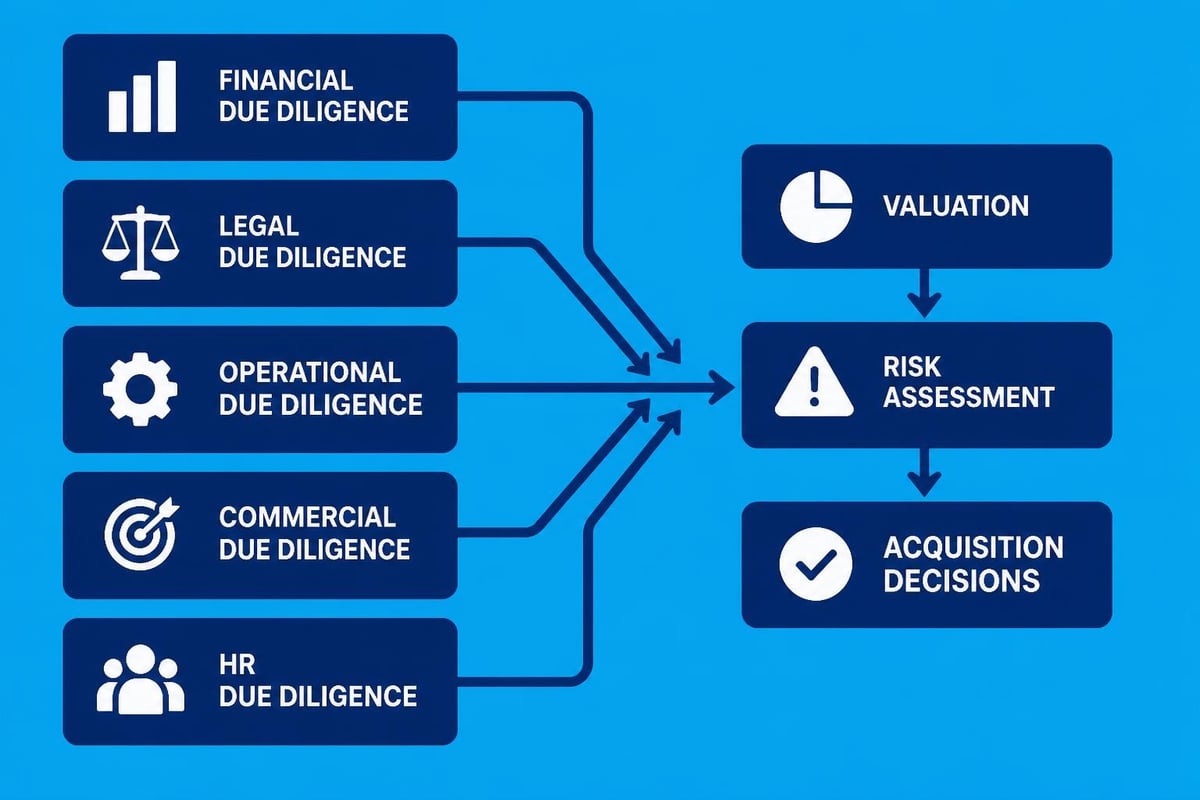
Effective due diligence extends far beyond financial statement review. Leading acquirers assemble cross-functional teams examining:
- Financial due diligence: Historical performance analysis, working capital requirements, quality of earnings assessments
- Legal due diligence: Contract reviews, litigation history, regulatory compliance verification
- Operational due diligence: Process efficiency, technology systems, supply chain resilience
- Commercial due diligence: Market position validation, customer satisfaction, competitive threats
- Human resources due diligence: Compensation structures, benefit obligations, key employee retention risks
Each workstream generates insights that either validate investment theses or reveal concerning issues requiring attention. The strategies mergers acquisitions experts recommend emphasize systematic evaluation across all these dimensions.
Virtual data rooms have revolutionized how due diligence proceeds, enabling secure document sharing and organized information exchange. Aligned IQ VDR provides a complimentary virtual data room for sellers after completing matches through the platform, with competitive pricing available for other buyers, sellers, and M&A service providers.
Establishing Realistic Valuation Parameters
Valuation represents where strategic vision meets financial reality. Effective acquisition strategies require disciplined valuation approaches that balance growth potential with prudent risk management. Overpaying damages returns regardless of how well the acquisition otherwise performs.
Multiple Valuation Methodologies
Sophisticated buyers employ several valuation techniques and triangulate results:
- Comparable company analysis: Benchmarking against similar businesses and recent transactions
- Discounted cash flow: Projecting future cash flows and discounting to present value
- Asset-based valuation: Evaluating tangible and intangible asset values
- Market multiples: Applying industry-standard revenue or EBITDA multiples
Each methodology carries inherent assumptions and limitations. Using multiple approaches provides validation and identifies outliers requiring explanation. When methodologies produce widely divergent results, dig deeper into underlying assumptions before proceeding.
The key strategies for acquiring businesses consistently emphasize realistic pricing as a cornerstone of success. Winners curse-overpaying due to competitive auction dynamics-destroys more value than any other single factor.
Negotiating Terms That Protect Value
Even with perfect strategic fit and accurate valuation, poorly structured deals undermine acquisition success. Effective acquisition strategies incorporate thoughtful deal structuring that allocates risk appropriately and aligns incentives between parties.
Critical Deal Structure Elements
Beyond purchase price, numerous terms significantly impact ultimate outcomes:
Earnouts and contingent payments tie portions of consideration to post-closing performance, bridging valuation gaps and incentivizing seller cooperation during transitions. However, poorly designed earnouts create conflicts and litigation.
Representations and warranties allocate risk for pre-closing conditions, with indemnification provisions specifying remedies for breaches. Representation and warranty insurance increasingly supplements traditional indemnification, particularly in competitive processes.
Working capital adjustments ensure buyers receive expected operational liquidity, preventing value transfer through pre-closing cash extraction or accounts receivable manipulation.
| Deal Term | Buyer Protection | Seller Benefit |
|---|---|---|
| Earnout structure | Performance-based payments reduce upfront risk | Potential for higher total consideration |
| Escrow holdbacks | Funds available for indemnification claims | Returns after claims period expires |
| Non-compete agreements | Prevents seller competition | Consulting income opportunities |
| Employment agreements | Ensures key talent retention | Continued income and transition role |
The acquisition negotiation strategy you employ significantly influences both immediate deal economics and long-term relationship quality with sellers who often remain involved post-closing.
Prioritizing Cultural Integration Planning
Technical and financial preparation receives disproportionate attention relative to cultural integration, yet cultural clashes destroy more acquisition value than any other post-closing factor. Effective acquisition strategies recognize that combining organizations involves people, not just assets and contracts.
Assessing Cultural Compatibility Early
Cultural due diligence should begin during initial target evaluation, not after signing definitive agreements. Observable indicators include:
- Decision-making processes (centralized versus distributed)
- Communication styles (formal versus informal)
- Risk tolerance (conservative versus aggressive)
- Performance management approaches (collaborative versus competitive)
- Work environment preferences (structured versus flexible)
A typical scenario might involve a family-owned business with consultative decision-making being acquired by a private equity-backed platform company emphasizing rapid execution. Without explicit cultural integration planning, this values mismatch creates friction, employee turnover, and performance deterioration.

Building Robust Integration Roadmaps
The hundred-day plan following acquisition closing largely determines whether projected synergies materialize. Successful acquisition strategies include detailed integration roadmaps prepared before closing that specify responsibilities, timelines, and success metrics.
Sequencing Integration Activities
Not everything can happen simultaneously. Prioritize integration initiatives based on value impact and interdependencies:
- Immediate priorities (Days 1-30): Leadership announcements, communication plans, critical system access
- Short-term initiatives (Days 31-100): Quick-win synergies, organizational design decisions, policy harmonization
- Medium-term projects (Months 4-12): System integrations, process standardization, culture-building initiatives
- Long-term transformation (Year 2+): Strategic repositioning, advanced capability development, portfolio optimization
Integration leadership requires dedicated resources. Assigning integration management responsibilities on top of existing operational roles guarantees inadequate attention and execution failures.
Leveraging Platform Strategies for Serial Acquirers
Private equity platforms and strategic buyers pursuing multiple acquisitions benefit from systematizing their approach. Platform strategies create frameworks that improve each successive transaction's efficiency and effectiveness.
Standardized processes reduce deal execution time and costs. From LOI templates to due diligence checklists to integration playbooks, documentation enables consistent quality across transactions.
Accumulated expertise compounds advantages. Teams that complete multiple deals develop pattern recognition for identifying risks, negotiating favorable terms, and executing smooth integrations.
Enhanced credibility with sellers improves deal flow. Buyers demonstrating professional, respectful processes attract better opportunities through reputation effects and referral networks.
Understanding acquisition in business strategy as a repeatable capability rather than one-off events transforms M&A from occasional occurrences into systematic growth engines.
Maintaining Confidentiality Throughout the Process
Premature disclosure of acquisition discussions damages both buyers and sellers. Effective acquisition strategies incorporate robust confidentiality protocols protecting sensitive information at every stage.
For sellers, leaked acquisition rumors create:
- Employee anxiety and potential departures
- Customer uncertainty about future service
- Supplier concerns about payment continuity
- Competitive intelligence for rivals
Buyers face different but equally serious confidentiality risks, including:
- Competitive disadvantage if strategic intentions become known
- Reputation damage from failed transaction publicity
- Potential litigation from unsuccessful targets
Modern acquisition platforms address these concerns by enabling private, confidential exploration before formal engagement. Aligned IQ M&A's proprietary matching process allows potential buyers and sellers to assess fit based on transaction priorities, deal size, and industry expertise without premature disclosure beyond interested parties.
Engaging Professional Advisors Strategically
While some buyers attempt to manage acquisitions internally, effective acquisition strategies typically involve selective engagement of specialized advisors. The key is deploying external expertise where it delivers disproportionate value.
When External Advisors Add Maximum Value
Consider professional assistance for:
- Legal counsel: Complex transaction structures, regulatory approvals, cross-border considerations
- Financial advisors: Valuation validation, financing optimization, competitive process management
- Tax specialists: Structure tax efficiency, minimize transaction taxes, plan post-closing optimization
- Technical experts: Specialized due diligence in technology, environmental, or industry-specific domains
- Integration consultants: Large-scale transformation, change management, cultural integration
The investment in quality advisors typically returns multiples through improved deal terms, risk mitigation, and execution efficiency. However, buyers must actively manage advisor teams rather than passively accepting recommendations.
Optimizing Financing Structures
How you finance acquisitions influences both feasibility and returns. Effective acquisition strategies evaluate multiple financing options and select structures optimizing cost of capital while maintaining operational flexibility.
Comparing Financing Alternatives
| Financing Source | Advantages | Considerations |
|---|---|---|
| Cash reserves | No financing costs, complete control | Depletes liquidity, opportunity cost |
| Bank debt | Lower cost, tax-deductible interest | Covenant restrictions, repayment obligations |
| Seller financing | Demonstrates seller confidence, flexible terms | Ongoing seller relationship, potential conflicts |
| Equity capital | No repayment pressure, shared risk | Dilution, governance implications |
| Mezzanine financing | Flexible structure, less dilutive | Higher cost, subordination issues |
Most transactions employ hybrid structures combining multiple sources. The optimal mix depends on acquisition size, buyer financial strength, target cash flow characteristics, and market conditions.
Measuring Acquisition Success Beyond Financial Returns
While financial performance ultimately determines acquisition success, effective acquisition strategies establish comprehensive success metrics capturing multiple value dimensions.
Strategic metrics assess whether the acquisition delivered intended strategic benefits:
- Market share expansion in target segments
- New capability development and deployment
- Geographic footprint extension
- Competitive position strengthening
Operational metrics evaluate integration execution and synergy realization:
- Revenue synergy achievement versus projections
- Cost synergy capture and timing
- Customer retention rates post-acquisition
- Employee retention, particularly key talent
Cultural metrics gauge human capital integration:
- Employee engagement scores
- Cultural alignment perception surveys
- Leadership team stability
- Cross-organizational collaboration frequency
Tracking these metrics through structured post-mortem reviews creates institutional learning that improves future acquisition performance. Organizations that systematically capture lessons from both successful and unsuccessful transactions develop superior acquisition capabilities over time.
Adapting Strategies for Industry-Specific Dynamics
While core principles apply universally, effective acquisition strategies adapt to industry-specific characteristics. Regulatory environments, competitive dynamics, and value creation drivers vary substantially across sectors.
In highly regulated industries like healthcare or financial services, regulatory approval processes and ongoing compliance requirements significantly influence deal timelines and structures. In technology sectors, intellectual property evaluation and key talent retention dominate success factors. Manufacturing businesses require detailed operational due diligence on equipment condition, supply chain resilience, and environmental compliance.
A typical scenario in transportation and logistics might emphasize route density, equipment utilization, and customer contract terms, while acquisitions in media and advertising focus on audience reach, content libraries, and creative talent retention.
Understanding these nuances and incorporating industry-specific evaluation criteria into your acquisition framework substantially improves target selection and integration success.
Building Long-Term Acquisition Capabilities
The most successful acquirers view M&A as a core competency requiring continuous development rather than episodic activities managed reactively. Building organizational acquisition capabilities delivers compounding advantages through improved deal flow, execution efficiency, and integration success.
Developing these capabilities involves:
- Dedicated M&A resources: Teams focused exclusively on acquisition activities rather than splitting attention with operational responsibilities
- Systematic processes: Documented workflows, templates, and checklists ensuring consistent quality
- Technology infrastructure: Platforms supporting deal sourcing, due diligence collaboration, and integration tracking
- Knowledge management: Capturing lessons learned and best practices from each transaction
- External networks: Relationships with intermediaries, industry experts, and service providers
Organizations building these capabilities transform acquisitions from risky, uncertain events into reliable growth engines. The effective customer acquisition strategies that businesses employ share similar characteristics-systematic processes, measured performance, and continuous optimization.
Implementing effective acquisition strategies requires balancing strategic vision with operational discipline, financial rigor with cultural sensitivity, and speed with thoroughness. The principles outlined above provide a framework for approaching acquisitions systematically, improving success rates, and capturing sustainable value. Aligned IQ transforms the traditional M&A process by prioritizing strategic fit from the outset, enabling buyers and sellers to explore potential deals privately and confidentially before formal engagement, and providing complimentary virtual data room access for matched sellers-take a tour to discover how our platform can support your acquisition objectives.
No responses yet