

If you find yourself thinking, "I want to sell my business" in 2026, you are in good company. Many owners are preparing for a major transition, and the decisions you make now can shape your financial future and legacy. Selling a business is never simple; it demands careful planning, strategic positioning, and the right partners at every stage. This guide will show you proven steps and expert insights to help you avoid common pitfalls, maximize your business value, and achieve a smooth, profitable exit. Ready to take control of your next chapter? Follow this roadmap for your most successful sale yet.
Deciding to Sell: Timing, Motivation, and Readiness
Thinking, "I want to sell my business," but not sure where to start? Deciding to exit is one of the most significant choices you will ever make as an owner. This process requires not just a financial calculation, but a deep understanding of your own motivation, your company's readiness, and the market conditions that can influence your outcome.

Assessing Your Motivation and Goals
Before you move forward, clarify why you want to sell my business and what you hope to achieve. Are you planning for retirement, feeling burnt out, or ready to pursue a new venture? Each motivation shapes your expectations, timeline, and the ideal buyer profile.
Common seller motivations include:
- Retirement or lifestyle change
- Burnout or health concerns
- Market timing or capitalizing on growth
- Pursuing other business opportunities
Unclear objectives can derail your sale, so avoid the trap of moving forward without a defined goal. Learning from competitors, owners who clearly define their reasons for selling typically experience smoother processes and better outcomes. Discuss your intentions with trusted advisors or family members to ensure alignment. For a step-by-step overview, see the steps to sell your business.
Evaluating Business Readiness
Ask yourself, is my business truly ready for sale? Buyers look for strong profitability, consistent cash flow, and a solid market position. If you want to sell my business for top value, reduce dependency on your direct involvement. Businesses with reliable management and well-documented systems are more attractive, as they signal stability and transferability.
Key readiness indicators:
- Consistent profitability and positive cash flow
- Strong market share and growth prospects
- Minimal reliance on the owner for operations
- Well-prepared management team
Preparing for transition can take months. Saleable businesses typically have robust processes and can demonstrate return on investment. On average, the sale process lasts 16 weeks or longer, so plan accordingly.
Choosing the Right Time to Sell
Timing is critical. If you want to sell my business, assess industry trends, economic outlook, and buyer demand. Selling during peak performance or growth can lead to higher offers, while poor timing may result in lower valuations or failed deals.
Consider the following:
- Are market conditions favorable for your sector?
- Is your business trending upward in revenue and profit?
- Would waiting improve your sale price, or could risks increase?
A typical scenario: Owners who wait for improved profitability often secure better offers. However, waiting can also expose you to changing market dynamics. Weigh the pros and cons carefully before making your move.
Understanding Risks and Rewards
Selling a business is both an opportunity and a challenge. Risks include the length and complexity of the process, emotional stress, and finding the right buyer. On the reward side, a successful sale can deliver financial freedom, open doors to new ventures, and help preserve your legacy.
There may also be impacts on employees and customers, so consider your responsibilities as you plan your exit.
Valuing Your Business: Methods, Preparation, and Reality Checks
Understanding what your company is truly worth is a critical step if you want to sell my business. Valuation is not just about numbers, it is about storytelling, market context, and how buyers perceive your company’s future potential.

Business Valuation Methods
If you want to sell my business, knowing the right valuation method is essential. The three most common approaches are:
| Method | What It Measures | Typical Use Case |
|---|---|---|
| Earnings Multiples | Profitability | Established, profitable businesses |
| Asset-Based | Net asset value | Asset-heavy or liquidation scenario |
| Market Comparables | Sale prices of similar firms | Competitive, active markets |
Third-party appraisals can provide objectivity and credibility. Online businesses may be valued on recurring revenue or customer base, while brick-and-mortar firms often focus on tangible assets. Industry-specific multiples can range widely, so benchmarking is vital. For a deeper dive, see Understanding business value before sale.
Preparing for Valuation
Preparation is everything when you want to sell my business. Start by organizing key financials—recent tax returns, profit and loss statements, and balance sheets. Clean up books and resolve discrepancies for maximum transparency.
Document any add-backs or owner benefits clearly. Transparency builds buyer confidence and can boost your sale price. Accurate, up-to-date records streamline the process and reduce surprises during due diligence.
Reality Checks and Market Comparisons
Many owners who want to sell my business overestimate its value. Compare your company to similar businesses in your sector to benchmark realistic sale prices. Avoid overvaluing by seeing your business through a buyer’s lens—buyers focus on sustainable profits, growth prospects, and operational risks.
Consider approaching competitors or industry peers as a “buyer” to gather insights. This perspective can help you adjust expectations and prepare for negotiations.
Professional Help: When and Why to Hire Experts
M&A advisors, brokers, and valuation specialists can be invaluable. They help you avoid costly errors, ensure accurate valuation, and maximize sale value. Professionals bring market insight, negotiation skill, and objectivity that are hard to match alone.
Their guidance is especially important for complex deals or unfamiliar industries. Investing in the right expertise often pays for itself through a smoother process and better outcomes.
Preparing for Sale: Documentation, Processes, and Presentation
Preparing your business for sale is a pivotal stage in the exit journey. If you want to sell my business and achieve optimal outcomes, you must focus on meticulous organization, robust presentation, and maintaining confidentiality every step of the way. Each of these elements directly impacts buyer confidence and the final sale price.
Organizing Key Documentation
Comprehensive documentation is the foundation for a smooth transaction, especially if you want to sell my business in a competitive market. Buyers expect to see accurate, up-to-date records that reflect your business's true health.
Essential documents include:
- Financial statements (profit and loss, balance sheets, tax returns)
- Legal files (articles of incorporation, licenses, permits)
- Contracts (customer, supplier, lease agreements)
- Intellectual property registrations (patents, trademarks)
- Human resources files (employee agreements, benefits)
To ensure confidentiality, many sellers use secure virtual data rooms (VDRs) to share sensitive documents only with qualified buyers. This practice protects your business information and expedites due diligence. Regularly updating and organizing these files is crucial for a seamless process.
Enhancing Business Attractiveness
If you want to sell my business for maximum value, you need to present it in the best possible light. Focus on increasing profitability, strengthening cash flow, and reducing owner dependency by delegating responsibilities and training management teams.
Steps to boost business appeal:
- Address operational inefficiencies
- Resolve outstanding legal or financial issues
- Document and streamline key processes
- Invest in management development
A typical scenario shows that strong, autonomous management can significantly increase buyer interest and drive up offers. For actionable steps on how to elevate your company's readiness, explore these Make your business exit ready tips. These efforts not only attract higher-quality buyers but also help you command top-dollar offers.
Confidentiality and Discretion
Maintaining discretion is vital if you want to sell my business without risking employee morale or customer trust. Public knowledge of a pending sale can lead to uncertainty, competitive threats, and even loss of key personnel.
Confidentiality strategies:
- Market your business discreetly through controlled channels
- Require buyers to sign non-disclosure agreements (NDAs)
- Release information in stages, sharing sensitive details only after buyer qualification
A careful approach protects your business reputation and ensures that only serious, vetted buyers gain access to proprietary information. Using a secure VDR also helps manage the flow of confidential data during negotiations.
How Aligned IQ M&A and Aligned IQ VDR Streamline the Process
For owners who want to sell my business with maximum privacy and efficiency, Aligned IQ offers a unique solution. The Aligned IQ M&A platform is a proprietary B2B matchmaker that connects sellers with buyers based on industry fit, deal size, and strategic criteria. Sellers maintain control over their information and explore exit options within a semi-proprietary buyer pool, minimizing risk and exposure compared to traditional processes.
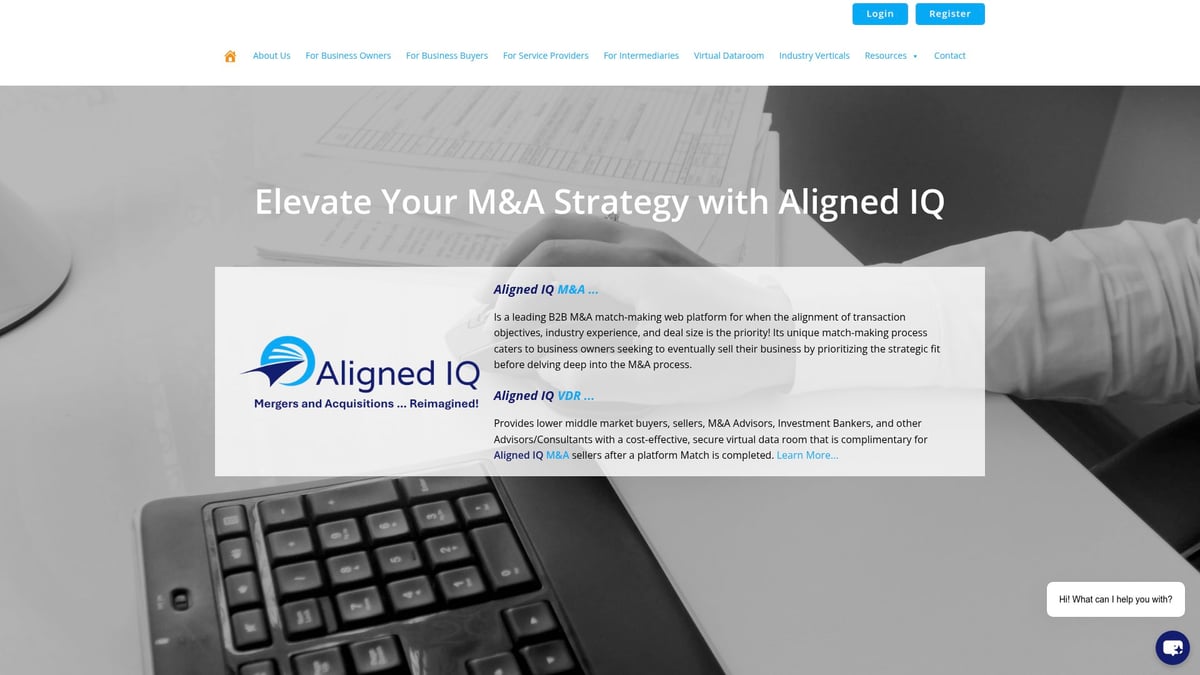
Aligned IQ VDR provides a secure, enterprise-grade virtual data room for due diligence. Sellers matched through Aligned IQ M&A receive complimentary access, while others can benefit from competitive pricing—see pricing details. For a closer look at these tools and how they simplify your sale, Take a Tour.
Finding the Right Buyer: Options, Outreach, and Fit
Identifying the ideal buyer is a critical milestone when you want to sell my business. The right fit can mean the difference between a seamless, lucrative exit and a stressful, drawn-out process. Buyers come in many forms, each with unique goals and expectations. By understanding these dynamics, you can tailor your approach and maximize your outcome.

Types of Buyers and What They Want
When you want to sell my business, knowing the buyer landscape is essential. The three main buyer types are:
| Buyer Type | What They Value | Typical Scenario |
|---|---|---|
| Strategic Buyers | Synergies, market expansion | Larger companies, industry competitors |
| Financial Buyers | Cash flow, ROI, growth | Private equity, investment groups |
| Individual Entrepreneurs | Lifestyle, independence | First-time buyers, management buyouts |
Strategic buyers often seek integration, while financial buyers focus on returns. Individual entrepreneurs may prioritize autonomy and legacy. Recognizing these preferences will help you position your business and negotiate more effectively.
Marketing Your Business for Sale
Effective outreach is crucial when you want to sell my business. Start by building a comprehensive, confidential information package that highlights strengths and growth potential. Consider these marketing channels:
- M&A platforms such as Aligned IQ M&A for targeted, confidential matchmaking
- Experienced business brokers
- Industry-specific networks and associations
Screen potential buyers carefully to ensure alignment and avoid wasted time. For a detailed roadmap, review Preparing your business for sale for practical steps on marketing and documentation.
Negotiating for Strategic Fit
Negotiation is about more than just price when you want to sell my business. Strategic fit—cultural alignment, operational compatibility, and shared vision—can significantly affect deal structure and long-term success.
A typical scenario involves buyers leveraging semi-proprietary platforms like Aligned IQ M&A. Here, sellers access a curated pool of motivated buyers, maintain confidentiality, and avoid broad public listings. This approach provides lower risk and greater control compared to traditional M&A processes. Sellers can explore their options privately and match with buyers who truly fit their goals.
Managing Buyer Interactions
Managing buyer interactions professionally is vital when you want to sell my business. Start with structured initial meetings, answer questions transparently, and always maintain confidentiality.
Use Aligned IQ VDR—a secure, enterprise-grade virtual data room—to share sensitive documents safely. This tool is complimentary for sellers post-match on Aligned IQ M&A and competitively priced for others, with full details at pricing. Regularly gather buyer feedback to refine your pitch and keep negotiations on track. Ready to experience a secure, streamlined process? Take a Tour of the platform today.
Navigating the Deal: Offers, Negotiations, and Due Diligence
Navigating the deal stage is where everything comes together for owners who want to sell my business. This phase is often fast-paced, detailed, and emotional. Understanding how to evaluate offers, negotiate effectively, and manage due diligence can make the difference between a smooth exit and a missed opportunity.
Evaluating Offers and Deal Structures
If you want to sell my business, you will likely receive several types of offers. Each structure comes with unique benefits and risks. Common deal types include all-cash, earnouts, seller financing, and equity rollovers.
Here is a quick comparison to help you weigh options:
| Offer Type | Pros | Cons |
|---|---|---|
| All-Cash | Immediate payout, low risk | May be lower overall price |
| Earnout | Potential higher total | Dependent on future performance |
| Seller Financing | Attracts more buyers | Ongoing risk, delayed payment |
| Equity Rollover | Upside in buyer's growth | Less liquidity, shared control |
When reviewing offers, balance price with terms. Sometimes, a higher price comes with risky contingencies. Watch for red flags like unclear funding, aggressive timelines, or vague contingencies. For a step-by-step breakdown, see these steps to sell your business successfully.
Negotiation Tactics and Best Practices
Strong negotiation is crucial when you want to sell my business. Begin by outlining your must-haves and your negotiables. This clarity helps you stay focused under pressure.
Bring in advisors, such as legal and financial experts, early. Their knowledge can be invaluable, especially if negotiations become complex. Counter-offers are common; use them to bridge value gaps or adjust deal terms. Creative structuring, like combining cash with earnouts, can satisfy both parties.
Platforms like Aligned IQ M&A, with its proprietary match-making model, let you negotiate directly with vetted buyers who are motivated and strategically aligned. This reduces wasted time and helps maintain confidentiality, unlike traditional broad-market approaches.
Due Diligence: What to Expect
Due diligence is the buyer's deep dive into your business. If you want to sell my business, expect requests for financial statements, legal documents, contracts, HR information, and tax records. This process can be intense, so preparation is vital.
Aligned IQ VDR offers secure, enterprise-grade virtual data rooms to simplify document sharing and protect sensitive information. Sellers who use Aligned IQ M&A gain complimentary access to VDR post-match, while others can take advantage of competitive pricing. This semi-proprietary approach ensures that only serious, matched buyers see your confidential data.
The "Take a Tour" feature allows you to see how Aligned IQ M&A and VDR streamline due diligence, making the process more efficient and less stressful compared to traditional M&A.
Managing Emotions and Staying Objective
The deal stage can be emotional and draining. Stay professional at all times. Avoid letting frustration or excitement cloud your judgment. Lean on your advisors, set boundaries, and take breaks to prevent deal fatigue.
Remaining objective will help you reach the best outcome when you want to sell my business, ensuring you exit on your terms and timeline.
Closing the Sale: Legal, Financial, and Transition Considerations
Finalizing the sale is where every owner who says, "I want to sell my business," turns intention into reality. This stage is about protecting your interests, ensuring compliance, and setting the groundwork for a successful transition. Whether you use traditional methods or a secure, semi-proprietary platform like Aligned IQ M&A, attention to detail is critical for maximizing value and minimizing risk.
Finalizing Legal Agreements
When you reach the closing table, legal documentation becomes your top priority. Key agreements include the purchase agreement, non-compete clauses, and assignment of business assets or intellectual property. If you want to sell my business and safeguard your future, work with experienced attorneys to review every document.
A well-structured deal will clarify obligations, limit post-sale liabilities, and ensure compliance with all regulatory requirements. The Aligned IQ M&A platform supports confidential negotiations and documentation, reducing the risks often found in traditional M&A processes. Sellers maintain control, and legal professionals help address any complex issues that arise. Finalizing these agreements is essential for a clean exit and peace of mind.
Financial Settlement and Tax Planning
Ensuring the financial aspects of your sale are handled correctly can have a lasting impact. If you want to sell my business and keep more of your proceeds, focus on deal structure and tax efficiency. Work with accountants to plan for capital gains or other taxes, and consider how payouts are structured—lump sum, installments, or earnouts.
Allocation of the purchase price among assets can affect your overall tax burden. Platforms like Aligned IQ M&A offer tools and resources to help sellers understand and optimize these choices. The Aligned IQ VDR, with competitive pricing, streamlines secure sharing of financial data, making due diligence and settlement more efficient. Proper planning at this stage ensures you maximize your financial outcome.
Transitioning Ownership and Operations
A seamless transition protects your legacy and the ongoing success of your business. If you want to sell my business and ensure continuity, plan for training, support periods, and clear communication with employees and customers. Many sellers choose to remain involved for a defined period, guiding the new owner through key processes.
Using Aligned IQ M&A and Aligned IQ VDR allows for confidential planning and secure document sharing, making transition smoother than traditional methods. For detailed strategies on maximizing transferable value and achieving a smooth handover, see Transition strategies for business owners. Typical scenarios include phased exits and structured transition plans, preserving relationships and business momentum.
Life After the Sale: Next Steps
After closing, you face new opportunities and challenges. If you want to sell my business and move forward, consider your next chapter—retirement, pursuing new ventures, or taking on advisory roles. Planning for life after the sale is just as important as the transaction itself.
The emotional impact of exiting your business can be significant. Take time to reflect, celebrate your achievements, and set new goals. With the right preparation and the support of platforms like Aligned IQ, you can transition confidently and embrace a rewarding post-exit future. Remember to "Take a Tour" of Aligned IQ M&A and VDR to see how these tools can support your journey.
As you think about selling your business in 2026, you deserve a process that feels tailored to your goals and respects your legacy. The right platform can make all the difference—connecting you with buyers whose priorities, experience, and vision align with yours. With Aligned IQ M&A’s unique approach, you can explore confidential opportunities, prioritize a strategic fit, and access secure tools for every step of the journey. If you’re curious how it all works or want to see how these features fit your exit strategy, I invite you to Take a Tour!
No responses yet