

Small business valuation software produces an estimated value range for a private company by applying methods such as market multiples, capitalized earnings and discounted cash flow to the financials you enter. The tools below run from a free estimate to a monthly subscription, and the right one depends on how formal the output must be and how soon you plan to sell.
Software gives you a defensible starting number, not a final price. Buyers will test your figures against normalized earnings, so the quality of your inputs matters as much as the tool you choose. If you want background on how those adjustments work, McMahon PC explains earnings normalization, valuation approaches and the limits of small-business estimates.
What a valuation tool does and what it cannot do
A valuation tool converts your financial statements into a value range using preset methods, and it cannot replace the judgment a buyer applies to your customer concentration, owner dependence or growth outlook.
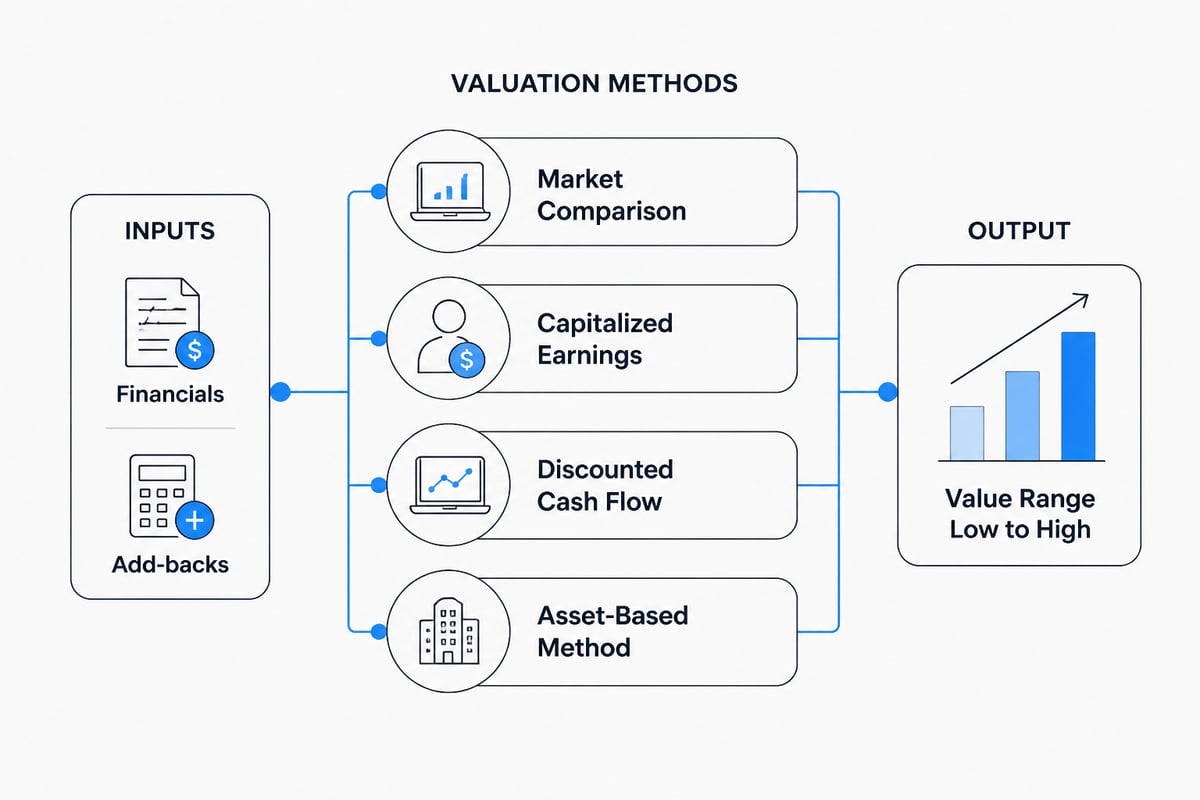
Most tools ask for revenue, owner compensation, add-backs, assets, debt and industry. They then apply one or several of these methods:
- Market comparison: applies a multiple drawn from reported private transactions in your industry.
- Capitalization of earnings: divides normalized, stable earnings by a required rate of return.
- Discounted cash flow: projects future cash flows and discounts them to today's value.
- Asset-based: adjusts the balance sheet to fair market value, often used for asset-heavy companies.
Treat the output as a range. A tool cannot see that your top client represents 40 percent of revenue, which is the kind of detail that moves a buyer's offer. For a broader view of how owners approach this step, see Aligned IQ's overview of small business valuation.
1. ExitSight
ExitSight is a web-based valuation app aimed at owners who want a documented, appraisal-style result rather than a quick estimate.
- Price: about $149 per month or $1,490 per year, according to the 2026 ExitSight comparison
- Key specs: web app; a 22-page appraisal-style PDF included; market data covering 118 industries
- Best use: owners seeking a documented valuation to share with a broker, CPA or prospective buyer
Verdict: A solid choice when a formal-looking report matters more than the lowest cost.
2. ValuAdder
ValuAdder is desktop valuation software sold as a one-time purchase instead of a subscription.
- Price: about $375 one-time, or $504 with Report Builder; a formal report template is about $185 (per the same comparison)
- Key specs: Windows and macOS; 15+ valuation methods reported in a comparison; formal report template available
- Best use: owners and valuation professionals who prefer desktop software and a single payment, and who may revisit the number several times before a sale
Verdict: The best fit for repeat use without a recurring fee.
3. ValuSource
ValuSource is a professional workflow built on Word and Excel, designed for people who prepare valuations for a living.
- Price: about $135 per month with a 12-month commitment, or $1,465 per year, with data sold separately (per the comparison)
- Key specs: desktop workflow; 300+ Excel schedules reported; specialist data extra
- Best use: credentialed appraisers and CPAs handling tax, litigation or ESOP work
Verdict: More tool than most owners need, and the data add-on raises the true cost.
4. BizEquity
BizEquity is an online platform that automates valuations using a proprietary blend of methods and market data.
- Price: not listed here
- Key specs: online platform; client-ready, white-label reports
- Best use: financial advisors and institutions introducing valuation to business-owner clients
Verdict: Built for advisors who distribute reports to clients, so an owner will usually meet it through an advisor.
5. Valzura
Valzura offers a free estimate with paid reports for owners who want more detail.
- Price: free estimate; about $299 per report; Advisor plan from about $99 per month (per the 2026 comparison)
- Key specs: web app; 20+ page PDF report; its comparison page lists 6 methods and 43 industries
- Best use: owners who want a free first look and then a single paid report when a sale gets closer
Verdict: A low-commitment path from rough estimate to written report.
6. Equitest
Equitest is a web app that charges by valuation volume, not by report.
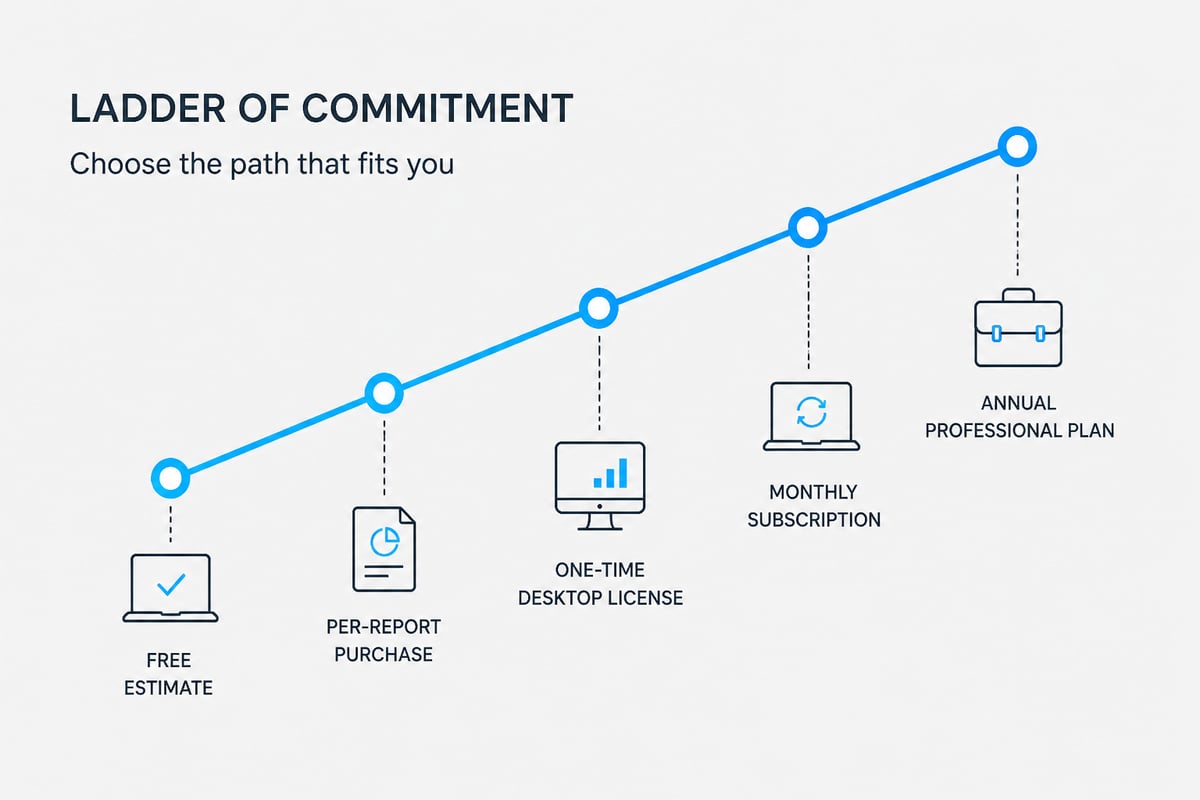
- Price: about $50, $100 or $300 per month, depending on plan
- Key specs: web app; Starter plan covers up to 5 valuations; Professional up to 15
- Best use: users who need recurring valuations across several startups or small companies, such as an owner with more than one entity or a holding structure
Verdict: Worth a look for multi-entity owners, less so for a single one-time estimate.
7. Valzy
Valzy delivers a PDF valuation report quickly and charges per valuation.
- Price: about $249 per valuation
- Key specs: web app; PDF report; report delivered in under 20 minutes
- Best use: owners who need a fast single report for a one-time valuation need
Verdict: Speed and a per-use price make it practical for a one-time need.
8. EZvaluation
EZvaluation is the most budget-friendly entry here, built around a short questionnaire.
- Price: free estimate; about $24.95 for the full report
- Key specs: web app; questionnaire takes 10 to 15 minutes; full report is 9 to 10 pages
- Best use: owners who want a quick, low-cost estimate before deciding whether to invest in more rigorous work
Verdict: A reasonable first step, with the caveat that a short report carries less detail.
9. Aligned IQ Virtual Dataroom
The Aligned IQ Virtual Dataroom is not a valuation calculator. It is a secure online data room for M&A transactions, where deal documents are shared with potential buyers or sellers, and it fits at the stage after your valuation is done and a transaction begins.
- Key specs: secure data room for deal documents; used to share files with potential buyers or sellers
- Best use: owners who have a valuation in hand and are ready to organize financials, contracts and diligence files for a counterparty
- Note on access: the VDR is complimentary for Aligned IQ M&A sellers after a match is completed
Verdict: Not a substitute for valuation software, but a practical next tool once the number is set.
How the tools compare
| Tool | Format | Approximate price (Nov 2026) | Report | Best use |
|---|---|---|---|---|
| ExitSight | Web app | $149/month or $1,490/year | 22-page PDF | Documented owner valuation |
| ValuAdder | Desktop | $375 one-time; $504 with Report Builder | Template extra ($185) | Repeat desktop use |
| ValuSource | Desktop (Word/Excel) | $135/month or $1,465/year; data extra | 300+ schedules | CPAs and appraisers |
| BizEquity | Online platform | Not listed | White-label | Advisor-led use |
| Valzura | Web app | Free estimate; $299/report | 20+ pages | One-off estimate or report |
| Equitest | Web app | $50, $100 or $300/month | Plan-metered | Recurring valuations |
| Valzy | Web app | $249/valuation | PDF in under 20 minutes | Fast single report |
| EZvaluation | Web app | Free estimate; $24.95 report | 9 to 10 pages | Quick, low-cost estimate |
| Aligned IQ Virtual Dataroom | Secure data room | See VDR pricing page | Not applicable | Sharing deal documents |
For additional side-by-side detail, ExitSight’s comparison page breaks down pricing, market data and reporting features.
How to choose small business valuation software
Choose small business valuation software by matching the output to its audience: a casual estimate for your own planning, a formal report for a lender or buyer, or a professional workbook for tax and legal work.
Use these checks:
- Audience for the report. A buyer or lender expects a more documented result than a quick estimate.
- Cost versus frequency. A one-time purchase suits repeated revisions, while a per-report price suits a single need.
- Input quality. The tool only reflects what you enter, so prepare three years of financials and a list of owner add-backs first.
- Methods shown. More methods give you a cross-check, though the inputs still drive the answer.
- Industry data. Check that your sector is covered.
A broader review of valuation tools at The CFO Club includes professional and startup-focused options if your needs extend beyond these eight.
Why a software estimate is only the start of an exit
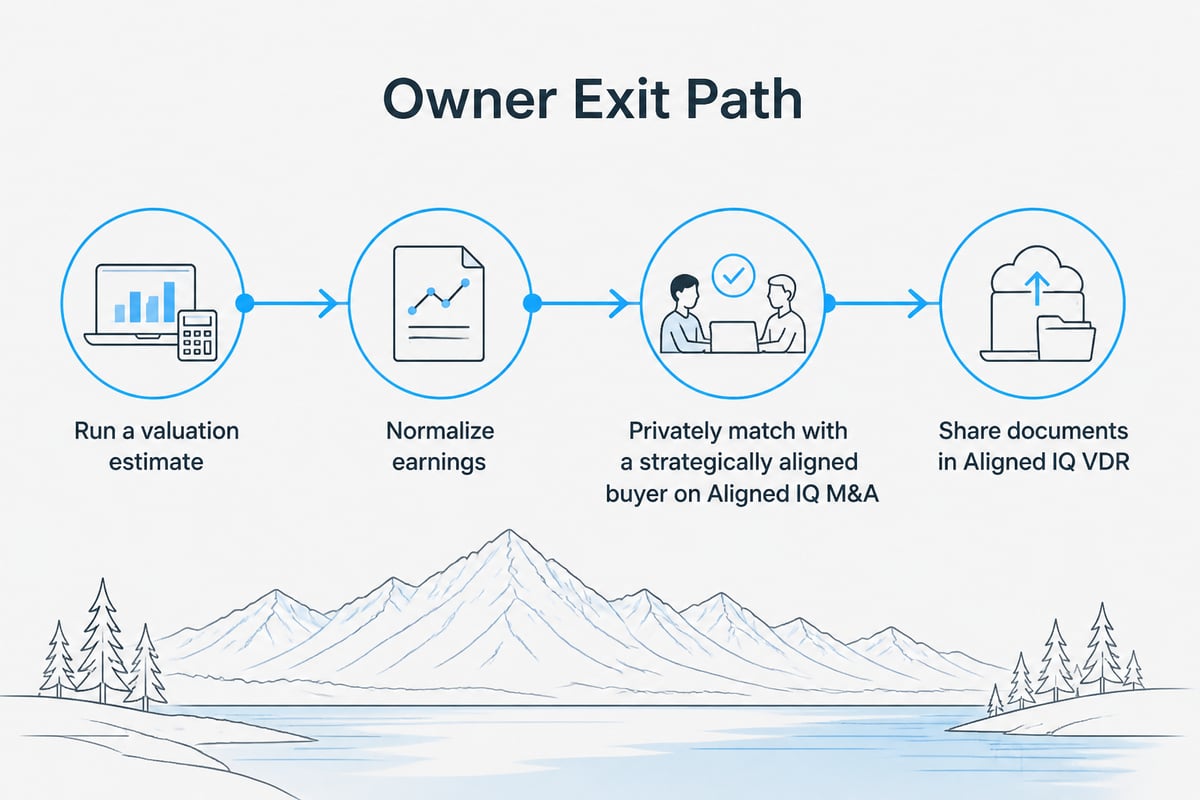
A software estimate gives you a number, but a sale price comes from a buyer who shares your priorities and sees a strategic fit. That is where a valuation tool ends and an exit process begins.
In a traditional M&A process, an owner often exposes the business broadly before knowing who is a serious counterparty, which creates confidentiality risk. Aligned IQ M&A takes a different approach. It is a proprietary web platform where buyers and sellers meet privately to explore potential deals, and it puts strategic fit first, so goals are agreed before anyone digs into detail. Matches are based on transaction priorities, deal size, and industry experience and expertise, and buyers present themselves as attractive exit options to owners, which keeps the process lower risk, confidential and secure compared with a broad listing.
A typical scenario: an owner runs a valuation tool, gets a range, and then wants to test it against real interest without announcing a sale. Aligned IQ M&A supports that stage, while the separate Aligned IQ VDR handles document sharing once a match is made. The M&A platform handles matching and strategy, and the VDR is the secure data room for diligence files.
If you are also weighing professional input, Aligned IQ's pages on business valuation software and selling a small business cover how the pieces connect, and Valzura’s comparison page lists tools by price, method and intended user.
Preparing your inputs before you run any tool
Clean inputs matter more than the tool, because every product here will return a weak range if the earnings figure is wrong.
- Normalize earnings. Add back owner perks, one-time expenses and above-market owner pay, and subtract below-market owner pay.
- Gather three years of statements. Profit and loss, balance sheet and tax returns give consistent support.
- Document concentration. Note any customer or supplier above a meaningful share of revenue.
- Run more than one tool. Two or three estimates show the spread, and a wide gap signals that an input needs review.
- Know the cost of a professional alternative. Aligned IQ's page on business valuation cost outlines what formal engagements typically involve.
Take a tour of Aligned IQ M&A to see how strategy-first matching works alongside your valuation work.
Start by running a free estimate from a tool such as Valzura or EZvaluation, and compare it with one paid report so you can see the spread before choosing a price to defend. When you are ready to test that number against real buyers, take a tour of Aligned IQ M&A to see how private, strategy-first matching works, and review Aligned IQ VDR pricing when you move to document sharing.
No responses yet