

New business acquisition represents one of the most significant growth strategies available to companies in 2026, offering immediate market access, enhanced capabilities, and accelerated revenue expansion. As traditional organic growth methods face increasing headwinds from market saturation and competitive pressures, more organizations are turning to acquisitions as their preferred pathway to scale. However, the process demands meticulous planning, strategic alignment, and thorough execution to deliver the promised value that motivates dealmakers to pursue these complex transactions.
Understanding the New Business Acquisition Landscape
The M&A environment has evolved dramatically over the past several years, with technology platforms and data-driven approaches fundamentally reshaping how buyers and sellers connect. Traditional methods of new business acquisition often involved lengthy intermediary chains, limited visibility into potential matches, and misaligned expectations between parties.
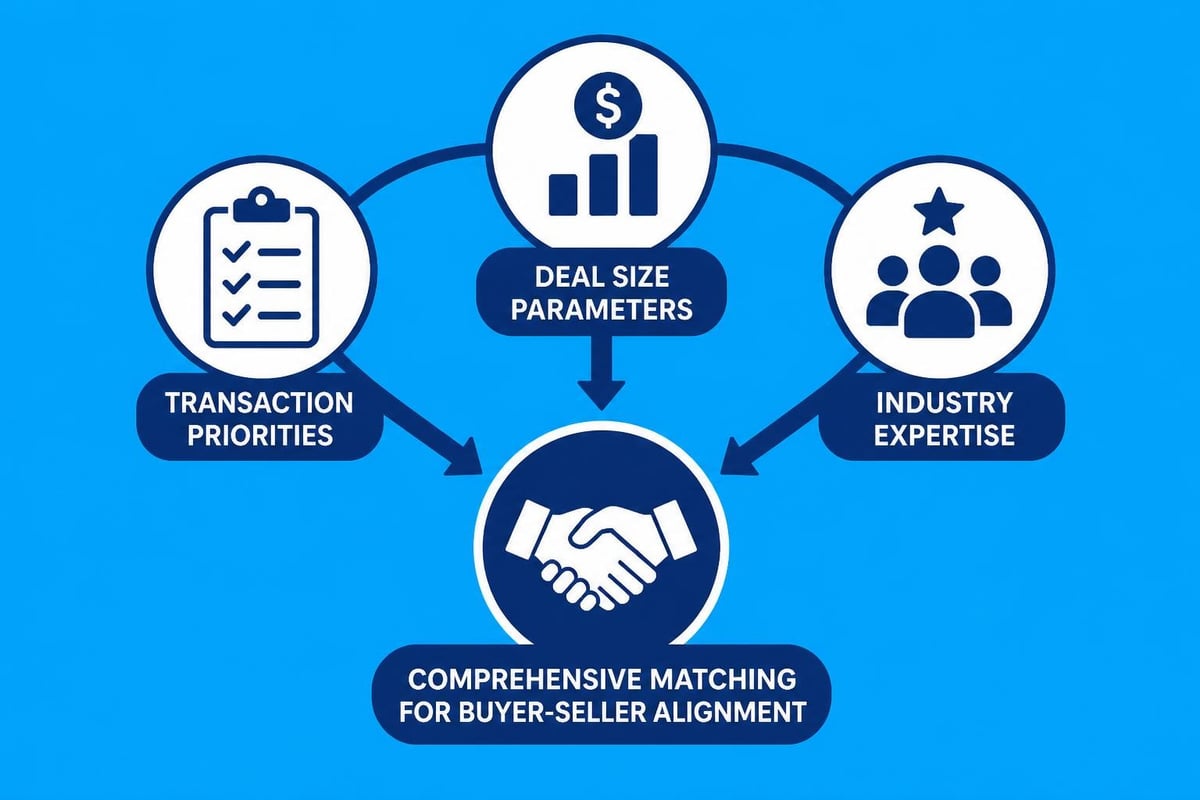
Modern acquisition platforms have transformed this dynamic by prioritizing strategic fit before diving into financial details. This approach recognizes that even the most attractively priced acquisition can fail if the cultural, operational, and strategic elements don't align properly. Business owners exploring exit options increasingly value confidentiality and control over the process, seeking environments where they can evaluate potential buyers without broadcasting their intentions to the broader market.
The Strategic Foundation
Every successful new business acquisition begins with a clear strategic rationale. Buyers must articulate precisely what they hope to achieve through the transaction:
- Market expansion into new geographic territories or customer segments
- Capability enhancement through acquiring specialized talent, technology, or intellectual property
- Revenue acceleration by integrating complementary product lines or service offerings
- Cost synergies from operational efficiencies and economies of scale
- Competitive positioning to strengthen market share or eliminate rivals
Understanding your acquisition as a growth strategy helps establish the criteria for evaluating potential targets and ensures alignment across your leadership team.
Sourcing and Identifying Acquisition Targets
The quality of your new business acquisition pipeline directly influences your ultimate success. Traditional sourcing methods relied heavily on investment bankers, business brokers, and professional networks, each adding time and cost to the process.
Today's buyers benefit from sophisticated deal sourcing platforms that use algorithmic matching to identify opportunities based on specific criteria. These platforms create proprietary or semi-proprietary environments where serious buyers can showcase their value proposition to potential sellers who aren't yet publicly marketing their businesses.
Building Your Target Profile
Creating a detailed acquisition target profile serves as your north star throughout the sourcing process:
- Define financial parameters including revenue range, profitability metrics, and acceptable adjusted EBITDA multiples
- Specify industry requirements based on your team's expertise and strategic objectives
- Establish geographic preferences considering operational integration complexity
- Identify deal structure preferences such as asset purchase versus stock purchase
- Determine integration capacity to ensure you don't overextend organizational resources
The most effective buyers maintain disciplined adherence to these criteria while remaining flexible enough to recognize exceptional opportunities that may fall slightly outside initial parameters.
| Sourcing Method | Advantages | Disadvantages | Best For |
|---|---|---|---|
| Investment Bankers | Professional process management, broad networks | High fees (3-10% of deal value), competitive auctions | Larger transactions ($50M+) |
| Business Brokers | Lower cost, local market knowledge | Limited screening, variable quality | Smaller deals (under $10M) |
| Direct Outreach | No intermediary fees, relationship control | Time-intensive, lower response rates | Specific strategic targets |
| M&A Platforms | Efficient matching, confidentiality, lower cost | Requires active platform engagement | Lower middle-market deals |
Due Diligence and Deal Assessment
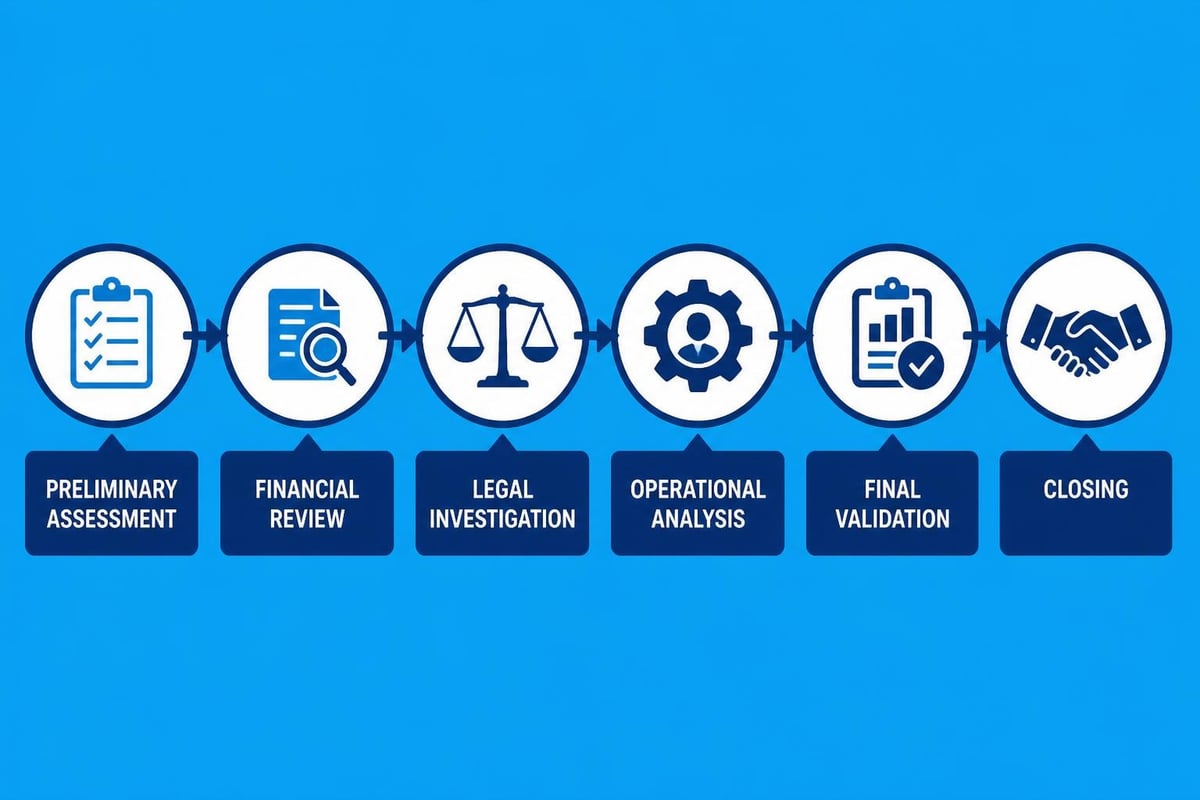
Once you've identified promising acquisition candidates, rigorous due diligence separates successful transactions from costly mistakes. The new business acquisition process demands comprehensive investigation across financial, operational, legal, and cultural dimensions.
Financial due diligence extends far beyond reviewing historical statements. You need to understand revenue quality, customer concentration, working capital requirements, and the sustainability of reported profitability. Pay particular attention to discretionary expenses, one-time adjustments, and accounting policies that may obscure the true economic performance.
Legal and Regulatory Considerations
Legal due diligence has grown increasingly complex as regulatory scrutiny of acquisitions intensifies. The U.S. DOJ/FTC 2023 Merger Guidelines provide essential context for assessing antitrust risk, particularly for transactions that may substantially reduce competition in defined markets.
A comprehensive legal due diligence checklist for business acquisition should examine:
- Corporate structure and governance documents
- Material contracts and customer/supplier agreements
- Intellectual property ownership and protection
- Employment agreements and benefit plans
- Litigation history and pending disputes
- Regulatory compliance and permits
- Environmental liabilities and assessments
For cross-border transactions, regulatory complexity multiplies significantly. International tax considerations, including new frameworks like Pillar Two, can substantially impact deal economics and structure as outlined in Deloitte’s analysis of tax impacts on M&A.
The Strategic Fit Assessment
While financial and legal diligence receive significant attention, evaluating strategic fit often determines whether an acquisition delivers promised value. This assessment examines whether the target's business model, culture, technology infrastructure, and operational processes can effectively integrate with your organization.
In a typical scenario, a software company might identify an attractive acquisition target with strong revenue growth and solid customer retention. However, deeper investigation reveals that the target's sales model relies heavily on the founder's personal relationships, creating significant key-person risk. Understanding this dynamic before closing allows the buyer to structure earnouts, retention agreements, and transition plans that mitigate the risk.
Valuation and Deal Structuring
Determining the appropriate price for a new business acquisition requires balancing quantitative analysis with qualitative judgment. Multiple valuation methodologies provide different perspectives:
- Comparable company analysis benchmarks the target against similar businesses
- Precedent transaction analysis examines recent acquisition multiples in the sector
- Discounted cash flow models the present value of projected future cash flows
- Asset-based valuation calculates the fair market value of underlying assets
The gap between buyer and seller expectations represents one of the most common deal obstacles. Sophisticated deal structures can bridge this gap through earnouts, seller financing, equity rollovers, and performance-based payments that align incentives and share risk.
Competitive Data Room Dynamics
Once negotiations advance beyond preliminary discussions, secure information exchange becomes critical. Traditional virtual data rooms often carry prohibitively high costs for lower middle-market transactions, creating barriers to efficient deal execution.
Aligned IQ VDR addresses this challenge by providing secure, feature-rich virtual data rooms at competitive pricing that makes sense for transactions of all sizes. The platform offers complimentary VDR access for sellers who complete matches through the Aligned IQ M&A platform, while maintaining affordable rates for other buyers, sellers, and intermediaries who need professional-grade security and functionality.
Integration Planning and Execution
The period following deal closure determines whether a new business acquisition creates or destroys value. Research consistently demonstrates that integration planning should begin during due diligence, not after signing. According to PwC’s M&A Integration Survey, companies that invest in early integration planning achieve significantly better outcomes than those treating integration as an afterthought.
Effective integration addresses multiple dimensions simultaneously:
- Day One readiness ensures basic operations continue without disruption
- Quick wins demonstrate value creation and build momentum
- Talent retention secures key employees through the transition uncertainty
- Systems integration consolidates technology platforms and data
- Culture integration blends organizational values and working styles
- Customer communication maintains relationships through ownership changes
The best practices for post-merger integration emphasize the importance of dedicated integration teams, clear accountability, regular communication, and metrics-driven progress tracking.

Bolt-On Acquisitions and Platform Strategy
For buyers pursuing multiple acquisitions, developing a repeatable integration playbook accelerates execution and reduces risk. A well-executed bolt-on acquisition strategy allows organizations to systematically add capabilities while maintaining operational stability in the core business.
In a typical scenario, a regional service provider might acquire smaller competitors in adjacent markets, using a standardized integration approach that preserves local customer relationships while capturing back-office efficiencies. This disciplined approach to new business acquisition enables faster growth than pursuing larger, more complex transactions.
Risk Mitigation Throughout the Process
Every new business acquisition carries inherent risks that can undermine expected returns. Sophisticated buyers implement multiple layers of protection:
Representation and warranty insurance has become increasingly common, transferring certain risk categories to insurance carriers and facilitating cleaner negotiations. This coverage can protect buyers from undisclosed liabilities, inaccurate financial statements, and breaches of seller representations.
Escrow arrangements hold back a portion of the purchase price to cover indemnification claims that emerge post-closing. Typical escrows range from 10-20% of deal value and remain in place for 12-24 months.
Employment agreements with key personnel ensure continuity during the transition period. These agreements should include appropriate non-compete, non-solicitation, and confidentiality provisions to protect the investment.
Managing Cross-Border Complexity
International acquisitions introduce additional risk layers including currency fluctuation, regulatory differences, and cultural challenges. Global merger regulation trends demonstrate increasing coordination among antitrust authorities worldwide, requiring earlier engagement and more comprehensive filings.
Currency risk can be partially hedged through forward contracts or natural hedges where the acquired business generates revenue in the same currency as debt service. However, structural currency exposure often remains, requiring careful consideration in valuation and financing decisions.
Financing Your Acquisition Strategy
The capital structure for a new business acquisition significantly impacts returns and risk profile. Most transactions employ a combination of funding sources:
| Financing Source | Typical Terms | Advantages | Considerations |
|---|---|---|---|
| Cash Reserves | Immediate availability | No dilution or debt service | Depletes working capital |
| Senior Debt | 3-4x EBITDA, 5-7 year term | Leverage enhances returns | Requires debt service coverage |
| Seller Financing | 10-30% of purchase price | Demonstrates seller confidence | Ongoing seller relationship |
| Equity Investment | Varies by structure | Shares risk with partners | Dilutes ownership |
| Earnouts | Performance-based payments | Bridges valuation gaps | Potential for disputes |
The optimal capital structure balances cost of capital, financial flexibility, and risk tolerance. Conservative buyers maintain lower leverage to preserve options for future acquisitions, while aggressive financial buyers maximize leverage to enhance equity returns.
The Role of Intermediaries and Service Providers
While technology platforms have democratized access to acquisition opportunities, professional advisors continue to play valuable roles in new business acquisition transactions. The key is engaging specialists strategically where their expertise justifies the cost.
For business owners contemplating exit options, understanding when to engage intermediaries can significantly impact outcomes. M&A advisors bring process expertise, negotiation skills, and market knowledge that often justify their fees on larger transactions. However, proprietary platforms offer alternatives for owners who prefer maintaining control and confidentiality while exploring potential matches.
Quality-of-earnings reviews by independent accounting firms provide buyers with objective assessment of financial performance, often uncovering adjustments that significantly impact valuation. Legal counsel experienced in M&A transactions structures deals to minimize tax liability and protect against post-closing disputes.
Building Repeatable Acquisition Capabilities
Organizations pursuing new business acquisition as a core growth strategy benefit from developing institutional capabilities that improve with each transaction. This includes standardized playbooks, experienced integration teams, and refined evaluation criteria.
Lower middle-market PE firms exemplify this approach, executing multiple acquisitions annually using proven frameworks. Their success demonstrates that acquisition expertise is learnable and scalable, not dependent solely on deal-by-deal improvisation.
Key elements of repeatable acquisition capability include:
- Consistent screening criteria that reflect strategic priorities and prevent mission creep
- Due diligence templates that ensure comprehensive investigation without reinventing processes
- Valuation models calibrated to your industry with appropriate benchmarks and assumptions
- Integration playbooks that balance standardization with deal-specific customization
- Performance metrics that track value creation and inform future decisions
Platform Acquisitions as Foundation
Companies new to acquisitive growth often benefit from identifying a strong platform acquisition that serves as foundation for subsequent bolt-on deals. The platform provides scale, infrastructure, and management capabilities to support additional transactions while establishing market presence in the target sector.
In a typical scenario, a first-time acquirer might purchase a well-run business with strong systems and experienced management, then systematically add smaller competitors that benefit from integration into the larger platform. This staged approach builds acquisition competency while managing execution risk.
Technology Infrastructure for Deal Success
Modern M&A demands sophisticated technology infrastructure to manage complex processes, secure sensitive information, and facilitate collaboration among multiple parties. Beyond basic virtual data rooms, comprehensive platforms integrate deal sourcing, due diligence management, workflow automation, and communication tools.
The distinction between matchmaking platforms and secure data repositories has become increasingly important. Aligned IQ M&A serves as a proprietary web platform where buyers and sellers connect based on strategic alignment before engaging in detailed discussions. This confidential environment protects seller privacy while allowing buyers to showcase their value proposition.
Once matches progress to active negotiations, Aligned IQ VDR provides the secure infrastructure for information exchange, with granular permission controls, comprehensive audit trails, and collaboration features that streamline the due diligence process. This separation ensures appropriate tools for each phase of the transaction lifecycle.
Lessons from Successful Transactions
Analyzing patterns across successful acquisitions and mergers reveals consistent themes that differentiate value-creating deals from disappointing outcomes. The most successful acquirers share several characteristics:
They maintain disciplined criteria rather than chasing every opportunity. Clear strategic rationale prevents mission creep and ensures acquisitions genuinely advance corporate objectives.
They invest in relationships with potential targets long before formal processes begin. This patient approach yields better information, stronger trust, and often more favorable terms than competitive auction processes.
They plan integration concurrently with due diligence rather than treating it as a post-closing afterthought. Early planning identifies risks, preserves value, and accelerates realization of synergies.
They communicate transparently with stakeholders throughout the process. Employees, customers, and partners appreciate honest dialogue that reduces uncertainty and builds confidence in the transition.
They measure rigorously against pre-deal assumptions, learning from both successes and disappointments to refine future approach.
Successful new business acquisition requires balancing strategic vision with operational discipline, combining thorough analysis with timely execution. The most effective acquirers recognize that finding the right strategic fit often matters more than securing the lowest price, and that value creation extends far beyond the closing date.
For buyers and sellers seeking a more collaborative M&A process built on strategic alignment, Aligned IQ M&A offers a confidential platform where matches are based on transaction priorities, deal size, and industry expertise rather than simply broadcasting opportunities to the broadest audience. Take a tour to discover how our matchmaking approach can help you find the perfect counterparty for your M&A goals while maintaining the privacy and control essential to exploring transformative business opportunities.
No responses yet