

In today’s business environment, the stakes for data room security have never been higher. Lower-middle market M&A transactions, once overlooked by cybercriminals, are now prime targets for sophisticated attacks seeking confidential deal information.
As threats evolve, traditional methods no longer suffice. This guide delivers proven strategies and practical steps to help you secure your data room, protect your business interests, and maintain trust throughout every transaction. You will learn how to identify modern risks, leverage essential and advanced security features, ensure compliance, and empower your team for safe, seamless deal execution. Ready to strengthen your data room security? Let’s get started.
Understanding Data Room Security Risks in 2026
The evolving landscape of data room security presents significant challenges for businesses navigating confidential transactions. Cybercriminals are increasingly targeting virtual data rooms, especially within the lower-middle market, where proprietary and semi-proprietary deal information holds immense value. The rise of AI-powered attacks has made breaches more frequent and sophisticated, with automated scans now occurring thousands of times per second. According to AI-driven cyberthreat surge, the threat environment is more dynamic than ever, making robust data room security a necessity rather than a luxury. Attackers commonly exploit phishing, credential compromise, ransomware, and insider threats, with 74% of breaches involving a human element. Lower-middle market businesses are now prime targets, as attackers perceive their defenses as weaker and their deal data as highly valuable.

Evolving Cyber Threat Landscape
Targeted attacks on M&A and business transaction data rooms have surged, putting confidential deal data at risk. Phishing remains a primary entry point, as attackers trick users into revealing credentials. Weak passwords and credential reuse further expose businesses to compromise. Ransomware and insider threats add complexity, with attackers aiming to access or disrupt sensitive documents. Lower-middle market firms, often relying on traditional processes, are seen as easier targets compared to large enterprises. Attackers value the confidential, off-market nature of these deals, seeking out proprietary information that can be monetized or leveraged. Data breaches are costly, averaging $4.45 million per incident, and the impact is magnified when confidential transactions are exposed.
Common Vulnerabilities in Virtual Data Rooms
Many data room security failures stem from misconfigured access controls, which allow unauthorized users to view sensitive documents. Download security is another weak point, as unrestricted file downloads or the absence of information rights management (IRM) expose proprietary data to leaks. Weak authentication protocols, such as password-only logins without multi-factor authentication, make credential stuffing attacks more likely. Human error is a persistent risk, with accidental sharing or falling for phishing emails compromising data room security. Lower-middle market examples include sellers unintentionally granting broad access to buyer groups or advisors, resulting in near-miss incidents. Unlike secure, purpose-built VDRs, traditional M&A processes lack these critical safeguards, increasing the exposure risk for confidential deals.
The Stakes: Financial, Legal, and Reputational Impact
The consequences of inadequate data room security are far-reaching. Financial losses extend beyond direct remediation costs, often impacting the overall value of a deal or causing transactions to collapse entirely. Regulatory penalties for breaches—such as those under GDPR, HIPAA, or CCPA—can be severe, regardless of company size. For lower-middle market businesses, reputational damage is particularly damaging, as trust is essential in confidential, off-market transactions. Case studies have shown deals failing or becoming embroiled in legal disputes after leaked documents surfaced. Protecting proprietary information with strong data room security is essential to avoid these pitfalls and to sustain future deal flow in sensitive markets.
Core Data Room Security Features Every Business Needs
Securing sensitive deal documents requires more than just passwords or file storage. For lower-middle market buyers and sellers, the right data room security features can mean the difference between a smooth transaction and a costly breach. Let us explore the core controls every business should demand from their virtual data room.
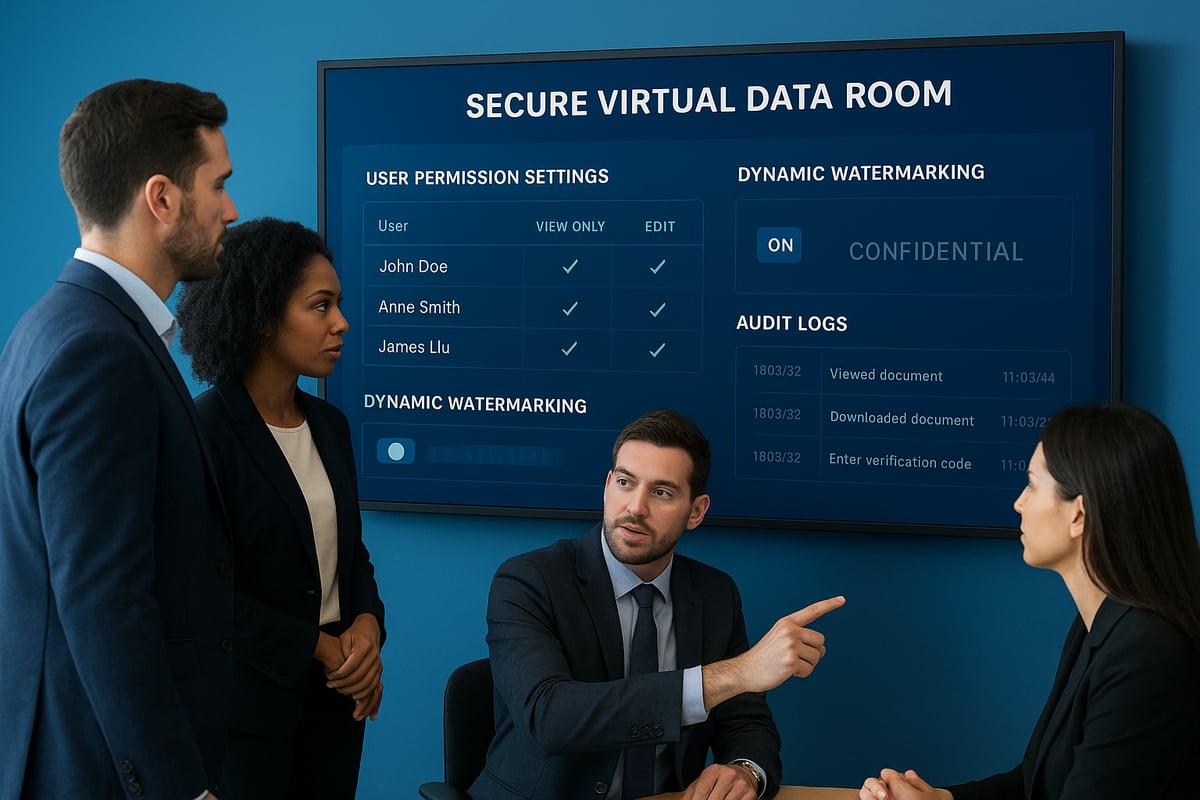
Robust Access Controls and Permissions
Data room security starts with strict access controls. In the lower-middle market, deals often involve multiple parties with varying information needs, such as sellers, buyers, advisors, and service providers.
- Assign role-based access so users only see what is relevant to them.
- Manage groups separately for each stakeholder type.
- Use “View As” or impersonation tools to verify permissions before inviting users.
For example, during due diligence, granular permissions ensure buyers cannot access confidential seller data not intended for their review. This minimizes accidental exposure and maintains tight control over deal-critical information.
Multi-Factor Authentication (MFA) and Single Sign-On (SSO)
Authentication is a cornerstone of data room security. Weak or reused passwords remain a major risk. Enabling MFA, especially via authentication apps instead of SMS, greatly reduces the chance of credential theft. Single Sign-On (SSO) streamlines access for advisors and frequent users, reducing password fatigue.
By choosing a provider like Secure M&A data rooms, lower-middle market firms benefit from robust authentication protocols that protect semi-proprietary deal data. These features help prevent credential stuffing, a common attack in smaller, confidential transactions.
Information Rights Management (IRM) and Secure Download Controls
IRM technology is vital for data room security. It lets admins control who can download, print, or forward sensitive files. Features like encrypted downloads, document expiry, and revocation ensure that confidential financials or contracts are not misused after access is granted.
Restricting “original download” rights further reduces risk. For instance, after a buyer completes due diligence, their ability to download sensitive documents can be revoked instantly, preserving confidentiality and reducing lingering exposure.
Audit Trails and Activity Monitoring
Continuous monitoring is essential for any secure virtual data room. Real-time audit logs record every document view, download, and permission change.
If an unauthorized download or unusual access pattern occurs, administrators are alerted immediately. This level of transparency is crucial for regulatory compliance and for resolving disputes if questions arise later in the deal process.
Dynamic Watermarking and Document Protection
Dynamic watermarking places a personalized, irremovable mark on every document, deterring leaks and tracing unauthorized sharing to its source. In confidential, off-market deals typical of Aligned IQ’s platform, this feature is a strong deterrent against insider threats.
Combined with download restrictions and IRM, dynamic watermarks help ensure that sensitive data does not circulate beyond intended parties, maintaining trust and regulatory compliance.
Advanced Strategies for Data Room Security in 2026
As cyber threats evolve, lower-middle market businesses must move beyond basic data room security and adopt advanced strategies. These measures offer enhanced protection for proprietary deal data and confidential transactions, which are frequent targets for cybercriminals. Let us explore the most impactful advanced security features shaping secure virtual data rooms today.

IP-Based Access Restrictions and Geo-Fencing
Restricting data room access by IP address or geographic region stops unauthorized users, even if credentials are compromised. For lower-middle market deals, this is especially valuable when buyers, sellers, and advisors are located across various regions.
- Configure the data room to allow only approved office or home IPs.
- Block logins from unexpected countries, which are often red flags for credential theft.
- Apply geo-fencing to prevent access from high-risk areas.
These settings are vital for confidential, semi-proprietary deals where exposure can lead to premature information leaks. By focusing on data room security at the network level, firms gain powerful, proactive control.
Secure Spreadsheet and Sensitive Data Viewers
Financial models and proprietary spreadsheets are among the most sensitive files in any transaction. Advanced data room security features limit spreadsheet actions, such as copying, editing, or even screen capturing.
- Use secure viewers that disable formula viewing and copying.
- Restrict spreadsheet downloads to authorized users only.
- Limit access to sensitive cells or tabs within files.
This granular control is essential for semi-proprietary lower-middle market deals, where the risk of data leakage is heightened. Such measures maintain confidentiality while allowing buyers to review information securely.
Automated Threat Detection and Anomaly Alerts
Modern data room security platforms use AI-driven monitoring to spot unusual access patterns or rapid downloads. Immediate alerts help administrators act before a breach escalates.
- Detect logins from unfamiliar devices or locations.
- Flag users who download large volumes of documents in a short time.
- Alert on repeated failed login attempts.
With these capabilities, lower-middle market firms can respond to threats in real time, protecting proprietary deal data and preserving trust throughout the transaction.
Integration with Compliance and Legal Frameworks
Compliance is non-negotiable for any data room security strategy. Advanced VDRs automate privacy-by-design and privacy-by-default, ensuring every action is logged and compliant with standards like GDPR, HIPAA, and ISO/IEC 27001.
- Automated compliance logs for audit readiness.
- Built-in checks for cross-border data sharing requirements.
- Seamless integration of legal hold and retention policies.
These features reduce manual compliance work for lower-middle market businesses, letting teams focus on the transaction rather than regulatory worries.
Continuous Security Updates and Patch Management
The threat landscape is always changing, so data room security must be continuously updated. Regular VDR software updates address emerging vulnerabilities, and vendors should prioritize timely patching.
- Schedule automatic updates to minimize human error.
- Review vendor patch history and responsiveness.
- Adopt an integrated vulnerability management framework to prioritize and address risks efficiently.
For lower-middle market deals, outdated software can be a significant liability. Prioritizing updates ensures the data room remains a secure environment for confidential, semi-proprietary dealmaking.
Compliance and Legal Considerations for Data Room Security
Protecting sensitive deal documents in virtual data rooms means more than just strong passwords. Robust data room security must address a complex web of regulations, certifications, contracts, and operational practices. For lower-middle market transactions, this is not optional—compliance is a deal-critical requirement.

Navigating Global and Industry-Specific Regulations
Data room security is shaped by an evolving regulatory landscape. Key standards like ISO/IEC 27001, GDPR, HIPAA, and CCPA impose strict controls over data privacy, security, and access. Lower-middle market businesses are held to the same standards as larger firms, especially when handling proprietary or semi-proprietary deal information.
Cross-border transactions add complexity. Data residency laws may require documents to stay within specific jurisdictions, while privacy rights dictate how personal data is processed. Understanding these requirements is essential for any organization using virtual data rooms to manage confidential M&A documents.
Security Certifications and Regular Auditing
Selecting a VDR provider with recognized security certifications is fundamental for data room security. Third-party audits such as SOC 2 Type II or ISO/IEC 27001 provide assurance that the platform meets rigorous standards for confidentiality and integrity.
Routine security audits help identify gaps before they become liabilities. For example, a lower-middle market firm that schedules annual audits can proactively address weaknesses, maintaining trust with buyers and sellers. Documenting audit results is also vital for demonstrating compliance during regulatory reviews.
Contractual Protections and Liability
Legal agreements play a pivotal role in data room security. Including data protection clauses in NDAs and transaction contracts clarifies each party’s responsibilities and rights in the event of a breach. This is especially important in confidential, off-market deals.
For sellers, defining how sensitive materials are handled and who can access them reduces the risk of disputes. To learn more about best practices for confidentiality during a business sale, review this sale of business confidentiality resource. In proprietary deals, clear contracts can provide legal recourse if confidential data is mishandled.
Data Retention and Deletion Policies
Every data room security strategy should address how long documents are retained after a deal closes. Secure deletion protocols, such as automated data room closure, ensure that sensitive files are not left exposed. Lower-middle market teams benefit from these controls, as they often manage smaller, more focused deal rooms.
Establishing clear retention timelines and deletion procedures also supports compliance with privacy regulations. Regularly reviewing and updating these policies helps organizations minimize long-term risk.
Responding to Regulatory Inquiries and Data Breaches
When a data breach or regulatory inquiry occurs, rapid, organized response is crucial for data room security. Maintaining detailed logs of user activity and document access enables quick investigation and reporting.
Teams should prepare a breach notification plan, including steps for informing affected parties and regulators. In confidential markets, demonstrating due diligence and transparency can limit penalties and preserve reputation. Advance preparation ensures that compliance obligations are met, even in high-pressure situations.
The Critical Role of User Training and Security Awareness
No matter how advanced your platform, data room security is only as strong as the people using it. In the lower-middle market, where teams are lean and confidentiality is paramount, training users to recognize risks and follow best practices is essential. Even the most sophisticated virtual data rooms can be compromised by a single misstep.
Human Error: The Weakest Link in Data Room Security
Research shows that 74 percent of breaches involve a human element. In the lower-middle market, this might mean someone reusing passwords, clicking on a phishing link, or accidentally sharing confidential documents. Attackers target these vulnerabilities because they are often easier to exploit than technical flaws. Data room security must address not just infrastructure, but user behavior at every stage.
Building a Security-First Culture
Establishing a culture where every participant understands their role in protecting sensitive deal data is vital. Regular phishing simulations and ongoing training sessions help users recognize threats and respond appropriately. The long-term value of this approach is supported by findings on phishing training effectiveness, which show measurable reductions in incident rates. For proprietary and semi-proprietary deals, this vigilance protects both confidentiality and deal value.
Onboarding and Access Management Protocols
A structured onboarding process ensures new users learn how to navigate the platform securely. This includes tutorials on features like granular permissions, audit logs, and secure document sharing. Periodic reviews of user access, especially after deal milestones or completion, help maintain data room security. Removing inactive accounts and enforcing strong authentication reduces the risk of lingering vulnerabilities.
Balancing Security and Usability
If security protocols are too complex, users may resort to unsafe workarounds. The best virtual data rooms offer streamlined, intuitive interfaces, making it easy to follow security best practices without sacrificing productivity. For lower-middle market teams, this balance is crucial for adoption and compliance. Simple workflows and guided actions encourage secure behavior from all participants.
Leveraging Vendor Resources and Support
Choose vendors that offer comprehensive support, including live onboarding, detailed guides, and regular security updates. Access to ongoing training and responsive help desks empowers users to stay vigilant. For lower-middle market firms, a vendor committed to data room security can be the difference between a smooth, confidential transaction and a costly breach. "Take a Tour" to see how dedicated support can elevate your security posture.
Step-by-Step Implementation: Building a Secure Data Room for 2026
Implementing robust data room security is a multi-step process, especially for lower-middle market deals where confidentiality and proprietary information are paramount. Here is a practical guide to building a secure virtual data room that keeps sensitive documents protected during every phase of your transaction.
Step 1: Assess Your Security Needs and Regulatory Requirements
Begin by identifying your transaction's type, the sensitivity of your documents, and any compliance obligations. Map out all stakeholders involved, including buyers, sellers, advisors, and service providers. For lower-middle market deals, the proprietary nature of your information makes data room security critical from the outset. Tailor your approach to match the unique risks and confidentiality requirements of your deal.
Step 2: Select a Trusted, Feature-Rich VDR Provider
Choose a virtual data room provider with advanced security features and a strong track record in the lower-middle market. Evaluate platforms that offer granular permissions, audit trails, and compliance support. For added peace of mind, research deal sourcing platforms security to understand how top providers protect sensitive information at every stage of the transaction.
Step 3: Configure Access Controls and User Permissions
Set up role-based access controls to ensure only authorized parties can view or interact with confidential documents. Use group management to separate seller, buyer, and advisor permissions. Data room security depends on limiting access and verifying user rights before sharing any sensitive files. Always double-check permissions using features like “View As.”
Step 4: Enable Multi-Factor Authentication and Secure Login
Require multi-factor authentication for all users, preferably through authentication apps instead of SMS. Integrate single sign-on for larger teams to streamline secure access. With credential theft incidents rising, as highlighted by recent credential theft statistics 2025, strong authentication is a non-negotiable component of data room security.
Step 5: Set Up Document Protection and Watermarking
Activate information rights management, encrypted downloads, and dynamic watermarking to deter unauthorized sharing. Restrict downloads and printing, especially for sensitive financial models and proprietary deal documents. This step is vital for maintaining confidentiality throughout the deal lifecycle.
Step 6: Establish Audit Trails and Monitoring Protocols
Enable real-time logging of user actions, such as document access, downloads, and sharing attempts. Continuous monitoring helps detect suspicious behavior early, providing a critical layer of data room security. These logs also support compliance and dispute resolution if questions arise.
Step 7: Train Users and Maintain Ongoing Security Hygiene
Provide onboarding and regular training for all users to reinforce best practices around data room security. Include phishing simulations and periodic refreshers to address human error, often the weakest link in secure transactions. Regular reviews help ensure only active, authorized users retain access.
Step 8: Plan for Incident Response and Regulatory Compliance
Develop a clear incident response plan that outlines actions in case of a data breach or regulatory inquiry. Maintain up-to-date documentation and compliance logs for quick access. This preparedness demonstrates diligence and can minimize financial and reputational damage if an incident occurs.
Step 9: Review, Update, and Improve Continuously
Schedule periodic reviews of VDR settings, user access, and security features. Stay informed about emerging threats and regulatory changes to keep your data room security measures current. Annual audits and continuous improvement are key for the ongoing protection of proprietary lower-middle market transactions.
As you’ve seen throughout this guide, securing your data room is vital for protecting sensitive M&A information and building trust with every transaction partner. By focusing on robust permissions, user training, and advanced security features, you can confidently navigate the evolving threat landscape in 2026. If you’re ready to see these best practices in action, I invite you to experience how Aligned IQ’s secure virtual data room empowers business owners and advisors to collaborate safely and efficiently. Discover firsthand how our approach puts strategic fit and confidentiality at the forefront—Take a Tour!
No responses yet