

When businesses decide to company acquire, they embark on one of the most consequential strategic decisions they will ever make. The acquisition process requires careful planning, rigorous due diligence, and alignment between parties to create lasting value. In 2026, the landscape for mergers and acquisitions has evolved significantly, with technology platforms and data-driven approaches transforming how buyers and sellers identify opportunities and execute transactions. Understanding the fundamentals of how to successfully company acquire can mean the difference between a deal that creates substantial value and one that destroys shareholder wealth.
Understanding the Strategic Rationale Behind Company Acquisitions
Before attempting to company acquire another business, organizations must clearly define their strategic objectives. Acquisitions serve various purposes including market expansion, technology acquisition, talent acquisition, and elimination of competition. The most successful transactions begin with a clear thesis about how the target company will enhance the acquiring organization's competitive position.
Defining Your Acquisition Criteria
Strategic buyers should establish specific criteria that align with their long-term vision. These parameters typically include:
- Industry sectors that complement existing operations or enable diversification
- Revenue and EBITDA thresholds that match the acquirer's financial capacity
- Geographic considerations for market expansion or consolidation
- Cultural compatibility factors that influence post-merger integration success
- Technology capabilities that accelerate innovation or digital transformation
The concept of strategic fit has become increasingly important in modern M&A. Rather than pursuing deals purely for financial arbitrage, sophisticated acquirers recognize that alignment in vision, values, and operational philosophy creates more sustainable value over time.

The Traditional Company Acquisition Process
When organizations company acquire through conventional channels, they typically follow a structured process that can span six to eighteen months. Understanding each phase helps both buyers and sellers prepare appropriately and manage expectations throughout the transaction lifecycle.
| Phase | Duration | Key Activities | Critical Success Factors |
|---|---|---|---|
| Strategy & Planning | 1-3 months | Define objectives, establish criteria, assemble deal team | Clear mandate from leadership, adequate resources |
| Target Identification | 2-6 months | Market research, screening candidates, initial outreach | Comprehensive market knowledge, discretion |
| Due Diligence | 2-4 months | Financial, operational, legal review | Thorough investigation, expert advisors |
| Negotiation & Closing | 1-3 months | Term sheets, purchase agreements, regulatory approval | Skilled negotiators, decisive leadership |
| Integration | 6-18 months | Combine operations, realize synergies, retain talent | Detailed planning, strong communication |
According to Bain & Company’s insights on M&A due diligence, successful acquirers approach due diligence with a thesis-driven mindset, develop proprietary insights, and consider integration implications from the earliest stages. This proactive approach contrasts sharply with reactive due diligence that merely validates publicly available information.
Challenges in Traditional Acquisition Channels
The conventional approach to company acquire transactions presents several obstacles. Sellers often lack visibility into the universe of potential buyers, limiting their options and negotiating leverage. Buyers waste substantial resources pursuing deals that ultimately lack strategic alignment. The process often prioritizes financial metrics over the softer factors that determine integration success.
Privacy concerns also complicate the traditional process. Business owners contemplating an eventual exit want to explore options discreetly without alerting competitors, employees, or customers prematurely. Intermediaries help maintain confidentiality, but their involvement adds cost and may not always result in optimal matches.
Modern Platforms Transforming How Companies Acquire
The emergence of specialized platforms has introduced new efficiencies into the company acquire process. These digital marketplaces connect buyers and sellers based on strategic criteria rather than simply listing businesses for sale. By prioritizing fit before financial details, modern platforms reduce wasted effort and improve match quality.
A typical scenario involves a manufacturing company seeking to acquire complementary capabilities. Rather than engaging multiple intermediaries and reviewing dozens of unsuitable targets, the buyer creates a detailed profile on a specialized deal sourcing platform that includes industry preferences, transaction size parameters, and strategic objectives. The platform's matching algorithm identifies sellers whose criteria align, initiating conversations only when mutual interest exists.
The Proprietary Advantage for Buyers
Sophisticated buyers recognize that proprietary deal flow provides competitive advantages. When most acquirers pursue the same publicly marketed opportunities, competition intensifies and valuations inflate. Conversely, buyers who establish unique channels to identify targets can negotiate more favorable terms and pursue higher-quality assets.
Platforms catering to the lower middle market create semi-proprietary environments where buyers showcase their value propositions directly to business owners. Rather than competing in auctions, buyers differentiate themselves through demonstrated industry expertise, cultural alignment, and compelling visions for the combined entity's future. This approach particularly benefits strategic buyers who can offer sellers benefits beyond maximum price.
Due Diligence and Valuation Considerations
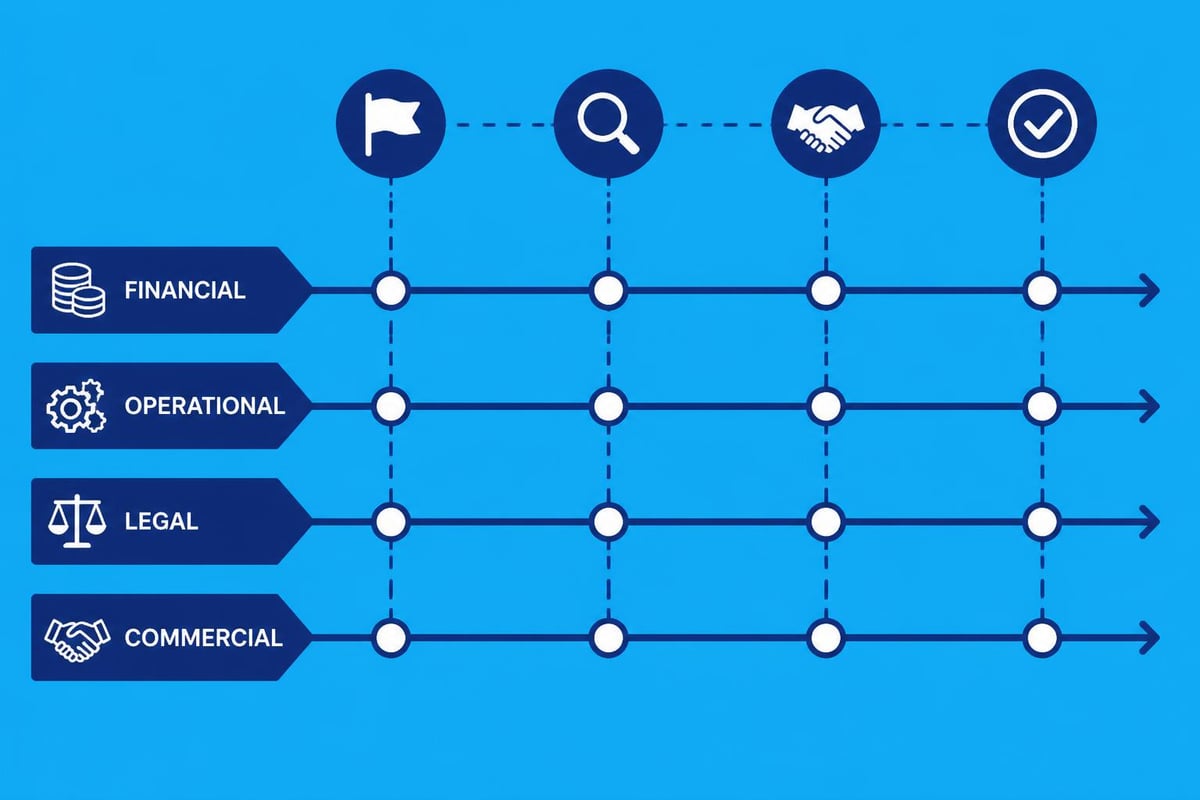
Once a buyer decides to company acquire a specific target, comprehensive due diligence becomes paramount. This investigative process validates assumptions, identifies risks, and informs final valuation. Stout’s best practices for middle-market M&A transactions emphasize involving integration teams early, establishing clear governance structures, and retaining key personnel.
Financial Due Diligence Components
Financial analysis forms the foundation of any acquisition evaluation:
- Historical performance review examining three to five years of audited or reviewed financial statements
- Quality of earnings analysis normalizing EBITDA by removing one-time items and owner discretionary expenses
- Working capital assessment determining normalized levels and potential cash requirements
- Revenue sustainability evaluation analyzing customer concentration, contract terms, and market trends
- Debt and liability verification confirming all obligations and potential contingencies
Understanding adjusted EBITDA proves critical for accurate valuation in mergers and acquisitions. Sellers often highlight headline EBITDA figures that include aggressive adjustments, while buyers prefer conservative normalization. Bridging this gap requires transparent dialogue about which adjustments reflect true operational performance versus optimistic projections.
Operational and Strategic Due Diligence
Beyond financial metrics, buyers must evaluate operational capabilities and strategic alignment:
- Management team assessment to determine retention needs and succession planning requirements
- Customer relationship evaluation including concentration risk and contract transferability
- Technology infrastructure review assessing systems, intellectual property, and digital capabilities
- Supply chain analysis identifying dependencies, redundancies, and optimization opportunities
- Regulatory compliance verification confirming adherence to industry-specific requirements
A typical scenario involves a buyer discovering during due diligence that the target's largest customer represents 40% of revenue with a contract expiring in six months. This finding materially impacts valuation and may require contract renewal as a closing condition. Such discoveries underscore why thorough investigation matters before finalizing terms to company acquire any business.
Negotiation Strategies and Deal Structure
Successfully negotiating to company acquire a business requires balancing multiple interests while maintaining relationship dynamics conducive to integration. The most effective negotiators focus on creating value rather than merely claiming it, recognizing that post-closing cooperation determines ultimate success.
Key Deal Terms to Negotiate
| Term Category | Buyer Considerations | Seller Considerations |
|---|---|---|
| Purchase Price | Valuation support, earn-out potential | Fair market value, certainty of proceeds |
| Payment Structure | Cash vs. stock, escrow amounts, holdbacks | Liquidity needs, tax optimization |
| Representations & Warranties | Comprehensive coverage, longer survival periods | Limited scope, reasonable caps |
| Non-Compete & Employment | Geographic and temporal scope | Personal flexibility, compensation adequacy |
| Indemnification | Broad protection, adequate caps and baskets | Defined limits, short claim periods |
The negotiation process extends beyond price to encompass deal structure elements that allocate risk and align incentives. Earn-outs bridge valuation gaps by tying portions of consideration to future performance, though they require careful structuring to avoid disputes. Seller financing demonstrates seller confidence while reducing buyer cash requirements, creating alignment through ongoing interest in the business's success.
Leveraging Technology in the Acquisition Process
Modern transactions to company acquire businesses increasingly rely on technology platforms that streamline workflows and enhance collaboration. Virtual data rooms have become essential infrastructure, replacing physical document repositories and enabling secure information sharing with multiple stakeholders.
When evaluating data room providers, buyers and sellers should consider functionality, security features, and cost-effectiveness. The best data room providers offer intuitive interfaces, granular permission controls, comprehensive audit trails, and responsive support. Pricing models vary significantly, making it essential to understand virtual data room costs before committing to a platform.
Integrated Platform Advantages
Specialized M&A platforms now offer end-to-end solutions that extend beyond simple deal sourcing. A typical scenario involves a seller who matches with a qualified buyer through the platform's proprietary algorithm based on industry expertise, transaction size, and strategic priorities. After both parties agree to proceed, they transition seamlessly to a complimentary virtual data room designed specifically for middle-market transactions.
This integrated approach eliminates friction points that traditionally slow deals. Rather than engaging separate vendors for matching, communication, and document sharing, parties work within a unified ecosystem that maintains confidentiality while accelerating progress. The availability of a free virtual data room for platform matches reduces costs for sellers while providing buyers access to professional-grade infrastructure.

Integration Planning and Execution
The decision to company acquire another business represents only the beginning of value creation. Post-merger integration determines whether anticipated synergies materialize or the deal destroys value through cultural clashes, talent attrition, and operational disruption. According to M&A Science’s comprehensive process guide, successful acquirers begin integration planning during due diligence rather than waiting until closing.
Critical Integration Workstreams
Effective integration requires coordinated effort across multiple dimensions:
- Cultural integration establishing shared values, communication norms, and decision-making processes
- Organizational design determining reporting structures, role definitions, and headcount optimization
- Systems integration consolidating IT infrastructure, financial systems, and customer databases
- Customer retention maintaining service levels and relationship continuity during transition
- Synergy realization capturing revenue enhancements and cost reductions identified during due diligence
The case study from Cisco’s acquisition integration practices demonstrates how process discipline and clear principles enable consistent execution across numerous transactions. Cisco's playbook approach, refined through more than 120 acquisitions, provides standardized frameworks while allowing customization for deal-specific circumstances.
Industry-Specific Considerations
When organizations company acquire businesses in particular sectors, industry-specific dynamics influence strategy, valuation, and integration approaches. Understanding these nuances helps buyers and sellers navigate sector-specific risks and opportunities more effectively.
Technology Sector Acquisitions
Technology acquisitions often prioritize intellectual property, engineering talent, and product roadmaps over current revenue. Buyers must assess technology sustainability, scalability potential, and competitive moat durability. Cultural fit becomes especially critical given the importance of retaining key developers and product managers post-closing.
Manufacturing and Distribution
Manufacturing acquisitions require detailed operational due diligence examining equipment condition, capacity utilization, and supply chain resilience. Buyers evaluate opportunities to consolidate facilities, optimize logistics networks, and leverage combined purchasing power. Environmental compliance and product liability represent material risk areas requiring thorough investigation.
Healthcare and Professional Services
Healthcare acquisitions navigate complex regulatory requirements including licensure, accreditation, and reimbursement dynamics. The importance of key person relationships with referral sources and patients necessitates careful retention planning. Professional service acquisitions similarly depend on maintaining client relationships through transition periods.
Exploring specific industry verticals helps buyers develop sector expertise that enhances target evaluation and integration effectiveness. Sellers benefit from understanding industry-specific valuation multiples and buyer priorities when positioning their businesses.
Selling Your Company: Preparing for a Successful Exit
Business owners contemplating an eventual sale should begin preparation years before actively seeking buyers. Companies that position themselves strategically command premium valuations and attract higher-quality acquirers. Those seeking to sell a business quickly while maximizing value must balance speed against thorough preparation.
Value Enhancement Strategies
Financial performance optimization involves cleaning up financial statements, documenting adjustments clearly, and demonstrating consistent growth trajectories. Owners should eliminate unnecessary expenses, resolve outstanding liabilities, and ensure revenue recognition aligns with industry standards.
Operational excellence initiatives strengthen the business's appeal by reducing key person dependencies, documenting standard operating procedures, and investing in systems that support scalability. Buyers prefer businesses with professional management teams capable of operating independently from the founder.
Strategic positioning improvements clarify the company's competitive advantages, document intellectual property protections, and cultivate customer diversification. Addressing concentration risks and securing long-term contracts enhance perceived stability.
The Confidential Exploration Process
Many owners want to explore acquisition possibilities without committing to an immediate sale or alerting stakeholders prematurely. Modern platforms designed for business owners enable confidential profile creation that attracts qualified buyers while maintaining privacy. This low-risk approach allows owners to gauge market interest, understand valuation expectations, and identify potential partners before formally engaging intermediaries.
The proprietary nature of quality M&A platforms ensures that only pre-qualified, serious buyers access seller information. Robust confidentiality protections including non-disclosure agreements and restricted information sharing preserve business value throughout the exploratory phase. Owners maintain complete control over disclosure timing and can withdraw from conversations without prejudicing future opportunities.
The Role of M&A Advisors and Service Providers
While technology platforms streamline many aspects of the company acquire process, experienced advisors remain valuable for complex transactions. Mergers and acquisitions advisory firms provide specialized expertise in valuation, negotiation, and deal structuring that complements platform capabilities.
When to Engage Professional Advisors
Certain transaction characteristics suggest professional advisory engagement:
- Complex deal structures involving earn-outs, equity rollovers, or multiple consideration forms
- Cross-border transactions requiring international tax planning and regulatory compliance
- Distressed situations where time pressure or financial constraints complicate negotiations
- Industry-specific expertise needs in regulated sectors like healthcare or financial services
- Large transaction size where advisory fees represent small percentages of deal value
Service providers including attorneys, accountants, and industry consultants complement transaction teams. Modern platforms enable these professionals to participate in deals by facilitating introductions, providing specialized services, and earning referral compensation when contributing to successful transactions.
Competitive Pricing for Professional Tools
M&A service providers benefit from access to professional-grade tools at competitive prices. Virtual data rooms designed for advisors handling multiple concurrent transactions offer flexible pricing models that scale with usage. Understanding pricing structures helps advisors select platforms that balance functionality with cost-effectiveness.
A typical scenario involves an investment banker managing three active sell-side engagements. Rather than paying premium prices for enterprise VDR solutions, the advisor leverages competitively priced platforms offering comparable security and functionality. The cost savings enable the advisor to serve middle-market clients profitably while maintaining professional standards.
Risk Management Throughout the Acquisition Journey
Every decision to company acquire another business involves risk. Sophisticated buyers implement comprehensive risk management frameworks that identify, assess, and mitigate potential pitfalls throughout the transaction lifecycle.
Pre-Closing Risk Mitigation
Before closing, buyers can protect themselves through several mechanisms:
- Material adverse change clauses allowing termination if significant negative developments occur
- Specific indemnities for known risks including litigation, environmental issues, or tax exposures
- Third-party consents ensuring key contracts, licenses, and relationships transfer successfully
- Financing contingencies providing exit options if funding becomes unavailable
- Working capital adjustments protecting against balance sheet manipulation
Post-Closing Protection Mechanisms
After closing, buyers rely on contractual protections including:
| Mechanism | Purpose | Typical Terms |
|---|---|---|
| Representations & Warranties | Allocate risk for undisclosed issues | 12-24 month survival period |
| Indemnification Provisions | Provide recovery for breaches | Caps, baskets, and deductibles |
| Escrow Holdbacks | Secure indemnity obligations | 10-20% of purchase price |
| Earn-Out Arrangements | Bridge valuation gaps | 1-3 years performance-based |
| Non-Compete Agreements | Protect against seller competition | 3-5 years geographic/industry scope |
Understanding these protective mechanisms helps both buyers and sellers negotiate balanced agreements that allocate risk appropriately while maintaining constructive post-closing relationships.
Future Trends in Company Acquisitions
The landscape for how organizations company acquire businesses continues evolving rapidly. Several trends will shape M&A activity through the remainder of this decade and beyond.
Artificial intelligence and machine learning increasingly power target identification, valuation modeling, and integration planning. Algorithms analyze vast datasets to identify patterns, predict synergies, and flag risks more comprehensively than manual analysis permits.
Environmental, social, and governance considerations influence acquisition strategies as stakeholders demand sustainable, responsible business practices. ESG due diligence now complements financial and operational analysis, with buyers assessing climate risks, diversity metrics, and governance structures.
Cross-border activity acceleration reflects globalization trends and digital business models that transcend geographic boundaries. Technology platforms facilitate international connections previously requiring extensive travel and relationship networks.
Democratization of M&A through accessible platforms enables smaller businesses and individual entrepreneurs to participate in acquisition opportunities historically reserved for institutional buyers. Lower transaction costs and improved information access level the playing field for sophisticated individual acquirers.
The shift toward strategic fit prioritization represents perhaps the most significant evolution. Rather than pursuing deals primarily for financial engineering, leading acquirers recognize that cultural alignment, operational compatibility, and strategic synergies drive sustainable value creation. Platforms emphasizing these dimensions attract parties committed to building enduring enterprises rather than executing quick flips.
Successfully executing company acquisitions requires balancing strategic vision with operational discipline throughout a complex, multi-stage process. By prioritizing strategic fit, conducting thorough due diligence, and planning integration carefully, buyers and sellers can create substantial value through M&A transactions. Aligned IQ transforms this journey by connecting buyers and sellers through proprietary matching based on transaction priorities, deal size, and industry expertise, while providing complimentary virtual data rooms for matched sellers and competitively priced solutions for all market participants. Take a tour today to discover how our platform can help you find the perfect counterparty for your M&A goals.
No responses yet