

Are you confused by virtual data room cost when planning your next M&A deal? Many lower-middle market business owners and advisors face uncertainty about what they will pay and what features they truly need.
This guide breaks down the virtual data room cost landscape, from pricing models to hidden fees and provider comparisons. You will learn how different features and fee structures impact your budget and deal outcomes.
Understanding virtual data room cost is critical for making confident decisions that protect your information and your bottom line. Ready to take control of your transaction and avoid costly surprises? Take a Tour to see how a modern VDR can simplify your next deal.
Understanding Virtual Data Room Pricing Models
Navigating the virtual data room cost landscape can be confusing, especially for lower-middle market business owners preparing for a transaction. Understanding how different pricing models work is crucial for budgeting, avoiding surprises, and ensuring a smooth M&A process. Let us break down the most common structures, what drives costs in 2026, and the industry’s move toward transparency.

Overview of Common Pricing Structures
Virtual data room cost models typically fall into four categories: per-page, per-user, storage-based, and flat monthly fees. Each structure impacts your total spend differently.
For example, per-page pricing ranges from $0.40 to $0.85 per page, which can escalate quickly during due diligence. Per-user fees might be $100 to $250 per user per month, while storage-based models often charge $75 per GB over a set limit. Flat monthly fees, often between $400 and $1,000, offer predictable costs—ideal for lower-middle market deals.
Here’s a quick comparison for a typical 3-month, 50GB, 15-user project:
| Pricing Model | Estimated Cost (3 months) |
|---|---|
| Per-Page | $2,000–$3,500 |
| Per-User | $4,500–$11,250 |
| Storage-Based | $1,200–$4,000 |
| Flat Monthly Fee | $1,200–$3,000 |
Flat fees minimize risk of overruns and simplify budgeting, which explains their popularity for smaller deals. For more detailed breakdowns, refer to this Virtual Data Room Pricing Models guide.
Factors Affecting VDR Pricing in 2026
Several factors drive virtual data room cost, especially as technology evolves. Security remains paramount—expect advanced encryption, watermarking, and regulatory compliance (SOC 2, FINRA, SEC) to be standard. Strong permission controls and audit logs are now expected, not premium.
Data management features, such as bulk uploads, smart indexing, and robust search, streamline diligence and add value. M&A advisors also look for project management tools, document analytics, and real-time engagement tracking. These features can justify higher virtual data room cost, but they also enhance efficiency.
Software integrations, for example with Microsoft Office or Slack, improve workflow and collaboration. Industry-specific compliance matters; healthcare deals need HIPAA, while financial deals demand FINRA or SEC standards. The rise of AI and automation—like smart redaction or auto-indexing—may impact future pricing, but they offer significant time savings.
Consider this: an M&A advisor using a flat-rate VDR rather than a per-user model can save $600 to $4,000 per deal. For lower-middle market sellers, investing in a secure, feature-rich platform is often less expensive in the long run than cutting corners on compliance or collaboration.
The Shift Toward Transparent, All-Inclusive Pricing
Market demand is pushing VDR providers to offer more transparent, all-inclusive pricing. Flat-rate and bundled packages are becoming the norm, often featuring unlimited users and generous storage limits. This shift empowers buyers and sellers to plan confidently, focusing on strategy instead of watching for hidden fees.
For lower-middle market sellers, predictable virtual data room cost means easier budgeting and reduced risk. Providers like FirmRoom now offer $400 per month plans with unlimited users and 10GB storage. Annual billing discounts and free trials are increasingly common, letting you test-drive platforms with zero risk.
Ultimately, this industry evolution allows dealmakers to prioritize secure, confidential transactions over worrying about cost overruns. Platforms designed for strategic fit and confidential exploration, such as Aligned IQ, are setting new standards for risk-free, efficient M&A processes.
Key Features That Influence Virtual Data Room Costs
Understanding which features drive virtual data room cost is crucial for lower-middle market buyers, sellers, and advisors. Each feature set impacts security, efficiency, and overall deal value, especially for confidential M&A transactions.
Essential Security and Compliance Features
Security is the backbone of any virtual data room cost structure. Advanced encryption, multi-level permission settings, and detailed audit logs are not just add-ons—they are essential for protecting sensitive M&A information. Features like dynamic watermarking, secure document viewers, and regulatory compliance (SOC 2, GDPR, HIPAA, FINRA, SEC) can push costs higher, but skipping these increases long-term risk.
For lower-middle market sellers, robust yet affordable security is vital. Missing features may expose confidential data or slow down diligence. Real-time activity tracking and permission controls are now expected, not optional. According to the Virtual Data Room Pricing Breakdown, enhanced compliance often commands a premium but is a wise investment for deals where privacy is paramount.
Collaboration, Project Management, and Analytics
Modern VDRs go beyond storage, offering integrated project management and analytics that can influence virtual data room cost. Built-in tools like playbooks, task tracking, and Q&A modules help advisors and sellers organize due diligence efficiently. Engagement analytics, such as heatmaps and document tracking, provide actionable insights, helping prioritize buyer interest in a sell-side process.
These advanced collaboration features often carry a higher price tag compared to basic file storage. However, for lower-middle market teams, the efficiency gains are significant. Integrated communication and analytics streamline deal flow, minimize errors, and reduce time to close. Investing in these capabilities can result in substantial long-term savings, making the added virtual data room cost justifiable.
Integrations, Scalability, and User Experience
A virtual data room cost also reflects how well the platform integrates with existing workflows, such as Office, Slack, or CRM systems. Scalability, including the ability to manage multiple projects or rooms under a single plan, is essential for growing advisory firms or repeat sellers.
User experience is equally important. Intuitive interfaces, minimal training requirements, and responsive support reduce onboarding friction. Lower-middle market teams often need platforms that are easy to use and quick to deploy. Pay attention to add-on or overage fees, as these can inflate total costs unexpectedly. Free trials and quality support are valuable factors when evaluating overall virtual data room cost.
Aligned IQ VDR: A Purpose-Built Solution for Lower Middle Market M&A
Aligned IQ VDR offers a secure, compliant, and easy-to-use platform designed for lower-middle market buyers and sellers. With complimentary access for sellers after a match, it reduces virtual data room cost risks up front. Proprietary features like document tracking, analytics, and robust permissions set it apart from traditional M&A solutions. Experience confidential deal-making with a risk-free, 7-day trial—Take a Tour.

Virtual Data Room Providers: 2026 Price and Feature Comparison
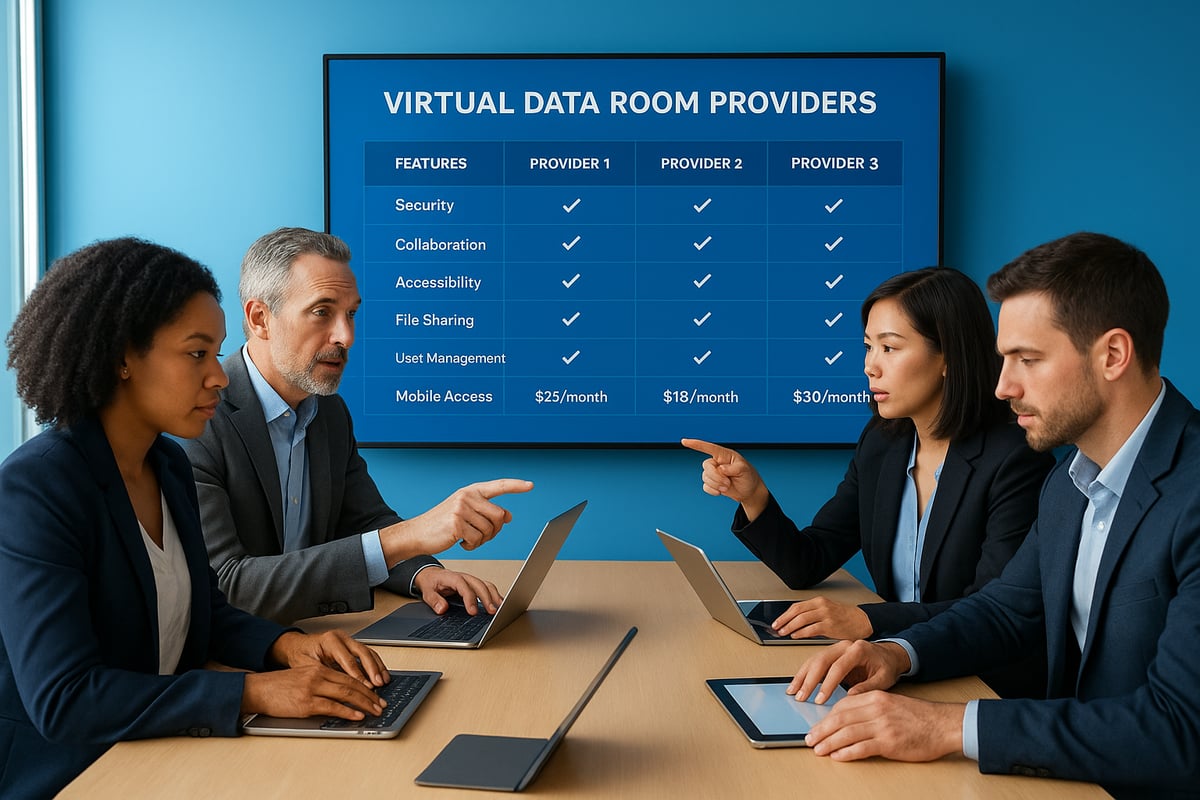
Choosing the right virtual data room provider is a critical step for lower-middle market buyers and sellers. The virtual data room cost can vary widely depending on provider, features, and project needs. Understanding the landscape will help you identify the best value for your transaction.
Leading VDR Providers and Their Offerings
The 2026 virtual data room market features a mix of established and innovative providers. FirmRoom, DealRoom, Intralinks, iDeals, Fordata, Merrill, Securedocs, Sharefile, Box, and Caplinked each target different business needs and budgets.
FirmRoom offers all-inclusive plans starting at $500 per month, with unlimited users and robust support. DealRoom’s plans begin at $1250 per month, focusing on advanced project management tools. Fordata and Securedocs provide lower entry points, at $190 and $400 per month respectively, with strong compliance features. Sharefile starts at $50 per month but limits features and user counts.
Most providers now offer free trials, ranging from 7 to 30 days, and discounts for annual billing. Flat-fee models with unlimited users and storage have become more common, supporting predictable virtual data room cost for lower-middle market deals.
For a deeper dive into each option, see this Virtual Data Room Providers Comparison 2026 for an independent review of pricing and features.
Feature Comparison Table: What You Get for Your Money
Comparing providers side by side reveals key differences in virtual data room cost, feature depth, and scalability. Lower-middle market teams often prioritize unlimited users, security, and easy collaboration.
| Provider | Starting Price | Users | Storage | Security/Compliance | Analytics | Project Mgmt | Free Trial |
|---|---|---|---|---|---|---|---|
| FirmRoom | $500/mo | Unlimited | 10GB | SOC 2, GDPR, FINRA | Advanced | Yes | 30 days |
| DealRoom | $1250/mo | Unlimited | Unlimited | SOC 2, GDPR, HIPAA | Advanced | Yes | 14 days |
| Fordata | $190/mo | 5+ | 5GB | SOC 2, GDPR | Basic | Limited | 14 days |
| Securedocs | $400/mo | Unlimited | 10GB | SOC 2, GDPR | Basic | Limited | 14 days |
| Sharefile | $50/mo | 5–10 | 5GB | Basic | Limited | No | 7 days |
Per-user or per-page models can drive the virtual data room cost for a typical 3-month, 15-user, 50GB project to $1,500–$5,000 or more. Flat-rate plans, by contrast, offer full-featured access at lower total cost and less risk for sellers.
Evaluating Total Cost of Ownership (TCO)
Total cost of ownership extends beyond the sticker price. Consider the virtual data room cost in terms of efficiency, hidden fees, support, training, and how quickly deals close.
A $200 per month VDR that accelerates diligence may save more in advisory fees and opportunity costs than a $100 per month basic option. Inefficient or hard-to-use platforms can slow your deal, increase risk, and ultimately raise your virtual data room cost.
Checklist for TCO evaluation:
- Upfront and recurring fees
- Hidden charges for users, storage, or features
- Support quality and onboarding resources
- Scalability for future deals
Choosing a provider that minimizes friction and maximizes value will help lower-middle market teams secure successful outcomes with confidence.
How to Choose the Right Virtual Data Room for Your Transaction
Selecting the right virtual data room for your transaction is critical. A well-chosen platform can accelerate due diligence, protect sensitive information, and ensure your deal proceeds smoothly. For lower-middle market sellers and advisors, the decision impacts not just security, but also efficiency and overall virtual data room cost.

Step 1: Define Project Scope and Requirements
Begin by outlining the specific needs of your M&A deal. Consider the number of users, anticipated storage requirements, and the length of your project. For example, a lower-middle market manufacturing sale might involve 10 users, 20GB of storage, and a 90-day timeline.
Clarify any industry-specific compliance needs. Healthcare buyers may require HIPAA compliance, while financial services often need FINRA. Mapping these details early helps you accurately estimate virtual data room cost and avoid future surprises.
List your must-have features, such as document permissions, audit trails, or secure Q&A.
Step 2: Identify Must-Have Features
Prioritize which features are essential for your transaction. Security is paramount, so look for advanced encryption and granular permission controls. Collaboration tools and analytics are valuable for tracking buyer interest and accelerating diligence.
Consider these items:
- Regulatory compliance (SOC 2, GDPR, HIPAA)
- In-platform communication
- Integration with your existing workflows
Ensure the platform is intuitive for all team members, especially if sellers are using a VDR for the first time.
Step 3: Compare Providers and Pricing Models
Shortlist virtual data room providers with transparent pricing and features that align with your needs. Evaluate flat-rate models, which can often lower virtual data room cost by eliminating user or storage overages.
Request demos and leverage free trial periods to test usability. For a deeper dive into evaluating deal platforms, explore Choosing the right deal platform.
Compare total costs for typical projects, such as a three-month, 15-user, 50GB data room. Use review sites for unbiased feedback and consider annual billing for potential savings.
Step 4: Evaluate Security, Support, and User Experience
Assess each platform’s approach to security. Confirm robust encryption, customizable access controls, and detailed audit trails. Test the user interface for ease of navigation, particularly for business owners new to digital diligence.
Responsive support is crucial. Check for live chat, phone support, or a dedicated manager. Reliable assistance during diligence can significantly impact virtual data room cost by preventing delays or errors.
Step 5: Make an Informed, Strategic Choice
Weigh the total cost of ownership, platform efficiency, and risk mitigation. Select a solution that matches your deal’s scale, complexity, and confidentiality requirements. Many lower-middle market sellers value Aligned IQ’s confidential, secure, and low-risk approach that stands apart from the traditional M&A process.
Leverage complimentary or trial access where available to experience the platform firsthand. Take a Tour and ensure your virtual data room cost aligns with your transaction goals.
Hidden Fees and Total Cost Considerations for 2026
Understanding the true virtual data room cost requires looking beyond base pricing. Lower-middle market sellers are especially vulnerable to hidden fees that can inflate project expenses. Common pitfalls include overage charges for storage or users, fees for advanced features, and unexpected costs for setup or training.
Auto-renewals and inflexible contracts can also lock businesses into unfavorable terms. For a deeper dive into how these traps impact sellers, explore Sell-side M&A advisory insights, which outlines practical steps to avoid budget surprises. Awareness of these contract details is crucial for any team preparing for a transaction.
Strategies to Minimize VDR Costs
Minimizing your virtual data room cost starts with choosing transparent, flat-rate pricing when possible. Bundled packages for multiple projects or longer durations can further reduce expenses. Always use free trials to test fit before committing.
Key strategies include:
- Confirming what is included in the base price, such as unlimited users or storage
- Negotiating bundled deals for recurring transactions
- Leveraging annual billing discounts or referral incentives
- Asking providers for a detailed breakdown of any potential add-on fees
A checklist for your provider:
- Are all features, users, and storage included?
- What triggers overage or support fees?
- Is onboarding or training extra?
- What are the contract renewal terms?
These steps help ensure your total virtual data room cost remains predictable and manageable.
The Role of Efficiency and Deal Speed in Cost Savings
Efficiency is a powerful driver in lowering virtual data room cost for lower-middle market deals. The right platform accelerates due diligence, reduces advisory hours, and allows sellers to focus on negotiations. Analytics and collaboration tools can prioritize buyer engagement, making the process faster and more strategic.
For example, an efficient VDR can help close deals in 60 days instead of six months, dramatically cutting opportunity and advisory costs. For more on optimizing due diligence and minimizing spend, see the Pre-sale due diligence guide.
The best choice is not simply the lowest price. Instead, select a VDR that offers speed, transparency, and security. Take a Tour to experience these benefits first-hand.
Virtual Data Room Trends and Expectations for 2026
The landscape for virtual data room cost is set to change dramatically as business sellers, buyers, and advisors seek smarter, more efficient solutions. In the lower-middle market, these shifts are especially relevant, with growing demand for transparency, advanced technology, and platforms that prioritize strategic fit over volume. Understanding these trends will help you choose a VDR that aligns with your goals and budget.
The Push Toward Greater Transparency and Simplicity
Across the industry, virtual data room cost models are shifting toward clear, all-inclusive pricing. Providers now offer bundled packages with unlimited users and storage, eliminating the confusion of per-page or per-user fees. This trend is especially beneficial for lower-middle market sellers, who value predictable costs and the ability to budget confidently.
Key features of this trend include:
- Transparent contracts with no hidden fees
- Free trials and no-commitment onboarding
- Flat-rate plans that cover essential security and collaboration tools
For first-time business sellers and buyers, this movement means less risk and easier decision-making. As you compare VDRs, prioritize those that lay out every charge up front, ensuring your virtual data room cost stays within budget.
Technology Advancements Shaping VDR Value
Emerging technologies are rapidly redefining what you can expect for your virtual data room cost. AI-driven analytics, automated document management, and seamless integrations with CRM and M&A tools are becoming standard features. For example, automated redaction and smart indexing now save teams hours during due diligence.
Modern VDRs also incorporate:
- Enhanced security such as biometric authentication and blockchain audit logs
- Real-time engagement analytics for prioritizing buyer interest
- Workflow integrations that streamline collaboration
These innovations are making enterprise-grade features accessible at lower price points, especially for the lower-middle market. For a deeper look at where the industry is headed and how these advancements impact virtual data room cost, see the Virtual Data Room Market Trends 2026.
The Evolving Role of VDRs in Collaborative M&A
The role of VDRs is expanding beyond document storage, creating new opportunities for confidential, strategic dealmaking. Platforms like Aligned IQ are transforming the traditional M&A process by enabling secure, discreet exploration and confidential match-making before diligence even begins.
Key benefits for lower-middle market teams include:
- Strategic fit assessment tools that reduce risk and upfront cost
- Robust permission controls for privacy and confidentiality
- Integrated analytics and communication features for efficient deal flow
For actionable guidance on leveraging these new capabilities and aligning VDR choice with your overall M&A approach, explore these mergers and acquisitions strategy tips. Take a Tour of next-generation VDRs to experience firsthand how these solutions can optimize your virtual data room cost while supporting successful outcomes.
Now that you have a clear picture of what influences virtual data room costs and how transparency is reshaping the M and A landscape, you’re better equipped to make a smart decision for your next transaction. Whether you’re preparing to sell your business or exploring new opportunities as a buyer or advisor, understanding real costs and value is key. If you want to see how a secure, user-friendly VDR can streamline your process and help you prioritize strategic fit, I encourage you to Take a Tour!
No responses yet