

Did you know that global M&A deal volume is projected to surge as we head into 2026? The anticipated uptick signals a highly competitive environment for acquisition companies, especially in sectors like Food and Beverage, Healthcare, and Industrial Products.
As the landscape grows more complex, acquisition companies face both new challenges and greater opportunities.
This guide is designed to help acquisition companies navigate these changes with confidence. We will cover essential strategies for success, from understanding the types of acquisition companies to mastering due diligence, integration, and leveraging technology.
By the end, you’ll have a clear roadmap to thrive in 2025’s dynamic acquisition environment.
Understanding Acquisition Companies
Acquisition companies reshape the business landscape by driving innovation and growth across key sectors. To navigate this evolving environment, it is crucial to understand the types, market dynamics, and core motivations behind acquisition companies’ strategies.

Definition and Types of Acquisition Companies
Acquisition companies specialize in purchasing and integrating businesses to achieve strategic goals. There are several main types:
| Type | Description | Example Industry |
|---|---|---|
| Strategic Buyers | Established firms acquiring for growth | Food and Beverage |
| Private Equity Firms | Investment groups seeking returns via buyouts | Healthcare |
| SPACs | Public shell companies acquiring private firms | Biotechnology |
| Holding Companies | Entities owning multiple businesses long-term | Industrial Products |
Strategic buyers often focus on operational synergies, while private equity firms prioritize financial performance and exit strategies. Private equity explained offers a deeper dive into how private equity fits within the acquisition companies landscape. SPACs and holding companies, meanwhile, bring unique structures to the table but share the common goal of value creation.
Market Landscape and Growth Projections
Acquisition companies are expected to see robust deal volume in the last quarter of 2025, moving into 2026, especially in sectors like biotechnology, environmental services, and pet care. Market analysts project strong activity in the lower-middle market as buyers seek proprietary and semi-proprietary deals, leveraging platforms like Aligned IQ for confidential connections.
Technology and healthcare remain significant sectors, but regional trends show rising interest in green industry and testing and measurement sectors. While North America leads in deal count, Europe and Asia are gaining ground. Acquisition companies are adapting to these shifts, targeting industries poised for rapid, sustainable growth.
Motivations and Objectives for Acquisitions
Acquisition companies pursue deals for a variety of reasons:
- Accelerating revenue growth and market share
- Diversifying product lines or entering new markets
- Securing access to advanced technology or skilled talent
- Strengthening supply chains or customer relationships
Companies often employ both defensive and offensive acquisition strategies. For instance, a lower-middle market food and beverage buyer may acquire a specialty producer to broaden its portfolio, while a healthcare firm might buy a diagnostics startup to gain cutting-edge capabilities. These targeted moves underscore why acquisition companies remain a vital force for innovation and long-term value creation.
Key Trends Shaping Acquisition Strategies in 2025
The landscape for acquisition companies is evolving rapidly as 2026 approaches. Shifts in sector priorities, sustainability demands, and digital transformation are redefining how acquisition companies approach growth and value creation. Understanding these trends is essential for anyone aiming to succeed in today’s dynamic market.

Rise of Industry-Focused and Niche Acquisitions
Acquisition companies are increasingly targeting specialized industries to unlock unique value. This shift is especially visible in lower-middle market segments such as Food and Beverage, Pet Care, and Environmental Services. By focusing on niche sectors, acquisition companies can leverage proprietary insights and minimize competition from broad-market buyers.
Recent studies show that niche deals, particularly in biotechnology and healthcare, have outperformed more generalized acquisitions in terms of post-deal growth.
Industry-focused strategies give acquisition companies a competitive edge, enabling them to build deep expertise and maximize synergies within their chosen fields.
ESG and Sustainability Considerations
Environmental, Social, and Governance (ESG) factors are now front and center in acquisition strategies. Acquisition companies are integrating ESG criteria to assess risk, unlock value, and meet stakeholder expectations. In 2025, deals in Green Industry and Chemicals and Materials are commanding higher premiums when ESG performance is strong.
Data from recent surveys indicate that more than 60 percent of acquisition companies now require ESG due diligence as part of their process. This trend is particularly pronounced for companies seeking to acquire Environmental Services businesses, where regulatory compliance and sustainability practices are mission-critical.
By embedding ESG into their criteria, acquisition companies not only reduce risk but also enhance the long-term appeal and value of their investments.
Cross-Border and Digital Transformation Deals
Cross-border acquisitions are surging as acquisition companies seek growth across regions and access to new technologies. Sectors such as Testing and Measurement and Industrial Products are seeing increased cross-border activity, often driven by digital transformation initiatives.
Digital transformation is now a primary motivator, with acquisition companies seeking companies offering proprietary data, automation tools, or advanced analytics. Notable case studies in the healthcare and biotechnology industries have illustrated how digital integration can accelerate value creation.
For a comprehensive view of these developments, see the Top M&A trends for 2025, which highlights how acquisition companies are leveraging both cross-border opportunities and digital innovation for strategic advantage.
Strategic Planning for Acquisition Success
Strategic planning stands at the heart of every successful acquisition company’s playbook. As the 2025 market grows more competitive, acquisition companies must adopt disciplined, repeatable processes to identify, evaluate, and secure the right targets. Below are the key pillars of effective planning.
Building a Robust Acquisition Pipeline
For acquisition companies, a strong pipeline is the foundation of growth. Top-performing teams leverage proprietary and semi-proprietary channels, such as direct networking, industry events, and confidential digital platforms, to uncover quality targets before they reach the open market. In sectors like Food and Beverage or Testing and Measurement, early access often means less competition and better deal terms.
Aligning pipeline development with long-term strategy ensures that every opportunity fits the company’s core objectives. Some acquisition companies use buy-and-build approaches in Environmental Services or Pet Care, enabling rapid expansion while maintaining strategic focus. For a deeper dive into pipeline strategies, see Acquisition strategies for growth.
Effective Target Screening and Evaluation
Once acquisition companies have a steady stream of potential targets, rigorous screening becomes critical. Key financial metrics—such as EBITDA margins, revenue growth, and debt load—are evaluated alongside strategic fit, cultural compatibility, and post-deal integration potential.
Many lower-middle market buyers use a scoring matrix to rank targets in industries like Biotechnology and Pharmaceuticals or Agribusiness. This structured approach helps teams prioritize deals that align with risk tolerance and long-term vision. For example, a testing lab buyer recently used a proprietary framework to assess five regional targets, ultimately choosing the one with the best operational synergy and leadership continuity.
Leveraging Technology and Data Analytics
Technology is rapidly reshaping how acquisition companies operate. AI-powered tools, data analytics, and automation streamline sourcing, screening, and due diligence, giving teams a competitive edge. Platforms that aggregate market intelligence can identify under-the-radar businesses in niche segments like Green Industry or Chemicals and Materials.
A recent survey found that acquisition companies using advanced analytics improved deal success rates by 20 percent over traditional methods. Digital dashboards and real-time reporting allow teams to monitor pipeline health and quickly adjust strategies as market conditions change. These tools not only save time but also support more informed, data-driven decisions.
How Aligned IQ Transforms Acquisition Sourcing
Aligned IQ offers acquisition companies a confidential, secure, and low-risk way to connect with vetted deal participants. Unlike traditional M&A processes, Aligned IQ’s B2B platform focuses on strategic fit and industry expertise, matching buyers and sellers across verticals like Healthcare, Industrial Products, and Pet Care.
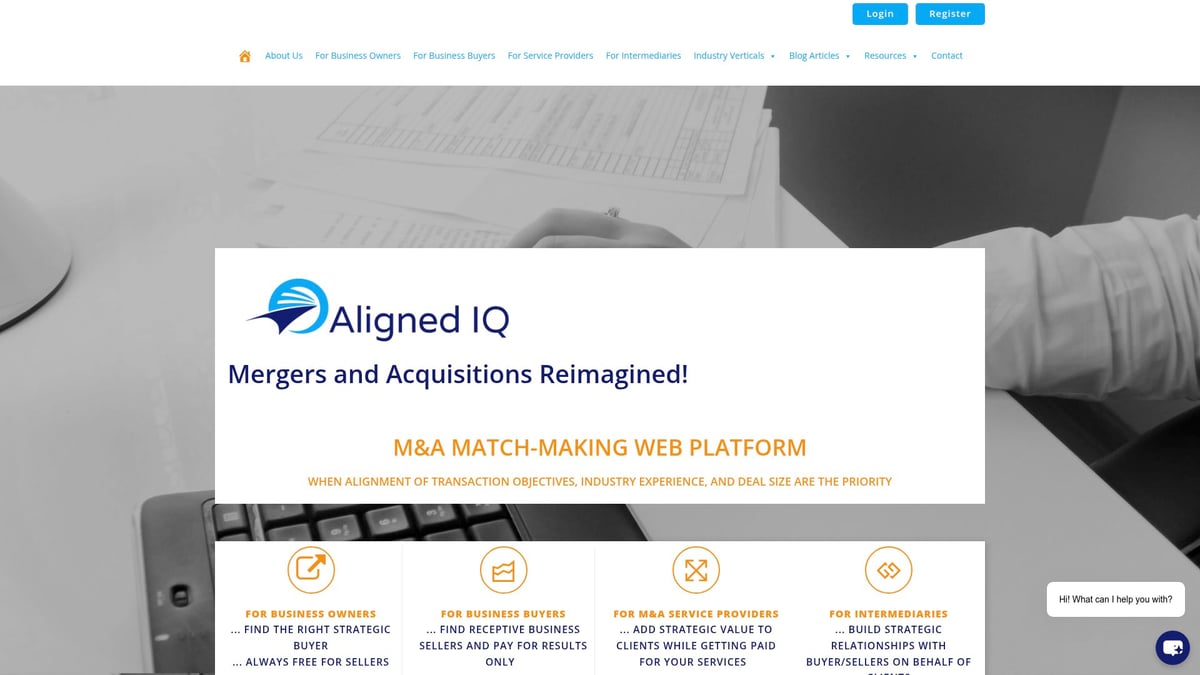
Acquisition companies benefit from efficient sourcing, reduced costs, and access to semi-proprietary opportunities not represented by Investment Banks. Ready to see how Aligned IQ can streamline your next acquisition? Take a Tour and discover a new standard in strategic dealmaking.
Mastering Due Diligence and Risk Management
Navigating due diligence and risk management is essential for acquisition companies aiming for successful outcomes in 2025. The right approach ensures that every opportunity in sectors like Healthcare, Food and Beverage, or Environmental Services is thoroughly vetted, confidentially sourced, and positioned for long-term value. For business buyers and sellers alike, leveraging a proprietary platform like Aligned IQ can create a secure space for assessing deals with reduced exposure to the risks of the traditional M&A process.

Comprehensive Due Diligence Process
A robust due diligence process is the backbone for acquisition companies seeking to avoid costly surprises. It begins with financial reviews, legal compliance checks, and operational assessments. For example, in the Pet Care or Biotechnology sectors, validating intellectual property and regulatory approvals is vital.
Yet, even experienced acquisition companies can overlook cultural fit or hidden liabilities, leading to failed deals. According to recent data, nearly 40% of transactions fall apart due to inadequate diligence. Avoiding these pitfalls requires a checklist approach covering:
- Financial audits
- Legal document verification
- Operational site visits
- Culture and leadership interviews
Early, thorough diligence enables acquisition companies to confidently move forward or walk away, protecting both value and reputation.
Identifying and Mitigating Risks
Acquisition companies must identify diverse risks, including regulatory, market, integration, and reputational threats. In sectors like Green Industry or Testing and Measurement, regulatory hurdles can derail even well-planned deals.
A proven risk assessment framework involves mapping potential hazards and assigning probability and impact scores. For example:
| Risk Type | Probability | Impact | Mitigation Strategy |
|---|---|---|---|
| Regulatory | High | High | Early legal review |
| Integration | Medium | High | Integration planning |
| Market | Medium | Medium | Market analysis |
| Reputational | Low | High | Stakeholder outreach |
Drawing insights from the 2025 M&A trends survey, acquisition companies that proactively address these risks report higher deal completion rates and smoother transitions.
Leveraging Advisors and Technology in Due Diligence
Expert advisors and advanced technology are transforming how acquisition companies handle due diligence. Legal and financial experts specialize in complex sectors such as Agribusiness or Chemicals, ensuring nothing is missed.
Technology platforms, including secure virtual data rooms, streamline document exchange and communication. Automation tools can cut diligence time by up to 30 percent and reduce costs significantly. Aligned IQ’s confidential, semi-proprietary environment provides acquisition companies with a low-risk, efficient way to connect with vetted sellers and advisors, offering a distinct edge over traditional processes.
Post-Diligence Decision Making
After due diligence, acquisition companies must decide whether a deal aligns with their strategic goals. Criteria include financial health, cultural compatibility, and risk profile. Integrating findings with long-term objectives ensures each acquisition strengthens the portfolio and drives growth. For those ready to take the next step, take a tour of Aligned IQ to experience a new standard in secure dealmaking.
Integration Strategies for Post-Acquisition Success
Successful integration is where acquisition companies transform a transaction into real, lasting value. Proactive planning, cultural sensitivity, and seamless technology adoption are critical for lower-middle market buyers, especially in industries like Food and Beverage, Healthcare, and Testing and Measurement. By focusing on these pillars, acquisition companies can reduce risk and maximize returns after closing.
Planning for Integration Early
Early integration planning sets the foundation for a smooth post-acquisition transition. Acquisition companies that develop integration playbooks before closing can anticipate challenges, align leadership, and set clear priorities. For example, a lower-middle market buyer in the Agribusiness vertical might map out supply chain harmonization and regulatory compliance steps months ahead.
Key integration planning steps include:
- Defining roles and responsibilities for both buyer and target teams
- Outlining Day 1 and first 100-day objectives
- Establishing communication protocols
Companies that follow a buy-and-build platform strategy often outperform their peers by integrating new acquisitions quickly and efficiently. This approach is especially effective for acquisition companies in high-growth sectors, offering a repeatable process for scaling operations.
Cultural Alignment and Change Management
Cultural integration can determine whether a deal creates value or falters. Acquisition companies must assess cultural fit during diligence, then focus on transparent communication and employee engagement. In industries like Environmental Services and Pet Care, aligning values and work styles accelerates collaboration and retention.
Best practices for cultural alignment:
- Conduct cultural assessments pre-close
- Appoint integration champions from both organizations
- Use regular town halls to address questions and concerns
Acquisition companies leveraging platforms like Aligned IQ benefit from a semi-proprietary process, ensuring confidential connections and a lower-risk environment for both buyers and sellers. This approach helps foster trust and smoother cultural transitions.
Technology and Systems Integration
Merging IT systems is often the most complex part of post-acquisition work. Acquisition companies must inventory digital assets, prioritize cybersecurity, and identify redundancies early. For example, integrating CRM platforms in Biotechnology and Pharmaceuticals requires careful mapping to maintain compliance and data integrity.
Strategies for successful tech integration:
- Conduct a full audit of systems and infrastructure
- Develop a phased migration roadmap
- Set up secure data sharing and backup protocols
Aligned IQ’s confidential platform gives acquisition companies a secure environment to exchange sensitive information, reducing risk compared to traditional M&A processes.
Measuring Integration Progress
Tracking integration success is essential for acquisition companies aiming for sustained growth. Common KPIs include employee retention, operational synergies realized, and customer satisfaction.
| KPI | Target Benchmark | Tracking Tool |
|---|---|---|
| Employee Retention | >90% after 1 year | HR Analytics |
| Synergy Capture | ≥80% planned | Financial Reports |
| System Uptime | 99.9% | IT Dashboards |
Acquisition companies should review these metrics regularly and adjust strategies as needed. Ready to see how confidential, proprietary integration can work for your business? Take a Tour.
Future-Proofing Acquisition Strategies: What’s Next?
Navigating the path forward demands that acquisition companies remain agile, informed, and proactive. As 2025 approaches, the future-proofing of acquisition strategies will hinge on adaptation, talent, and innovation. Lower-middle market players, especially across verticals like Food and Beverage, Environmental Services, and Healthcare, must anticipate change and seize new opportunities to maintain their competitive edge.
Adapting to Regulatory Changes and Geopolitical Risks
Regulatory shifts and geopolitical uncertainties are reshaping the landscape for acquisition companies. In 2025, scrutiny around antitrust, CFIUS, and GDPR requirements is intensifying, particularly for cross-border deals in sectors such as biotechnology and chemicals. Staying compliant demands robust monitoring of evolving rules and deep collaboration with legal advisors.
For example, a lower-middle market environmental services firm seeking growth through North American acquisitions must anticipate both regional and global compliance standards. Confidential, tech-enabled platforms like Aligned IQ enhance security and transparency, minimizing regulatory risk for buyers and sellers alike. For more on how these pressures are influencing dealmaking, see the Global M&A industry trends: 2025 outlook.
Investing in Talent and Leadership Development
Talent drives deal success. Acquisition companies that prioritize leadership continuity and employee integration outperform peers, especially in industries such as pet care and industrial products. Early identification of key managers and incentives for retention reduce disruption, while targeted onboarding programs foster cohesion.
A proprietary approach, such as that enabled by Aligned IQ, allows acquirers to confidentially assess talent fit and leadership potential before closing. This low-risk process is especially valuable for sellers in sensitive sectors like testing and measurement, where discretion is paramount. Leadership development initiatives tailored to acquired teams help unlock post-deal value and support long-term growth.
Embracing Innovation and Continuous Improvement
Innovation is no longer optional for acquisition companies. Adopting AI-driven analytics, automation, and digital integration tools enhances every stage of the M&A lifecycle, from sourcing to post-close optimization. Sectors like agribusiness and green industry are leveraging these advancements to achieve higher returns and operational efficiency.
Continuous improvement frameworks, such as regular post-deal reviews and process refinement, help companies adapt to changing market dynamics. As highlighted in the 2025 M&A Outlook: 4 Trends Driving an Anticipated Rebound, staying ahead of trends like AI and new M&A models is crucial. Take a Tour of platforms like Aligned IQ to explore how secure, semi-proprietary deal sourcing can future-proof your acquisition strategy.
As we’ve explored, the world of acquisitions is evolving rapidly, with strategic fit and industry expertise at the heart of successful deals in 2025. Whether you’re looking to grow, diversify, or simply stay ahead of the competition, having the right resources and insights makes all the difference. If you’d like to discuss how these strategies apply to your unique goals or want expert guidance on navigating the new M&A landscape, you don’t have to figure it out alone. Let’s connect and take your acquisition strategy to the next level—Talk to an Expert!
No responses yet