

Deciding where to sell your business ranks among the most critical choices you'll make as an owner. The channel you select determines who sees your opportunity, how quickly you connect with qualified buyers, what level of confidentiality you maintain, and ultimately the terms you negotiate. In 2026, business owners have more options than ever, ranging from traditional business brokers and investment bankers to modern digital platforms that prioritize strategic alignment. Understanding the landscape of available channels helps you make an informed decision that protects your legacy while achieving your financial and strategic objectives.
Traditional M&A Channels: Brokers and Investment Bankers
Business brokers and investment bankers have dominated the market for decades, offering full-service representation for sellers navigating complex transactions. These intermediaries typically handle valuations, marketing materials, buyer outreach, negotiations, and deal structuring. For many sellers, particularly those unfamiliar with M&A processes, having experienced professionals manage the transaction provides significant peace of mind.
Business brokers generally focus on smaller transactions, often below $5 million in enterprise value. They list businesses on multiple platforms, screen potential buyers, and facilitate discussions. Their fees typically range from 10-15% of the transaction value, with minimum commissions that can make smaller deals prohibitively expensive.
Investment bankers target larger middle-market and enterprise transactions, usually starting at $10-20 million. They bring sophisticated valuation models, extensive buyer networks, and structured auction processes. Their retainer fees and success-based commissions reflect the complexity and value of deals they handle.
Limitations of Traditional Approaches
While brokers and bankers provide valuable services, several constraints affect their effectiveness for certain sellers:
- High costs that reduce net proceeds, particularly for lower middle-market deals
- Limited confidentiality as listings become public or semi-public
- Misaligned incentives that prioritize closing speed over strategic fit
- Restricted buyer pools based on existing relationships rather than optimal matches
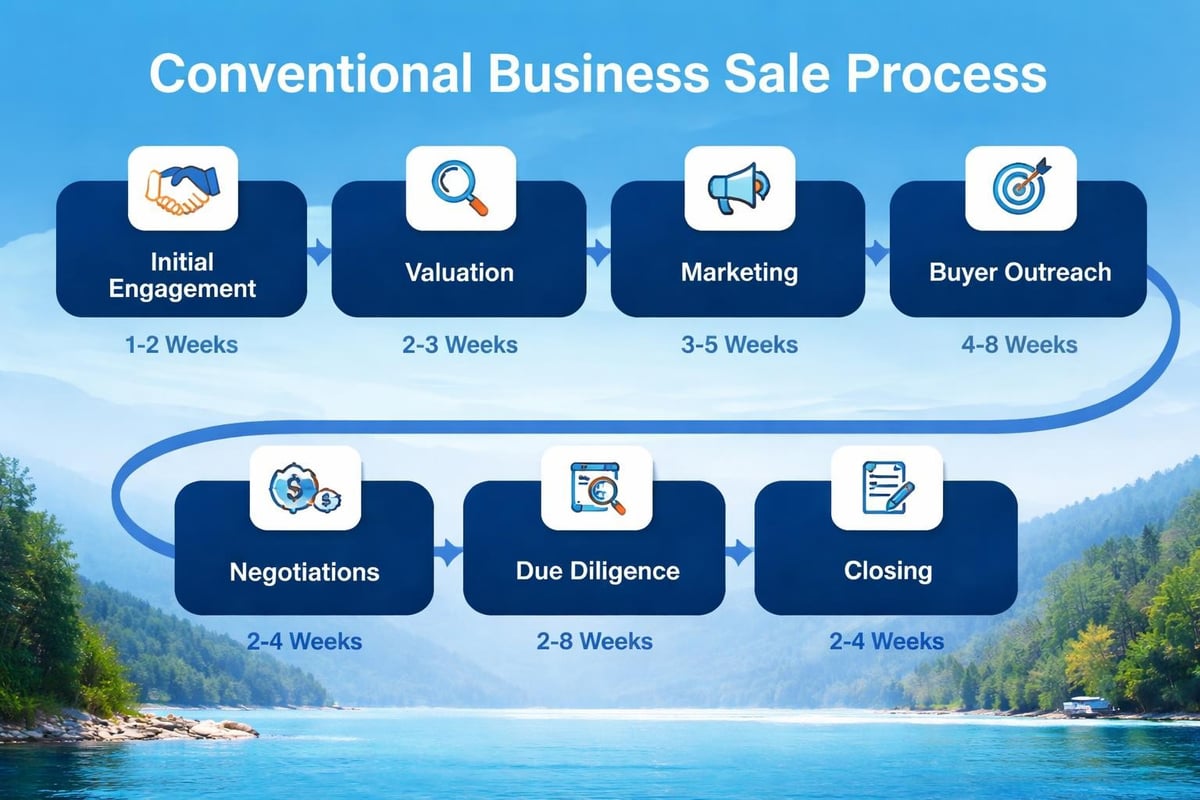
- Time-intensive processes that can extend 12-18 months without certainty
A typical scenario involves a manufacturing business owner paying $75,000 in upfront fees plus 10% commission, only to discover that potential buyers lack industry expertise or cultural alignment. The eight essential steps for selling a business include considerations about which channel maximizes both value and fit.
Online Marketplaces and Listing Platforms
Digital marketplaces have democratized access to buyers, allowing sellers to list businesses directly on platforms visible to thousands of potential acquirers. These websites function similarly to real estate listings, displaying business summaries, financial highlights, and asking prices.
Popular online marketplaces attract diverse audiences but present significant challenges regarding confidentiality and buyer qualification. When evaluating where to sell your business through online channels, consider these factors:
| Platform Type | Visibility | Confidentiality | Buyer Quality | Seller Control |
|---|---|---|---|---|
| Public Marketplaces | Very High | Low | Variable | High |
| Subscription Networks | Medium | Medium | Moderate | Medium |
| Private Platforms | Controlled | High | Highly Vetted | Variable |
Public listing sites expose business details to competitors, employees, and unqualified prospects. While they generate inquiry volume, sellers often spend countless hours screening tire-kickers who lack financing or relevant experience. The comprehensive SBA guide on selling a business emphasizes protecting sensitive information throughout the process.
Private Equity and Strategic Buyer Networks
Another consideration when determining where to sell your business involves directly targeting institutional buyers and strategic acquirers. Private equity firms actively seek acquisition opportunities that fit their investment theses, particularly in the lower middle market where competition remains less intense than larger segments.
Direct outreach to private equity requires understanding their sector focus, deal size preferences, and value creation strategies. Sellers benefit from researching lower middle-market PE firms that actively invest in their industry. However, this approach demands significant time and expertise to identify appropriate firms and craft compelling investment memorandums.
Strategic buyers within your industry may offer premium valuations due to synergies, but approaching competitors directly risks exposing confidential information without guarantee of consummation. Many owners prefer intermediaries or confidential platforms that facilitate introductions while protecting sensitive data until mutual interest is established.
Building Your Own Buyer Network
Some sophisticated sellers begin cultivating relationships with potential acquirers years before initiating formal sale processes. This strategy works particularly well for business owners who plan exits early, building reputation and demonstrating growth trajectories that attract quality buyers organically.
The challenge lies in maintaining confidentiality while signaling availability. Premature disclosure of sale intentions can disrupt employee morale, customer relationships, and competitive positioning. Balancing visibility with discretion requires careful communication strategies and often benefits from professional guidance.
Modern M&A Platforms: Prioritizing Strategic Fit
The evolution of mergers and acquisitions technology has introduced platforms that fundamentally reimagine where to sell your business by emphasizing strategic compatibility before transaction mechanics. Unlike traditional channels that prioritize speed or volume, these systems match owners with buyers based on complementary objectives, industry expertise, and cultural alignment.
Aligned IQ M&A represents this new generation of deal sourcing platforms that transform the selling experience through proprietary matching algorithms. The platform operates as a private B2B network where sellers and buyers create detailed profiles specifying transaction priorities, deal size parameters, and industry experience. Rather than broadcasting listings publicly, the system identifies optimal counterparties through confidential matching processes.
How Strategic Matching Differs
Traditional approaches often present sellers with whoever responds to outreach or listings. Strategic matching inverts this model by filtering the entire buyer universe to surface only those whose objectives, capabilities, and vision align with seller priorities. This methodology delivers several distinct advantages:
- Enhanced confidentiality through semi-proprietary access restricted to verified, qualified buyers
- Better strategic fit based on complementary goals rather than opportunistic inquiries
- Reduced time waste by eliminating mismatched parties before detailed discussions begin
- Lower transaction costs compared to traditional intermediary fees
- Greater seller control over timing, disclosure, and counterparty selection
In a typical scenario, a software services company founder might prioritize finding a buyer who will retain employees and maintain the brand rather than simply maximizing purchase price. Traditional channels rarely filter for these preferences, while platforms like Aligned IQ M&A incorporate such criteria into matching algorithms from the outset.

Comparing Channel Effectiveness for Different Business Sizes
Where to sell your business depends significantly on your company's size, complexity, and industry dynamics. Each channel demonstrates varying effectiveness across different transaction profiles:
Businesses Under $1 Million
For micro-businesses and lifestyle companies, online marketplaces and business-for-sale websites often provide sufficient visibility at reasonable costs. However, sellers should prepare for extensive screening work and potential confidentiality challenges. The key considerations when selling emphasize realistic pricing and buyer qualification as critical success factors.
Lower Middle Market ($1-25 Million)
This segment faces unique challenges where traditional brokers become expensive relative to transaction value, yet businesses remain too small for most investment bankers. Strategic matching platforms fill this gap effectively by connecting sellers with qualified buyers at fraction of traditional costs. Many lower middle-market deals benefit from platform acquisition strategies where buyers seek to build portfolios through complementary additions.
Middle Market and Above ($25 Million+)
Larger transactions typically warrant investment banker involvement due to complexity, regulatory requirements, and sophisticated buyer expectations. However, even at this level, preliminary strategic matching can identify optimal partners before engaging full auction processes, potentially reducing time-to-close and improving terms through competitive tension among pre-qualified parties.
Technology-Enabled Due Diligence and Transaction Management
Beyond determining where to sell your business, modern technology streamlines the actual transaction process once buyers are identified. Virtual data rooms (VDRs) have become essential infrastructure for secure document sharing, collaboration, and audit trail maintenance throughout due diligence.
Aligned IQ VDR provides lower middle-market participants with enterprise-grade virtual data room capabilities at competitive pricing unavailable from legacy providers. This platform serves buyers, sellers, M&A advisors, investment bankers, and other service providers with secure environments for managing confidential information exchanges.
Virtual Data Room Advantages
Traditional due diligence involved physical data rooms, courier services, and extensive in-person meetings. Modern VDRs eliminate these inefficiencies while enhancing security and accessibility:
| Feature | Traditional Approach | Virtual Data Room |
|---|---|---|
| Access Control | Physical presence required | Granular digital permissions |
| Audit Capability | Manual tracking | Automatic activity logs |
| Document Updates | Version confusion | Real-time synchronization |
| Cost Structure | High overhead | Subscription-based |
| Collaboration | Sequential reviews | Simultaneous access |
Aligned IQ M&A sellers receive complimentary VDR access after completing matches, removing a significant cost barrier that often delays or complicates transactions. Other market participants can access the same technology through competitive VDR pricing designed for the lower middle market rather than enterprise-only fee structures.
Comparing top data room providers reveals significant price disparities, with many legacy vendors charging $10,000+ monthly for capabilities that modern platforms deliver at fraction of the cost. This democratization of M&A technology enables smaller transactions to benefit from institutional-quality infrastructure previously accessible only to large deals.

M&A Service Providers and Professional Networks
When exploring where to sell your business, consider leveraging M&A service providers who operate within modern platform ecosystems. Attorneys, accountants, valuation specialists, and transaction advisors increasingly participate in digital networks that facilitate referrals and collaboration.
Professional service integration within platforms like Aligned IQ M&A allows service providers to showcase expertise, receive qualified sell-side referrals, and earn compensation for successful introductions. This model aligns incentives by rewarding advisors who bring quality opportunities to the platform while providing sellers access to vetted professionals familiar with the platform's processes.
Building Your Advisory Team
Regardless of channel selection, assembling competent advisors remains crucial for successful exits. Your team typically includes:
- Transaction attorney specializing in M&A agreements and regulatory compliance
- Certified public accountant managing tax implications and financial representations
- Valuation expert establishing fair market value and supporting price negotiations
- Industry advisor providing sector-specific guidance on buyer expectations
- Wealth manager structuring post-transaction financial planning
Platforms that facilitate advisor connections help sellers identify professionals experienced with similar transactions, reducing the risk of engaging generalists unfamiliar with M&A nuances. The importance of early planning includes building these relationships well before initiating sale processes.
Confidentiality Considerations Across Channels
Maintaining confidentiality ranks among sellers' top concerns when deciding where to sell your business. Premature disclosure can trigger employee departures, customer uncertainty, supplier concerns, and competitive disadvantages. Different channels offer varying levels of protection:
High confidentiality channels include private platforms with verified users, direct approaches to known buyers under non-disclosure agreements, and exclusive engagements with reputable intermediaries. These methods minimize exposure but may limit buyer pool size.
Medium confidentiality channels encompass subscription-based networks requiring buyer qualifications and blind profiles that reveal business details only after mutual interest and signed NDAs. These balance broader reach with reasonable discretion.
Low confidentiality channels involve public listing sites where competitors, customers, and employees may discover sale intentions despite blind listings. While generating maximum visibility, these approaches carry significant disclosure risks.
A typical scenario might involve a distribution company owner whose largest customer relationship depends on stability perceptions. Public listing could trigger customer concerns leading to contract renegotiations or defection, potentially reducing business value before any transaction occurs. Semi-proprietary platforms mitigate these risks through controlled access and strategic matching that occurs before widespread disclosure.
Timing and Market Conditions
Where to sell your business intersects with when to sell, as market conditions significantly impact channel effectiveness and buyer availability. Economic cycles, industry trends, and capital market dynamics all influence transaction success rates across different channels.
Seller's markets characterized by abundant capital, low interest rates, and strong economic growth favor most channels, as buyer competition drives favorable terms. During these periods, even public marketplaces generate quality inquiries, and sellers enjoy negotiating leverage across platforms.
Buyer's markets during economic uncertainty or capital constraints require more sophisticated channel selection. Strategic platforms that emphasize fit over opportunism tend to perform better, as genuinely interested buyers continue pursuing aligned opportunities while casual acquirers retreat. The common pitfalls to avoid include mistiming market entry or selecting channels mismatched to prevailing conditions.
Industry-Specific Considerations
Certain industries demonstrate channel preferences based on buyer characteristics and transaction norms. Technology companies often transact through strategic networks and private equity platforms, while professional services frequently sell through industry associations and relationship-based introductions. Understanding your sector's typical patterns informs channel selection, though innovation opportunities exist in applying new approaches to traditional industries.
Preparing Your Business Regardless of Channel
Before determining where to sell your business, ensure you've prepared the company for scrutiny across any channel. Buyers evaluating opportunities through traditional brokers, online platforms, or strategic matching networks all conduct similar due diligence examining:
- Financial performance including three years of audited or reviewed statements
- Customer concentration and relationship stability beyond ownership transition
- Operational systems that function independently of founder involvement
- Legal compliance across employment, regulatory, and contractual obligations
- Growth trajectory demonstrating sustainable competitive advantages
Financial preparation and documentation directly impact buyer confidence and valuation regardless of introduction channel. Sellers who invest in pre-sale organization, professional financial statements, and documented processes consistently achieve better outcomes across all transaction types.
The Role of Valuation
Understanding your business value guides channel selection and expectation setting. Overpriced businesses struggle on any platform, while undervalued companies leave money unclaimed. Professional valuations provide credible pricing foundations that facilitate productive negotiations with buyers identified through any channel.
Different methodologies apply across industries and transaction types, from revenue multiples in SaaS businesses to EBITDA multiples in manufacturing to asset-based valuations in real estate-intensive operations. Aligning your asking price with market reality improves match quality on strategic platforms and reduces wasted time with mismatched buyers across all channels.
Hybrid Approaches and Multi-Channel Strategies
Sophisticated sellers often employ hybrid strategies combining multiple channels to maximize exposure while maintaining control. A typical scenario might involve engaging a strategic platform for initial confidential matching while retaining the option to engage a broker if platform matches don't materialize within specified timeframes.
Sequential approaches start with highest-confidentiality channels, progressively expanding to broader audiences only if necessary. This protects sensitive information while ensuring adequate market coverage. Conversely, parallel approaches simultaneously pursue multiple channels, though this increases complexity and potential confidentiality challenges.
The key question when considering where to sell your business through multiple channels involves coordination and message consistency. Buyers discovering your business through different sources may question your strategy or perceive desperation, potentially weakening negotiating positions. Clear protocols prevent channel conflicts and maintain professional presentation across all touchpoints.
Measuring Channel Success Beyond Transaction Price
While purchase price matters significantly, evaluating where to sell your business should incorporate additional success metrics reflecting your broader objectives:
- Time to close from initial listing or matching through final transaction
- Quality of buyer interactions including professionalism and transparency
- Strategic fit between buyer vision and your legacy objectives
- Transaction certainty measured by deal completion rates
- Post-close satisfaction with transition support and cultural integration
Modern platforms like Aligned IQ M&A explicitly design matching algorithms around these holistic success factors, recognizing that optimal transactions extend beyond maximizing price to encompass strategic alignment and relationship quality. This approach particularly resonates with founders who view their businesses as more than financial assets.
International Considerations for Cross-Border Sales
Business owners exploring where to sell their business must consider geographic scope, particularly as globalization expands buyer pools beyond domestic markets. Cross-border transactions introduce complexities around regulatory compliance, tax treatment, currency risk, and cultural differences that affect channel selection.
Domestic platforms simplify transactions by keeping all parties within familiar legal and financial frameworks. However, they may miss international buyers offering premium valuations due to strategic advantages or currency arbitrage opportunities. International platforms expand reach but require sophisticated support for navigating jurisdictional complications.
Aligned IQ M&A accommodates both domestic and international participants while providing infrastructure that facilitates cross-border matching based on compatible objectives regardless of geography. The platform's focus on strategic fit before transaction mechanics helps overcome cultural and operational differences that might otherwise derail international deals.
Selecting where to sell your business fundamentally shapes your transaction experience, from initial buyer contact through final closing and beyond. The right channel balances confidentiality with adequate exposure, prioritizes strategic fit alongside financial terms, and provides infrastructure supporting efficient due diligence and negotiation. Aligned IQ transforms this decision by offering a proprietary M&A platform that matches sellers with strategically aligned buyers based on transaction priorities, deal size, and industry expertise, while providing complimentary virtual data room access to facilitate secure, efficient transactions. Take a tour to discover how strategic matching can help you find the perfect counterparty for your M&A goals.
No responses yet