
Thinking about your next big move and wondering where can i sell my company in 2026? The right exit not only protects your legacy, it can also secure your wealth and shape your future.
Navigating the company sale process may seem overwhelming, but understanding your options is the first step to maximizing value and reducing risk.
This essential guide will show you where to start, from exploring the evolving M&A landscape to comparing key sales channels and preparing your business for a seamless transition.
Discover actionable steps, expert insights, and a clear roadmap to help you select the best buyer and achieve a successful, strategic exit.
Understanding the Modern Company Sale Landscape
The landscape for selling a business is evolving rapidly. If you are asking, "where can i sell my company," the answer has never been more dynamic or full of opportunity. Today, technology and shifting buyer expectations are reshaping how deals are sourced, negotiated, and closed.

The Rise of Digital M&A Platforms
Traditionally, business owners relied on in-person brokers and investment bankers to sell their companies. In recent years, digital M&A platforms and online marketplaces have surged in popularity. According to the IBBA, over 60% of lower middle-market deals now start online, connecting sellers with a wider range of buyers.
Digital platforms offer several benefits:
- Broader access to national and international buyers
- Faster deal initiation and greater transparency
- Lower upfront fees for many sellers
However, these platforms are not without drawbacks. Some offer less rigorous vetting of buyers, and there can be greater confidentiality risks compared to traditional advisors. For owners considering where can i sell my company, weighing these trade-offs is crucial to maximize value and minimize risk.
Key Trends Shaping Company Sales in 2026
The M&A market is experiencing a wave of new trends. Buyer diversity is expanding: private equity firms, family offices, corporate acquirers, and international investors are all active. Sellers must be mindful of confidentiality and data security, as sensitive information becomes a major concern in digital deals.
There is also a growing demand for industry specialization and strategic fit. Buyers are looking for businesses that align with their expertise or fill gaps in their portfolios. According to US M&A momentum accelerates, technology-driven transformation and global investment are driving robust deal activity as we approach 2026.
Regulatory and Economic Factors
As you explore where can i sell my company, it is essential to consider the regulatory and economic landscape. New tax laws taking effect in 2026 may change the structure of deals and influence seller net proceeds. Regulatory scrutiny, especially in cross-border transactions, is increasing and can add complexity to the process.
Economic trends also play a key role. While rising interest rates may temper some buyer enthusiasm, strong corporate balance sheets and strategic growth mandates continue to fuel demand for quality businesses. Monitoring these factors helps sellers time their exit for the best results.
Typical Timeline and Deal Size
Selling a business is rarely a quick process. For lower middle-market companies, the typical sale takes six to twelve months from preparation to closing. Deal sizes most often range from $1 million to $50 million, though outliers exist in both directions.
Understanding this timeline gives owners realistic expectations when considering where can i sell my company. Proper preparation and the right sale channel can help streamline the process, reduce risks, and secure the best possible outcome.
Main Channels for Selling Your Company
Wondering where can i sell my company in today’s dynamic market? The answer depends on your business’s size, industry, and your goals for confidentiality and value. Let’s explore the main channels available, each offering unique benefits and considerations for sellers in 2026.

Traditional M&A Advisors and Investment Bankers
For larger or more complex deals, traditional M&A advisors and investment bankers remain a highly trusted channel. They offer end-to-end deal management, industry expertise, and access to qualified buyers. Their fee structure typically includes a retainer and a success fee, which aligns their incentives with your outcome.
These professionals excel when confidential, high-stakes negotiations are required. If you’re curious about the full process, the traditional sell-side M&A process provides a detailed overview of each step.
Business Brokers
Business brokers specialize in smaller deals, often ranging from $1M to $10M. They provide hands-on support, from valuation to closing, and charge commission rates between 8% and 12%.
Their local expertise and personal attention can be beneficial for owners unfamiliar with the sale process. However, they may have a more limited buyer pool compared to larger advisory firms, which can sometimes impact deal speed and value.
Online Marketplaces and Listing Sites
If you’re researching where can i sell my company quickly and reach a broad audience, online marketplaces like BizBuySell, Axial, and DealStream stand out. These platforms offer transparency, speed, and access to thousands of potential buyers.
While you gain exposure, be mindful that listings are often less vetted, and confidentiality can be harder to maintain. This channel is best suited for straightforward businesses ready for public marketing.
Proprietary and Semi-Proprietary Matchmaking Platforms
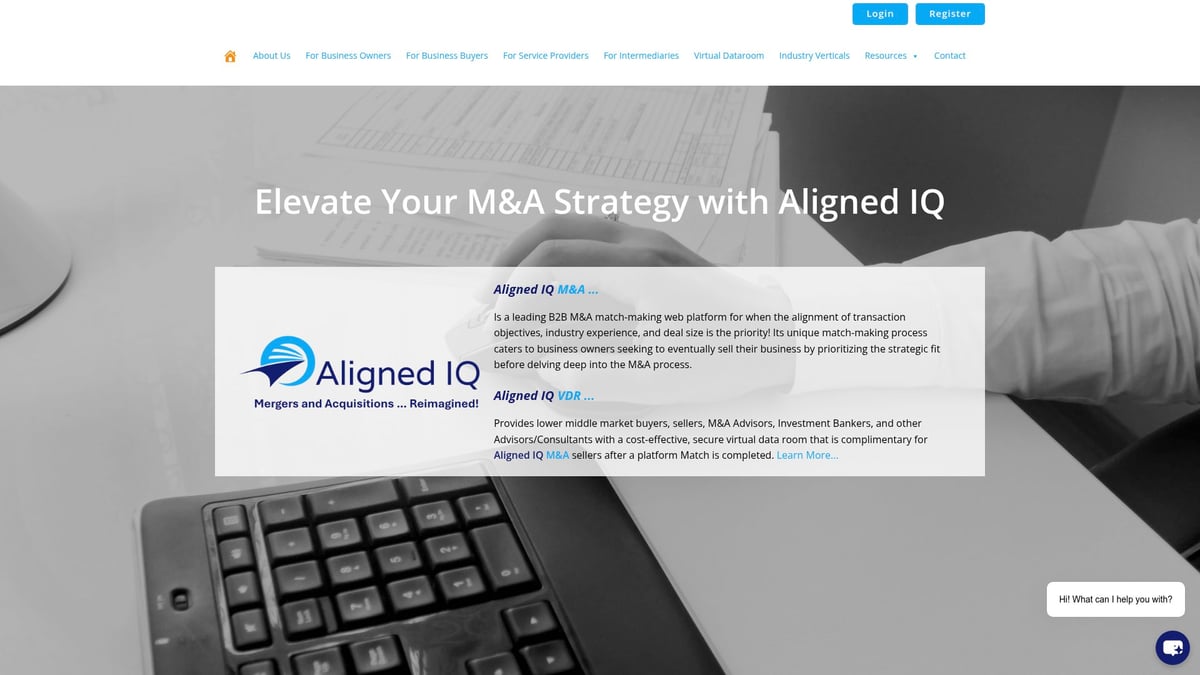
Proprietary platforms such as Aligned IQ M&A are transforming the answer to where can i sell my company. These web-based solutions prioritize strategic fit by matching sellers with vetted buyers based on industry, deal size, and objectives before deep engagement.
With Aligned IQ, sellers maintain full discretion and control throughout the process. After a successful match, sellers receive complimentary access to Aligned IQ VDR, a secure virtual data room for due diligence. The VDR is also competitively priced for buyers, intermediaries, and service providers (see pricing). This approach delivers confidentiality, targeted matches, and efficiency—key advantages over traditional listing sites.
Direct Outreach and Networking
Sometimes, the best answer to where can i sell my company is through your own network. Leveraging industry contacts, advisors, and direct approaches can uncover strategic buyers not found on public platforms.
Combining these channels—or choosing the one that aligns best with your goals—will help you maximize value, confidentiality, and control throughout the sale process.
How to Prepare Your Company for Sale
Preparing your business for a successful sale is a strategic process that can make all the difference in your outcome. Whether you are asking where can i sell my company or how to maximize its value, careful preparation helps you attract the right buyers and achieve your goals. Here is a step-by-step guide to get your company exit-ready.

Financial and Operational Readiness
Start by ensuring your financial records are accurate, up-to-date, and ideally audited. Buyers will scrutinize your books, so resolve outstanding liabilities, reconcile accounts, and fix any inconsistencies. Operationally, streamline processes and address legal or compliance issues ahead of time.
Create clear documentation for all procedures, contracts, and key assets. This not only builds buyer confidence but also accelerates due diligence. For actionable insights, review these ten tips to help make your business exit ready.
Business Valuation and Market Positioning
Determining your company’s value is critical when considering where can i sell my company for the best return. Common valuation methods include EBITDA multiples, discounted cash flow, and asset-based approaches.
| Valuation Method | Description | Best For |
|---|---|---|
| EBITDA Multiple | Uses profit before interest, taxes, depreciation, and amortization | Profitable businesses |
| Discounted Cash Flow | Projects future cash flows, then discounts to present value | Stable cash flow |
| Asset-Based | Calculates net asset value | Asset-heavy firms |
Benchmark your business against industry peers and recent comparable sales to position it competitively.
Assembling Your Deal Team
A strong deal team is essential. Key roles to fill include:
- M&A attorney for legal guidance
- Accountant for financial accuracy
- M&A advisor or broker for process expertise
- Internal champions for operational support
With the right team, you reduce risks and increase the likelihood of a successful sale.
Preparing Marketing Materials
Craft a compelling Confidential Information Memorandum (CIM) and concise teaser documents. These should highlight your business’s strengths while protecting sensitive information.
Striking the right balance between transparency and confidentiality is vital. Share enough to spark interest from buyers, but keep proprietary details secure until trust is established.
Data Room Preparation
Buyers expect organized, secure access to due diligence documents. Prepare a digital data room with financials, contracts, HR files, and operational data.
Platforms like Aligned IQ offer sellers complimentary access to a secure Virtual Data Room (VDR) after a successful match. For buyers, intermediaries, and service providers, Aligned IQ VDR delivers competitive pricing (see pricing). This controlled environment protects confidentiality and streamlines the transaction process.
Preparing your business thoroughly before asking where can i sell my company ensures you stand out to qualified buyers, minimize surprises, and pave the way for a smooth transition.
Aligned IQ: Transforming How You Sell Your Company
If you are wondering where can i sell my company for maximum value and privacy, Aligned IQ offers a new era of M&A. This proprietary B2B match-making web platform connects sellers with vetted buyers who fit your industry, deal size, and objectives. Unlike traditional M&A channels, Aligned IQ puts you in control, ensuring each introduction is strategic, confidential, and fully aligned with your exit goals.
Why Choose Aligned IQ M&A?
- Proprietary, semi-proprietary buyer network for targeted matches
- Sellers always remain anonymous and control buyer engagement
- No upfront fees for sellers, buyers pay only when a successful match is made
- Strategic fit prioritized before deep engagement, saving time and reducing risk
Here is a quick comparison:
| Feature | Aligned IQ M&A | Traditional M&A Process |
|---|---|---|
| Buyer Vetting | Proprietary/Curated | Broad, less targeted |
| Confidentiality | Full Control | Varies |
| Seller Costs | Always Free | Retainers, Success Fees |
| Match Process | Strategic & Efficient | Manual, Slower |
When asking where can i sell my company securely, Aligned IQ stands out for its focus on discretion and strategic alignment.
Aligned IQ VDR: Secure, Efficient Due Diligence
After a successful match, sellers receive complimentary access to the Aligned IQ VDR, a virtual data room designed for seamless due diligence. This secure platform empowers you to organize financials, legal documents, and sensitive files, giving buyers confidence while maintaining strict confidentiality.
For buyers, intermediaries, and M&A service providers, Aligned IQ VDR offers competitive pricing and robust functionality. To see detailed pricing, visit the see pricing page.
This approach eliminates unnecessary risk and cost, making Aligned IQ the answer to where can i sell my company with confidence.
A Typical Scenario & Next Steps
Imagine a business owner seeking a discreet, strategic exit. With Aligned IQ, that owner is matched to a buyer who brings relevant industry expertise and shared vision. The negotiation and due diligence process is streamlined, thanks to the platform’s secure tools and proprietary network.
Ready to take control of your exit? Take a Tour of Aligned IQ and discover how it can transform the way you sell your company.
Step-by-Step: The Company Sale Process in 2026
Selling your business is a complex journey, but following a clear process can help you maximize value and minimize risk. If you are asking yourself where can i sell my company, understanding each phase is crucial for a successful exit in 2026. Below, you will find the step-by-step roadmap every business owner should know.
Step 1: Setting Your Objectives and Timeline
Start by defining exactly what you want from the sale. Are you seeking financial freedom, a new challenge, or to secure your legacy? Setting clear goals will guide every decision. Plan your timeline realistically, accounting for due diligence, negotiations, and potential delays. For a comprehensive overview, refer to How do you sell a company for practical insights and preparation steps.
Step 2: Selecting the Right Sale Channel
Next, decide where can i sell my company for the best results. Evaluate whether a traditional M&A advisor, business broker, or a modern digital match-making platform like Aligned IQ is best for your company size and industry. Consider confidentiality, buyer vetting, and strategic fit when making your choice.
Step 3: Preparing Documentation and Due Diligence Materials
Organize all financial statements, legal documents, and operational records. A well-prepared virtual data room (VDR) streamlines buyer reviews and protects sensitive information. Using secure platforms, such as Aligned IQ VDR, ensures confidentiality and efficiency, which is key when considering where can i sell my company.
Step 4: Marketing and Buyer Outreach
Craft compelling teaser documents and a Confidential Information Memorandum (CIM). Target the right buyers through curated platforms or direct outreach. Balancing transparency with confidentiality is essential. Leverage proprietary match-making platforms to reach qualified buyers discreetly, another important factor in answering where can i sell my company.
Step 5: Negotiating Offers and Structuring the Deal
Compare offers, keeping your objectives in mind. Understand deal structures like asset sales, stock sales, earnouts, and seller financing. Use negotiation tactics to align interests and maximize value. A structured approach helps you navigate where can i sell my company for the optimal outcome.
Step 6: Closing and Transition
Finalize due diligence, legal documentation, and regulatory approvals. Plan for a smooth transition, including knowledge transfer and post-sale support. This step ensures business continuity, protects your legacy, and completes the journey of where can i sell my company.
Choosing the Best Buyer: Strategic Fit, Value, and Legacy
Selecting the right buyer is just as crucial as deciding where can i sell my company. The ideal buyer not only offers the best price but also ensures your business continues to thrive, your team is respected, and your legacy is preserved.
Types of Buyers and Their Motivations
Understanding buyer motivations helps inform where can i sell my company for optimal results. Corporate buyers often seek synergies, looking to integrate your business into their existing operations. Private equity firms are attracted by growth potential and operational efficiency. Family offices typically value stable cash flow and long-term investment. Individual entrepreneurs may prioritize independence and established processes. Each buyer type brings unique perspectives and objectives, shaping how your business will evolve after the transaction.
Evaluating Buyer Fit
The decision of where can i sell my company hinges on finding a buyer with the right strategic fit. Key criteria include industry experience, operational expertise, cultural alignment, and financial strength. Using proprietary matchmaking platforms like Aligned IQ M&A ensures buyers are vetted for these attributes before engagement. For more on how to approach and select the right buyers, see The business selling process: how many potential buyers should you approach. Carefully evaluating buyer fit maximizes deal value and safeguards your company’s future.
Protecting Confidentiality and Minimizing Disruption
Confidentiality is critical during negotiations to avoid employee uncertainty and customer attrition. Tools such as secure data rooms, like Aligned IQ VDR, provide a confidential space for sharing sensitive documents. Limiting information flow, using non-disclosure agreements, and controlling buyer access help prevent leaks. A controlled process, as offered by Aligned IQ, maintains discretion and minimizes operational disruption until a deal is finalized, protecting your business reputation throughout the sale.
Maximizing Value and Ensuring a Smooth Transition
To fully realize the value when deciding where can i sell my company, consider structuring earnouts, retention bonuses, and comprehensive transition plans. These mechanisms align interests and support business continuity. Leveraging Aligned IQ M&A’s proprietary process and secure VDR—with competitive pricing for buyers, intermediaries, and service providers (see pricing)—ensures a seamless transition. Prioritizing strategic fit not only maximizes financial returns but also preserves your legacy and supports a successful handover. Take a Tour of Aligned IQ to discover how these tools can help you achieve your exit goals.
As you consider how to sell your company in 2026, it’s clear that choosing the right platform can make all the difference—especially when strategic fit, confidentiality, and maximizing value are your top priorities. Aligned IQ M&A stands out for its thoughtful matchmaking process, putting you in control and ensuring you connect with buyers who truly understand your business. If you’re ready to see how this modern, secure platform can simplify your exit and support your goals, I invite you to Take a Tour!
No responses yet