

Imagine preparing to sell or acquire a business in 2026. An important question might be, “What will virtual data room pricing look like, and how can I budget confidently?”
This guide is designed to give buyers, sellers, and advisors in the lower-middle market a clear understanding of how virtual data room pricing works. You will discover the latest pricing models, key factors that influence costs, side-by-side comparisons of leading providers, potential hidden fees, and actionable strategies for choosing the right solution.
Gain future-focused insights, learn about evolving VDR trends, and unlock the knowledge you need for cost transparency. By the end, you will have the confidence to make smart, informed decisions for your next transaction.
Understanding Virtual Data Room Pricing Models
Choosing the right virtual data room pricing model can impact your deal costs, particularly in the lower-middle market. As digital transactions become more sophisticated, understanding how providers set their prices is essential for buyers, sellers, and advisors seeking transparency and value.

Types of Pricing Structures in 2026
Virtual data room pricing has evolved to meet diverse transaction needs. The most common models include:
-
Per-page pricing: $0.35 to $0.80 per page, ideal for projects with minimal documentation but can escalate quickly.
-
Per-user pricing: $15 to $75 per user per month, offering predictability for small teams but scaling up with more collaborators.
-
Storage-based pricing: Ranges from $60 to $1,000+ per GB monthly, best for data-heavy projects but risky if requirements grow.
-
Flat monthly fee: $400 to $5,000+ per month, covering unlimited users and projects, providing cost certainty for ongoing transactions.
-
Annual subscriptions: Offer 20–30% discounts compared to monthly rates, with upfront commitments.
-
Hybrid models: Combine elements such as user and storage fees for tailored solutions.
Lower-middle market M&A deals often favor flat-fee or per-user models to avoid unpredictable costs. For a more detailed breakdown of these structures, see Virtual Data Room Pricing Models Explained.
Pros and Cons of Each Model
Each virtual data room pricing approach has distinct advantages and drawbacks:
-
Per-page: Simple for small deals but unpredictable for larger transactions.
-
Per-user: Easy to budget for stable teams, yet costly during peak activity.
-
Storage-based: Effective for known data needs, risky for rapid growth.
-
Flat fee: Scalable and transparent, may be excessive for brief or small deals.
-
Annual: Delivers savings for ongoing projects, less flexible if deal timelines shift.
Lower-middle market firms should assess which model aligns with their deal volume, user count, and data complexity.
Market Trends in VDR Pricing
Recent trends in virtual data room pricing show a clear move toward flat-fee and hybrid models, especially in the lower-middle market. Providers are phasing out per-page pricing, as it often leads to hidden fees and unpredictability.
There is a noticeable increase in transparent, published rates and the availability of free trials. This shift allows deal teams to test platforms before committing, reducing risk and improving confidence in their selection.
Ultimately, understanding these trends empowers buyers, sellers, and advisors to choose a solution that balances security, scalability, and cost control.
Key Factors Influencing VDR Costs
Understanding what drives virtual data room pricing is crucial for making informed decisions, especially in lower-middle market transactions. Each deal is unique, so knowing which factors influence costs helps you choose a solution that fits both your budget and project needs.

Deal Size and Complexity
The size and complexity of your transaction directly impact virtual data room pricing. The more users you invite, the higher your document count, and the greater your storage needs, the more you’ll pay. For example, a 75,000-page due diligence project billed at $0.50 per page would total $37,500, which could be more than an annual flat-fee plan.
Lower-middle market M&A deals often find that user-based or flat-fee models offer predictable costs, especially as deal teams grow. During pre-sale due diligence essentials, document volume can surge, so anticipating these spikes helps avoid surprises in virtual data room pricing.
Security and Compliance Features
Security is non-negotiable in M&A. Enhanced features like 256-bit encryption, SOC 2 Type II, HIPAA, or GDPR compliance can increase virtual data room pricing, but these protections are essential for confidential transactions. Dynamic watermarking, single sign-on, and two-factor authentication are often included in higher-tier plans.
For lower-middle market buyers and sellers, prioritizing the right security features can mean the difference between a smooth transaction and costly data breaches. Investing in robust security often justifies the additional spend in virtual data room pricing.
Project Duration and Frequency
How long you need access to the VDR and how often you run deals both play a big part in virtual data room pricing. Short-term, one-off projects may be better suited to single-project pricing, while ongoing dealmakers benefit from annual subscriptions that offer 20 to 30 percent savings.
Providers sometimes offer prorated rates or discounts for multiple projects. If your business expects frequent transactions, locking in a subscription can help control long-term virtual data room pricing and eliminate surprises.
Collaboration and User Management Tools
Efficient collaboration is essential, especially in deals involving multiple stakeholders. Advanced user management, unlimited users, and granular permissions are features that impact virtual data room pricing. For lower-middle market transactions, flexibility is key—buyers, sellers, and advisors all need secure, tailored access.
Features like Q&A modules and audit trails streamline communication, but may also be bundled into higher-priced plans. Assess your team’s needs to avoid overpaying for unnecessary extras.
Provider Support and Training
The level of support included can significantly affect your costs. 24/7 support, onboarding, and live training help reduce deal risk, ensuring everyone uses the platform efficiently. Some providers offer unlimited live training in enterprise plans, which is valuable during complex deals.
For lower-middle market firms, responsive support is critical for handling confidential data and time-sensitive negotiations. While these services may add to virtual data room pricing, they often save time and money in the long run.
Customization and Branding
Customization options like branded portals, custom workflows, and API integrations are typically reserved for premium plans, impacting virtual data room pricing. Lower-middle market firms may prioritize essential features over advanced customization to keep spending in check.
Consider what features are truly necessary for your transaction. While branded experiences can enhance professionalism, focusing on core capabilities often delivers better value.
Geographic Data Residency and Compliance
Where your data is stored can influence both compliance and cost. Providers may charge more for hosting data in specific regions to meet regulatory requirements. For cross-border M&A, understanding these nuances is vital.
If your deal requires data to reside within the EU or US, clarify these needs upfront. Transparent communication with your provider ensures your virtual data room pricing aligns with both legal and operational requirements.
Comparing Leading Virtual Data Room Providers for 2026
Choosing the right virtual data room provider can make or break your transaction’s efficiency, cost, and security. With so many options available, understanding how leading providers structure their virtual data room pricing is essential for lower-middle market buyers, sellers, and advisors.
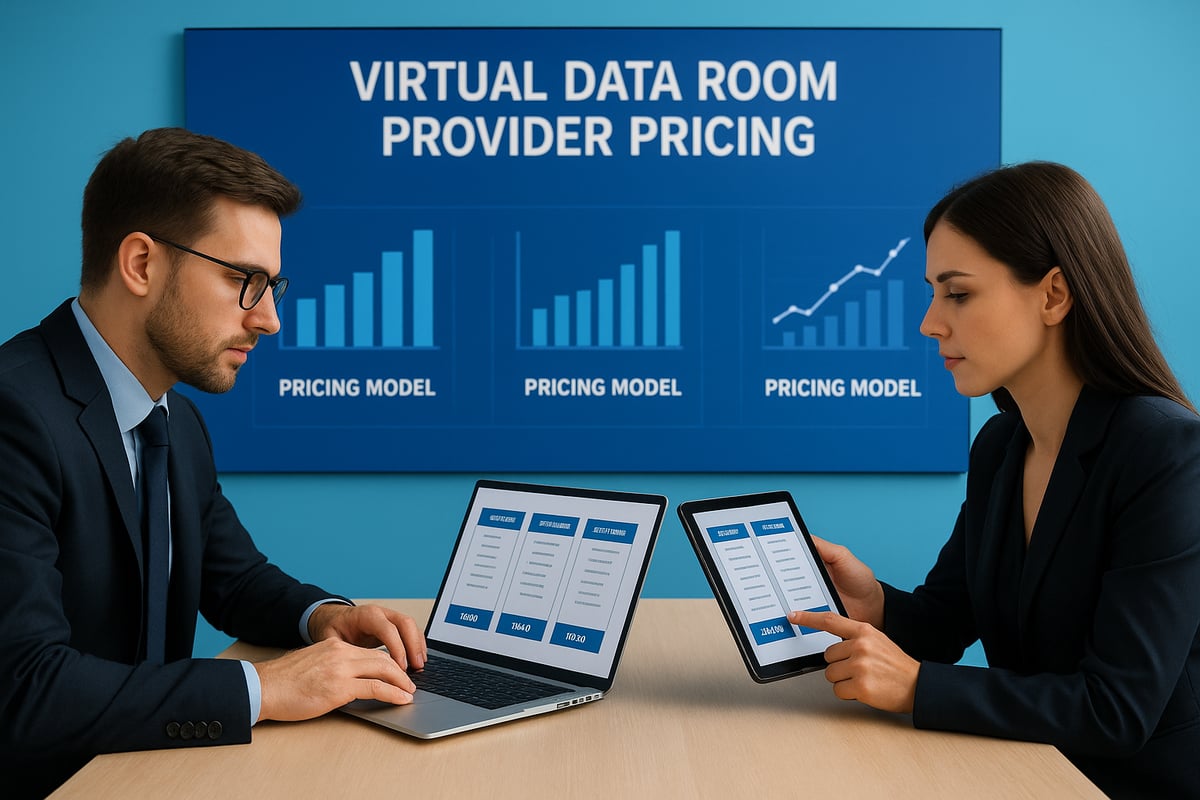
Provider Pricing Examples and Feature Comparison
Virtual data room pricing varies widely across providers, with each offering distinct models and features. Here is a quick comparison:
|
Provider |
Pricing Model |
Starting Price |
Key Features |
Free Trial |
|---|---|---|---|---|
|
Ideals |
Flat-rate monthly |
$400/mo |
Unlimited users, robust security |
30 days |
|
Intralinks |
Per-page |
$0.35–$0.80/page |
Unlimited users, advanced security |
No |
|
Datasite |
Per-page, annual |
Custom |
AI features, high security |
No |
|
Onehub |
Per-user/month, flat |
$15/user, $300/mo |
1,000 users, unlimited storage |
Yes |
|
Firmex |
Project/annual |
Custom |
Instant setup, document controls |
Yes |
|
Digify |
Tiered plans |
$190–$500/mo |
Secure sharing, custom branding |
Yes |
|
DealRoom |
Annual, flat |
$7,500+/yr |
Unlimited users, 24/7 support |
Yes |
For a deeper breakdown of these models and what to expect, the Virtual Data Room Pricing: Cost Breakdown & Best Options guide offers additional context.
Value for Lower-Middle Market Transactions
For lower-middle market transactions, predictable virtual data room pricing is critical. Flat-fee and per-user models are especially popular, as they eliminate surprises and support collaboration among multiple stakeholders.
Take Onehub’s Data Room Edition, for example. At $300 per month for up to 1,000 users and unlimited storage, it’s a strong fit for mid-sized M&A deals. Flexible billing and prorated options are increasingly common, allowing businesses to match costs with real deal activity.
Providers like Ideals and DealRoom also cater to these needs, combining strong security with scalable plans. These features are vital for buyers, sellers, and advisors who need reliable access and budget control.
Feature Highlights and Differentiators; Transparency and Free Trial Availability
What sets top VDR providers apart is their commitment to robust security, scalability, and ease of use. Unlimited users and storage, advanced encryption, and features like AI-powered redaction are now table stakes for serious platforms.
Transparent virtual data room pricing is becoming a standard, with more providers publishing rates and offering free trials. This trend empowers dealmakers to test usability, gauge support, and ensure the platform meets their unique needs before committing.
For lower-middle market professionals, this shift means fewer hidden costs and greater confidence in selecting the best fit. Taking advantage of risk-free trial periods is a smart way to validate both functionality and total cost before making a decision.
Hidden Costs and How to Avoid Them
Hidden costs can quickly turn an affordable virtual data room pricing plan into an unexpected burden, especially for lower-middle market deals. Business owners and advisors must watch for fees that are not always obvious at the outset. These can include overage charges for exceeding storage or user limits, extra fees for advanced tools like API access or custom branding, and charges for additional support or document uploads. Early contract termination may also trigger penalties, sometimes as high as 25 percent of the remaining contract value. For those handling sensitive deals, costs can increase further if physical media or extended access is required.

Red Flags and How to Spot Them
Identifying red flags in virtual data room pricing is crucial for avoiding budget surprises. If a provider does not publish transparent pricing, proceed with caution. Ambiguous terms like “unlimited users” or “unlimited storage” often come with fair-use clauses that may restrict your deal team’s flexibility. Per-page pricing models, once common in the traditional M&A process, can escalate rapidly during due diligence. Reviewing The traditional sell-side M&A process can help you understand where these risks typically arise and why modern solutions offer greater cost clarity.
Strategies to Minimize Unexpected Expenses
To stay in control of virtual data room pricing, begin with a thorough assessment of your deal’s scope, including expected users, document volume, and must-have features. Negotiate custom quotes if you expect multiple transactions or fluctuating activity. Always take advantage of free trials or demos to evaluate true cost versus value. For example, a 50,000-page deal at $0.50 per page equals $25,000, while a flat-fee plan could save thousands. Annual subscriptions often yield 20 to 30 percent savings over monthly billing, which is especially valuable for ongoing lower-middle market activity. For more guidance, explore Lower-middle market M&A insights to see how industry peers optimize costs.
How to Choose the Right Virtual Data Room for Your Deal
Selecting the right virtual data room for your deal can make or break the success of your transaction. The process is not simply about picking a platform, but about aligning features, security, and costs with your deal’s unique requirements. Let’s break down a step-by-step approach to ensure you achieve transparency and value in virtual data room pricing.
Step 1: Define Your Project Requirements
Begin by clearly outlining your deal’s core needs. Estimate the number of users who will require access, the volume of documents involved, and the level of security or compliance mandated by your industry. In the lower-middle market, user numbers can shift rapidly, so it helps to review guides on assembling your M&A team to anticipate access needs. This clarity is vital, as it directly impacts virtual data room pricing.
Create a checklist:
-
Expected number of internal and external users
-
Document types and total estimated volume
-
Industry-specific compliance needs
Step 2: Compare Pricing Models and Features
Once you know your requirements, compare virtual data room pricing models. Look for providers with transparent costs and flexible plans. Consider whether flat-fee, per-user, or hybrid models best suit your transaction. Evaluate the included features such as advanced Q&A, permission controls, and security certifications.
Prioritize providers offering free trials and onboarding support. This allows you to test the platform’s suitability before committing. Keep in mind, market trends suggest flat-fee and hybrid models are gaining popularity in the lower-middle market.
Step 3: Test Usability and Support
A virtual data room is only as good as its usability. Use trial periods or demos to ensure the platform is intuitive for your team, buyers, and advisors. Pay close attention to customer support responsiveness. For lower-middle market deals, where teams may have less technical support, strong training and help resources can reduce risk.
Check for simple document upload processes, customizable permission settings, and clear user activity tracking. These features are essential for maintaining deal momentum.
Step 4: Consider Future Growth and Scalability
Choose a provider whose virtual data room pricing structure can scale with your business. If you anticipate increased deal activity, opt for platforms that offer easy upgrades or custom plans. Look for solutions that allow you to add users or storage without hidden fees or complex renegotiations.
Scalability ensures you are not locked into a solution that fits today, but limits future growth. Providers that support flexible billing and multiple projects are ideal for ongoing dealmakers.
Step 5: Negotiate and Clarify All Terms
Before finalizing your decision, negotiate all pricing elements in writing. Ask providers to clarify potential overages, add-on features, and early termination penalties. Inquire about discounts for annual commitments or bundled services, especially if you plan multiple deals.
A transparent agreement helps you avoid surprises and ensures your virtual data room pricing remains predictable throughout the transaction. Always confirm support levels and any additional costs for training or custom features.
As you navigate the evolving landscape of virtual data room pricing for 2026, you deserve a solution that’s secure, transparent, and designed with your unique M&A needs in mind. At Aligned IQ, we put strategic fit and confidentiality at the forefront, offering complimentary VDR access for sellers after a match and tools that make every transaction smoother for buyers, sellers, and advisors. If you’re ready to experience a more collaborative, cost-effective way to manage your deals—with the added confidence of robust security and user-friendly analytics—I invite you to Take a Tour!
No responses yet