

Building a business with strong transferable value is the foundation for sustainable growth, seamless succession, and a successful exit. Transferable value means your company can thrive and attract buyers, even when you are not in the driver’s seat.
This guide arms you with a step-by-step process to unlock lasting business success in 2025 and beyond. You will discover:
- What transferable value is and why it matters
- The core drivers that boost value and reduce risk
- Actionable steps to build and maximize value
- How confidential M&A platforms can empower your transition
- Strategies to optimize for future opportunities
Ready to maximize your business’s potential? Let’s dive in and start your journey toward enduring value.
Understanding Transferable Value: What It Is and Why It Matters
Defining Transferable Value
Transferable value is the portion of your business’s worth that a new owner can realize, regardless of your direct involvement. Unlike intrinsic value, which includes intangible factors such as reputation or brand, transferable value focuses on what can be sustained and grown by someone else. This distinction is critical for lower-middle market owners, especially in family businesses or owner-operated firms considering succession or sale.
Buyers pay premiums for businesses with high transferable value, as highlighted by Forbes and Cherry Bekaert. They are drawn to companies where systems, customer relationships, and profits are not dependent on one individual. For a deeper dive into why this matters and how to assess it, see the Unlocking Transferable Value Guide.
Key Benefits of High Transferable Value
Building strong transferable value offers multiple advantages. First, it makes your business more attractive to both buyers and investors. Companies with high transferable value often receive higher sale multiples and experience smoother transitions during ownership changes.
Other benefits include:
- Lower risk for new owners, ensuring business continuity.
- Improved access to capital and more opportunities for strategic partnerships.
- Greater resilience in changing markets.
According to Forbes, businesses with robust transferable value can command up to 30 percent higher exit multiples, underscoring the financial upside for proactive owners.
Common Pitfalls: Low Transferable Value Risks
Low transferable value can undermine even profitable businesses. Overdependence on the owner or key employees is a major risk. Without documented processes or systems, transitioning leadership becomes challenging and reduces buyer confidence.
Other pitfalls include:
- Limited customer diversification, leading to revenue instability.
- Weak recurring revenue streams, making future cash flow uncertain.
- Discounted offers or lack of serious buyer interest.
Real-world examples from lower-middle market deals show that firms with these issues often face lengthy sale timelines or failed transitions. Addressing these risks early is essential for protecting your business’s future.

Core Drivers of Transferable Value in 2025
Unlocking transferable value in your business starts with understanding its foundational drivers. These core elements are what buyers, investors, and successors look for when assessing the true, sustainable worth of a company beyond its founder or current leadership. Let’s explore what sets high-performing, transferable businesses apart in today’s market.

Financial Performance and Clean Records
A solid financial foundation is essential for maximizing transferable value. Consistent revenue growth, profitability, and transparent financial statements give buyers confidence that the business can thrive after the transition. Third-party audits and well-organized books support credibility and reduce perceived risk.
Recurring revenue streams and diversified income sources are especially attractive, as they signal stability and predictability. According to Cherry Bekaert, 70% of buyers consider clean financials a top decision factor. In the lower-middle market, companies with clear, verifiable financial histories often command premium prices and attract more serious buyers.
Operational Independence and Scalable Systems
Operational independence is a cornerstone of transferable value. Buyers want to see that a business can function smoothly without heavy involvement from the owner. This is achieved through documented processes, standard operating procedures, and smart use of technology. Automation and digital tools further increase efficiency and scalability.
For example, manufacturers using ERP systems demonstrate process control and resilience, making them more appealing in the market. Implementing robust systems can significantly enhance value, as discussed in Driving Value Through Systems. These practices reduce single points of failure and support a seamless handoff, positioning your business as a low-risk, high-potential opportunity.
Customer and Revenue Diversification
A diverse, loyal customer base is vital for strong transferable value. Overreliance on a handful of clients, in particular when they have a close, deep relationship with the founder, increases risk and can lead to discounted offers during a sale. Businesses that spread revenue across multiple customers and sectors are more resilient and better positioned for growth.
Subscription and contract-based revenue models further stabilize cash flow and appeal to buyers. In service firms, those with more than 40% of revenue from their top three clients often receive lower valuations. Proactively broadening your customer mix can significantly boost market interest and exit multiples.
Strong Management and Leadership Bench
A capable management team is a powerful driver of transferable value. Effective succession planning ensures that key roles are filled and responsibilities are clear, making transitions smoother for new owners. Retaining and incentivizing top talent is equally important, as it reduces disruption and preserves institutional knowledge.
Cultivating a culture of accountability and growth demonstrates long-term sustainability. For instance, family businesses with next-generation leaders in place often achieve premium valuations. Buyers are far more likely to pay a premium when confident that the leadership team can continue driving success post-transition.
Step-by-Step Guide to Unlocking Transferable Value
Unlocking transferable value requires a clear plan and disciplined execution. By following these four practical steps, lower-middle market business owners can maximize their company’s appeal, sustainability, and exit options.

Step 1: Assess Current State and Identify Gaps
Begin by evaluating your company’s current level of transferable value. Conduct a comprehensive business valuation, focusing on how easily your operations, customer relationships, and financials could be transitioned to a new owner.
Use value driver checklists and seek third-party assessments to pinpoint dependency risks. For example, if your business relies heavily on your personal relationships with clients or a single key employee, this will reduce transferable value. Tools like confidential self-assessment questionnaires help uncover hidden vulnerabilities and operational bottlenecks.
Regularly reviewing these factors ensures you identify areas for improvement before entering the market.
Step 2: Build Robust Processes and Documentation
Systematize every critical business function to boost transferable value. Create and regularly update standard operating procedures (SOPs) for sales, operations, and finance. Digital systems such as CRMs or workflow automation tools ensure process consistency and scalability.
Train your team to follow documented processes and encourage cross-functional skills. This reduces reliance on any single person, making ownership transition seamless. Service businesses that have systematized client onboarding often see doubled buyer interest.
For more on how operational independence increases transferable value, see Transitioning to Hands-Off Management.
Step 3: Diversify Revenue and Strengthen Customer Relationships
Transferable value improves when your revenue streams are broad and predictable. Develop new customer segments or expand your product lines to reduce concentration risk. Secure long-term contracts or implement subscription models to create recurring revenue.
Customer retention programs help maintain loyalty, while reducing reliance on single clients or markets. Data shows that businesses with over 70 percent recurring revenue attract twice as many buyers. Regularly review your customer mix to ensure no single client accounts for an outsized portion of revenue.
Step 4: Empower and Retain Key Talent
A strong management team is essential for sustaining transferable value. Establish incentive plans like phantom equity or retention bonuses to motivate your top performers to stay through transitions.
Document all roles and responsibilities for critical positions. Invest in ongoing leadership development and succession planning. For example, a distributor with a documented leadership bench and clear growth culture recently sold at an industry-high multiple.
Empowering your team not only supports continuity but also assures buyers that the business can thrive beyond your direct involvement.
Leveraging Confidential M&A Matchmaking Platforms
Modern M&A matchmaking platforms have redefined how business owners unlock transferable value during an exit or transition. For lower-middle market companies, these platforms offer a secure and efficient way to connect with qualified buyers while maintaining confidentiality.
Traditional M&A processes often expose sensitive information early and rely on broad market listings. In contrast, digital matchmaking platforms prioritize strategic fit, only revealing details after alignment is confirmed. This approach reduces risk and ensures business owners retain control over the process.
The result is a smoother path to realizing transferable value, with more targeted buyer interest and improved outcomes for both sellers and acquirers.
Take a Tour of Aligned IQ: A New Approach to M&A Value Creation
Aligned IQ stands out as a proprietary, alignment-first platform designed specifically for lower-middle market M&A. Its unique model prioritizes strategic fit, industry expertise, and transaction objectives before any deep due diligence begins. For sellers, this means no upfront marketing materials or public exposure, allowing for a confidential, seller-controlled process that directly supports transferable value.
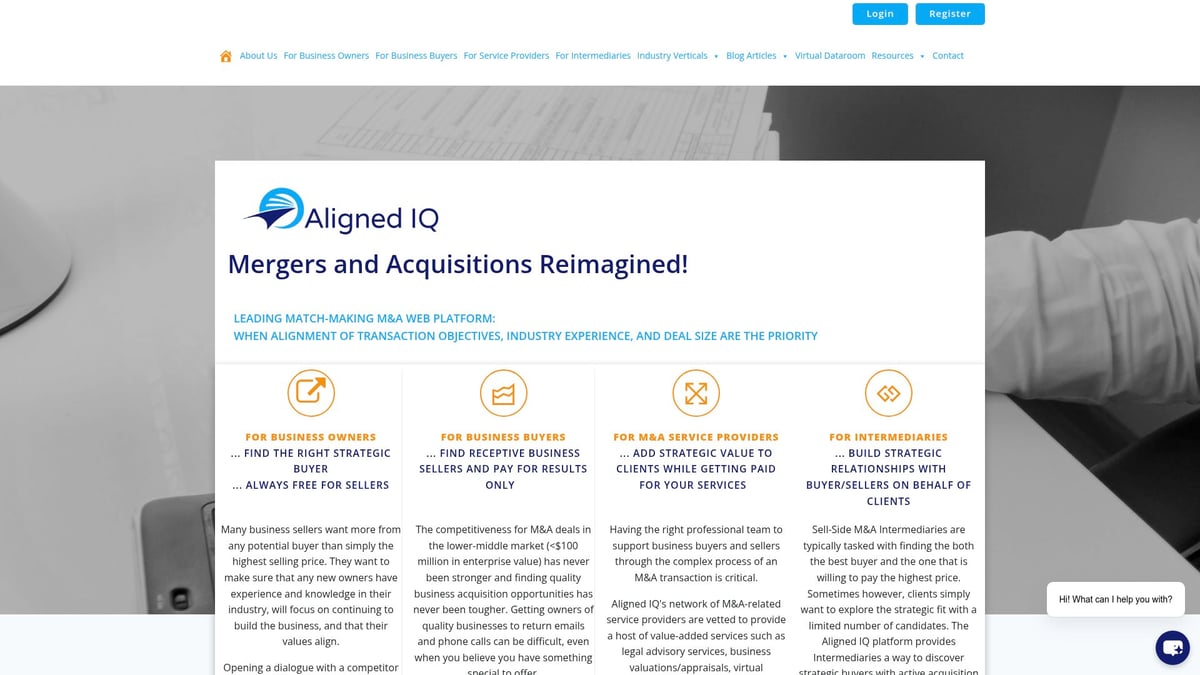
After a strategic match is confirmed, Aligned IQ provides a secure virtual data room for document sharing, free for sellers. This minimizes risk and ensures sensitive information is only accessible to pre-vetted, interested buyers. For business owners focused on maximizing exit value, tools like Aligned IQ, combined with strategies such as improving revenue quality for exits, can significantly elevate transferable value outcomes.
Buyers benefit from access to a curated pool of receptive sellers and industry-specific opportunities. The result is a higher likelihood of a successful, value-maximizing exit and a smoother transaction for all parties. Ready to see how Aligned IQ can help unlock your business’s full transferable value? Take a Tour today.
Optimizing for Future Transitions: Continuous Value Enhancement
Continuous enhancement of transferable value is essential for preparing your business for any future transition. Owners in the lower-middle market must view value-building as an ongoing process, not a one-time event. This mindset ensures your company remains resilient, attractive, and ready—no matter when opportunity or change arrives.
Ongoing Value-Building Strategies
To maximize transferable value over time, adopt a proactive approach to business improvement. Regularly assess your operations, identify gaps, and implement upgrades to processes and documentation. This includes:
- Scheduling quarterly value assessments and gap analyses
- Updating standard operating procedures for evolving business needs
- Encouraging staff to embrace innovation and flexibility
- Keeping a close eye on industry trends and buyer preferences
Building a culture of continuous improvement makes your business more resilient and desirable to buyers. For proven approaches, explore Strategies to Enhance Transferable Business Value, which outlines practical steps for sustaining growth and value.
Preparing for Unexpected Events and Market Shifts
Unexpected leadership changes or market disruptions can threaten your business’s transferable value if you are unprepared. Develop contingency plans that address succession, emergency response, and operational continuity. Essential elements include:
- Clear succession and leadership development plans
- Crisis communication protocols
- Financial and operational playbooks for emergencies
A family-owned manufacturer with a comprehensive crisis plan retained its transferable value during an unexpected ownership transition, demonstrating the power of preparation. For more on how transferable value impacts succession, see Importance of Transferable Value in Business Succession Planning.
Measuring Success and Tracking Progress
Set clear KPIs and monitor drivers of transferable value every quarter. Use third-party benchmarks to compare your business’s performance and identify areas for improvement. A service firm that tracked its value score and targeted key weaknesses improved its transferable value by 25 percent in just one year.
| KPI | Target | Frequency |
|---|---|---|
| Recurring Revenue % | > 70% | Quarterly |
| Customer Concentration | < 30% top 3 | Quarterly |
| Process Documentation | 100% coverage | Annually |
Celebrate progress and adjust your strategies as needed. By making transferable value a central metric, your business stays ready for any transition.
Key Takeaways for Business Owners
- Proactive value-building leads to higher offers and smoother transitions.
- Transferable value is the foundation for lasting business success.
- Early planning and leveraging the right tools or platforms are essential for optimal outcomes.
Business owners should prioritize regular assessments, invest in process documentation, and develop a strong management team. Using confidential, seller-first platforms like Aligned IQ can further reduce risk and maximize results. As highlighted in Business Succession Planning and Transferable Value, succession planning and value transfer go hand in hand.
As you’ve seen throughout this guide, building transferable value is the key to lasting business success, smoother transitions, and maximizing what you’ve worked so hard to create. If you’re ready to take your next steps—whether you’re exploring a future exit or simply want to build a more resilient, valuable company—leveraging the right platform can make all the difference. I encourage you to see firsthand how Aligned IQ’s confidential, strategic-fit approach can help you unlock and realize your business’s full potential. Curious to see how it works in action? Take a Tour!
No responses yet