
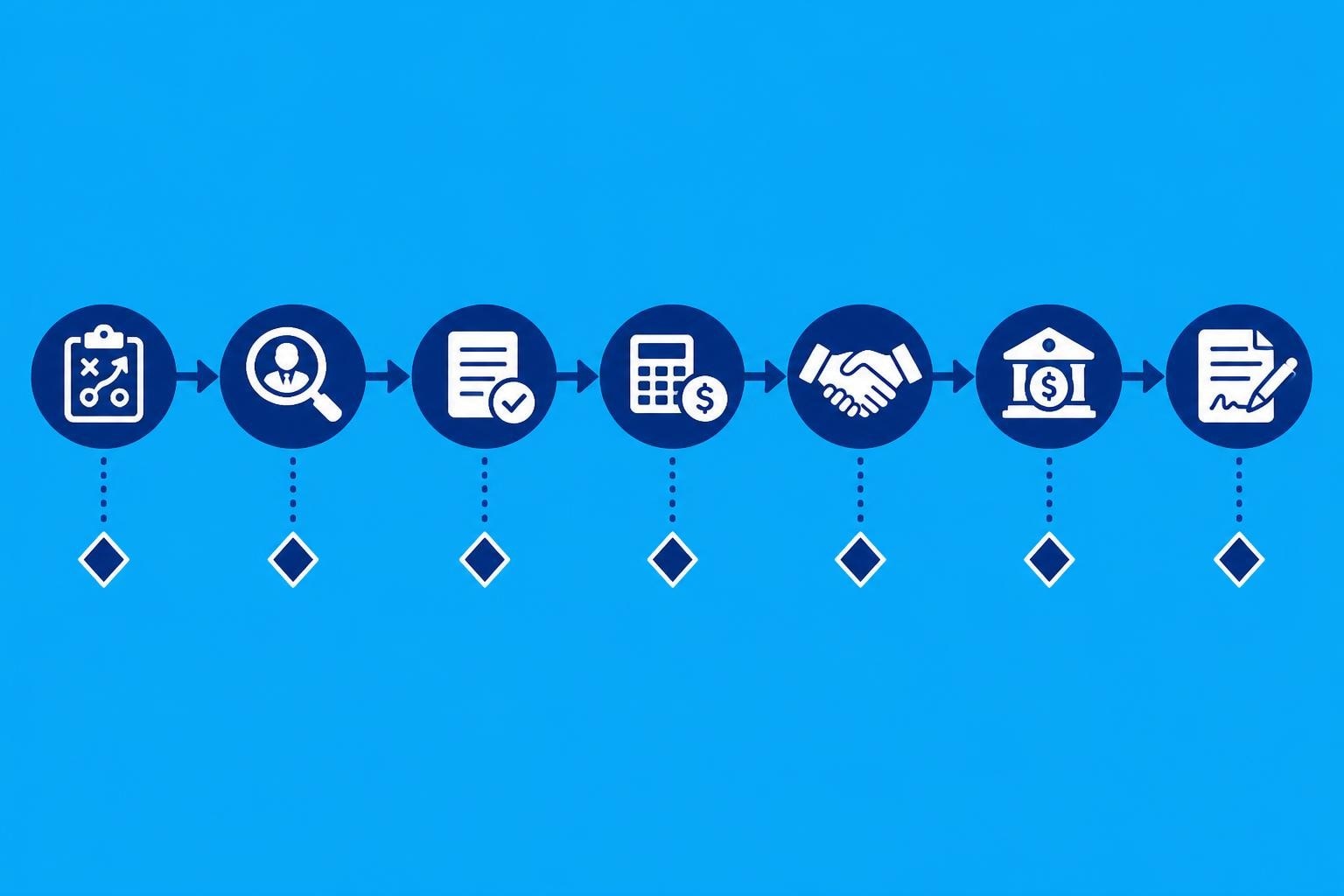
Acquiring a business represents one of the most significant strategic decisions an entrepreneur or company can make. Whether you're a first-time buyer or an experienced investor, understanding the steps to acquire a business ensures you navigate the complex process with confidence and minimize risks. The acquisition landscape in 2026 continues to evolve, with digital platforms transforming how buyers and sellers connect, making transactions more efficient and strategic fit more accessible than ever before. This comprehensive guide walks through the essential phases of business acquisition, from initial strategy development through final closing.
Developing Your Acquisition Strategy
Before diving into the market, successful buyers establish a clear acquisition strategy that aligns with their long-term objectives. This foundational phase determines which opportunities make sense and which should be avoided.
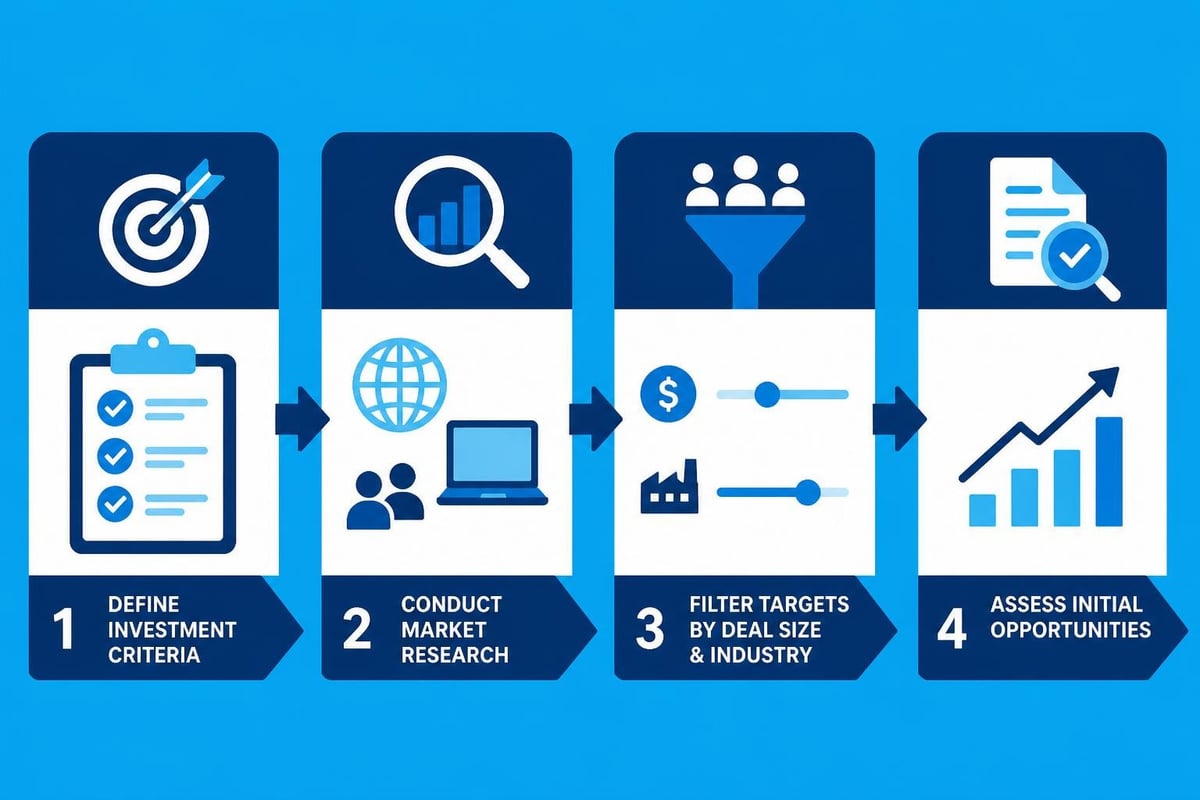
Define Your Investment Criteria
The first step involves creating specific parameters for your ideal acquisition target. Consider the following elements:
- Industry focus: Sectors where you have expertise or want to expand
- Company size: Revenue range, employee count, and market position
- Geographic location: Regional preferences based on operational capabilities
- Deal structure: Asset purchase, stock purchase, or merger preferences
- Strategic objectives: Growth, diversification, talent acquisition, or market entry
Financial capacity plays a crucial role in defining your criteria. Determine your available capital, financing options, and desired return on investment before engaging with potential targets.
Research Market Opportunities
Once you've established your criteria, begin researching available opportunities through multiple channels. Traditional methods include working with business brokers, investment bankers, and industry networks. However, modern deal sourcing platforms have revolutionized how buyers discover opportunities, offering proprietary access to businesses that may not be publicly listed.
The advantage of platform-based approaches is the ability to filter opportunities based on your specific criteria, ensuring you only spend time on deals that match your strategic vision. This efficiency becomes increasingly valuable as you scale your acquisition efforts.
Identifying and Evaluating Target Companies
With your strategy defined, the next phase focuses on identifying specific companies that meet your criteria and conducting preliminary evaluations to prioritize your efforts.
Source Potential Targets
Multiple sourcing channels exist in 2026, each with distinct advantages:
| Sourcing Method | Advantages | Considerations |
|---|---|---|
| Business Brokers | Structured process, screened listings | Higher fees, broad market exposure |
| Investment Bankers | Professional representation, larger deals | Expensive, competitive bidding |
| Direct Outreach | No intermediary fees, proprietary deals | Time-intensive, relationship-dependent |
| Digital Platforms | Efficient matching, confidential | Varying quality of listings |
Modern web platforms prioritize strategic fit before delving into detailed financial analysis, which fundamentally changes the acquisition dynamic. By focusing on compatibility first, both parties avoid wasting time on deals that won't ultimately succeed regardless of price.
Conduct Preliminary Assessment
When you identify interesting opportunities, perform an initial evaluation before making formal contact. Review publicly available information about the company's market position, competitive landscape, and growth trends. The U.S. Small Business Administration provides guidance on the fundamental differences between mergers and acquisitions that inform this preliminary assessment.
In a typical scenario, a buyer might identify three to five targets within their industry focus, narrow these down to two based on preliminary research, and then initiate formal discussions with the most promising candidate. This focused approach prevents resource drain and maintains confidentiality.
Initiating Contact and Building Relationships
The steps to acquire a business require strong relationship-building skills, particularly in the lower middle market where personal connections often determine deal success.
Making Initial Contact
First impressions matter significantly in acquisition discussions. Whether connecting through an intermediary or directly, present yourself as a credible, serious buyer who understands the seller's industry and respects their legacy.
Confidentiality remains paramount throughout initial conversations. Both parties benefit from secure, private environments where they can explore fit without public exposure. Traditional M&A processes often expose sellers to broad market awareness, creating employee uncertainty and competitive risks. However, platforms that emphasize privacy and strategic fit allow sellers to explore options discretely while maintaining business continuity.
Establish Mutual Interest
Early conversations should focus on alignment rather than price. Discuss:
- Vision for the business's future direction
- Cultural compatibility and management philosophy
- Transition expectations and timelines
- Growth opportunities and challenges
- Deal structure preferences
These discussions help both parties determine whether proceeding to formal due diligence makes strategic sense. In many cases, discovering misalignment early saves months of wasted effort and significant professional fees.
Conducting Comprehensive Due Diligence
Due diligence represents perhaps the most critical phase among the steps to acquire a business. This investigative process uncovers risks, validates assumptions, and provides the foundation for final valuation and deal terms.
Financial Due Diligence
Financial review examines historical performance, current position, and future projections. Key areas include:
- Three to five years of financial statements (audited if available)
- Tax returns and compliance documentation
- Revenue composition and customer concentration
- Working capital requirements and cash flow analysis
- Debt obligations and contingent liabilities
Understanding business valuation methodologies helps buyers interpret financial data correctly and identify potential red flags that might justify price adjustments or deal structure modifications.
Operational Due Diligence
Beyond financials, operational review assesses the business's functional capabilities:
- Customer relationships: Contract terms, retention rates, concentration risk
- Supplier dependencies: Key relationships, contract terms, alternative sources
- Human capital: Employee capabilities, compensation structures, retention risks
- Technology systems: Infrastructure quality, upgrade requirements, security
- Regulatory compliance: Licenses, permits, environmental issues, litigation

Legal Due Diligence
Legal due diligence checklist components ensure you understand all obligations and potential liabilities:
- Corporate structure and governance documents
- Material contracts and commitments
- Intellectual property ownership and protection
- Employment agreements and benefit plans
- Pending or threatened litigation
- Environmental compliance and liabilities
Professional advisors including attorneys, accountants, and industry specialists become invaluable during this phase. Their expertise identifies issues that inexperienced buyers might overlook.
Structuring the Deal and Securing Financing
Once due diligence validates the opportunity, attention shifts to deal structure and financing arrangements that work for both parties.
Determine Deal Structure
The fundamental choice involves asset purchase versus stock purchase, each with distinct tax and liability implications:
| Structure Type | Buyer Benefits | Seller Benefits |
|---|---|---|
| Asset Purchase | Select specific assets, avoid unknown liabilities | Retain cash and non-operating assets |
| Stock Purchase | Simpler transfer, preserve contracts and licenses | Often more tax-efficient |
| Merger | Combine entities, preserve relationships | Continuity for stakeholders |
Additional structural considerations include earnout provisions, seller financing, employment agreements, and non-compete clauses. These elements bridge valuation gaps and align incentives during the transition period.
Secure Acquisition Financing
Most acquisitions require some combination of financing sources:
- Equity capital: Personal funds, partner contributions, or investor capital
- Bank financing: Traditional loans secured by business assets
- SBA loans: Government-backed financing for qualifying transactions
- Seller financing: Deferred payment reducing upfront capital requirements
- Mezzanine debt: Subordinated debt with equity features
The comparison between buying versus starting a business highlights financing considerations unique to acquisitions. Lenders typically view established businesses more favorably than startups, potentially improving terms and availability.
Negotiating Terms and Finalizing Agreements
Negotiation skills significantly impact acquisition outcomes. The steps to acquire a business include multiple negotiation points beyond purchase price.
Letter of Intent (LOI)
The LOI formalizes preliminary agreement on key terms:
- Purchase price and payment structure
- Earnout provisions and contingencies
- Due diligence timeline and conditions
- Exclusivity period preventing seller from pursuing other buyers
- Target closing date
While typically non-binding except for exclusivity and confidentiality provisions, the LOI sets expectations for final documentation. Clear communication during LOI negotiation prevents misunderstandings that derail transactions later.
Purchase Agreement Negotiation
The definitive purchase agreement contains detailed terms governing the transaction. Critical sections include:
- Representations and warranties: Seller's statements about business condition
- Indemnification: Allocation of responsibility for undisclosed liabilities
- Closing conditions: Requirements that must be satisfied before completion
- Post-closing obligations: Transition support, non-compete agreements
- Dispute resolution: Mechanisms for addressing disagreements
Professional legal counsel becomes essential during this phase. Experienced transaction attorneys identify risks and negotiate protective provisions that inexperienced buyers might miss. The step-by-step acquisition process guide emphasizes proper legal documentation as fundamental to successful transactions.
Managing the Closing Process
The closing phase transforms negotiated agreements into completed transactions, requiring careful coordination of multiple parties and documents.
Pre-Closing Requirements
Before closing day, numerous tasks must be completed:
- Third-party consents: Landlord approvals, customer contract assignments, lender permissions
- Regulatory filings: Hart-Scott-Rodino notifications if applicable, state registrations
- Insurance: New policies or endorsements protecting acquired assets
- Organizational documents: Formation of acquisition entities if needed
- Employment matters: WARN Act compliance, benefit plan transitions
A detailed closing checklist prevents last-minute surprises that could delay or jeopardize the transaction. Communication with all stakeholders including employees, customers, and suppliers should be carefully coordinated based on timing agreed upon in the purchase agreement.
Closing Day Execution
The actual closing involves executing numerous documents and transferring funds. Typical closing deliverables include:
- Bill of sale transferring assets
- Assignment and assumption agreements for contracts
- Employment and consulting agreements
- Non-compete and non-solicitation agreements
- Financing documents if applicable
- Secretary's certificates and corporate resolutions
- Closing statements reconciling all financial adjustments
Many closings in 2026 occur virtually through secure platforms, with documents executed electronically and funds transferred via wire. The use of secure virtual data rooms facilitates efficient document exchange while maintaining confidentiality throughout the process. For buyers and sellers connected through matching platforms, complimentary data room access after matching streamlines document management. Other market participants can access competitively priced virtual data room solutions at Aligned IQ VDR, offering enterprise-grade security without enterprise pricing.

Post-Acquisition Integration and Transition
The final steps to acquire a business extend beyond closing to ensure successful integration and value realization.
Integration Planning
Successful acquirers begin integration planning during due diligence rather than waiting until after closing. Key planning elements include:
- Day One priorities: Critical operations that must continue uninterrupted
- Communication strategy: Messages for employees, customers, suppliers
- Quick wins: Early improvements demonstrating competence and building momentum
- Cultural integration: Bridging differences between organizations
- Systems consolidation: Technology, reporting, and process alignment
In a typical scenario involving a lower middle-market acquisition, the buyer might plan a 100-day integration roadmap addressing immediate operational needs while establishing foundations for longer-term strategic initiatives.
Seller Transition Support
Most acquisitions benefit from seller involvement during the transition period. Common arrangements include:
| Transition Type | Duration | Purpose |
|---|---|---|
| Consulting Agreement | 3-12 months | Knowledge transfer, relationship introductions |
| Employment Agreement | 6-24 months | Ongoing operational involvement |
| Board Advisory Role | 1-3 years | Strategic guidance and industry insights |
These arrangements provide continuity for stakeholders while allowing gradual leadership transition. The specific structure depends on the seller's preferences, buyer's capabilities, and business complexity.
Performance Monitoring
Establish clear metrics to track integration success and business performance:
- Financial performance versus projections
- Customer retention and satisfaction levels
- Employee retention and engagement
- Operational efficiency improvements
- Strategic initiative progress
Regular review meetings with key team members identify issues early when they're most easily addressed. Transparency and responsiveness during the transition period build trust and accelerate integration.
Leveraging Technology in Modern Acquisitions
The steps to acquire a business in 2026 benefit significantly from technological advances that streamline traditional processes and create new opportunities.
Digital Deal Sourcing
Modern platforms have transformed how buyers discover opportunities. Rather than relying solely on brokers or cold outreach, buyers can access curated marketplaces where strategic fit is prioritized from the initial connection. This approach differs fundamentally from traditional processes where financial terms often dominate early discussions despite strategic misalignment.
For sellers, platform-based approaches offer confidential exploration of exit options without the risks associated with broad market exposure. The proprietary nature of these connections means competitors remain unaware while serious buyers demonstrate their qualifications and vision for the business.
Secure Collaboration Tools
Virtual data rooms have evolved beyond simple document repositories to become comprehensive collaboration platforms supporting the entire transaction lifecycle. Features include:
- Granular permission controls: Determine exactly what each party can access
- Activity tracking: Monitor document views and user engagement
- Q&A management: Organize due diligence questions and responses
- Version control: Track document changes and maintain audit trails
- Mobile access: Review materials securely from any device
These capabilities accelerate due diligence while maintaining security standards required for sensitive business information.
Common Pitfalls and How to Avoid Them
Understanding frequent acquisition mistakes helps buyers navigate the steps to acquire a business more successfully.
Insufficient Due Diligence
The most costly mistake involves inadequate investigation before closing. Pressure to complete deals quickly or overconfidence in preliminary assessments leads buyers to skip important verification steps. Professional advisors provide objectivity and experience that help identify issues buyers emotionally committed to transactions might rationalize away.
Overpaying Based on Optimistic Projections
Sellers naturally present optimistic futures for their businesses. Sophisticated buyers distinguish between reasonable growth expectations and unrealistic projections. Base valuations primarily on historical performance with modest adjustments for verified improvements rather than speculative future achievements.
Neglecting Cultural Compatibility
Financial metrics and strategic logic don't guarantee success if cultural misalignment creates implementation challenges. Assess management philosophy, decision-making processes, and workplace culture during due diligence. In typical scenarios where cultural conflicts emerge post-closing, key employee departures often undermine the strategic rationale that justified the acquisition.
Inadequate Post-Closing Planning
Many buyers focus intensely on reaching closing day without sufficient attention to integration planning. This approach squanders the momentum and goodwill that exist immediately after closing. Develop detailed integration plans during due diligence so you're prepared to execute immediately after taking ownership.
Building Your Acquisition Capability
For buyers planning multiple acquisitions or pursuing acquisition as a core growth strategy, developing systematic capabilities generates compounding advantages.
Create Repeatable Processes
Document your acquisition approach including:
- Screening criteria and evaluation frameworks
- Due diligence checklists customized for your target industries
- Standard LOI and purchase agreement templates
- Integration playbooks for common scenarios
- Performance metrics and monitoring systems
These tools reduce transaction costs and risks while enabling faster execution as you gain experience.
Build Your Advisory Network
Establish relationships with professionals who understand your acquisition objectives:
- Transaction attorneys experienced in your target deal sizes
- Accountants who can efficiently conduct financial due diligence
- Industry experts providing specialized knowledge
- Financing sources familiar with your investment profile
- Integration specialists supporting post-closing transitions
These relationships become increasingly valuable across multiple transactions as advisors develop deeper understanding of your preferences and approach.
Stay Current on Market Dynamics
The acquisition landscape continues evolving with changing regulations, financing availability, and competitive dynamics. Resources like the seven-step approach to buying businesses provide frameworks that adapt to current market conditions. Regular engagement with industry associations, conferences, and professional networks keeps you informed about emerging trends and opportunities.
Acquisition Strategies for Different Buyer Types
The steps to acquire a business remain generally consistent, but emphasis and approach vary based on buyer characteristics and objectives.
First-Time Buyers
Individuals pursuing their first acquisition often prioritize businesses they can personally operate. These buyers typically focus on:
- Smaller deal sizes matching available capital
- Industries where they have operational experience
- Established businesses with stable cash flows
- Strong seller support during transition
- Businesses in acceptable geographic locations
Understanding the essential steps becomes particularly important for first-time buyers who lack transaction experience. Working with experienced advisors mitigates knowledge gaps and reduces risk.
Strategic Corporate Buyers
Companies acquiring businesses to expand capabilities or enter new markets emphasize different factors:
- Strategic synergies justifying premium valuations
- Technology or intellectual property assets
- Customer relationships and market access
- Talent acquisition and organizational capabilities
- Geographic expansion opportunities
These buyers often have internal corporate development teams managing acquisition processes and access to significant financing resources supporting larger transactions.
Financial Buyers and Investors
Private equity firms and individual investors approach acquisitions with distinct priorities:
- Financial returns and exit potential
- Management team quality and depth
- Operational improvement opportunities
- Platform acquisition versus add-on strategies
- Industry trends and growth dynamics
Lower middle-market private equity firms often pursue buy-and-build strategies, making multiple acquisitions within an industry to create scaled platforms. This approach requires efficient deal sourcing and execution capabilities.
Successfully completing the steps to acquire a business requires strategic planning, thorough investigation, skilled negotiation, and careful integration execution. Whether you're pursuing your first acquisition or building a systematic acquisition capability, the fundamental principles remain consistent: understand your objectives, assess opportunities objectively, conduct comprehensive due diligence, structure mutually beneficial terms, and execute disciplined integration. For buyers seeking strategic fit with business owners exploring exit options, Aligned IQ provides a confidential platform where meaningful connections happen before traditional M&A pressures begin, transforming acquisitions into collaborative processes that benefit all parties. Take a tour to discover how prioritizing strategic alignment creates better acquisition outcomes.
No responses yet