

Selling a business represents one of the most significant financial transactions most entrepreneurs will undertake in their lifetime. For many business owners, understanding how to sell a business privately offers distinct advantages over traditional broker-led sales processes, including greater control over confidentiality, lower transaction costs, and the ability to prioritize strategic fit over speed. Private sales allow owners to carefully select buyers who align with their vision for the company's future while maintaining discretion throughout the process. In 2026, technological advancements and specialized platforms have made private business sales more accessible and efficient than ever before, transforming what was once a daunting process into a manageable strategic initiative.
Understanding the Private Sale Advantage
When exploring how to sell a business privately, owners discover several compelling benefits that traditional broker-led transactions cannot match. The most immediate advantage is cost savings, as private sales eliminate broker commissions that typically range from 8-12% of the transaction value for lower middle-market companies.
Beyond financial considerations, privacy stands as a critical factor. Many owners want to control the narrative around their business sale to protect employee morale, maintain customer confidence, and prevent competitors from exploiting the transition period. Private sales allow sellers to share information selectively and only with qualified, serious buyers who demonstrate genuine strategic interest.
Key advantages of private sales include:
- Complete control over buyer selection and qualification processes
- Enhanced confidentiality throughout the transaction
- Elimination of broker fees and commissions
- Ability to prioritize strategic fit over transaction speed
- Direct communication with potential buyers
- Flexible timeline aligned with seller preferences

However, private sales also require sellers to assume responsibilities typically handled by intermediaries. Understanding these requirements helps owners prepare adequately and leverage appropriate resources. According to insights on preparing privately held businesses for sale, strategic planning and execution prove critical for success.
Preparing Your Business for Private Sale
Before initiating contact with potential buyers, thorough preparation separates successful transactions from failed attempts. The preparation phase typically requires 6-12 months and encompasses financial, operational, and legal dimensions that buyers will scrutinize during due diligence.
Financial Documentation and Valuation
Financial transparency forms the foundation of any credible sale process. Sellers must compile at least three years of audited or reviewed financial statements, tax returns, and detailed profit and loss statements. Cash flow documentation proves particularly important, as buyers focus intensely on sustainable, recurring revenue streams.
Understanding your business's fair market value prevents unrealistic expectations and establishes credible negotiating parameters. Multiple valuation approaches exist, and using comparables to estimate business value provides important benchmarking context. Professional valuation services offer objective assessments that carry weight with sophisticated buyers.
| Valuation Method | Best For | Typical Multiple Range |
|---|---|---|
| EBITDA Multiple | Service businesses | 3x-6x EBITDA |
| Revenue Multiple | SaaS/Technology | 2x-8x ARR |
| Asset-Based | Manufacturing | Book value + premium |
| Discounted Cash Flow | Mature businesses | Varies by projections |
Operational Optimization
Buyers acquire future earnings potential, not past performance. Demonstrating operational excellence and growth trajectory significantly enhances valuation multiples. This includes documenting standard operating procedures, demonstrating customer diversity, and showcasing management team capabilities beyond the owner.
Addressing obvious weaknesses before marketing the business prevents buyer concerns from derailing negotiations. Customer concentration, owner dependency, and declining revenue trends represent common deal-breakers that require proactive solutions.
Identifying and Qualifying Potential Buyers
Learning how to sell a business privately requires developing sophisticated buyer identification and qualification strategies. Unlike broker-led processes that cast wide nets, successful private sales focus on targeted outreach to strategic and financial buyers who demonstrate clear synergies.
Strategic Buyer Categories
Strategic buyers include competitors, complementary businesses, and companies seeking geographic expansion or product line extensions. These buyers typically pay premium valuations because they can realize operational synergies and revenue enhancements unavailable to financial buyers.
Financial buyers encompass private equity firms, family offices, and individual entrepreneurs seeking acquisition opportunities. These buyers evaluate purchases based primarily on return on investment calculations and typically apply more standardized valuation methodologies.
In typical scenarios, sellers develop lists of 15-25 potential buyers across both categories, then systematically evaluate their acquisition capacity, strategic fit, and cultural alignment. This targeted approach differs markedly from traditional intermediary processes that prioritize volume over compatibility.
Confidential Buyer Outreach Methods
Maintaining confidentiality during initial buyer outreach presents significant challenges. Many sellers utilize blind profiles or teasers that describe the business opportunity without identifying the company. These documents highlight key metrics, market position, and growth opportunities while omitting specific identifying information.
Modern deal sourcing platforms have revolutionized how to sell a business privately by enabling confidential matchmaking between qualified buyers and sellers. These platforms allow owners to showcase their businesses to vetted buyer communities while maintaining complete anonymity until both parties express mutual interest.
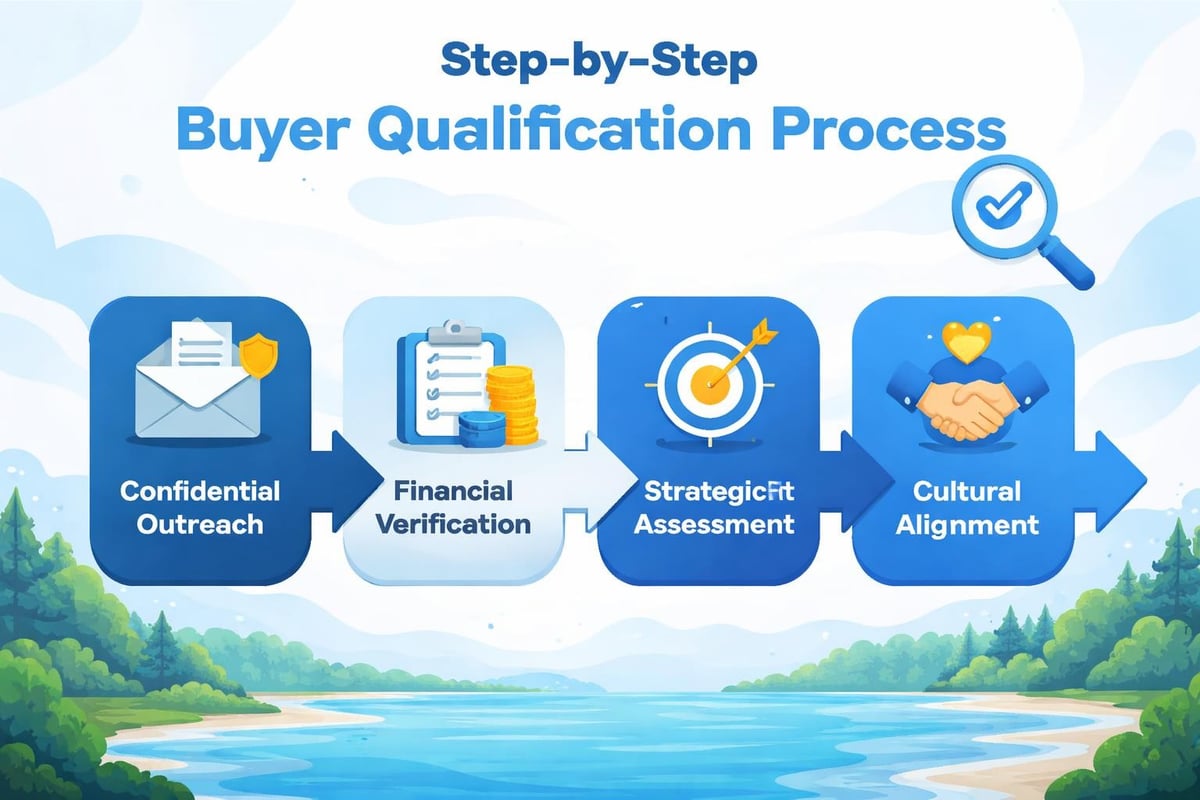
Non-disclosure agreements (NDAs) represent the critical gatekeeper between initial interest and substantive discussions. Properly structured NDAs protect sensitive business information while allowing buyers sufficient detail to evaluate the opportunity seriously. As noted in guidance on legal steps when selling privately, robust legal agreements establish the foundation for successful transactions.
Conducting Confidential Negotiations
Once qualified buyers express serious interest, the negotiation phase begins in earnest. This stage requires balancing transparency with strategic positioning, sharing information progressively as buyer commitment deepens.
Letter of Intent Fundamentals
The Letter of Intent (LOI) represents the first formal milestone in how to sell a business privately. This non-binding document outlines proposed transaction terms including purchase price, payment structure, earnouts, employment agreements, and exclusivity periods.
Critical LOI components include:
- Purchase price and valuation methodology
- Transaction structure (asset vs. stock sale)
- Payment terms and financing contingencies
- Due diligence timeline and scope
- Exclusivity period duration
- Key conditions precedent to closing
Sellers should expect negotiations over multiple LOI iterations before reaching mutually acceptable terms. Maintaining parallel discussions with multiple qualified buyers strengthens negotiating leverage and provides alternatives if primary discussions stall.
Managing the Due Diligence Process
Due diligence represents the most intensive phase of private business sales, typically consuming 60-90 days. Buyers systematically examine financial records, contracts, intellectual property, operational systems, and legal compliance to verify representations made during negotiations.
Organized sellers establish virtual data rooms containing categorized documentation that buyers can access on controlled timelines. The Aligned IQ VDR provides lower middle-market sellers with competitively priced secure virtual data room solutions designed specifically for M&A transactions. For Aligned IQ M&A platform users, the VDR comes complimentary after matching with qualified buyers, streamlining the transition from initial connection to due diligence.
| Due Diligence Category | Required Documents | Typical Review Duration |
|---|---|---|
| Financial | 3-5 years statements, tax returns | 3-4 weeks |
| Legal | Contracts, litigation, compliance | 2-3 weeks |
| Operational | Customer data, supplier agreements | 2-3 weeks |
| HR | Employee agreements, benefits | 1-2 weeks |
Responding promptly to buyer information requests demonstrates professionalism and maintains transaction momentum. Delays often trigger buyer concerns about hidden issues, potentially derailing otherwise solid deals.
Structuring the Transaction
Understanding transaction structure options proves essential when learning how to sell a business privately. The structure significantly impacts tax consequences, liability allocation, and post-closing obligations for both parties.
Asset Sales vs. Stock Sales
Asset sales involve buyers purchasing specific business assets (equipment, inventory, intellectual property, customer contracts) while leaving legal entities and associated liabilities with sellers. Buyers favor asset sales because they can avoid inheriting unknown liabilities and receive favorable tax treatment through asset depreciation.
Stock sales transfer ownership of legal entities including all assets and liabilities. Sellers generally prefer stock sales due to simpler tax treatment and cleaner breaks from the business. However, buyers require comprehensive representations and warranties to protect against undisclosed liabilities.
The Forbes overview of common business sale methods provides additional context on how structure choices impact transaction dynamics.
Earnouts and Seller Financing
In typical scenarios where buyers cannot or will not pay full purchase prices upfront, earnouts and seller financing bridge valuation gaps. Earnouts tie portions of purchase prices to future performance metrics, aligning buyer and seller interests during transition periods.
Seller financing involves sellers extending credit to buyers for portions of purchase prices, receiving payments over 3-7 year periods with interest. This arrangement benefits buyers with limited capital while providing sellers with interest income, though it also maintains risk exposure if businesses underperform post-sale.
Leveraging Technology for Private Sales
In 2026, understanding how to sell a business privately requires embracing technological solutions that didn't exist in previous decades. Specialized platforms have emerged that specifically address the unique challenges private sellers face.

Aligned IQ M&A represents a proprietary B2B platform where potential buyers and sellers meet privately to explore deals based on strategic fit rather than simply transaction speed. The platform's unique matchmaking process prioritizes users' transaction priorities, deal size preferences, and industry expertise before facilitating deeper engagement.
Strategic Fit First Approach
Traditional M&A processes often emphasize speed and price discovery, sometimes at the expense of finding truly compatible partners. The strategy-first M&A approach reverses this dynamic by ensuring alignment on vision, culture, and strategic objectives before delving into detailed financial negotiations.
This methodology particularly benefits business owners who view their companies as legacies rather than mere financial assets. By identifying buyers who share their values and vision for the business's future, sellers achieve outcomes beyond maximum purchase prices.
Platform advantages for private sellers include:
- Complete confidentiality until mutual interest is established
- Sophisticated buyer qualification and verification
- Access to vetted buyer communities actively seeking acquisitions
- Elimination of unsolicited broker contact and spam
- Complimentary VDR access after successful matching
- Control over disclosure timeline and information sharing
For buyers, the platform provides opportunities to showcase themselves as attractive acquisition partners, demonstrating financial capacity, industry expertise, and strategic vision that appeals to quality sellers.
Legal Considerations and Documentation
The legal framework surrounding how to sell a business privately involves complex agreements that protect both parties while facilitating smooth transitions. Engaging experienced M&A attorneys early in the process prevents costly mistakes and ensures compliance with applicable regulations.
Purchase Agreement Essentials
The definitive purchase agreement represents the binding contract governing the transaction. This comprehensive document typically spans 50-100 pages and addresses every conceivable aspect of the deal.
Critical sections include purchase price and payment terms, representations and warranties from both parties, indemnification provisions allocating risk, conditions precedent to closing, and post-closing covenants regarding transition support and non-competition.
Sellers should pay particular attention to representation and warranty provisions, as these create potential post-closing liability if statements prove inaccurate. Buyers increasingly request representation and warranty insurance to protect against undisclosed issues without relying solely on seller indemnification.
Tax Implications and Planning
Tax consequences often determine whether private business sales achieve seller objectives or result in disappointing net proceeds. Federal and state tax treatment varies dramatically based on transaction structure, entity type, and holding periods.
For many sellers, capital gains treatment represents the optimal outcome, taxed at preferential rates significantly below ordinary income rates. However, certain assets trigger ordinary income treatment, and depreciation recapture can create unexpected tax liabilities. Resources on understanding tax implications when selling privately provide essential guidance for tax planning.
Sophisticated sellers engage tax advisors 12-18 months before anticipated sales to implement strategies that minimize tax burdens. Timing considerations, entity restructuring, and installment sale elections can generate substantial tax savings when executed properly.
Managing Transition and Post-Closing Obligations
Successful private business sales extend beyond closing dates. Most purchase agreements include transition periods where sellers assist buyers with customer introductions, employee integration, and operational knowledge transfer.
Transition Service Agreements
Transition periods typically span 30-180 days depending on business complexity and buyer experience in the industry. Sellers may continue in consulting roles, either as employees or independent contractors, receiving compensation beyond purchase prices.
These arrangements benefit both parties when structured appropriately. Buyers gain access to institutional knowledge and customer relationships, while sellers ensure smooth transitions that protect earnout payments and preserve business legacies.
Clear documentation of transition expectations prevents misunderstandings. Specific deliverables, time commitments, and compensation terms should be explicitly detailed in transition service agreements executed at closing.
Employment and Non-Compete Agreements
Most buyers require sellers to execute non-compete agreements preventing them from launching competing businesses within defined geographic areas and time periods. Reasonable non-compete terms typically extend 3-5 years and cover markets where the business actively operates.
Courts scrutinize non-compete provisions carefully, invalidating overly broad restrictions that unreasonably limit sellers' future employment opportunities. Well-drafted agreements balance legitimate buyer interests with sellers' rights to pursue other ventures.
Risk Management Throughout the Process
Understanding how to sell a business privately requires acknowledging and mitigating various risks that could derail transactions or expose sellers to liability.
Protecting Confidentiality
Information leaks during sale processes can devastate businesses. Employees who learn about potential sales may seek other opportunities, creating operational disruptions. Customers might diversify suppliers, reducing business value. Competitors could exploit uncertainty to poach talent or clients.
Limiting information access to essential parties remains critical. Many sellers restrict knowledge to a small circle including their attorney, accountant, and perhaps one key executive. All external parties sign NDAs before receiving identifying information.
Modern secure platforms provide additional confidentiality protection through controlled information disclosure and verified user communities. The semi-proprietary nature of quality deal sourcing platforms ensures only serious, qualified buyers gain access to detailed business information.
Common Deal-Breakers and Solutions
Research on what surprises business owners during sales reveals several recurring challenges that derail transactions.
Frequent deal-breakers include:
- Undisclosed litigation or regulatory issues
- Customer concentration exceeding 25% with single clients
- Declining revenue trends not previously disclosed
- Owner dependency without documented transition plans
- Working capital shortfalls requiring buyer cash infusions
- Environmental liabilities or compliance violations
Addressing these issues proactively during preparation phases prevents late-stage surprises that destroy buyer confidence. Transparency about known challenges, coupled with documented remediation plans, demonstrates integrity that sophisticated buyers value.
M&A Service Provider Collaboration
While the focus is on how to sell a business privately, many sellers benefit from selective engagement with M&A service providers for specific aspects of transactions. Quality of earnings reports, tax structuring advice, and legal documentation typically require professional expertise.
The key is maintaining control over the overall process while leveraging specialists for discrete deliverables. This hybrid approach captures private sale benefits while accessing professional guidance where it adds genuine value.
Platforms like Aligned IQ facilitate these relationships by connecting sellers with vetted service providers who understand the unique dynamics of private transactions. M&A advisors, investment bankers, and other professionals can showcase their services and receive referral fees for facilitating successful matches.
Closing Process and Final Steps
The closing process transforms non-binding agreements into completed transactions. This phase involves coordinating multiple parties including attorneys, accountants, lenders, and sometimes regulators to satisfy all closing conditions.
Pre-Closing Checklist
Typical closing processes require 30-60 days after finalizing purchase agreements. This period involves obtaining third-party consents for contract assignments, securing financing commitments, satisfying regulatory requirements, and preparing closing documents.
Essential pre-closing activities:
- Obtain landlord consents for lease assignments
- Secure customer and supplier contract assignments
- Finalize employment agreements for continuing employees
- Complete title transfers for real property
- Obtain necessary regulatory approvals
- Arrange insurance policy transfers or replacements
- Prepare working capital calculations and adjustments
Well-organized closings occur remotely through secure document execution platforms, eliminating the need for in-person closing meetings that were standard in previous decades.
Post-Closing Adjustments
Many purchase agreements include provisions for post-closing purchase price adjustments based on final working capital calculations or earnout performance. Understanding these mechanisms prevents disputes that strain buyer-seller relationships during transition periods.
Working capital adjustments typically occur 60-90 days post-closing after final accounting reconciliations. Earnout calculations may extend 1-3 years depending on negotiated metrics and measurement periods.
Successfully navigating how to sell a business privately requires careful preparation, strategic buyer identification, and meticulous execution throughout the transaction lifecycle. By prioritizing confidentiality, strategic fit, and structured processes, business owners can achieve superior outcomes while maintaining control over their most valuable assets. Aligned IQ transforms this complex journey through proprietary matchmaking technology that connects buyers and sellers based on strategic compatibility, supported by complimentary VDR access and a collaborative platform designed specifically for private transactions. Take a tour to discover how the right technology partner can help you find the perfect counterparty for your M&A goals.
No responses yet