

Selling a business represents one of the most significant financial decisions an owner will ever make. Whether you're planning retirement, pursuing new opportunities, or capitalizing on favorable market conditions, understanding how do you sell a business is essential for achieving optimal results. The traditional M&A process has evolved dramatically in recent years, with technology-driven platforms revolutionizing how buyers and sellers connect. This comprehensive guide explores every critical aspect of selling your business in 2026, from initial preparation through final closing.
Understanding When to Sell Your Business
Timing significantly impacts both the valuation you receive and the quality of buyers you attract. Many successful business owners start planning their exit strategy years in advance, recognizing that preparation determines outcomes. The question of how do you sell a business begins long before you list it publicly.
Market Conditions and Industry Trends
Several factors influence optimal timing for a business sale:
- Economic cycles: Strong GDP growth and low interest rates typically attract more buyers
- Industry consolidation: Active M&A activity in your sector indicates buyer appetite
- Technology disruption: Selling before major industry shifts can preserve valuation
- Personal readiness: Emotional preparation matters as much as financial readiness
Market multiples fluctuate based on broader economic conditions. In 2026, we're seeing particular strength in technology-enabled service businesses, healthcare services, and specialized manufacturing operations.
Personal and Financial Readiness
Beyond market timing, personal circumstances drive many sale decisions. Unexpected challenges emerge when business owners aren't fully prepared for the emotional and practical aspects of selling.
A typical scenario involves an owner who built their company over 20 years, only to discover that their identity was deeply intertwined with the business. This emotional connection can complicate negotiations or even derail transactions entirely.
Preparing Your Business for Sale
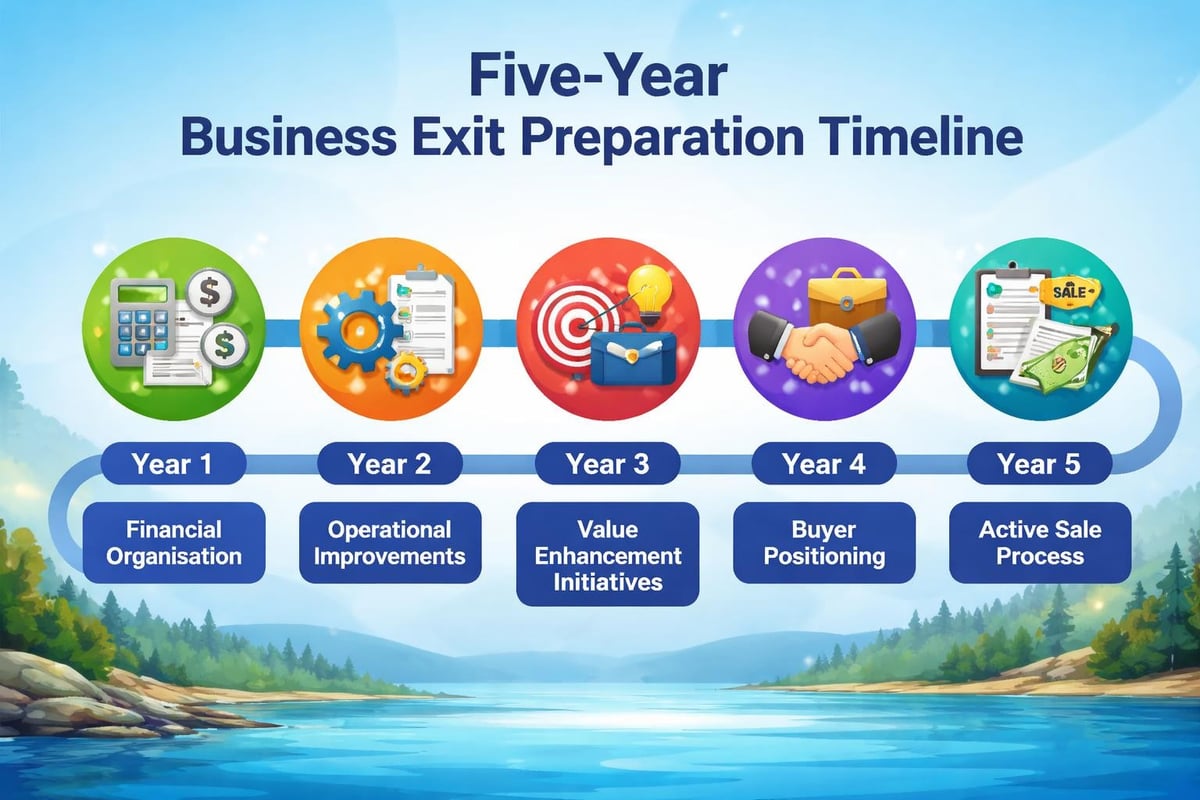
How do you sell a business for maximum value? The answer starts with thorough preparation that can take 18 to 36 months for optimal results.
Financial Documentation and Transparency
Buyers scrutinize financial records intensively during due diligence. Your preparation should include:
- Three to five years of audited or reviewed financial statements
- Clean accounting practices with clear revenue recognition
- Normalized EBITDA calculations removing owner-specific expenses
- Detailed customer concentration analysis
- Comprehensive accounts receivable aging reports
Financial transparency builds buyer confidence and accelerates deal timelines. Proper financial preparation directly correlates with higher valuations and smoother transactions.
Operational Systems and Documentation
Buyers invest in businesses, not jobs. Demonstrating that your company operates independently of you personally increases attractiveness to acquirers.
| Operational Area | Key Documentation | Buyer Value |
|---|---|---|
| Standard Operating Procedures | Written processes for core functions | Reduces transition risk |
| Customer Relationships | Documented account management protocols | Ensures revenue continuity |
| Employee Structure | Organization charts and role definitions | Clarifies scalability |
| Technology Systems | IT infrastructure documentation | Identifies integration requirements |
The most successful sales involve businesses where the owner has already begun delegating critical functions to a strong management team.
Valuation: Determining Your Business Worth
Understanding how do you sell a business requires realistic valuation expectations. Professional valuations provide the foundation for pricing strategy and negotiations.
Common Valuation Methodologies
Three primary approaches determine business value:
- Multiple of EBITDA: Most common for established businesses with consistent cash flow
- Revenue multiples: Often used for high-growth companies with limited profitability
- Asset-based valuation: Relevant for asset-heavy businesses or distressed situations
Industry-specific factors heavily influence which methodology applies. A SaaS business might command 6-8x revenue multiples, while a traditional manufacturing operation might sell for 4-6x EBITDA.
Working with Valuation Professionals
Professional valuations cost between $5,000 and $50,000 depending on business complexity. This investment pays dividends by establishing credible asking prices and identifying value drivers you can enhance before sale.
A typical scenario involves a business owner who believed their company was worth $10 million based on informal conversations. A professional valuation revealed $7.5 million as the realistic range, allowing the owner to either adjust expectations or implement specific improvements to bridge the gap.

Finding Qualified Buyers
The traditional M&A process involved hiring investment bankers or brokers who controlled access to buyer networks. Modern technology has transformed this landscape dramatically. When considering how do you sell a business, you now have significantly more options for connecting with potential acquirers.
Traditional vs. Modern Buyer Search Methods
| Method | Advantages | Disadvantages | Best For |
|---|---|---|---|
| Investment Banker | Extensive networks, full-service support | 5-10% fees, less control | Deals over $25M |
| Business Broker | Industry knowledge, local connections | 8-12% fees, variable quality | Deals under $5M |
| M&A Platform | Confidential matching, buyer control | Requires active participation | $2M-$100M range |
| Direct Outreach | No intermediary fees | Time-intensive, limited reach | Strategic acquirers |
The mergers and acquisitions platform approach has gained significant traction because it prioritizes strategic fit before diving into detailed negotiations.
The Strategic Fit Advantage
Aligned IQ M&A represents a fundamental shift in how buyers and sellers connect. Rather than broadcasting your business to every potential buyer, the platform's proprietary matching process identifies counterparties based on:
- Transaction priorities and deal structure preferences
- Target deal size and financial capacity
- Industry experience and operational expertise
- Cultural alignment and management philosophy
This approach maintains confidentiality while ensuring conversations happen with serious, qualified buyers who align with your exit objectives. The semi-proprietary nature means your business information remains secure while you evaluate potential matches.
Navigating the Due Diligence Process
Once you've identified interested buyers, due diligence begins. This investigative phase determines whether buyers proceed with their offers or renegotiate terms based on discoveries.
Organizing Your Data Room
How do you sell a business efficiently? A well-organized virtual data room accelerates due diligence and demonstrates operational competence. Essential documents include:
- Financial Records: Tax returns, financial statements, management reports
- Legal Documents: Articles of incorporation, contracts, intellectual property
- Operational Data: Customer lists, supplier agreements, employee information
- Strategic Materials: Business plans, market analysis, growth projections
- Compliance Records: Permits, licenses, regulatory correspondence
Aligned IQ VDR provides lower middle-market participants with secure document management specifically designed for M&A transactions. The platform offers complimentary access for Aligned IQ M&A sellers after completing a match, eliminating this cost from your transaction budget. For other market participants, competitive pricing makes professional-grade security accessible to businesses of all sizes.
Managing Due Diligence Requests
Buyers will probe every aspect of your business. A typical scenario involves 200-500 document requests over 60-90 days. Responding promptly and completely maintains deal momentum and buyer confidence.
The most challenging questions often center on customer concentration, revenue quality, pending litigation, and environmental compliance. Addressing these proactively in your documentation reduces surprises and demonstrates transparency.
Structuring the Transaction
Understanding how do you sell a business involves more than finding a buyer and agreeing on price. Deal structure significantly impacts your after-tax proceeds and ongoing obligations.
Asset Sales vs. Stock Sales
The structure choice carries major tax and liability implications:
Asset Sale
- Buyer purchases specific assets and assumes selected liabilities
- Seller retains corporate entity and excluded liabilities
- Generally favorable to buyers due to step-up in basis
- May result in higher seller taxes on ordinary income
Stock Sale
- Buyer purchases ownership interests in the company
- All assets and liabilities transfer with the entity
- Typically preferred by sellers for capital gains treatment
- Buyer inherits all known and unknown liabilities
Your tax advisor and attorney should evaluate your specific situation before committing to a structure. The difference can amount to hundreds of thousands or even millions in after-tax proceeds.
Earnouts and Seller Financing
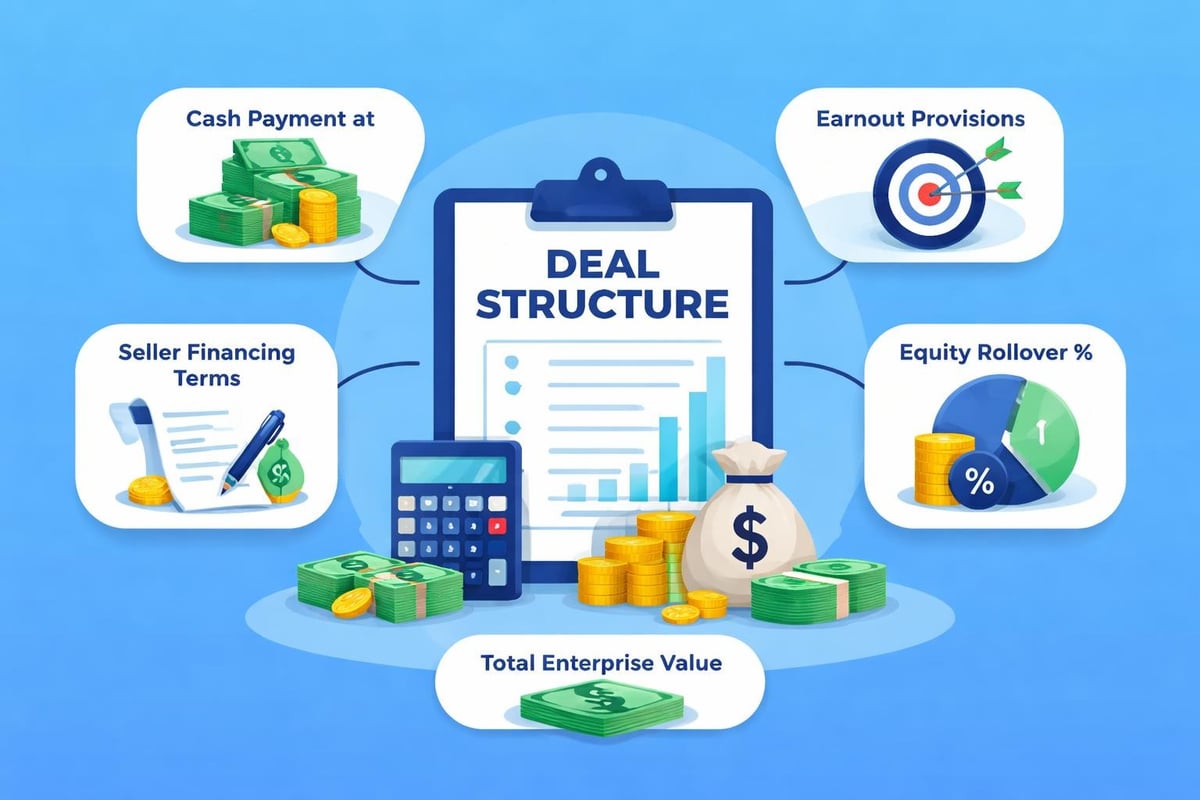
Pure cash-at-closing deals are increasingly rare, particularly in the lower middle market. Common alternatives include:
- Earnouts: Future payments based on performance metrics (10-30% of purchase price)
- Seller financing: You provide loan to buyer for portion of purchase price (10-20%)
- Equity rollovers: You maintain ownership stake in acquiring entity (5-30%)
These mechanisms bridge valuation gaps and align incentives post-closing. However, they also increase your ongoing risk and involvement. Professional guidance on deal structure helps balance risk and reward.
Negotiating Terms Beyond Price
Purchase price captures attention, but dozens of other terms affect your outcome when you ask how do you sell a business successfully.
Critical Non-Price Terms
| Term | Impact | Negotiation Priority |
|---|---|---|
| Working capital adjustment | Can add or subtract 5-15% from price | High |
| Indemnification caps | Limits post-closing liability exposure | High |
| Non-compete terms | Restricts future business activities | Medium |
| Transition services | Defines your post-closing involvement | Medium |
| Closing conditions | Determines deal certainty | High |
A typical scenario involves a seller who negotiated their asking price of $8 million, only to discover $600,000 in working capital adjustments and $400,000 in escrow holdbacks at closing. The "agreed" $8 million became $7 million in actual proceeds.
Managing Multiple Offers
When you successfully position your business, multiple buyers may submit offers. Evaluating these requires looking beyond headline price to assess total value and certainty of closing.
Consider these factors:
- Buyer financial capacity: Can they actually fund the transaction?
- Due diligence depth: More thorough buyers are less likely to re-trade
- Cultural fit: Will they preserve what you've built?
- Timeline: Faster closes reduce market risk and distraction
The deal sourcing platforms approach allows you to evaluate multiple interested parties while maintaining control over information flow and timing.
Professional Advisors and Service Providers
Successfully navigating how do you sell a business requires assembling the right team. No single person possesses all necessary expertise across finance, tax, legal, and operational domains.
Essential Professional Roles
Your transaction team should include:
- M&A Attorney: Drafts and reviews legal documents, manages legal due diligence
- CPA/Tax Advisor: Structures transaction for tax efficiency, reviews financial representations
- Financial Advisor: Manages valuation, buyer process, and negotiations (if engaged)
- Industry Consultant: Provides market context and operational benchmarking
- Wealth Manager: Plans for post-sale asset deployment and financial security
Quality advisors pay for themselves through value preservation and risk mitigation. Budget 3-7% of transaction value for total advisory costs, depending on deal complexity and size.
Service Provider Referrals Through Aligned IQ
M&A service providers can showcase their capabilities and receive paid referrals through the Aligned IQ platform. This creates a curated ecosystem of qualified professionals who understand the platform's collaborative approach to transactions. For sellers, this means access to vetted service providers who align with your process philosophy.
Maintaining Business Performance During Sale
A critical challenge when selling is maintaining operational focus while managing a demanding transaction process. Revenue or profitability declines during the sale period damage valuations and can derail deals entirely.
Protecting Business Continuity
Successful sellers implement these practices:
- Delegate transaction management: Assign internal project lead to coordinate document requests
- Limit disclosure: Only senior leaders know about sale process initially
- Maintain normal operations: Continue investing in growth and customer service
- Set boundaries: Designate specific times for deal activities vs. business management
- Communicate strategically: Plan employee, customer, and vendor communications carefully
The most common mistake involves business owners becoming so consumed by the sale process that quarterly results suffer, prompting buyers to reduce offers or withdraw entirely.
Confidentiality Management
Premature disclosure creates multiple risks including employee departures, customer uncertainty, and competitor exploitation. Understanding what aspects to communicate and when protects value throughout the process.
Aligned IQ M&A's private, secure platform minimizes confidentiality risks by controlling information sharing and ensuring only matched, qualified buyers access sensitive details. This stands in stark contrast to public business-for-sale listings that broadcast your intentions broadly.
Closing the Transaction
The final phase of how do you sell a business involves satisfying closing conditions, finalizing documentation, and transferring ownership. This typically spans 30-60 days after signing the purchase agreement.
Pre-Closing Activities
Both parties work to satisfy conditions precedent to closing:
- Financing arrangements: Buyer secures debt or equity funding
- Third-party consents: Landlords, customers, suppliers approve assignment
- Regulatory approvals: Industry-specific licenses transfer to buyer
- Final due diligence: Buyer confirms no material adverse changes
- Document execution: All closing documents signed and delivered
A typical scenario involves a transaction scheduled to close on a specific date, only to encounter delays in financing approvals or third-party consents. Building buffer time into your planning prevents disappointment.
Post-Closing Transition
Most transactions include a transition period where you help the buyer understand operations, meet key relationships, and ensure continuity. This typically lasts 30-90 days but can extend to six months or longer.
Your involvement level should be clearly defined in the purchase agreement to prevent scope creep and manage expectations. Compensation for extended transition services should be separately negotiated.
Alternative Exit Strategies
Outright sale to a third party isn't the only path when considering how do you sell a business. Alternative approaches may better serve specific circumstances.
Management Buyouts and ESOPs
Internal transitions offer unique advantages:
Management Buyout (MBO)
- Existing leadership team purchases the business
- Preserves company culture and employee relationships
- Often requires seller financing due to management's limited capital
- Typically results in lower valuations than third-party sales
Employee Stock Ownership Plan (ESOP)
- Company creates trust to purchase shares on behalf of employees
- Offers significant tax advantages for sellers
- Maintains business independence
- Complex to structure and administer
Recapitalizations with Private Equity
Private equity platforms pursue recapitalization transactions where you sell a majority stake while retaining 20-40% ownership. This approach provides:
- Immediate liquidity from partial sale
- Professional management support and resources
- Opportunity for second exit at higher valuation
- Continued involvement in business direction
This "two-bite" strategy has become increasingly popular among owners who want partial liquidity while participating in future growth.
Tax Planning for Business Sales
Tax consequences significantly impact net proceeds from business sales. Strategic planning before transaction execution can save hundreds of thousands in taxes.
Capital Gains Optimization
Current federal long-term capital gains rates reach 20% for high earners, plus 3.8% net investment income tax. State taxes add another 0-13% depending on location. Strategies to minimize taxes include:
- Qualified Small Business Stock (QSBS): Potentially excludes up to 100% of gains on qualifying C-corp stock
- Installment sales: Spreads gain recognition over multiple years
- Charitable remainder trusts: Provides income while eliminating capital gains
- Opportunity zone investments: Defers and reduces gains through qualified investments
Working with tax professionals 12-18 months before sale maximizes planning opportunities. Last-minute tax planning offers limited options.
Valuation for M&A Tax Purposes
The valuation for mergers and acquisitions serves multiple purposes beyond negotiating price, including establishing tax basis and supporting specific tax treatments. Professional valuations provide documentation to support your tax positions if challenged.
Learning from the M&A Process
Understanding how do you sell a business evolves as you progress through the journey. Many sellers report that the experience taught them valuable lessons about their business, themselves, and the broader M&A market.
Common Seller Mistakes to Avoid
Experienced advisors identify recurring errors that damage outcomes:
- Overvaluing the business based on emotional attachment
- Beginning sale process without adequate preparation
- Failing to maintain confidentiality during buyer search
- Accepting first offer without shopping the market
- Neglecting to build competitive tension among buyers
- Making material business changes during due diligence
Each mistake reduces your leverage and ultimate sale proceeds. Learning from others' experiences helps avoid these pitfalls in your own transaction.
The Role of Strategic Fit in Success
Traditional M&A often emphasizes price discovery above all else. However, sustainable successful transactions require alignment between buyer and seller beyond financial terms. Strategic fit encompasses:
- Compatible operating philosophies
- Shared vision for business future
- Aligned risk tolerance and growth expectations
- Cultural compatibility between organizations
This is precisely why Aligned IQ M&A prioritizes strategic fit before delving into detailed negotiations. By matching based on transaction priorities, deal size parameters, and industry expertise, the platform increases the likelihood of successful, mutually beneficial transactions.
When buyers and sellers share fundamental alignment, negotiations proceed more smoothly, due diligence reveals fewer concerning surprises, and post-closing integration succeeds more frequently. The time invested in finding the right counterparty pays dividends throughout the transaction and beyond.
Selling a business successfully requires thorough preparation, realistic expectations, professional guidance, and strategic counterparty selection. By understanding each phase of the process and avoiding common pitfalls, you position yourself for optimal outcomes. Aligned IQ provides business owners with a proprietary platform that prioritizes strategic fit through intelligent matching based on your transaction priorities, deal parameters, and industry expertise. Take a Tour to discover how our collaborative approach to M&A can help you find the ideal buyer while maintaining confidentiality and control throughout your exit journey.
No responses yet