

Deciding to sell shares of your company represents one of the most significant financial decisions you'll make as a business owner. Whether you're planning a full exit, partial divestiture, or seeking strategic partners, understanding the complete process is essential for maximizing value and ensuring a smooth transaction. Many owners ask themselves "how do I sell shares of my company" without fully grasping the complexity involved in share transfers, valuation methodologies, and regulatory requirements. This comprehensive guide walks you through every critical step, from initial preparation to closing the deal, while highlighting modern platforms that streamline the traditionally complex merger and acquisition process.
Understanding Share Sale Fundamentals
When contemplating how do I sell shares of my company, you must first understand the fundamental difference between selling company shares versus selling assets. A share sale transfers ownership of the company entity itself, including all assets, liabilities, contracts, and obligations. This differs significantly from an asset sale where specific business components are sold individually.
Key distinctions include:
- Share sales transfer the entire business entity to new ownership
- Asset sales allow selective transfer of specific business components
- Tax implications vary dramatically between the two structures
- Liability transfer automatically occurs with shares but not assets
- Contract assignments typically transfer seamlessly with share sales
The legal process for selling shares in a private company involves multiple layers of documentation, due diligence, and regulatory compliance. Unlike publicly traded securities, private company shares lack a readily available market, requiring specialized approaches to find qualified buyers and negotiate favorable terms.
Valuation Considerations
Before you can effectively answer how do I sell shares of my company, establishing an accurate business valuation is paramount. Professional valuations consider multiple methodologies including discounted cash flow analysis, comparable company analysis, and precedent transaction multiples.
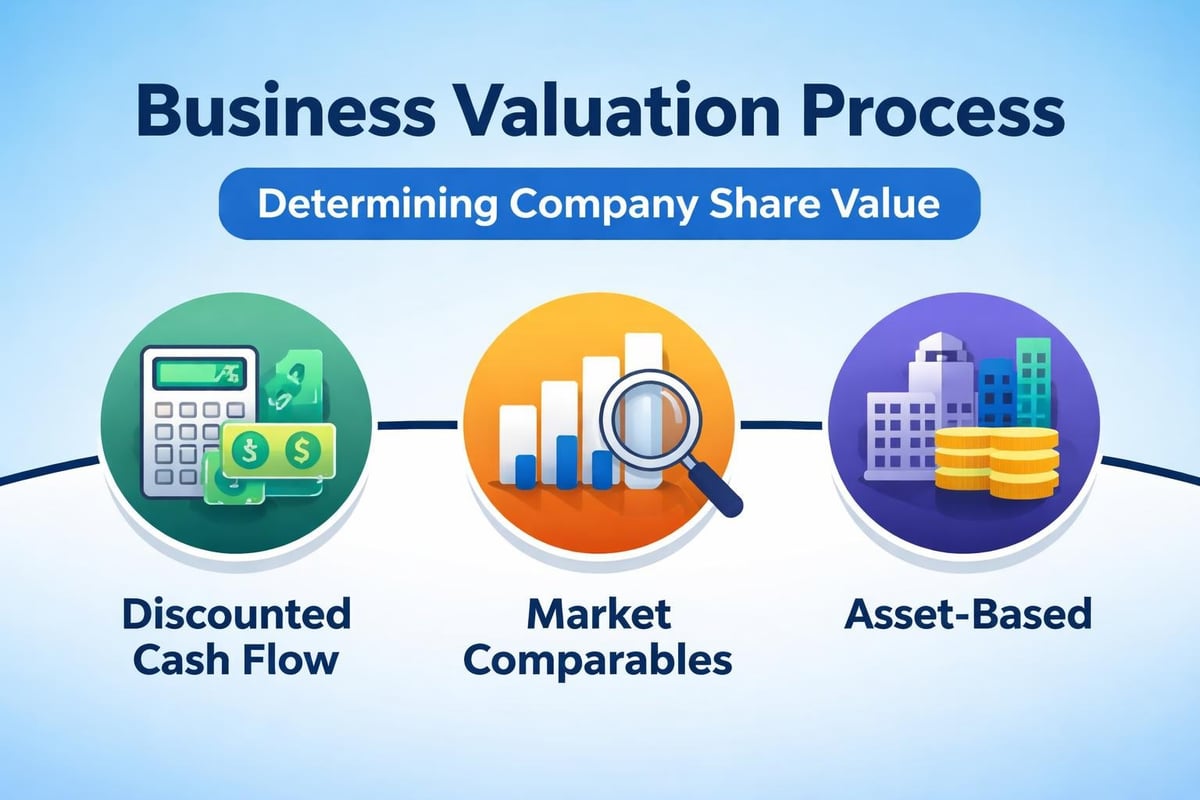
| Valuation Method | Best For | Typical Range |
|---|---|---|
| Discounted Cash Flow | Stable revenue businesses | 3x-8x EBITDA |
| Market Comparables | Industry-standard companies | Varies by sector |
| Asset-Based | Asset-heavy businesses | Book value + premium |
| Revenue Multiple | High-growth companies | 1x-5x annual revenue |
Professional business appraisers bring objectivity to the valuation process, which proves invaluable during negotiations. Their independent assessments carry weight with potential buyers and help justify your asking price with data-driven insights.
Preparing Your Company for Sale
When owners seriously consider how do I sell shares of my company, preparation becomes the differentiating factor between successful transactions and failed deals. This phase typically requires six to twelve months of focused effort to position your business optimally.
Financial Documentation and Cleanup
Prospective buyers will scrutinize your financial records intensively. Clean, organized financial statements spanning at least three years demonstrate professionalism and reduce buyer concerns. This includes:
- Audited financial statements prepared by certified public accountants
- Normalized earnings statements adjusting for one-time expenses
- Detailed tax returns showing compliance and consistency
- Accounts receivable aging reports demonstrating collection efficiency
- Capital expenditure schedules outlining equipment and asset investments
- Debt schedules detailing all outstanding obligations and terms
Understanding methods for selling private company stock reveals that buyers prioritize transparency. Any irregularities or inconsistencies in financial reporting raise immediate red flags that can derail negotiations or significantly reduce valuation multiples.
Operational Documentation
Beyond financials, comprehensive operational documentation showcases business sustainability. This includes standard operating procedures, customer contracts, supplier agreements, employee handbooks, and intellectual property registrations. These materials demonstrate that the business can function effectively with or without the current owner.
Identifying Qualified Buyers
The traditional approach to answering how do I sell shares of my company often involves hiring intermediaries like business brokers or investment bankers. While these professionals provide valuable services, modern platforms offer alternative approaches that prioritize strategic fit and confidentiality.
Traditional buyer identification methods include:
- Business brokers who market companies to their networks
- Investment bankers who conduct structured sale processes
- Industry competitors who may seek acquisition opportunities
- Private equity firms targeting specific sectors
- Family offices with investment mandates
However, these conventional approaches often sacrifice confidentiality and may not optimize for strategic alignment. Broadcasting your intent to sell can disrupt employee morale, concern customers, and alert competitors to potential vulnerabilities.
The Strategic Fit Advantage
Aligned IQ M&A transforms the buyer identification process by prioritizing strategic fit before diving into detailed negotiations. Rather than simply matching based on price and industry, the platform considers transaction priorities, deal size preferences, and complementary expertise. This approach ensures both parties share compatible visions for the business's future.
The proprietary matching process maintains confidentiality throughout initial discussions, allowing sellers to explore opportunities without publicly announcing their exit intentions. This discretion proves particularly valuable for lower middle-market companies where reputation and relationship preservation are critical.
Navigating the Due Diligence Process
Once you've identified potential buyers and answered the initial question of how do I sell shares of my company, the due diligence phase begins. This comprehensive investigation allows buyers to verify all claims, uncover potential issues, and justify their valuation assumptions.
Organizing Your Virtual Data Room
Modern transactions rely heavily on secure virtual data rooms (VDRs) for document sharing and collaboration. Rather than physical data rooms requiring in-person visits, VDRs enable remote due diligence with enhanced security and tracking capabilities.

Aligned IQ VDR provides lower middle-market participants with enterprise-grade security at accessible pricing. The platform offers complimentary access to Aligned IQ M&A sellers after completing a match, significantly reducing transaction costs. For other buyers, sellers, and intermediaries, competitive VDR pricing makes professional-grade document security attainable without the excessive fees charged by legacy providers.
Essential VDR folders include:
- Corporate documents (articles, bylaws, shareholder agreements)
- Financial statements (audited results, tax returns, projections)
- Legal agreements (contracts, leases, permits, licenses)
- Human resources (organizational charts, key employee contracts)
- Intellectual property (patents, trademarks, copyrights)
- Customer information (contracts, revenue concentration, churn data)
- Operational materials (procedures, vendor agreements, facilities)
Managing the Due Diligence Timeline
A typical scenario involves 60 to 90 days of intensive due diligence following letter of intent execution. During this period, buyers systematically review every aspect of your business, requesting clarifications and additional documentation as questions arise.
| Due Diligence Phase | Duration | Key Activities |
|---|---|---|
| Initial Review | 2-3 weeks | High-level document examination |
| Deep Dive | 4-6 weeks | Detailed analysis and site visits |
| Expert Consultation | 2-3 weeks | Legal, tax, and technical review |
| Final Verification | 1-2 weeks | Outstanding item resolution |
Responsiveness during due diligence directly impacts buyer confidence. Delays in producing requested documents or evasive answers to straightforward questions create uncertainty that often translates into reduced valuations or deal termination.
Legal and Regulatory Considerations
Understanding how do I sell shares of my company from a legal perspective requires professional guidance from experienced M&A attorneys. The complexity varies based on company structure, industry regulations, and transaction specifics.
Share Transfer Restrictions
Many private companies impose restrictions on share transfers through shareholder agreements or corporate bylaws. Common restrictions include:
- Right of first refusal requiring offers to existing shareholders first
- Co-sale rights allowing minority shareholders to participate in sales
- Drag-along provisions forcing minority shareholders to join majority sales
- Tag-along rights enabling minority shareholders to join majority sales
- Board approval requirements mandating director consent for transfers
Before marketing your shares, review all governing documents to understand applicable restrictions. Violating these provisions can invalidate transactions and create legal liability. Key considerations before selling company stock include understanding these contractual limitations and planning accordingly.
Regulatory Compliance
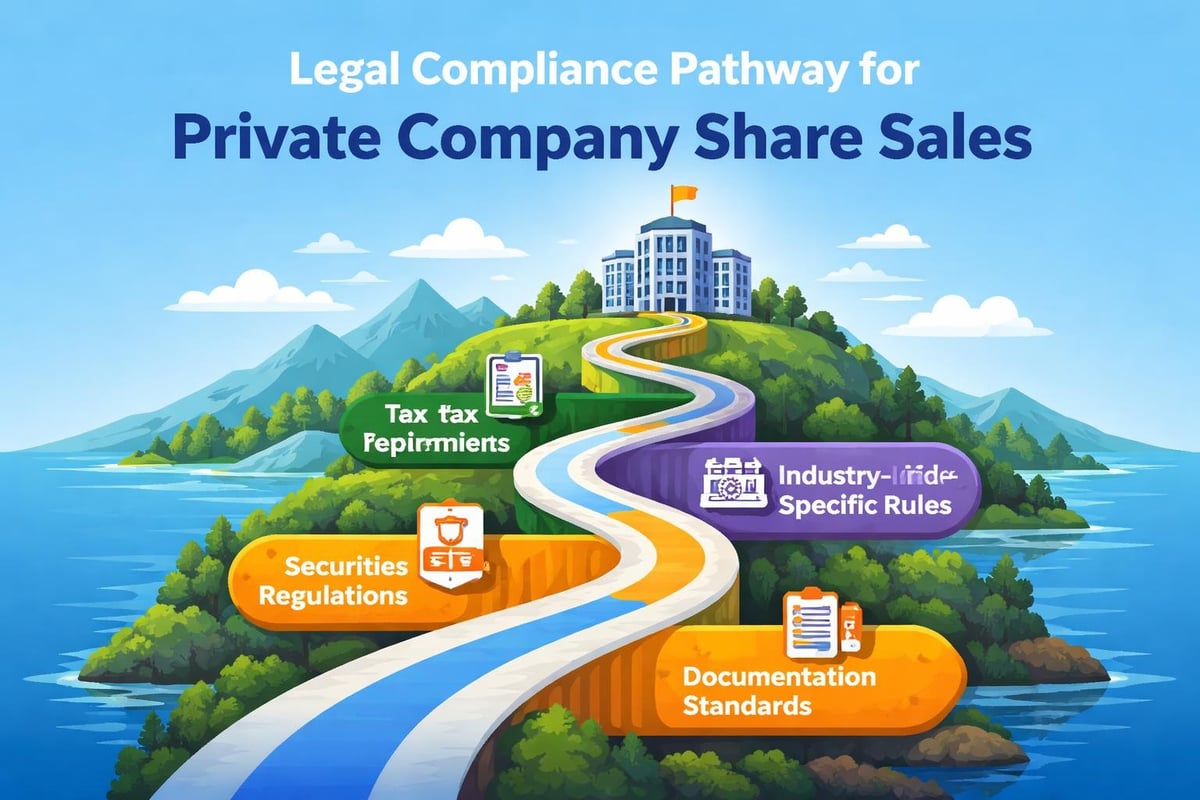
Depending on your industry and company structure, various regulatory requirements may apply to share sales. Securities laws govern private company stock transfers, even though these shares aren't publicly traded. Proper legal counsel ensures compliance with applicable regulations.
Structuring the Transaction
When business owners ask how do I sell shares of my company, they often overlook the numerous structural variations available. The optimal structure balances tax efficiency, risk allocation, and post-closing obligations.
Purchase Price Components
Transaction value rarely consists of a single upfront payment. Sophisticated deals incorporate multiple components:
- Cash at closing providing immediate liquidity
- Seller financing where sellers loan buyers a portion of the purchase price
- Earnouts tying future payments to performance milestones
- Equity rollovers retaining partial ownership in the continuing entity
- Employment agreements compensating sellers for transition assistance
- Non-compete payments compensating for agreement not to compete
A typical scenario might involve 60% cash at closing, 20% earnout over three years, and 20% seller note payable over five years. This structure aligns incentives, reduces buyer risk, and potentially optimizes tax treatment.
Tax Implications
Tax consequences significantly impact net proceeds from share sales. Capital gains treatment generally applies to share sales, providing favorable rates compared to ordinary income. However, numerous factors affect actual tax liability:
- Holding period determines long-term versus short-term capital gains treatment
- Qualified Small Business Stock may allow partial or full gain exclusion
- Section 1202 benefits can exempt substantial gains under specific conditions
- State tax obligations vary dramatically by jurisdiction
- Alternative Minimum Tax considerations for certain transaction structures
Engaging experienced tax advisors early in the process allows for structure optimization before executing binding agreements. Retrospective tax planning provides limited benefits compared to proactive structuring.
Alternative Liquidity Options
While a complete sale represents the most common answer to how do I sell shares of my company, several alternative approaches provide partial liquidity while maintaining some ownership.
Exploring options for selling shares before an IPO reveals strategies including company-sponsored buyback programs, tender offers, and secondary market transactions. These approaches work particularly well for founders seeking some liquidity without completely exiting their businesses.
Partial liquidity strategies:
- Dividend recapitalizations allowing cash distribution to shareholders
- Minority stake sales to strategic or financial investors
- Secondary sales to existing investors at increased valuations
- Management buyouts where key employees purchase shares
- ESOP transactions creating employee ownership structures
Understanding deal sourcing platforms that connect buyers and sellers helps business owners evaluate all available options. The right approach depends on personal objectives, business circumstances, and market conditions.
Working with Intermediaries
Professional intermediaries play crucial roles in successfully completing share sales. While some owners attempt self-directed sales, the complexity typically warrants expert assistance.
M&A Advisors and Investment Bankers
These professionals manage the entire sale process from valuation through closing. They prepare marketing materials, identify qualified buyers, manage negotiations, and coordinate due diligence. Fees typically range from 5% to 10% of transaction value, with various retainer and success fee structures.
M&A service providers using Aligned IQ M&A can receive compensation for sell-side referrals while showcasing their professional services to a targeted audience of serious buyers and sellers. This creates an ecosystem where intermediaries, buyers, and sellers all benefit from aligned incentives.
Legal and Tax Professionals
Attorneys and accountants provide essential guidance throughout the transaction. M&A attorneys draft and negotiate purchase agreements, disclosure schedules, and ancillary documents. Tax advisors structure transactions for optimal tax treatment and ensure compliance with reporting obligations.
| Professional Role | Typical Fee Structure | Key Responsibilities |
|---|---|---|
| M&A Advisor | 5-10% of deal value | Process management, buyer identification |
| M&A Attorney | $300-$600 per hour | Legal documentation, negotiation |
| Tax Advisor | $250-$500 per hour | Tax structuring, compliance |
| Valuation Expert | $5,000-$25,000 flat | Independent business valuation |
| Accountant | $200-$400 per hour | Financial due diligence support |
Modern Platforms Transforming M&A
When considering how do I sell shares of my company in 2026, business owners benefit from technological innovations that streamline traditionally inefficient processes. Modern M&A platforms address longstanding pain points in private company transactions.
The traditional M&A process often involves broad marketing that compromises confidentiality, misaligned incentives between parties, and excessive focus on price over strategic compatibility. Aligned IQ M&A reimagines this approach by creating a proprietary environment where buyers and sellers meet privately to explore opportunities based on strategic alignment.
Prioritizing Strategic Fit
Rather than immediately focusing on price negotiations, the platform emphasizes compatibility across multiple dimensions. Typical scenarios involve matching based on:
- Transaction priorities including cultural fit, growth plans, and legacy preservation
- Deal size alignment ensuring financial capacity matches seller expectations
- Industry expertise connecting buyers with relevant operational experience
- Geographic preferences accommodating location-specific requirements
- Timeline compatibility aligning urgency and patience levels
This collaborative approach transforms M&A from an adversarial negotiation into a partnership-building process where both parties work toward mutually beneficial outcomes.
Maintaining Confidentiality and Security
The semi-proprietary nature of Aligned IQ M&A provides business owners with confidence that their exit exploration remains confidential. Unlike public marketplaces or broad broker marketing campaigns, the platform facilitates discrete discussions without alerting competitors, employees, or customers.
After completing a match, sellers gain complimentary access to Aligned IQ VDR, eliminating a significant cost barrier. Understanding data room costs reveals that traditional providers often charge excessive fees that disproportionately impact lower middle-market transactions. By including VDR access with successful matches, the platform reduces friction and demonstrates commitment to seller success.
Post-Closing Transition Planning
Successfully answering how do I sell shares of my company extends beyond closing the transaction. Thoughtful transition planning ensures business continuity and protects the value you've built.
Transition Services Agreements
Most buyers require seller involvement for a defined period following closing. These transition services agreements typically span three to twelve months and cover:
- Customer relationship transfers and introductions
- Vendor relationship transitions and renegotiations
- Employee communication and reassurance
- Operational training on unique business processes
- Strategic guidance on industry-specific challenges
Compensation for transition services is typically negotiated separately from the purchase price, providing additional income while facilitating a smooth handoff.
Knowledge Transfer
Documenting institutional knowledge proves invaluable during ownership transitions. Create comprehensive materials covering customer preferences, vendor peculiarities, employee dynamics, and operational nuances that might not appear in formal documentation.
Timing Your Exit Strategically
Market conditions, business performance, and personal circumstances all influence optimal timing for share sales. When contemplating how do I sell shares of my company, consider both internal and external factors.
Internal timing considerations:
- Recent financial performance trends and sustainability
- Strength and stability of management team
- Customer concentration and diversification
- Competitive positioning and market share trajectory
- Capital expenditure requirements and deferred maintenance
External timing considerations:
- Industry consolidation trends and buyer appetite
- Overall M&A market conditions and valuation multiples
- Interest rate environment affecting buyer financing costs
- Economic outlook and recession probabilities
- Tax policy changes affecting capital gains treatment
A typical scenario involves planning your exit 18 to 24 months in advance, allowing time to optimize business operations, address weaknesses, and position the company for maximum valuation.
Evaluating Offers and Negotiation Strategies
Once you've successfully identified interested buyers, evaluating competing offers requires looking beyond headline purchase prices. The highest bid doesn't always represent the best deal when considering structure, terms, and execution risk.
Offer Evaluation Framework
Compare offers across multiple dimensions to identify the truly superior proposal:
- Total consideration including all payment components
- Cash at closing providing immediate liquidity certainty
- Earnout structure with achievable milestones and clear definitions
- Due diligence requirements indicating execution probability
- Financing certainty confirmed through commitment letters
- Closing timeline matching your urgency and circumstances
- Indemnification caps limiting post-closing liability exposure
- Working capital adjustments affecting final proceeds
Understanding how to buy and sell private company shares from both perspectives helps sellers anticipate buyer concerns and structure proposals that address potential objections proactively.
Negotiation Leverage Points
Your negotiating position strengthens when multiple qualified buyers compete for your company. This competitive tension encourages buyers to improve terms and reduces the likelihood of re-trading after due diligence.
Maintaining confidentiality while creating competitive tension requires skill and experience. The semi-proprietary environment of platforms like Aligned IQ M&A allows controlled competition without broadcasting availability to the broader market.
Successfully selling company shares requires careful planning, thorough preparation, and strategic execution across legal, financial, and operational dimensions. Whether pursuing a complete exit or partial liquidity event, understanding the comprehensive process positions business owners for optimal outcomes while minimizing risks and surprises. Aligned IQ provides a modern solution by connecting buyers and sellers through strategic fit-focused matching, maintaining confidentiality throughout the process, and offering complimentary VDR access to sellers after successful matches. Take a tour to discover how our platform transforms the traditional M&A process into a collaborative journey that ensures all parties find the perfect counterparty to meet their transaction goals.
No responses yet