

Acquiring an existing business for sale in 2026 opens the door to entrepreneurship faster than starting from scratch. Yet, the way buyers and sellers connect, evaluate, and close deals is evolving at record speed.
This expert guide demystifies how to find, assess, and purchase an existing business for sale, helping you make a strategic, informed investment. We will explore current market trends, sourcing strategies, valuation methods, due diligence steps, deal structuring, and what it takes to succeed after the acquisition.
Ready to seize new opportunities? Let’s dive in and set you up for a successful business purchase.
Understanding the 2026 Market for Existing Business Sales
The market for an existing business for sale in 2026 is undergoing rapid transformation. Buyers and sellers are navigating a landscape shaped by technology, demographic shifts, and evolving deal structures. Understanding these changes is critical to making informed, strategic acquisition decisions.

Key Trends Shaping the Business-for-Sale Market
Several powerful forces are shaping the existing business for sale landscape in 2026. Digital transformation and industry consolidation are fueling mergers and acquisitions across sectors. The market is seeing a surge in semi-proprietary and off-market deals, appealing to both buyers seeking exclusivity and sellers prioritizing confidentiality.
Private equity groups and family offices are increasing their presence, targeting scalable opportunities. Aging business owner demographics are boosting supply, particularly as many baby boomers look to retire. AI and automation are transforming business models, with buyers closely evaluating resilience and adaptability.
According to BizBuySell, 2025 saw a 15% rise in lower middle-market transactions, reflecting growing confidence. The aftershocks of COVID-19 continue to influence risk assessment, with buyers focusing on operational stability and pandemic-tested sectors.
Who’s Buying and Who’s Selling?
The typical buyer profile for an existing business for sale ranges from first-time entrepreneurs to corporate acquirers and investment groups. These buyers are motivated by goals such as growth, diversification, and strategic market entry.
On the selling side, baby boomers and founders nearing retirement dominate the supply. Many owners are also seeking exits due to market pressures or business distress. The shift toward prioritizing strategic fit, rather than just financials, is notable among both parties. In 2025, 60% of sellers cited retirement as their main motivation, according to the IBBA survey.
For deeper insights into acquiring businesses from retiring owners and the unique opportunities they present, see Owner retiring business for sale.
Intermediaries are adapting by leveraging technology to better match buyers and sellers, using advanced tools for confidentiality and streamlined deal flow.
Types of Businesses Most in Demand
Demand for an existing business for sale is strongest in service industries, SaaS, logistics, healthcare, and specialty manufacturing. Buyers place a premium on businesses with recurring revenue and defensible market positions.
For example, SaaS companies reached EBITDA multiples of 5x in 2025, according to PitchBook. Geographic and industry hot spots are shifting as regulatory and supply chain factors evolve. Buyers are also scrutinizing compliance and resilience in sectors facing regulatory changes.
A table summarizing buyer criteria:
| Buyer Criteria | Description |
|---|---|
| Recurring Revenue | Predictable cash flow |
| Market Position | Defensible, differentiated |
| Scalability | Growth potential |
| Compliance | Regulatory soundness |
The Rise of Online Platforms and Marketplaces
The way buyers and sellers connect for an existing business for sale is changing. Traditional brokers are seeing competition from digital match-making platforms that offer greater confidentiality and broader reach.
These online platforms use proprietary algorithms to ensure better strategic alignment between parties. Notable examples provide secure, seller-controlled processes and semi-proprietary deal access. This digital shift enables more efficient, confidential, and exclusive transactions, setting a new standard for the M&A landscape.
How to Find the Right Existing Business for Sale
Finding the right existing business for sale in 2026 means navigating a landscape that's more dynamic and digitized than ever. Buyers are leveraging new sourcing channels, advanced online platforms, and expert teams to secure the best opportunities. Let’s break down the process into actionable steps for a successful search.
Sourcing Strategies: Where Deals Are Found in 2026
In 2026, the search for an existing business for sale starts with understanding where deals originate. Buyers now have more options than ever before:
- Online business-for-sale marketplaces offer thousands of listings with advanced filters.
- Proprietary and semi-proprietary deal networks provide access to exclusive opportunities not widely advertised.
- Industry associations and trade events connect buyers with reputable sellers.
- Professional M&A advisors and business brokers can open doors to curated, high-quality businesses.
- Direct outreach to business owners remains a powerful way to uncover hidden gems.
Recent data shows that 40 percent of deals now begin on digital platforms, a trend that continues to accelerate. This means buyers who know where to look gain a clear advantage in the competitive search for an existing business for sale.
Evaluating Online M&A Platforms: What to Look For
Selecting the right online platform is crucial when searching for an existing business for sale. Not all platforms offer the same benefits, so pay close attention to these features:
- Confidentiality controls that protect both buyers and sellers.
- Strategic fit algorithms to match buyers with the most relevant businesses.
- Access to off-market or semi-proprietary deals, increasing your chances of exclusivity.
- Clear and transparent platform fees with no hidden costs.
- An intuitive user interface and responsive customer support.
- High standards for security and data privacy to ensure safe transactions.
A platform that excels in these areas will streamline your search, making it easier to connect with the right existing business for sale while minimizing risk.
How Aligned IQ M&A Is Changing the Search Process
Aligned IQ M&A is transforming how buyers and sellers approach the search for an existing business for sale. Unlike traditional M&A processes, Aligned IQ M&A uses proprietary match-making technology to ensure strategic fit before either party commits to deeper engagement.
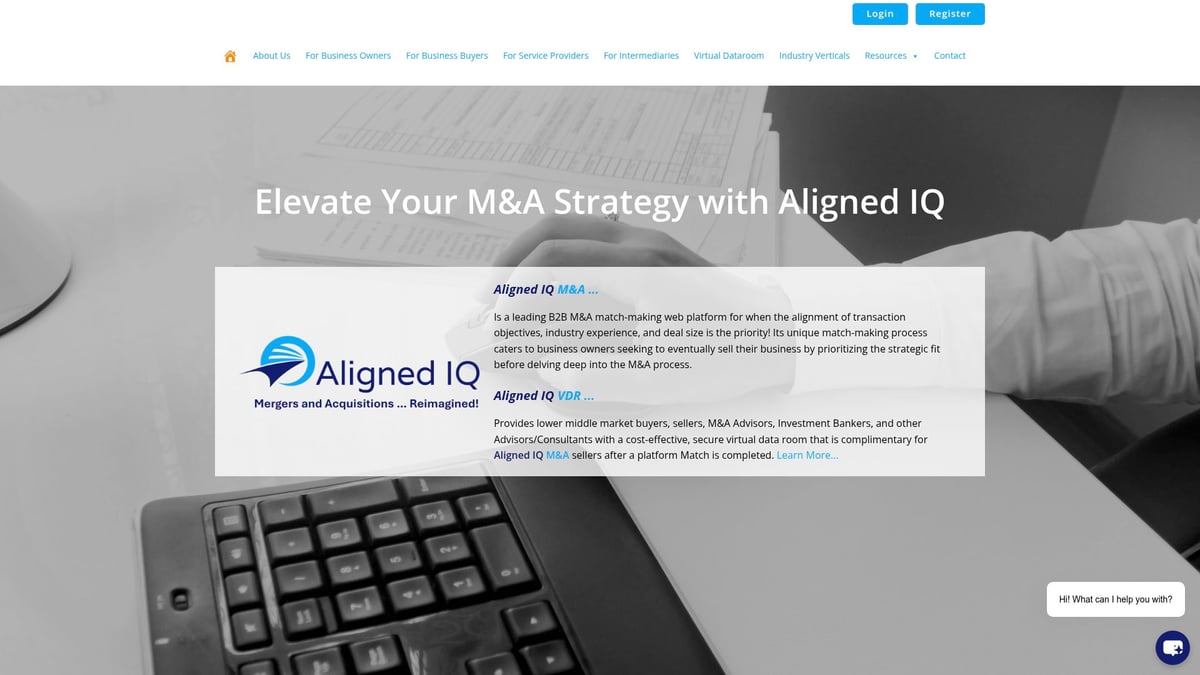
For sellers, the process is confidential and fully controlled, with no upfront fees. Buyers benefit from access to semi-proprietary and off-market deals, increasing the chance to find unique opportunities. After a successful match, sellers receive complimentary access to the secure Aligned IQ VDR, which simplifies document sharing and due diligence. For all other users, the Aligned IQ VDR is available at highly competitive rates, with transparent pricing details provided.
Industry-specific organization and a pay-for-results model align everyone’s incentives, making Aligned IQ M&A an innovative solution for today’s market. Ready to experience the difference? Take a Tour.
Building Your Buy-Side Team
Assembling the right team is essential when pursuing an existing business for sale. M&A advisors, attorneys, accountants, and lenders each play a key role. Choose professionals with deep industry expertise and a track record in successful transactions.
Collaborative advisory models ensure that your interests are protected at every stage, increasing your chances of a smooth and successful acquisition.
Step-by-Step Guide to Evaluating a Business for Sale
Evaluating an existing business for sale in 2026 requires a structured approach. Each step in the process builds a foundation for a confident, informed decision. Let’s break down the key areas to review before you commit to a transaction.

Step 1: Initial Screening and Industry Fit
Start by assessing whether the existing business for sale aligns with your experience and goals. Evaluate the sector’s growth prospects and consider if your skills can add value.
Look for industries with positive trends, such as SaaS or healthcare, and avoid sectors facing long-term decline or major regulatory hurdles. Red flags include heavy reliance on single customers, outdated technology, or shrinking markets.
Prioritize businesses with recurring revenue models, diversified customer bases, and scalability. This initial screening narrows your focus and helps you avoid costly missteps.
Step 2: Reviewing Financials and Key Metrics
Reviewing financials is crucial when considering an existing business for sale. Analyze historical profit and loss statements, balance sheets, and cash flow reports for the past three years. Normalize earnings by adjusting for owner compensation and non-recurring expenses.
Key metrics to examine include:
| Metric | Why It Matters |
|---|---|
| EBITDA | True operating earnings |
| SDE | Owner’s cash flow |
| Gross Margin | Pricing power, efficiency |
| Retention Rate | Customer loyalty |
Benchmark these figures against industry averages to spot anomalies. For a deeper dive into what to look for, consult the pre-sale due diligence process.
Step 3: Assessing Operations and Human Capital
A thorough review of operations is essential before acquiring an existing business for sale. Assess the company’s management depth and employee retention. Strong middle management reduces transition risk and supports sustainable growth.
Examine whether the business has documented standard operating procedures (SOPs), a modern technology stack, and reliable supplier relationships. High owner dependency is a warning sign, as is a lack of key staff retention strategies.
A typical scenario in 2026 involves buyers seeking businesses with well-established teams and minimal daily owner involvement. This operational stability often leads to higher valuations.
Step 4: Market Position and Competitive Landscape
Understanding the market position of an existing business for sale is vital. Analyze the company’s market share, unique value proposition, and barriers to entry.
Use a SWOT analysis to evaluate strengths, weaknesses, opportunities, and threats. Benchmark the business against direct competitors to identify areas for improvement.
| SWOT Element | Key Focus |
|---|---|
| Strengths | Brand, IP, processes |
| Weaknesses | Gaps, dependencies |
| Opportunities | Expansion, trends |
| Threats | Competitors, changes |
Businesses with patented products, proprietary software, or a strong brand reputation tend to command premium multiples. This strategic perspective ensures you invest wisely.
Due Diligence and Deal Structuring Essentials
Navigating due diligence and deal structuring is critical when considering an existing business for sale. This process ensures your investment is sound, risks are minimized, and your acquisition journey is efficient. Let us break down the essentials, highlighting how technology and expert strategies can streamline your path to a successful close.

Planning and Executing Due Diligence
Comprehensive due diligence forms the backbone of any acquisition of an existing business for sale. Begin with a structured checklist that covers legal, financial, operational, and commercial aspects. Review key documents such as contracts, leases, intellectual property, and employee agreements.
Watch for pitfalls like undisclosed liabilities or regulatory issues. Allocate adequate resources and set a realistic timeline. Utilizing Virtual Datarooms (VDRs) for secure document sharing enhances confidentiality and efficiency, especially when managing multiple stakeholders. With proprietary platforms like Aligned IQ M&A, sellers maintain control and confidentiality throughout the process, reducing risk compared to traditional M&A approaches.
Legal and Regulatory Considerations
Legal structuring is pivotal when acquiring an existing business for sale. Decide early on whether an asset or stock purchase aligns best with your goals, as each has tax and liability implications. Ensure compliance with all local, state, and federal regulations, including environmental, labor, and data privacy requirements.
Review all licenses and permits, and confirm there are no outstanding regulatory issues that could delay closing. For example, in highly regulated sectors like healthcare, missing permits or non-compliance can result in significant fines or jeopardize the transaction. Consider engaging attorneys with sector expertise to navigate these complexities and safeguard your acquisition.
Valuation Methods and Negotiation Strategies
A robust valuation process is essential when pursuing an existing business for sale. Common approaches include income-based, market-based, and asset-based valuations. Adjust these methods to reflect growth prospects, unique risks, and possible synergies.
Use industry benchmarks and normalized earnings to support your analysis. Negotiation strategies should balance price, terms, and contingencies, often incorporating earnouts or seller financing. For more on core valuation methods, see Business valuation essentials. Recent market data shows that seller financing featured in 30 percent of 2025 deals, highlighting its role in bridging valuation gaps and aligning interests.
Using Virtual Datarooms for M&A: Security and Efficiency
Virtual Datarooms (VDRs) have become indispensable in M&A transactions for an existing business for sale. They streamline due diligence by enabling secure, organized document management, with features like granular access controls and user activity analytics.
The Aligned IQ VDR stands out by offering complimentary access to sellers matched via Aligned IQ M&A, while maintaining competitive pricing for all users. Explore VDR pricing details for transparent costs. In a typical scenario, lower middle-market buyers, sellers, and advisors use the Aligned IQ VDR to ensure confidentiality and efficiency throughout the transaction. Ready to experience a secure, proprietary environment? Take a Tour to see how Aligned IQ transforms the acquisition process.
Closing the Deal and Ensuring a Smooth Transition
Navigating the final stretch of acquiring an existing business for sale requires precision and a clear plan. The closing and transition phases are critical for protecting your investment and setting the stage for long-term success. Leveraging secure, confidential platforms like Aligned IQ M&A and the competitively priced Aligned IQ VDR reduces risks compared to traditional M&A processes, giving buyers and sellers peace of mind.
Finalizing the Transaction
Finalizing an existing business for sale means meticulous attention to detail. Start by reviewing the purchase agreement with your advisory team. Ensure all closing checklists are complete, including:
- Funding logistics
- Regulatory approvals
- Third-party consents
Escrow release and final payment should only proceed once all obligations are satisfied. Delays can occur, for example, if tax clearance certificates are missing. Using Aligned IQ VDR streamlines document management and ensures secure, confidential sharing with all parties. For a deeper dive into what buyers should expect during this stage, see The business selling process.
Transition Planning and Post-Sale Integration
A smooth handover is essential after closing an existing business for sale. Begin by arranging knowledge transfer sessions and comprehensive training. Retain key staff and maintain open communication with major customers. Integrate systems and processes quickly to avoid disruption.
A typical scenario involves buyers prioritizing:
- Retaining crucial team members
- Building trust with existing clients
- Unifying operations and technology
Effective transition planning pays off. In fact, 70% of buyers cite robust post-sale support as a key factor in a successful acquisition, making this phase just as vital as the deal itself.
Maximizing Value After Acquisition
Unlocking value from your newly acquired existing business for sale starts with clear, measurable goals. Establish 90-day and 1-year targets focused on growth and stability:
- Identify cost-saving opportunities
- Accelerate revenue growth
- Implement customer retention strategies
Monitor KPIs closely to ensure early wins translate into sustainable progress. Leverage your own expertise and network to introduce improvements, whether through rebranding or digital transformation. Platforms like Aligned IQ M&A offer buyers access to semi-proprietary deals while sellers enjoy a low-risk, secure process. Take advantage of the competitive Aligned IQ VDR pricing and start your journey with confidence. Ready to experience the difference? Take a Tour.
As we’ve explored, finding and acquiring the right business in 2026 means more than just crunching numbers—it’s about strategic fit, secure deal flow, and a collaborative approach that truly benefits both buyers and sellers. If you’re ready to put these insights into action, I encourage you to see how Aligned IQ M&A brings this process to life. Their platform prioritizes confidentiality and meaningful connections, making your M&A journey smoother and more successful. Curious about how it all works in practice Take a closer look and Take a Tour!
No responses yet