

What is your business truly worth, and why does it matter more than ever in 2025? In a rapidly changing market, understanding the value of your company is essential for owners, buyers, and advisors seeking clarity and confidence in their next move. Business valuation services have become a cornerstone for critical decisions, from ownership transitions to strategic growth.
This essential guide unpacks the world of business valuation services, breaking down core concepts, practical uses, and the latest methodologies. Discover how to select the right provider, navigate industry-specific challenges, and leverage technology for more accurate, defensible results. Ready to make smarter choices? Let’s dive in and empower your business journey.
Understanding Business Valuation: Core Concepts and Purposes
Business valuation services are fundamental to understanding, protecting, and maximizing the value of any business. Whether you are an owner, buyer, or advisor, a clear grasp of these core concepts will help you make confident, informed decisions at every stage of the business lifecycle.

What is Business Valuation?
Business valuation is the analytical process of determining the economic worth of a company. It plays a pivotal role throughout the business lifecycle, from startup growth to exit planning.
Key terms include:
| Term | Definition |
|---|---|
| Fair Market Value | The price at which a business would sell between willing parties. |
| Enterprise Value | The total value of a business, including debt and equity. |
| Equity Value | The value attributable to shareholders after debts are paid. |
A common misconception is that business valuation services deliver a single, exact number. In reality, results reflect a range based on methods, assumptions, and the intended use.
Why Businesses Need Valuation Services
Business valuation services serve many critical purposes beyond the obvious sale or acquisition. Owners may need valuations for mergers, succession planning, estate settlements, litigation, financing, or regulatory compliance.
For lower-middle market companies—typically under $100 million in revenue—these needs are often driven by transitions such as a family-owned business preparing for new ownership. For a deeper dive into the importance of valuation before a sale, see Understanding Business Value Before a Sale.
Types of Valuation Engagements
Business valuation services can take several forms:
- Full Valuation: Comprehensive and suitable for legal or regulatory requirements.
- Calculation Engagement: A limited-scope estimate, often used for internal decision-making.
- Limited Scope or Advisory Opinion: Focused on specific issues, like partner buyouts or litigation support.
For example, a full valuation may be necessary for a sale, while a calculation engagement could help a buyer assess a business’s suitability before entering negotiations.
Key Stakeholders in the Valuation Process
Several stakeholders rely on business valuation services, each with distinct objectives:
- Business owners use valuations to guide exit strategies or succession.
- M&A Advisors use valuation to assess whether the market will bear the value expected by seller clients or to guide buyer clients on acquisition strategies.
- Buyers and investors assess fair price and growth potential.
- Lenders require validation of collateral.
- Legal and tax advisors ensure compliance and defensibility.
In the lower-middle market, owners often drive decisions, making transparent, confidential processes essential for trust.
Regulatory and Professional Standards
Credible business valuation services follow strict professional guidelines. Leading standards include those set by the AICPA, ASA, and the Appraisal Foundation.
Compliance with these standards is vital for defensibility, especially in legal or regulatory contexts. Studies show that over 65% of formal valuations require adherence to such frameworks, ensuring results are both credible and widely accepted.
Modern Valuation Methodologies and Approaches
Business valuation services rely on proven methodologies to deliver credible, defensible outcomes for owners and buyers. Each approach has unique strengths, especially for lower-middle market companies where data, assets, and industry norms can vary widely. Understanding these methods helps you interpret results and ask the right questions of your provider.

Income Approach
The income approach centers on a company’s ability to generate future earnings. Business valuation services often use Discounted Cash Flow (DCF) or Capitalization of Earnings methods for this purpose.
DCF projects future cash flows and discounts them to present value, making it ideal for businesses with stable, predictable revenue streams. Capitalization of Earnings works well for established firms with consistent performance.
For example, a recurring revenue service company in the lower-middle market, such as a managed IT provider, benefits from this approach due to its steady income and growth prospects.
However, the income approach requires reliable forecasts and can be less effective for cyclical or early-stage businesses.
Market Approach
The market approach estimates value by comparing your business to similar companies that have sold recently or are publicly traded. Business valuation services using this method rely on transactional databases and industry reports to identify relevant multiples.
For lower-middle market owners, finding direct comparables can be challenging, especially for niche manufacturers or unique service providers. To learn more about how comparables drive value estimation, see Using Comparables to Estimate Value.
A niche manufacturing business, for instance, may have limited direct peers, making adjustments for size and market position essential.
Asset-Based Approach
Asset-based valuation focuses on the value of a company’s tangible and intangible assets. This method is most relevant for asset-heavy businesses, such as equipment rental firms or wholesalers, where book value and adjusted net asset value provide a meaningful benchmark.
In contrast, service-based businesses with limited tangible assets rarely benefit from asset-based valuation unless facing liquidation.
For lower-middle market companies, asset-based approaches are often used when earnings are inconsistent or asset values dominate the balance sheet.
| Approach | Best For | Limitation |
|---|---|---|
| Income | Profitable, stable firms | Needs reliable forecasts |
| Market | Common industries, data-rich | Limited comps for unique firms |
| Asset-Based | Asset-heavy, liquidation | Not ideal for service firms |
Selecting the Right Approach
Choosing the best methodology depends on several factors. Business valuation services consider industry norms, business maturity, financial performance, and the purpose of the valuation.
Hybrid or multi-method approaches are common, ensuring results are robust and defensible. For example, a tech business may require both an income and market approach to reflect both growth and prevailing market multiples.
Competitor data often shapes the final choice, as some industries rely more heavily on EBITDA multiples, while others focus on asset value.
Common Adjustments and Normalizations
Accurate business valuation services require normalizing financial statements. Key adjustments include:
- Owner compensation set above or below market rates
- Non-recurring expenses, such as legal settlements or one-time projects
- Related-party transactions, like rent paid to an owner’s affiliate
These adjustments are vital for lower-middle market valuations, where personal and business expenses often overlap.
By applying these modern valuation methodologies, business owners and buyers gain clarity and confidence throughout the process.
The Business Valuation Process: Step-by-Step
A clear, structured process is critical for anyone seeking business valuation services. Whether you are a business owner, buyer, or advisor in the lower-middle market, understanding each step ensures transparency and confidence. Each stage is designed to protect your interests, maintain confidentiality, and deliver reliable results tailored to your unique needs.

Initial Consultation and Defining Objectives
The journey with business valuation services starts by clarifying your goals. Are you preparing for a sale, planning succession, or seeking financing? Setting clear objectives ensures the valuation addresses your business’s specific context.
During this phase, the provider outlines the scope, deliverables, and confidentiality agreements. In the lower-middle market, owners often play a direct role in defining these terms. Confidentiality is paramount, especially for family-owned businesses or those exploring options discreetly.
Data Gathering and Due Diligence
Effective business valuation services rely on comprehensive data collection. Providers request financial statements, tax returns, customer lists, and key contracts. For a retail business, typical documents might include inventory reports, lease agreements, and historical sales data.
Due diligence also involves management interviews and market research. This ensures the analysis reflects both the numbers and the business’s unique story. Secure document sharing platforms, like those used by Aligned IQ, keep sensitive information protected throughout the process.
Analysis and Method Selection
Once data is collected, analysts apply the most appropriate valuation approaches. Factors such as industry, growth prospects, and transaction purpose guide the choice between income, market, or asset-based methods.
Adjustments for owner compensation or one-time expenses are made to reflect true earning power. The best business valuation services use a blend of methods for accuracy. Providers may reference Business Valuation Explained to ensure all stakeholders understand the rationale behind each method applied.
Report Preparation and Review
A robust valuation report translates complex analysis into clear, actionable insights. Business valuation services prepare documents that are defensible and easy to interpret, even for those without a financial background.
Draft reports are shared securely, allowing business owners to review assumptions and ask questions. Providers prioritize clarity, ensuring the findings can be confidently shared with partners, lenders, or potential buyers.
Presentation and Discussion of Results
Presenting the results is more than sharing numbers. Expert providers explain the valuation findings, answer questions, and explore what-if scenarios. For instance, how would a new contract or market change impact your business’s value?
This collaborative review supports informed decision-making. In the lower-middle market, direct owner involvement ensures the results align with both personal and business goals.
Ongoing Support and Updates
Business valuation services do not end with the report. Providers offer ongoing support, helping clients decide when updates are needed. Annual reviews are common, but major events like acquisitions or leadership changes may prompt interim revaluations.
A proactive approach helps owners stay prepared for future opportunities. Platforms like Aligned IQ enable confidential revaluations, ensuring your business is always ready for the next step.
Choosing the Right Business Valuation Provider
Selecting the right provider for business valuation services is critical for lower-middle market owners seeking clarity and confidence in their next steps. The ideal partner brings a combination of expertise, industry understanding, and transparency, helping you make informed decisions that protect and maximize value.
Credentials and Experience to Look For
When evaluating business valuation services, prioritize providers with recognized credentials such as ASA, CPA/ABV, or CFA. These designations reflect rigorous training and adherence to industry standards. Experience with businesses under $100M is vital, as lower-middle market companies face unique challenges compared to large corporations.
A provider’s track record should include valuations for family-owned firms, partnerships, and closely held entities. Deep technical knowledge, combined with practical experience, ensures a credible result. For a comprehensive understanding of up-to-date valuation practices and professional standards, review The No. 1 Best-Selling Guide to Business Valuation—Updated for 2025.
Industry Expertise and Specialization
Industry specialization is a key differentiator among business valuation services. Providers familiar with your sector can benchmark performance more accurately and identify value drivers specific to your business model.
For example, a healthcare business requires a very different approach than a technology startup. Industry experts can interpret comparable transactions, understand regulatory impacts, and evaluate intangible assets. This expertise leads to more reliable and defendable valuations, especially in sectors like manufacturing, SaaS, or construction.
Process Transparency and Communication
A reputable provider of business valuation services will outline each step of the process, from initial data gathering to final report delivery. Clear timelines, deliverable expectations, and communication protocols are essential.
Effective communication builds trust and ensures you understand how your valuation is determined. Look for professionals who educate clients on the methodology and results, making complex concepts accessible. Transparency also helps prevent surprises and supports confident decision-making.
Fee Structures and Engagement Models
Understanding how business valuation services are priced is crucial for lower-middle market owners. Fee structures typically include:
- Fixed fee: Predictable cost for defined scope
- Hourly rate: Based on time spent, suitable for limited engagements
- Success-based: Tied to transaction completion, less common for formal valuations
For most businesses under $100M, fixed or hourly fees are standard. Always request a clear proposal outlining fees, scope, and deliverables before engaging a provider.
Questions to Ask Before Hiring
Before selecting a provider for business valuation services, ask targeted questions to assess fit and reliability:
- What valuation approaches do you recommend for my industry?
- Can you provide references from similar engagements?
- How do you protect confidentiality and sensitive data?
- What is your experience with lower-middle market businesses?
- How do you ensure compliance with relevant standards?
The right answers will give you confidence in your selection process.
Take a Tour of Aligned IQ: A New Approach to M&A and Business Valuation Matching
Aligned IQ offers a confidential, industry-focused platform designed for lower-middle market owners looking to find the right strategic fit in advance of a sale without the risks of traditional M&A. Its proprietary matching system connects sellers with buyers who have relevant industry experience and acquisition mandates.
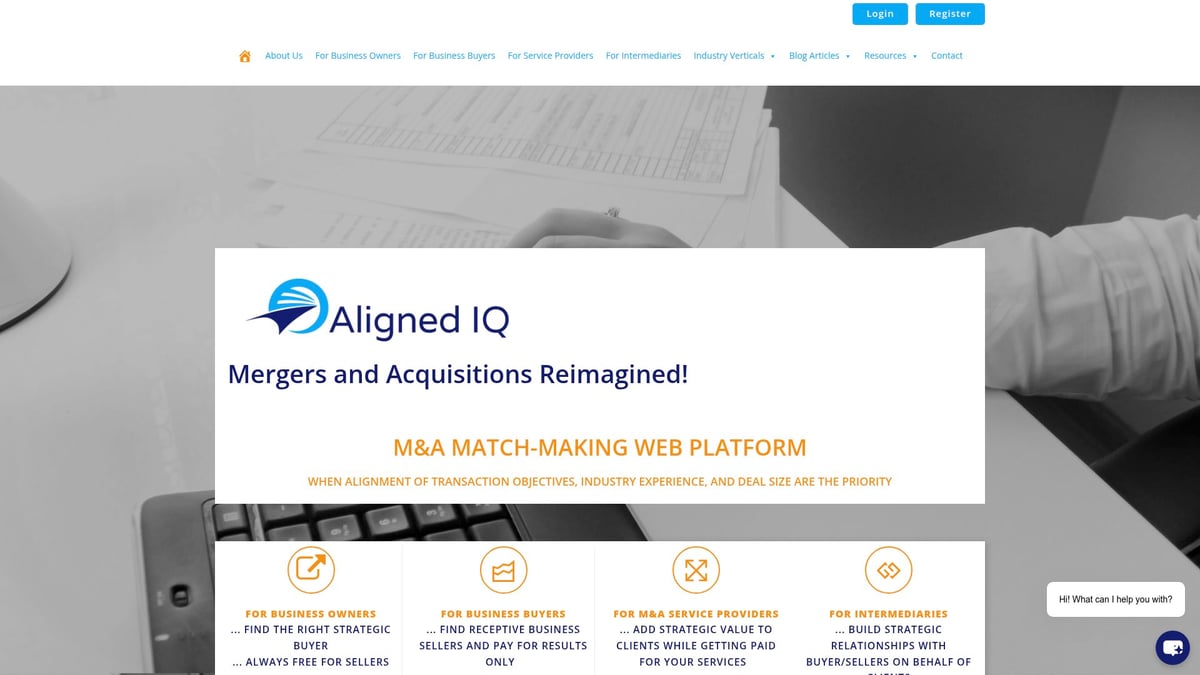
Sellers benefit from no upfront costs, a secure environment, and access to a network of value-added service providers. Take a Tour to discover how Aligned IQ empowers you to explore valuation options and strategic fit before committing to a conventional deal process.
Industry-Specific Considerations in Business Valuation
Understanding how industry nuances impact business valuation services is critical for lower-middle market owners. Each sector brings unique challenges and value drivers, so a one-size-fits-all approach rarely delivers accurate results. Below, we break down the most important industry considerations for effective business valuation.
Factors Impacting Value by Industry
Industry dynamics shape the application of business valuation services in powerful ways. Key factors include:
- Recurring or contract revenue streams
- Customer concentration and retention rates
- Regulatory environment and compliance demands
- Technology adoption and digital assets
For example, a SaaS business with high recurring revenue and low customer churn is typically valued differently from a manufacturing firm with a few large contracts and significant capital assets. These elements can significantly move the needle on valuation outcomes.
Common Industry Benchmarks and Multiples
Benchmarks and multiples are essential for grounding business valuation services in market reality. EBITDA multiples, for instance, vary by sector and deal size. Here is a simplified snapshot for lower-middle market deals:
| Industry | Typical EBITDA Multiple |
|---|---|
| Healthcare | 6x – 8x |
| Construction | 4x – 6x |
| Retail | 3x – 5x |
These figures are only starting points. Adjusted or normalized EBITDA is often used to ensure fair comparisons, as explained in this detailed article.
Special Cases: Intangibles and Complex Assets
Some businesses rely heavily on intangible assets, which can complicate business valuation services. For instance, technology firms often possess proprietary software, robust brands, or extensive customer lists. Valuing these assets requires specialized expertise and may involve separate analyses for intellectual property, non-compete agreements, and brand strength. Accurately capturing these values is key to a credible valuation, especially in industries where tangible assets are minimal.
Regulatory and Compliance Issues
Every industry faces its own set of regulatory and compliance requirements, which directly impact business valuation services. Healthcare, for example, must account for HIPAA and reimbursement models, while financial services firms navigate SEC and FINRA rules. Ensuring compliance not only protects the business but also strengthens the defensibility of the valuation report. Providers like Aligned IQ are equipped to handle these concerns confidentially and securely for lower-middle market clients.
Recent Trends and Case Studies
Recent years have seen private equity interest surge across multiple industries, while digital transformation accelerates change. Lessons from lower-middle market exits show that buyers now weigh ESG factors, customer data, and tech integration more heavily. For an in-depth look at how emerging methods and ESG metrics are shaping the field, read 2025 Predictions for Business Valuation Techniques. For business owners considering a future sale, platforms like Aligned IQ offer a low-risk, confidential way to explore value and strategic fit before entering the traditional M&A process. Take a Tour to see how these innovations can shape your next chapter.
The Impact of Technology and Data on Business Valuation
Technology is transforming business valuation services, giving owners and advisors access to better insights, faster processes, and more accurate results. For lower-middle market companies, these advances mean a more level playing field and greater confidence in valuation outcomes.
Digital Tools and Platforms in Valuation
Cloud-based accounting platforms, AI-driven analytics, and digital document management are now central to business valuation services. These tools streamline the process, reduce manual errors, and allow providers to analyze vast amounts of financial data quickly.
For example, automated data extraction from accounting systems lets valuation professionals focus on analysis rather than data entry. This shift accelerates turnaround times and enhances reliability for business owners seeking timely insights.
Access to Real-Time Market Data
Modern business valuation services rely on transaction databases, industry reports, and benchmarking tools to provide up-to-date market comparisons. These resources enable more accurate peer analysis and support defensible valuation conclusions.
Lower-middle market businesses benefit from this access, which was once reserved for larger firms. With real-time data, providers can benchmark performance, spot trends, and adjust assumptions to reflect current market realities.
Confidentiality and Security in the Digital Age
Protecting sensitive data is essential in business valuation services. Secure portals and encrypted communication channels safeguard financial statements, client information, and proprietary documents throughout the engagement.
Best practices include setting strict access controls, using secure file-sharing platforms, like Aligned IQ’s VDR, and maintaining confidentiality agreements. For owners considering platforms like Aligned IQ, confidentiality and risk mitigation are built into every step, ensuring peace of mind.
Future Outlook: How Technology is Shaping Valuation Services
Looking ahead, predictive analytics, machine learning, and virtual collaboration are set to redefine business valuation services. Providers can model future scenarios, assess risk with greater precision, and deliver interactive reports to clients anywhere.
Emerging trends, such as ESG integration and advanced digital methods, are discussed in Company Valuation in 2025: Challenges and Opportunities. For business owners and buyers, this means more transparency, better benchmarking, and faster decisions. Take a Tour of Aligned IQ to experience a secure, tech-enabled approach to valuation and M&A.
As you navigate the evolving world of business valuation, it’s clear how crucial the right expertise and a people first approach are—especially when you want more than just numbers on a page. With so much at stake for your business’s future, why not explore a platform that prioritizes strategic fit, confidentiality, and industry insight from the start You deserve a valuation and M&A experience that’s transparent, secure, and tailored to your unique goals. If you’re thinking about selling, buying, or simply planning ahead, let’s make the process work better for you. Take a Tour!
No responses yet