

Brand acquisition represents one of the most complex yet potentially rewarding strategic decisions businesses can make in 2026. When executed properly, acquiring established brands delivers immediate market access, loyal customer bases, and proven operational frameworks. However, the journey from identifying a target brand to successful integration requires careful planning, thorough due diligence, and strategic decision-making at every stage. Understanding the nuances of brand acquisition has become increasingly critical as businesses seek growth opportunities beyond organic expansion, particularly in competitive markets where establishing brand recognition from scratch requires substantial time and capital investment.
Understanding Brand Acquisition Fundamentals
Brand acquisition involves purchasing the rights, assets, and goodwill associated with an established brand name and its market presence. Unlike simple asset purchases, this transaction type encompasses intangible elements including customer loyalty, brand recognition, intellectual property, and market positioning.
The strategic value of brand acquisition extends beyond financial metrics. Acquiring companies gain access to established distribution channels, proprietary technologies, and experienced talent pools. These advantages compress timelines for market entry and reduce the risks associated with launching new products or services under unknown brand names.
Key Components of Brand Value
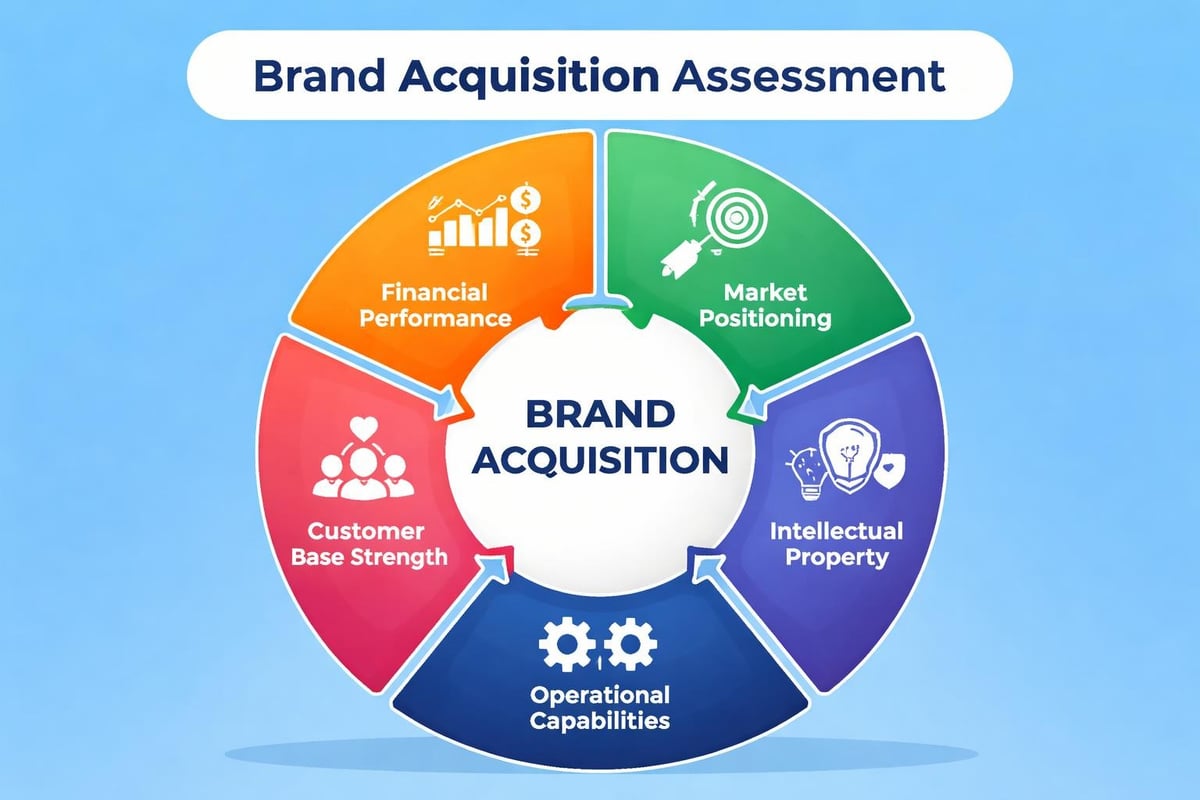
Understanding what makes a brand valuable helps buyers make informed decisions during the acquisition process. Several factors determine brand equity:
- Customer recognition and loyalty across target demographics
- Market positioning relative to competitors
- Intellectual property portfolio including trademarks, patents, and copyrights
- Revenue consistency and profit margins
- Distribution network strength and coverage
- Digital presence and online reputation
For businesses exploring equity deals, recognizing these components early in the evaluation process ensures alignment between acquisition goals and actual brand capabilities.
Due Diligence in Brand Acquisition
Thorough due diligence represents the cornerstone of successful brand acquisition. This investigative process uncovers risks, validates assumptions, and provides the information necessary to structure deals appropriately.
The essential tips for successful brand acquisition emphasize comprehensive evaluation across multiple dimensions. Financial due diligence examines historical performance, but brand-specific analysis must extend into customer sentiment, market trends, and competitive dynamics.
Financial and Legal Assessment
| Assessment Area | Key Focus Points | Critical Documents |
|---|---|---|
| Financial Health | Revenue trends, profit margins, cash flow | Audited financials, tax returns, accounts receivable |
| Legal Standing | Trademark ownership, pending litigation, contract obligations | IP registrations, legal correspondence, material contracts |
| Market Position | Market share, competitive landscape, pricing power | Market research, customer surveys, competitor analysis |
Leveraging secure platforms like virtual data rooms streamlines the due diligence process by providing controlled access to sensitive documents while maintaining confidentiality throughout negotiations.
Operational Due Diligence
Beyond financials, operational assessment reveals how the brand functions daily. This examination includes supply chain reliability, technology infrastructure, employee retention rates, and quality control processes.
A typical scenario might involve a buyer discovering that a target brand's customer loyalty stems primarily from a single charismatic founder rather than systematic processes. This insight dramatically affects valuation and integration planning, potentially requiring earnout structures or longer transition periods.
Brand Architecture Strategy Post-Acquisition
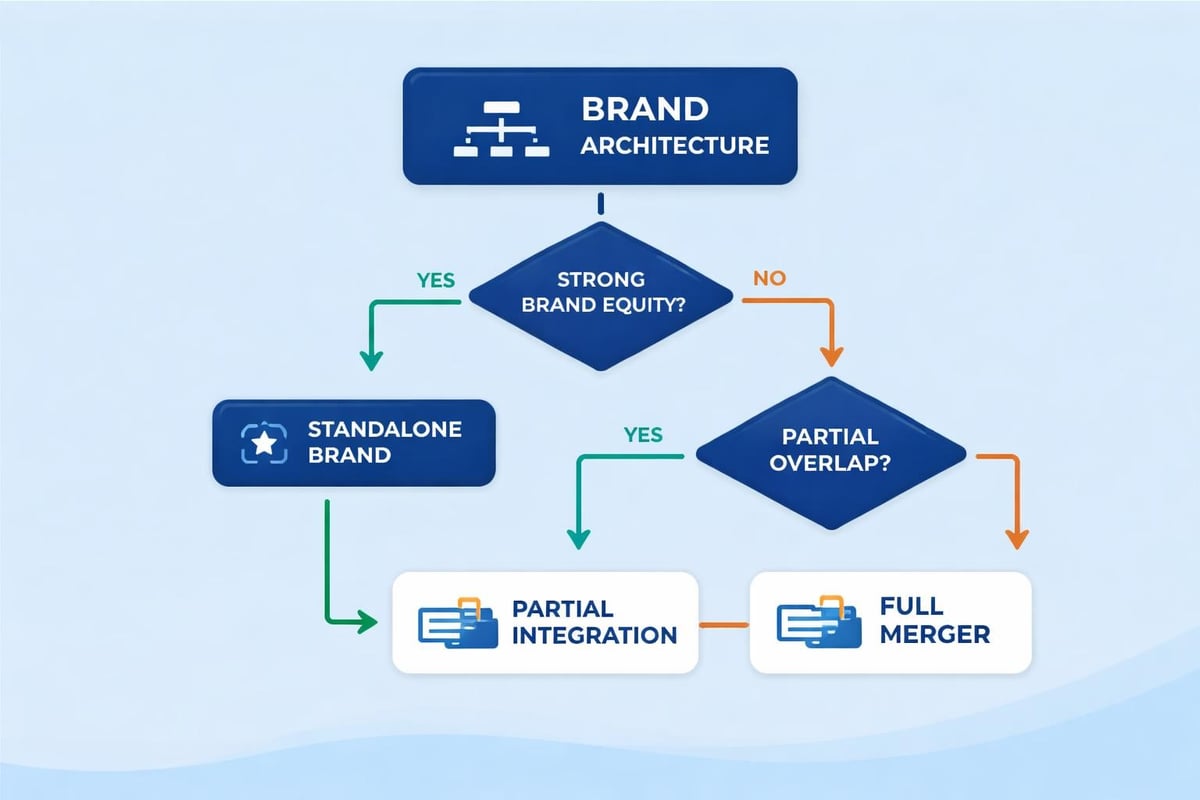
Once due diligence confirms acquisition viability, buyers must decide how the acquired brand fits within their existing portfolio. The standard M&A branding strategies range from complete integration to maintaining separate brand identities.
Strategic choices in brand architecture directly impact customer retention, operational efficiency, and long-term value creation. Each approach carries distinct advantages and challenges.
Common Brand Integration Approaches
House of Brands Strategy
This approach maintains the acquired brand as a distinct entity within the portfolio. Companies choose this path when the target brand commands strong loyalty in specific market segments or when integration might damage existing brand equity.
Branded House Strategy
Complete integration under the acquiring company's brand eliminates redundancy but risks alienating loyal customers of the acquired brand. This strategy works best when the acquiring brand possesses significantly stronger market recognition.
Hybrid Approach
Many acquirers adopt hybrid strategies, maintaining the acquired brand name while adding endorsement from the parent company. This balanced approach leverages existing brand equity while signaling stability and resources from the acquirer.
The importance of designing and testing brand architecture options cannot be overstated. Market research with existing customers of both brands provides valuable insights into potential reactions to integration strategies.
Valuation Considerations for Brand Acquisition
Determining fair value for brand assets challenges even experienced acquirers. Unlike tangible assets, brand value fluctuates based on market perceptions, competitive dynamics, and cultural trends.
Multiple valuation methodologies provide different perspectives on brand worth. The income approach projects future cash flows attributable to brand strength. The market approach compares transaction multiples from similar brand acquisitions. The cost approach estimates replacement value for building equivalent brand recognition.
Brand-Specific Valuation Factors
When assessing valuation for mergers and acquisitions, several brand-specific elements warrant premium valuations:
- Customer Acquisition Cost Differential: Established brands typically acquire customers at significantly lower costs than new market entrants
- Pricing Power: Strong brands command premium pricing without proportional volume loss
- Extension Potential: Brands with broader application potential across product categories carry additional value
- Geographic Expansion Opportunity: Brands with proven concepts but limited geographic reach offer scaling advantages
- Digital Assets: Domain authority, social media followings, and email subscriber lists represent quantifiable assets
Buyers should approach valuation as a range rather than a single number, with different scenarios reflecting various integration approaches and market conditions.
Finding and Evaluating Acquisition Targets
Identifying suitable brand acquisition candidates requires systematic approaches combining market research, competitive analysis, and relationship development. Traditional methods like engaging investment bankers provide access to formal sale processes, but proprietary deal sourcing often yields superior results.
Businesses serious about brand acquisition benefit from deal sourcing platforms that connect buyers with sellers before public marketing begins. This approach reduces competitive bidding pressure while allowing deeper strategic discussions before formal processes commence.
Proprietary vs. Competitive Acquisition Processes
| Process Type | Advantages | Challenges | Best For |
|---|---|---|---|
| Proprietary | Lower competition, flexible timing, relationship-driven | Requires extensive networking, longer development | Strategic acquisitions prioritizing fit |
| Competitive | Clear process, defined timeline, professional representation | Higher prices, limited due diligence time, winner's curse risk | Financial buyers seeking auctions |
| Semi-Proprietary | Balanced approach, selected buyer group, reasonable competition | Requires platform access, still competitive | Buyers seeking quality without full auction pressure |
Aligned IQ M&A provides a semi-proprietary environment where buyers can showcase their capabilities to business owners exploring exit options. This match-making approach prioritizes strategic fit, allowing potential acquirers to demonstrate why they represent the ideal home for a target brand before intensive negotiations begin.
Integration Planning for Acquired Brands
Success in brand acquisition depends heavily on post-closing integration execution. Research consistently shows that integration planning beginning before deal closure dramatically improves outcomes.
The brand strategies post-merger or acquisition should align with overall business objectives while respecting the acquired brand's heritage and customer relationships.
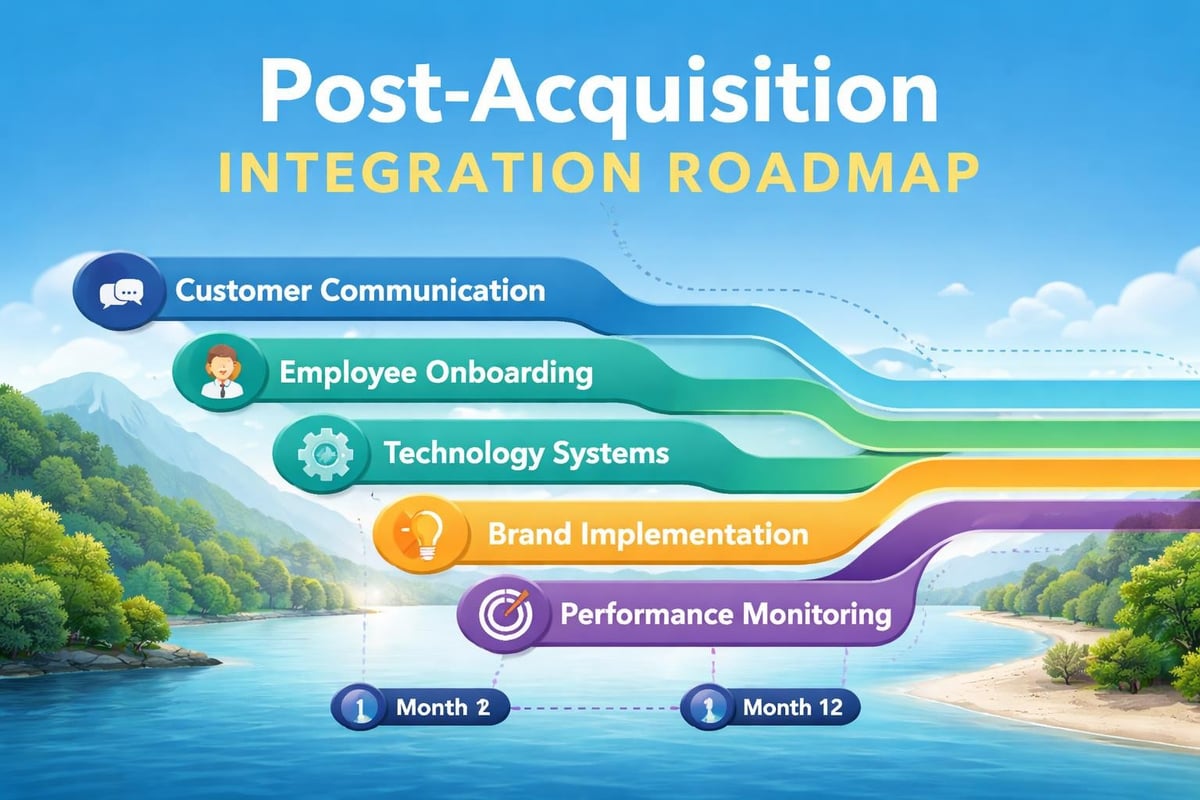
Critical Integration Workstreams
Customer Communication Strategy
Proactive communication with customers of the acquired brand prevents uncertainty and competitive poaching. Messages should emphasize continuity, improvements, and commitment to quality standards that attracted customers originally.
Employee Retention Programs
Key talent often represents significant portions of brand value, particularly in service businesses or companies dependent on specialized expertise. Retention bonuses, role clarity, and cultural integration efforts reduce post-acquisition turnover.
Technology and Systems Integration
Determining which technology platforms to retain, replace, or integrate affects operational efficiency and customer experience. Rushed technology integration frequently causes customer service disruptions that damage brand perception.
Supply Chain Consolidation
Combining purchasing power and streamlining suppliers generates cost savings, but changes must preserve product quality that existing customers expect.
Risk Mitigation in Brand Acquisition
Every brand acquisition carries inherent risks requiring deliberate mitigation strategies. Understanding potential pitfalls enables buyers to structure protections into transaction terms.
Common Brand Acquisition Risks
Customer Attrition
Ownership changes trigger customer reconsideration, particularly in B2B contexts where relationships drive purchasing decisions. Earnout structures tying payment to customer retention align seller incentives with buyer objectives.
Cultural Misalignment
Acquired brands often possess distinct cultures that contributed to their success. Forcing immediate cultural conformity risks losing the elements that made the brand valuable initially.
Regulatory Complications
Antitrust considerations affect brand acquisitions in concentrated markets. Early consultation with regulatory counsel prevents deal-killing surprises late in processes.
Intellectual Property Disputes
Trademark challenges or copyright claims emerging post-acquisition create expensive complications. Comprehensive IP due diligence and warranty provisions protect acquirers.
Utilizing top data room providers during due diligence ensures systematic document review while maintaining audit trails that document thorough investigation should disputes arise later.
Strategic Fit Assessment
Beyond financial metrics, successful brand acquisition requires genuine strategic alignment between buyer capabilities and brand requirements. The M&A brand identity strategies vary significantly based on this strategic fit.
Evaluating Strategic Compatibility
Strategic fit assessment examines multiple dimensions:
- Operational synergies in manufacturing, distribution, or service delivery
- Market complementarity expanding geographic or demographic reach
- Technology compatibility enabling cross-selling or enhanced offerings
- Cultural alignment between buyer and seller organizations
- Management capability to scale the acquired brand
- Financial capacity to invest in growth initiatives post-acquisition
In a typical scenario, a regional service brand might attract acquirers possessing national distribution capabilities but lacking local market expertise. This complementary fit creates value through geographic expansion while preserving brand authenticity in original markets.
Platforms prioritizing strategic fit before extensive process investment help both parties avoid wasting resources on incompatible transactions. This approach particularly benefits business owners seeking buyers who will preserve brand legacy while providing resources for growth.
Leveraging Technology in Brand Acquisition
Modern brand acquisition processes benefit significantly from technology platforms that streamline communication, due diligence, and transaction management. The evolution from paper-based processes to digital workflows has compressed timelines while improving information quality.
Virtual Data Rooms in Brand Acquisition
Secure virtual data rooms have become standard infrastructure for brand acquisition transactions. These platforms provide:
- Centralized document repositories eliminating version control issues
- Granular access controls protecting sensitive competitive information
- Activity tracking showing which buyers review which materials
- Q&A management streamlining communication between parties
- Integration with signature platforms accelerating closing procedures
The Aligned IQ VDR offers competitively priced virtual data room capabilities with transparent pricing accessible to lower middle-market participants. For sellers completing matches through Aligned IQ M&A, complimentary VDR access reduces transaction costs while maintaining professional standards.
Customer Acquisition Strategy Integration
Brand acquisition inherently involves acquiring customer relationships, but maximizing value requires integrating customer acquisition strategies post-closing. The customer acquisition strategies from growing brands demonstrate how successful companies scale customer bases systematically.
Buyers should evaluate whether acquired brand customer acquisition approaches complement or require replacement. High-performing acquisition channels deserve continued investment, while underperforming methods present optimization opportunities.
Analyzing Acquisition Channel Performance
| Channel | Assessment Criteria | Integration Considerations |
|---|---|---|
| Organic Search | Traffic trends, conversion rates, domain authority | Preserve brand domains, maintain content strategy |
| Paid Advertising | Customer acquisition costs, lifetime value ratios | Combine budgets for scale, test cross-brand messaging |
| Referral Programs | Referral rates, quality of referred customers | Expand successful programs across combined customer base |
| Content Marketing | Engagement metrics, lead generation efficiency | Consolidate production while maintaining brand voice |
The customer acquisition strategies that built the acquired brand's success require careful preservation even as acquirers introduce new capabilities and resources.
Financing Brand Acquisition Transactions
Structuring appropriate financing for brand acquisition affects both deal feasibility and post-acquisition financial flexibility. Multiple financing options exist, each with distinct implications for ownership structure and future operations.
Traditional Bank Financing
Commercial loans secured by acquired assets provide cost-effective capital but require substantial equity investment and impose operational covenants.
Seller Financing
Partial seller financing demonstrates seller confidence while reducing upfront capital requirements. This approach aligns interests through earn-out provisions based on post-acquisition performance.
Private Equity Partnerships
Institutional capital provides resources for larger acquisitions but involves ownership dilution and pressure for specific return timelines.
SBA Financing Programs
Small Business Administration programs facilitate acquisition financing for qualifying transactions, offering favorable terms for appropriate deals.
Reviewing acquisition case studies provides insights into how different financing structures perform across various scenarios and market conditions.
Protecting Brand Equity During Transition
Brand equity represents fragile value that can deteriorate quickly during poorly managed transitions. Protecting this asset requires deliberate strategies throughout the acquisition process.
Equity Preservation Tactics
Communication consistency prevents brand perception degradation during ownership changes. Customers, employees, and suppliers should receive clear messaging about continuity, improvements, and commitment to brand values.
Maintaining visible continuity through early transition periods reassures stakeholders. Retaining key personnel, preserving customer service standards, and honoring existing commitments demonstrate respect for brand heritage.
Measuring brand health metrics throughout integration provides early warning of problems. Customer satisfaction scores, net promoter scores, and brand awareness tracking quantify whether integration strategies preserve or damage brand equity.
Confidentiality and Privacy in Brand Acquisition
Brand acquisition discussions require exceptional confidentiality to protect competitive positions and prevent market disruptions. Premature disclosure creates numerous problems including customer uncertainty, employee departures, and competitor interference.
Maintaining Transaction Confidentiality
Effective confidentiality management begins before initial contact with potential acquisition targets. Non-disclosure agreements establishing information protection expectations and consequences for breaches provide legal foundations.
Limiting information access to essential personnel reduces leak risks. Even within acquiring organizations, brand acquisition discussions should remain restricted to individuals directly involved in evaluation and decision-making.
Aligned IQ M&A provides a confidential environment where business owners can explore potential exits privately without public market exposure. This protected setting allows preliminary strategic fit discussions before broader disclosure becomes necessary.
Market Research and Brand Assessment
Understanding acquired brand market position requires systematic research beyond financial statement analysis. Customer perception studies, competitive positioning analysis, and market trend evaluation provide context for brand value and growth potential.
Primary research with existing customers reveals satisfaction drivers, unmet needs, and loyalty factors. These insights inform integration decisions and identify opportunities for value enhancement post-acquisition.
Competitive analysis examines how the acquired brand differentiates from alternatives and whether competitive advantages remain sustainable under new ownership. Markets evolve constantly, requiring assessment of whether historical brand strengths remain relevant for future success.
The brand importance evaluation systems developed in academic research provide frameworks for systematic brand equity assessment that supplement traditional financial metrics.
Successful brand acquisition in 2026 demands thorough preparation, realistic assessment of strategic fit, and careful integration planning that preserves value while capturing synergies. Whether you're seeking to acquire established brands to accelerate growth or exploring exit options for your own business, the right platform makes the difference between efficient transactions and costly mistakes. Take a tour of how Aligned IQ M&A connects serious buyers with quality sellers through a confidential, strategic-fit-first matching process that transforms brand acquisition from competitive auction to collaborative partnership.
No responses yet