
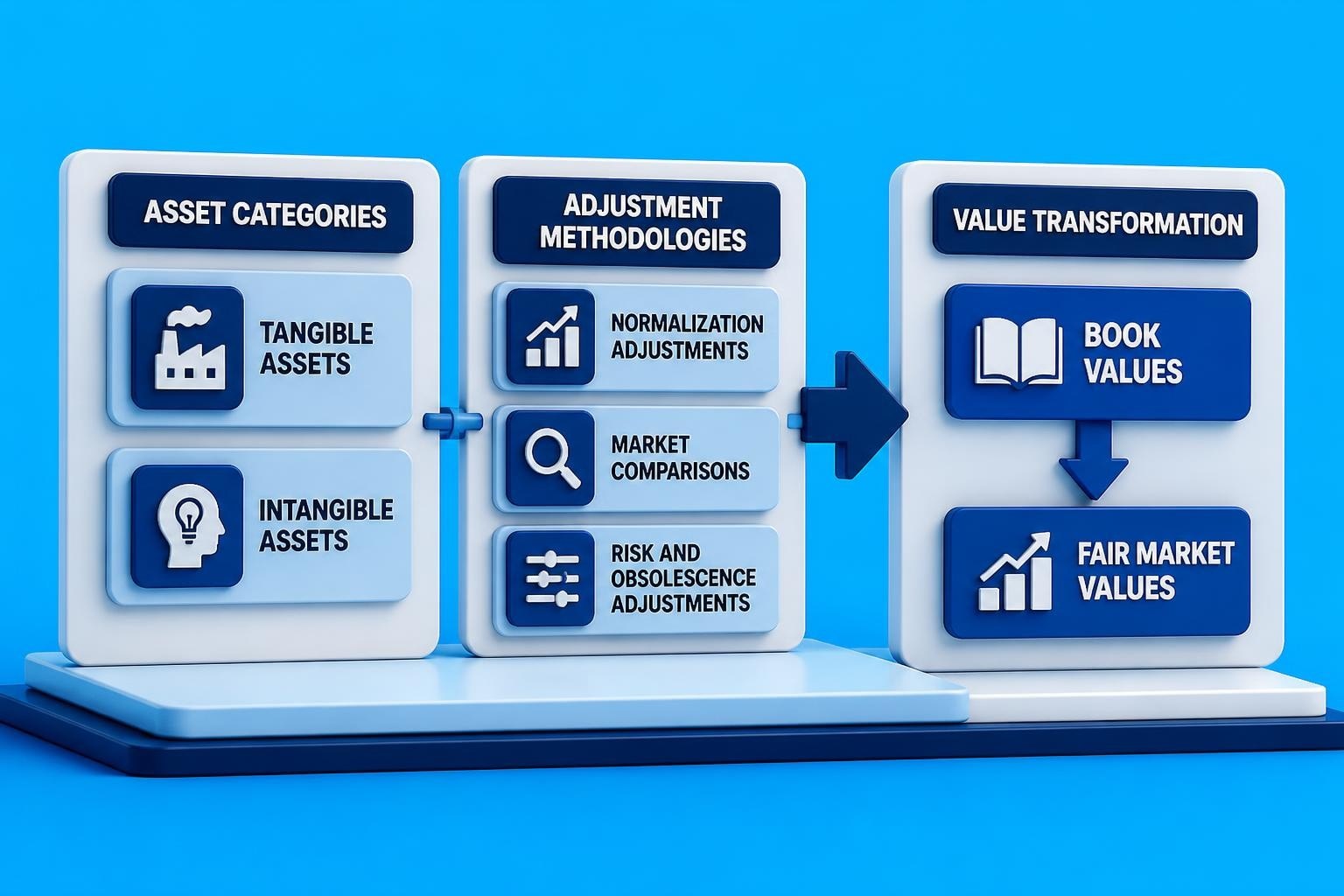
Asset based valuation represents one of the fundamental approaches to determining what a business is worth, particularly when tangible assets form the core value proposition of an enterprise. While income-based and market-based methodologies often dominate M&A conversations, understanding how to properly assess the adjusted net asset value of a target company remains essential for buyers, sellers, and advisors navigating transactions. This method becomes particularly relevant when evaluating asset-intensive businesses, distressed companies, or situations where future cash flows prove difficult to predict with confidence.
Understanding Asset Based Valuation Fundamentals
Asset based valuation focuses on what a company owns rather than what it earns. This approach calculates business value by adjusting the balance sheet to reflect the fair market value of all assets and liabilities, creating a snapshot of net worth at a specific point in time.
The Corporate Finance Institute provides practical guidance on the two primary variations of this methodology. The going-concern approach assumes the business will continue operations and values assets at their current use value. The liquidation approach, conversely, estimates what assets would fetch if sold individually in an orderly or forced sale scenario.
When Asset Based Valuation Makes Strategic Sense
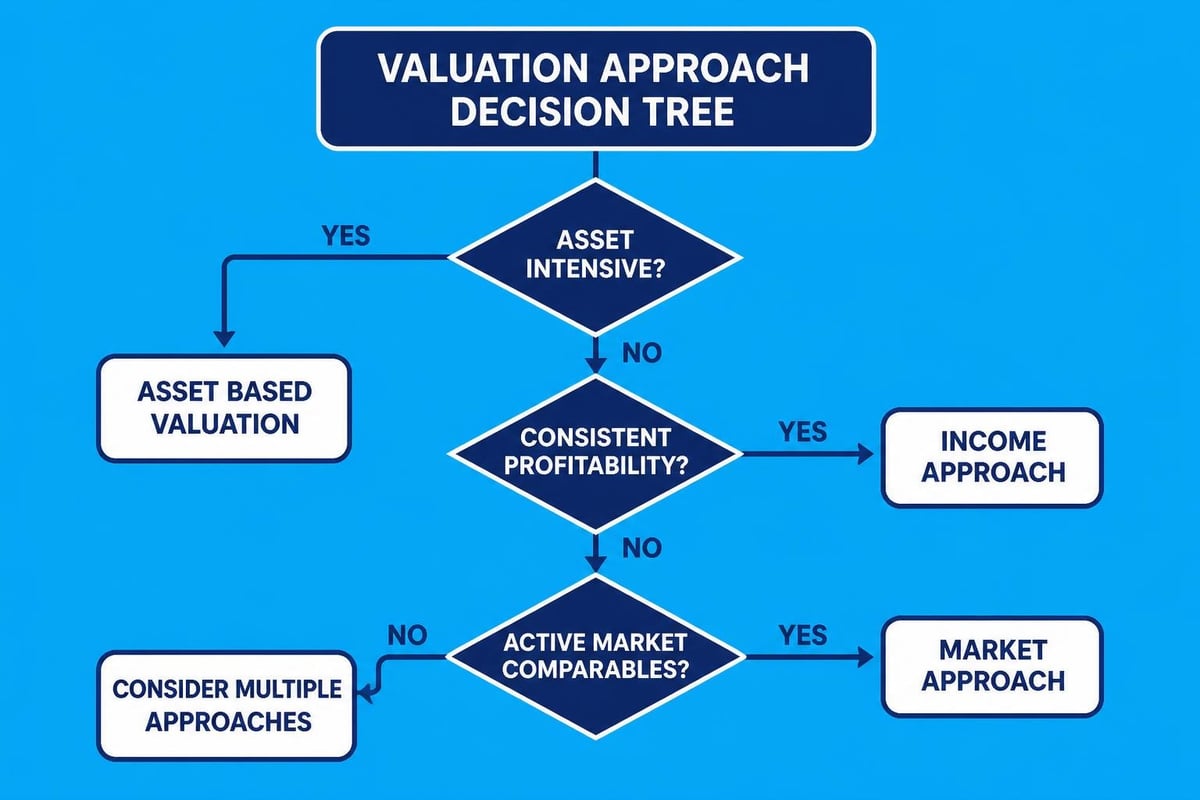
Several situations call for prioritizing asset based valuation over alternative methodologies:
- Asset-heavy industries such as manufacturing, real estate holding companies, or transportation businesses where physical assets constitute the primary value driver
- Distressed situations where operating losses make income-based approaches unreliable
- Holding companies with diverse investment portfolios that lack operational synergies
- Early-stage ventures without established revenue patterns or profitability
- Liquidation scenarios requiring baseline floor values for negotiation purposes
For businesses exploring opportunities through platforms focused on deal sourcing, understanding when sellers have used asset based valuation helps buyers prepare appropriate due diligence strategies.
The Adjustment Process: From Book to Market Value
Balance sheets prepared under generally accepted accounting principles rarely reflect current market realities. Historical cost accounting, depreciation schedules, and conservative recognition standards create gaps between book values and what assets could command in today's market.
Tangible Asset Adjustments
The adjustment process begins with tangible assets, systematically reviewing each category:
| Asset Category | Common Adjustments | Typical Valuation Methods |
|---|---|---|
| Real Estate | Market appreciation/depreciation | Comparable sales, appraisals |
| Equipment | Technological obsolescence | Replacement cost less depreciation |
| Inventory | LIFO/FIFO differences, obsolescence | Net realizable value |
| Accounts Receivable | Collectibility assessment | Aging analysis, bad debt reserves |
| Cash Equivalents | Minimal adjustment needed | Face value |
Professional appraisers following standards outlined by organizations like the American Society of Appraisers provide independent assessments that lend credibility to adjusted values. These experts apply recognized valuation techniques while considering market conditions, asset condition, and economic utility.
Real estate typically requires the most significant adjustments. A manufacturing facility purchased fifteen years ago for $2 million might now have a fair market value of $4.5 million due to location appreciation and improvements. Equipment valuations must account for both physical depreciation and functional obsolescence as newer technologies emerge.
Intangible Asset Recognition
Book values frequently understate or completely omit intangible assets that create substantial economic value. Asset based valuation must identify and measure these elements:
- Customer relationships and contract portfolios
- Trade names and brand recognition
- Proprietary technology and patents
- Non-compete agreements and employment contracts
- Databases and proprietary information systems
Research from the National Bureau of Economic Research demonstrates the growing gap between book values and market values, attributable largely to unmeasured intangible capital. In 2026, service businesses and technology-enabled companies often derive more value from intangibles than physical assets.
Measuring these intangibles requires specialized techniques. Customer relationships might be valued using the multi-period excess earnings method, which isolates cash flows attributable specifically to the customer base. Brand value often employs relief-from-royalty calculations that estimate what the company would pay to license its own brand from a third party.
Liability Adjustments and Off-Balance Sheet Considerations
Asset based valuation demands equal scrutiny of the liability side of the balance sheet. Recorded liabilities may not reflect actual settlement costs, and unrecorded obligations can materially impact net asset value.
Recorded Liability Adjustments
Several liability categories frequently require adjustment:
- Debt instruments may trade at premiums or discounts to book value based on current interest rate environments
- Pension obligations often show funding deficits not fully reflected in balance sheet accruals
- Environmental liabilities may exceed recorded reserves after updated site assessments
- Warranty obligations might require actuarial analysis beyond simple historical accruals
- Lease obligations need present value calculations at current market rates
The IFRS 13 standards on fair value measurement provide international guidance on liability valuation, emphasizing exit price concepts that reflect what the company would pay to transfer obligations to third parties.
Unrecorded Liabilities and Contingencies
Due diligence frequently uncovers obligations absent from balance sheets:
- Pending litigation with uncertain outcomes
- Tax exposure from aggressive positions
- Regulatory compliance deficiencies requiring remediation
- Contractual commitments with unfavorable terms
- Product liability claims in early stages
In a typical scenario, a buyer might discover that a target company faces potential environmental remediation costs of $800,000 related to legacy operations, an obligation not reflected in financial statements. This finding would reduce adjusted net asset value and impact overall deal pricing.

Applying Asset Based Valuation in M&A Transactions
Asset based valuation serves multiple purposes throughout the M&A lifecycle, from initial screening through final negotiations. Understanding its role helps transaction participants leverage this methodology effectively.
Setting Floor Values and Negotiation Ranges
Asset based valuation establishes the minimum rational price for a going concern. A buyer should rarely pay less than adjusted net asset value unless acquiring assets through a distressed liquidation scenario. This floor value anchors negotiations and provides sellers with defensible minimum positions.
For businesses marketed through platforms emphasizing strategic fit and confidential matching, having a well-supported asset based valuation strengthens a seller's position when fielding initial inquiries. The proprietary nature of professional M&A platforms allows sellers to share valuation frameworks with serious, qualified buyers while maintaining confidentiality.
Reconciliation with Other Valuation Methods
The CISI training materials on corporate finance emphasize that sophisticated buyers typically employ multiple valuation methods and reconcile results. When asset based valuation produces materially different results from income or market approaches, transaction parties must understand the drivers.
Consider a typical scenario where a distribution company shows these valuation conclusions:
| Valuation Method | Indicated Value | Basis |
|---|---|---|
| Asset Based | $8.2 million | Adjusted net tangible assets |
| Income (DCF) | $12.5 million | Projected cash flows |
| Market Multiple | $11.8 million | Comparable transaction analysis |
The $4.3 million gap between asset and income approaches suggests significant going-concern value beyond tangible assets, likely reflecting customer relationships, operational systems, and workforce expertise. Buyers might justify pricing above asset value based on these intangible elements while using the $8.2 million figure as a floor.
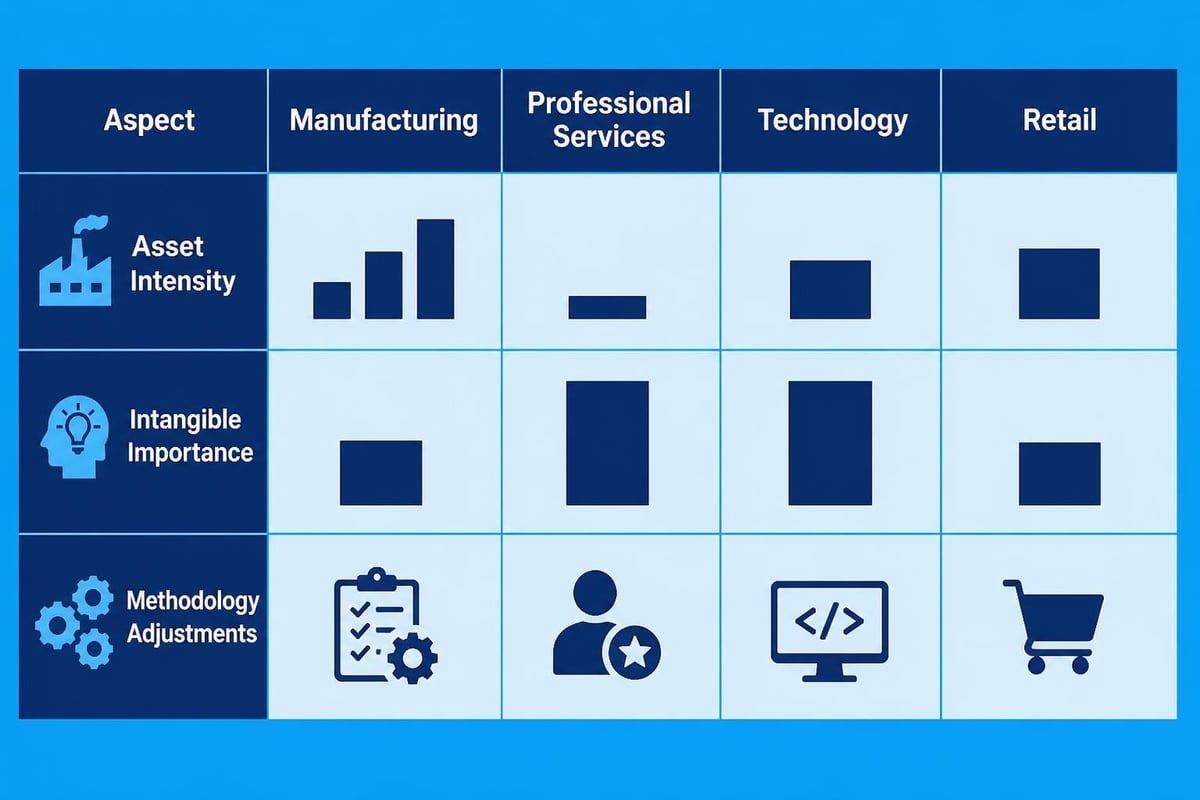
Industry-Specific Considerations for Asset Based Valuation
Different industries present unique challenges when applying asset based valuation methodologies. Recognizing these nuances prevents valuation errors and strengthens deal analysis.
Manufacturing and Industrial Businesses
Asset-intensive manufacturers often show book values below market values due to conservatively depreciated equipment and appreciated real estate. However, functional obsolescence can work in the opposite direction when production technology lags industry standards.
In a typical scenario involving a precision machining company, appraisers might find that CNC equipment purchased for $3 million five years ago has a replacement cost of $3.8 million but a market value of only $2.1 million due to newer, more efficient models entering the market. This functional obsolescence must inform adjusted values.
Professional Services and Knowledge Businesses
Service businesses present the opposite challenge: minimal tangible assets but substantial intangible value in workforce, client relationships, and methodologies. Asset based valuation often produces artificially low results for these enterprises.
A typical management consulting firm might show adjusted net tangible assets of $500,000 (primarily receivables and office equipment) despite generating $8 million in annual revenue. For such businesses, understanding the limitations of asset based approaches prevents undervaluation while the methodology still provides a baseline for distressed scenarios.
Technology and Software Companies
Technology companies frequently show negative tangible net worth during growth phases as they consume capital while building products and customer bases. Asset based valuation proves less useful for going-concern purposes but remains relevant for liquidation analysis.
Working with a business valuation specialist becomes particularly important for technology companies, where intangible asset identification and measurement require specialized expertise in software capitalization, technology lifecycle assessment, and customer contract valuation.
Governance, Documentation, and Professional Standards
Credible asset based valuations require rigorous documentation and adherence to professional standards. This discipline proves essential when valuations face scrutiny from lenders, investors, or opposing parties in negotiations.
Valuation Standards and Frameworks
Multiple organizations provide guidance on proper valuation practice. The FASB guidance on fair value measurement establishes concepts for U.S. GAAP reporting purposes, defining fair value as the price that would be received to sell an asset or paid to transfer a liability in an orderly transaction.
Deloitte’s annual fair valuation survey provides insights into evolving practices among valuation professionals, highlighting governance frameworks, control procedures, and documentation standards that enhance reliability.
Documentation Requirements
Comprehensive asset based valuations include several key components:
- Engagement letter defining scope, purpose, and limiting conditions
- Asset inventory with detailed descriptions and carrying values
- Adjustment schedules showing calculations for each material item
- Appraisal reports for significant assets requiring specialist assessment
- Market research supporting valuation assumptions and methods
- Reconciliation explaining differences from book values
- Valuation conclusion with clear indication of adjusted net asset value
For businesses preparing to enter the M&A market, having this documentation prepared before engaging potential buyers demonstrates professionalism and accelerates due diligence. Platforms that prioritize strategic fit benefit from sellers who present well-documented valuations early in the matching process.
Integrating Asset Based Valuation into Strategic Planning
Forward-thinking business owners use asset based valuation as a strategic management tool, not merely a transaction necessity. Regular revaluation exercises provide insights beyond deal preparation.
Annual Revaluation and Gap Analysis
Conducting annual asset revaluations reveals trends in underlying business value and identifies areas requiring management attention. Declining equipment values might signal needed capital investment, while growing intangible values validate investments in customer service and brand building.
This practice proves particularly valuable for owners considering eventual exit strategies. Understanding how asset values trend over multiple years helps optimize timing and identify value enhancement opportunities before approaching potential buyers.
Capital Allocation Decisions
Asset based valuation informs capital allocation by revealing which assets generate returns exceeding their carrying costs and which assets might be better deployed elsewhere. A real estate holding that has appreciated substantially might warrant sale and redeployment into operating assets that support core business growth.
Business owners exploring opportunities through platforms focused on valuing private companies benefit from understanding how asset repositioning can enhance enterprise value before marketing their businesses.
Common Pitfalls and How to Avoid Them
Even experienced professionals encounter challenges when conducting asset based valuations. Recognizing common errors prevents valuation mistakes that complicate transactions.
Overlooking Asset Interdependencies
Assets rarely function in isolation. A manufacturing line might include equipment from multiple balance sheet accounts that collectively create value greater than the sum of individual components. Valuing pieces separately can understate the assembled value.
Similarly, intangible assets often work synergistically. Customer relationships combined with proprietary technology create more value than either element alone. Valuation approaches must consider these interdependencies.
Ignoring Market Conditions and Timing
Asset values fluctuate with market conditions. Real estate values shift with local economic cycles, equipment values change based on supply and demand for used machinery, and intangible values respond to industry trends and competitive dynamics.
A valuation performed in early 2026 might produce materially different results than one conducted six months earlier due to interest rate changes, commodity price fluctuations, or industry consolidation trends. Timing considerations must inform valuation dates and update frequencies.
Failing to Consider Tax Implications
Asset values have tax consequences that affect net realizable proceeds. Appreciated assets trigger capital gains, while certain asset sales might generate ordinary income. Step-up in basis opportunities in stock versus asset purchases materially impact after-tax values.
Sophisticated transaction structures consider these tax dynamics, and asset based valuations should clearly identify pre-tax versus after-tax values to facilitate informed decision-making.
Technology and Tools Supporting Modern Asset Valuation
The asset valuation process has evolved substantially with technology advancements. Modern tools enhance accuracy, efficiency, and documentation quality.
Valuation Software and Databases
Specialized software platforms automate many aspects of asset based valuation, from depreciation calculations to market value lookups. These tools access databases of comparable sales, equipment auction results, and real estate transactions that inform market value adjustments.
Integration with accounting systems allows direct import of balance sheet data, reducing manual entry errors and streamlining the adjustment process. Version control and audit trail capabilities ensure documentation meets professional standards.
Virtual Data Rooms for Due Diligence
When buyers begin validating asset based valuations during due diligence, secure information sharing becomes essential. Modern virtual data rooms provide organized access to appraisal reports, asset listings, purchase documentation, and supporting schedules.
The Aligned IQ VDR offers competitively priced secure storage and sharing capabilities that streamline the due diligence process. Aligned IQ M&A sellers receive complimentary access to the virtual data room after completing a match, while other market participants can leverage the platform's competitive pricing for their transactions. This technology infrastructure supports efficient information exchange while maintaining the confidentiality and security that characterize successful M&A processes.
Artificial Intelligence and Predictive Analytics
Emerging technologies apply machine learning to asset valuation challenges. AI systems can analyze thousands of comparable transactions to identify relevant pricing benchmarks, predict equipment values based on age and usage patterns, and flag potential valuation outliers requiring additional scrutiny.
While human judgment remains essential, these tools enhance consistency and provide data-driven support for valuation conclusions. As these technologies mature through 2026 and beyond, they will increasingly complement traditional appraisal methodologies.
Preparing Your Business for Asset Based Valuation
Business owners contemplating eventual exits should take proactive steps to optimize asset based valuations well before entering the market. Strategic preparation enhances outcomes and accelerates transaction processes.
Asset Maintenance and Documentation
Maintaining detailed records of asset purchases, improvements, and maintenance demonstrates proper stewardship and supports higher valuations. Original purchase documentation, improvement invoices, and maintenance logs provide appraisers with reliable information for assessment.
Physical asset condition directly impacts value. Regular maintenance programs that keep equipment operating efficiently and facilities well-presented support stronger valuations than deferred maintenance that creates unfavorable impressions.
Intangible Asset Development
While often overlooked, deliberate intangible asset development creates value that buyers recognize and pay premiums to acquire. Documenting customer relationships through CRM systems, protecting intellectual property through patents and trademarks, and systematizing operational knowledge through written procedures transform informal advantages into transferable assets.
For those exploring startup valuation concepts, understanding how intangible asset development supports higher valuations provides a roadmap for value creation during growth phases.
Professional Relationships and Advisory Teams
Establishing relationships with qualified appraisers, valuation specialists, and transaction advisors before needing their services ensures access to expertise when timing matters. These professionals provide perspective on value enhancement opportunities and help owners avoid decisions that inadvertently diminish asset values.
The confidential, secure environment provided by professional M&A platforms allows business owners to explore options without publicly signaling intent. This low-risk approach to market exploration differs markedly from traditional processes that can alert competitors, employees, and customers prematurely.
Asset based valuation provides essential perspective on business worth, particularly for asset-intensive enterprises or situations where other methodologies prove unreliable. While rarely used in isolation, this approach establishes floor values and reveals opportunities for value enhancement through strategic asset management.
Whether you're a business owner preparing for an eventual exit or a buyer seeking opportunities in the lower middle market, understanding asset based valuation strengthens your position throughout the M&A process. Aligned IQ M&A transforms traditional deal-making by prioritizing strategic fit before delving into detailed valuations, creating a confidential environment where qualified buyers and sellers explore opportunities based on alignment rather than auction dynamics. Take a tour to discover how our proprietary matching platform and complimentary virtual data room for matched sellers can support your M&A goals while maintaining the discretion and security your transaction deserves.
No responses yet