
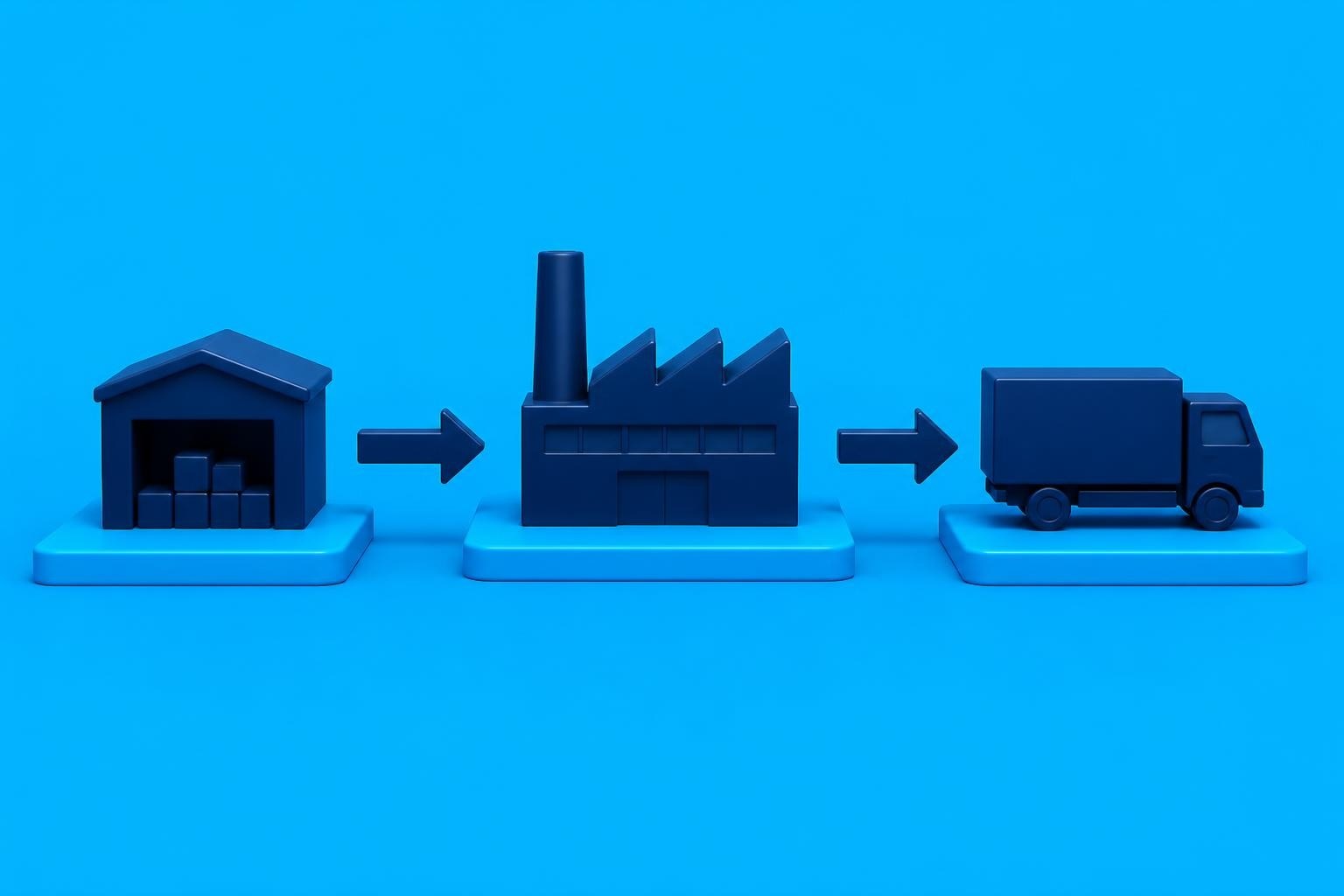
A vertical integration acquisition represents one of the most strategically powerful moves in modern business, allowing companies to consolidate control over multiple stages of their supply chain or distribution network. Unlike traditional horizontal acquisitions that expand market share within a single industry tier, this approach targets businesses operating at different levels of production or distribution. For middle-market business owners and buyers exploring M&A opportunities in 2026, understanding the mechanics, benefits, and complexities of vertical integration strategies can unlock significant competitive advantages and operational efficiencies.
Understanding the Strategic Value of Vertical Integration Acquisition
A vertical integration acquisition occurs when a company purchases another business that operates at a different stage of the same value chain. This strategic move can take two distinct forms: backward integration and forward integration.
Backward integration involves acquiring suppliers or manufacturers that provide inputs for your current operations. A typical scenario might involve a manufacturing company purchasing its primary raw material supplier to secure pricing, guarantee quality control, and eliminate supply chain vulnerabilities.
Forward integration moves in the opposite direction, with companies acquiring distributors, retailers, or service providers closer to the end customer. This approach provides greater control over how products reach the market and how customers experience the brand.
The Mechanics Behind Value Creation
The fundamental concept of vertical integration centers on eliminating intermediaries and capturing margins across multiple business stages. When executed properly, these acquisitions deliver several measurable advantages:
- Cost reduction through eliminated markup fees paid to third parties
- Quality control maintained across production and distribution stages
- Supply chain security protecting against disruptions and price volatility
- Market intelligence gained from direct access to multiple business tiers
- Competitive differentiation created through unique capabilities
Beyond these operational benefits, vertical integration acquisitions fundamentally alter the strategic landscape. Companies gain proprietary capabilities that competitors relying on third-party relationships cannot easily replicate.

Evaluating Vertical Integration Opportunities
Identifying the right vertical integration acquisition requires rigorous analysis of both strategic fit and operational compatibility. The most successful transactions align with clear business objectives and address specific competitive challenges.
Strategic Fit Assessment Criteria
When evaluating potential targets, strategic fit extends beyond simple financial metrics. Decision-makers must assess whether the target company strengthens the core business model and whether integration will deliver sustainable advantages.
| Assessment Factor | Key Questions | Success Indicators |
|---|---|---|
| Supply Chain Impact | Does this acquisition eliminate a critical dependency? | Reduced lead times, guaranteed capacity |
| Cost Structure | What margins can be captured through integration? | 15%+ reduction in input costs |
| Quality Control | Will direct ownership improve product quality? | Measurable quality improvements |
| Market Position | Does this create barriers for competitors? | Unique capabilities, proprietary processes |
| Cultural Alignment | Can operations be integrated smoothly? | Compatible management styles, shared values |
For lower middle-market PE firms and strategic buyers, the evaluation process demands particular attention to integration complexity. A target company may appear financially attractive while presenting insurmountable operational challenges.
Due Diligence Considerations Unique to Vertical Deals
Vertical integration acquisitions require specialized due diligence approaches. Traditional financial and legal reviews must expand to encompass operational compatibility, technological systems alignment, and supply chain dependencies.
Operational integration analysis examines whether existing systems, processes, and technologies can work together effectively. A manufacturing company acquiring a supplier must verify that production schedules, quality standards, and logistics capabilities align with current operations.
Customer and supplier relationship review becomes critical when the acquisition affects existing business relationships. In a typical scenario, a distributor acquiring its manufacturer might face concerns from competing distributors who previously shared the same supplier.
Regulatory and antitrust considerations carry heightened importance for vertical deals. The application of antitrust laws to vertical mergers has evolved significantly, with regulators scrutinizing whether such transactions might foreclose market access or create anticompetitive effects.
Structuring Vertical Integration Transactions
The structural approach to vertical integration acquisitions significantly impacts long-term success. Transaction design must account for operational interdependencies, management transitions, and integration timelines.
Deal Structure Options
Asset purchases provide selective acquisition of specific operations while avoiding unwanted liabilities. This structure works particularly well when buyers seek specific capabilities without inheriting complex corporate structures.
Stock purchases transfer complete ownership including all assets, liabilities, and existing contracts. This approach simplifies transactions when the target's entire operation contributes value to the vertical integration strategy.
Earnouts and performance milestones help bridge valuation gaps while aligning seller incentives with integration success. In vertical deals where operational performance directly impacts buyer economics, earnouts tied to supply reliability or quality metrics create powerful alignment.
Negotiation Dynamics in Vertical Deals
Unlike horizontal acquisitions where comparable transactions provide valuation benchmarks, vertical integration deals require more nuanced valuation approaches. Buyers must quantify benefits from eliminated intermediaries, secured supply chains, and enhanced competitive positioning.
Synergy quantification demands rigorous financial modeling. Buyers should develop detailed projections showing how integration eliminates costs, captures margins, and creates new revenue opportunities. These projections become central to justifying premium valuations.
Transition planning begins during negotiations rather than after closing. Successful acquirers engage target management teams early to design integration roadmaps, identify potential obstacles, and establish realistic timelines.
The confidential nature of these discussions makes platforms like Aligned IQ M&A particularly valuable for exploring vertical integration opportunities. The platform's proprietary matching process allows buyers and sellers to assess strategic fit privately before committing to formal negotiations, reducing the risk of competitive intelligence leaks or market disruption.

Implementation and Integration Challenges
Executing a successful vertical integration acquisition extends far beyond the closing table. The post-merger integration phase determines whether strategic promises translate into operational reality.
Critical Integration Success Factors
- Leadership alignment across previously independent organizations
- Communication protocols connecting different operational tiers
- Technology systems integration enabling seamless information flow
- Cultural integration bridging different organizational norms
- Performance measurement tracking synergy realization
A typical scenario involves a distribution company acquiring its primary supplier. While the strategic logic appears sound, integration challenges emerge immediately. Sales teams accustomed to managing vendor relationships must transition to coordinating internal operations. Pricing structures designed for arm's-length transactions require complete redesign. Quality control processes need harmonization across previously separate organizations.
Managing Stakeholder Concerns
Employee uncertainty peaks during vertical integration transitions as roles, reporting structures, and compensation models undergo review. Transparent communication about integration plans and career opportunities helps maintain productivity and retain key talent.
Customer reassurance becomes essential when acquisitions alter existing business relationships. Current customers may worry about preferential treatment, pricing changes, or service disruptions. Proactive engagement addressing these concerns preserves valuable relationships.
Competitor reactions to vertical integration moves can reshape market dynamics. Competitors may pursue their own vertical acquisitions, seek alternative supply sources, or challenge the transaction on antitrust grounds. Understanding how vertical integration works within antitrust frameworks helps anticipate and address these challenges.
Industry-Specific Vertical Integration Patterns
Different industries exhibit distinct vertical integration patterns based on their unique value chain characteristics and competitive dynamics.
Manufacturing and Industrial Products
Industrial products companies frequently pursue backward integration to secure raw material supplies and control component quality. These acquisitions protect against supply disruptions while enabling product innovation through deeper material science expertise.
Forward integration in manufacturing typically targets distribution networks or specialized service providers. By acquiring these downstream businesses, manufacturers gain direct customer relationships and market intelligence previously filtered through intermediaries.
Transportation and Logistics
The transportation and logistics sector demonstrates vertical integration through acquisitions connecting freight carriers, warehousing operations, and last-mile delivery services. These integrated networks create competitive advantages through seamless coordination and reduced handoff costs.
Recent vertical integration acquisition activity in this sector includes technology platform acquisitions, enabling digital coordination across physical operations. This combination of operational and technological capabilities creates formidable barriers to entry.
Media and Advertising
Media and advertising companies have pursued aggressive vertical integration strategies, with real-world examples including major entertainment conglomerates acquiring content production studios, distribution platforms, and advertising technology providers.
These acquisitions enable direct-to-consumer distribution while capturing advertising revenue previously shared with platform intermediaries. The strategic value extends beyond immediate financial returns to include proprietary customer data and engagement insights.
Financial Considerations and Valuation Approaches
Valuing vertical integration acquisition targets requires methodologies that capture both standalone business value and strategic integration benefits.
Valuation Methodology Comparison
| Valuation Method | Best Applications | Limitations |
|---|---|---|
| Comparable Transactions | Horizontal deals, market multiples | Limited vertical comparables |
| Discounted Cash Flow | Quantifiable synergies, stable operations | Requires accurate projections |
| Asset-Based Valuation | Capital-intensive businesses, liquidation | Ignores operational synergies |
| Synergy-Adjusted DCF | Vertical integration with measurable benefits | Synergy estimation complexity |
Business valuation for vertical integration targets must isolate and quantify integration benefits. This analysis separates baseline company value from the incremental value created through vertical integration.
Synergy quantification demands detailed operational analysis. Buyers should model specific cost eliminations, margin captures, and revenue enhancements attributable to integration. Conservative assumptions with clear documentation build credibility during negotiations.
Risk adjustment accounts for integration execution uncertainty. Even well-planned vertical integrations encounter unexpected challenges. Valuation models should incorporate probability-weighted scenarios reflecting both successful integration and partial success outcomes.
Financing Vertical Integration Acquisitions
Strategic buyers financing vertical integration deals typically leverage existing credit facilities or corporate cash flows. The operational nature of expected returns aligns well with traditional financing structures.
Financial buyers including private equity firms approach vertical integration acquisitions with particular scrutiny. The integration complexity and operational nature of value creation require hands-on portfolio management capabilities beyond simple financial engineering.
Seller financing and earnouts play expanded roles in vertical deals where operational performance directly impacts buyer returns. These structures align incentives while providing sellers continued participation in integration success.
Managing Regulatory and Compliance Requirements
Vertical integration acquisitions face distinct regulatory considerations compared to horizontal transactions. Understanding these requirements early in the deal process prevents costly delays or transaction failures.
Antitrust Analysis Framework
Regulatory agencies evaluate vertical mergers using frameworks that assess potential competitive harms. The 2023 Merger Guidelines introduced updated approaches to analyzing vertical integration under antitrust laws, emphasizing foreclosure risks and market access concerns.
Input foreclosure occurs when vertical integration enables a supplier to deny competitors access to critical inputs. Regulators examine whether alternative suppliers exist and whether the integrated entity has incentives to engage in foreclosure strategies.
Customer foreclosure arises when downstream acquisitions prevent rival suppliers from accessing key distribution channels. Analysis focuses on market concentration, entry barriers, and the availability of alternative distribution options.
Industry-Specific Regulatory Considerations
Certain industries face heightened regulatory scrutiny for vertical integration transactions. Healthcare, telecommunications, and energy sectors maintain specialized regulatory frameworks governing vertical combinations.
Pre-merger notification requirements under Hart-Scott-Rodino regulations apply when transaction values exceed specified thresholds. Filing obligations trigger waiting periods during which regulators review competitive impacts.
State and international regulatory reviews may apply concurrently with federal processes. Companies pursuing vertical integration acquisitions across multiple jurisdictions must coordinate compliance efforts and timeline expectations.

Technology and Data Room Management
Modern vertical integration acquisitions require sophisticated technology infrastructure to manage due diligence, facilitate collaboration, and secure confidential information.
Virtual Data Room Selection Criteria
Security features top the priority list when selecting virtual data room solutions. Vertical integration deals involve competitively sensitive information about supply relationships, pricing structures, and operational capabilities requiring maximum protection.
User experience impacts deal efficiency significantly. Platforms that enable intuitive navigation, powerful search capabilities, and streamlined question-and-answer processes accelerate due diligence while reducing administrative burdens.
Cost structure varies dramatically across data room providers. For middle-market transactions, competitive pricing models that align costs with deal size make advanced capabilities accessible without excessive fees.
Aligned IQ VDR provides lower middle-market buyers, sellers, M&A advisors, investment bankers, and other advisors with a secure virtual data room solution. For Aligned IQ M&A sellers who complete a match through the platform, the VDR service is complimentary, while competitive pricing serves other market participants. This approach ensures that vertical integration acquisition participants can access enterprise-grade security and functionality regardless of transaction size.
Information Organization Best Practices
Effective data room organization accelerates vertical integration due diligence by enabling efficient information access and analysis. Standard folder structures should accommodate both traditional financial documents and vertical integration-specific materials.
Supply chain documentation including vendor agreements, purchase orders, and quality control procedures requires dedicated organization. Buyers evaluating vertical integration opportunities need comprehensive visibility into existing relationships and operational dependencies.
Customer contract review becomes particularly important when acquisitions might trigger change-of-control provisions or customer concerns about competitive positioning. Organized presentation of these agreements facilitates efficient legal review and risk assessment.
Strategic Alternatives to Full Vertical Integration
While vertical integration acquisitions offer powerful strategic benefits, companies should evaluate alternative approaches that achieve similar objectives with different risk profiles.
Joint Ventures and Strategic Partnerships
Collaborative arrangements provide some vertical integration benefits without full ownership commitments. Joint ventures enable shared investment in upstream or downstream capabilities while maintaining operational flexibility.
A typical scenario involves a manufacturer forming a joint venture with a key supplier to develop specialized components. This arrangement secures supply access and enables collaborative innovation without the capital commitment and integration complexity of full acquisition.
Long-Term Contracts and Preferred Relationships
Strategic supplier agreements can deliver supply chain security through contractual commitments rather than ownership. Volume guarantees, exclusivity provisions, and joint development clauses create stability while preserving organizational independence.
These arrangements work particularly well when vertical integration's primary objective centers on supply security rather than margin capture or competitive differentiation. The reduced complexity and capital requirements make contractual approaches attractive for companies with limited M&A experience.
Minority Investments and Options
Equity participation without control provides exposure to vertical integration benefits while limiting downside risk. Minority investments often include governance rights, information access, and future acquisition options creating pathways to full integration.
This staged approach enables relationship development and operational learning before committing to full vertical integration acquisition. The initial investment period tests compatibility and validates integration assumptions before major capital deployment.
Building Vertical Integration Capabilities
Companies pursuing vertical integration acquisition strategies should develop specialized organizational capabilities supporting successful execution.
Internal Team Development
Cross-functional integration teams bring together operations, finance, legal, and business development expertise. These teams develop vertical integration criteria, evaluate opportunities, and manage post-merger integration processes.
Industry expertise becomes particularly valuable in vertical integration contexts where deep understanding of value chain dynamics drives success. Companies should cultivate specialized knowledge across different tiers of their industry's value chain.
External Advisor Selection
M&A advisors with vertical integration experience provide valuable perspectives on deal structuring, valuation approaches, and integration planning. Their cross-industry experience helps avoid common pitfalls while identifying best practices.
Legal counsel specializing in antitrust and regulatory compliance ensures vertical integration acquisitions navigate complex approval processes successfully. Early engagement prevents structural issues that could derail transactions during regulatory review.
For companies exploring vertical integration opportunities, leveraging platforms designed for strategic M&A matching streamlines the identification and evaluation process. The Aligned IQ mergers and acquisitions platform enables confidential exploration of potential vertical integration targets based on strategic priorities, transaction size, and industry expertise.
Measuring Vertical Integration Success
Post-acquisition performance measurement determines whether vertical integration acquisitions deliver promised strategic and financial benefits.
Key Performance Indicators
| Metric Category | Specific KPIs | Target Timeframes |
|---|---|---|
| Cost Reduction | Input cost savings, eliminated markups | 6-12 months |
| Quality Improvement | Defect rates, customer satisfaction | 12-18 months |
| Supply Chain | Lead time reduction, inventory turns | 6-12 months |
| Revenue Enhancement | Cross-selling success, market share | 18-24 months |
| Integration Progress | System integration, employee retention | 3-6 months |
Baseline establishment before acquisition closing creates clear benchmarks for measuring improvement. Companies should document current performance across all relevant metrics to enable accurate post-integration comparison.
Regular reporting cadences maintain management focus on integration priorities while enabling course corrections. Monthly performance reviews during the first year transition to quarterly assessments as integration stabilizes.
Long-Term Strategic Assessment
Beyond immediate operational metrics, vertical integration success requires evaluation against original strategic objectives. Did the acquisition create sustainable competitive advantages? Has the integrated operation generated returns exceeding the cost of capital?
Competitive positioning analysis examines whether vertical integration delivered anticipated market advantages. Companies should assess competitor responses, customer perceptions, and market share trends attributable to the integration.
Return on investment calculation compares actual financial performance against pro forma projections. Honest assessment of outcomes, including shortfalls and unexpected challenges, builds organizational learning for future vertical integration acquisitions.
Vertical integration acquisition strategies offer compelling opportunities for companies seeking to strengthen competitive positions through supply chain control and operational efficiency gains. Success requires rigorous strategic assessment, specialized due diligence, careful transaction structuring, and disciplined post-merger integration execution. When you're ready to explore vertical integration opportunities that align with your strategic objectives, Aligned IQ provides a confidential platform where buyers and sellers can assess strategic fit before committing to formal negotiations. Our proprietary matching process prioritizes the strategic alignment essential for successful vertical integration acquisitions, helping you find the perfect counterparty for your M&A goals. Take a tour of the platform today to discover how our approach to M&A can support your vertical integration strategy.
No responses yet