

The business landscape in 2026 is more complex and competitive than ever before. For lower-middle market leaders, gaining an edge requires more than just ambition. Strategic fit analysis has become essential for driving sustainable growth and securing a true competitive advantage.
This guide offers practical steps, actionable insights, and real-world examples designed specifically for lower-middle market businesses. You will discover the clear definition of strategic fit, a step-by-step analysis process, powerful tools and frameworks, in-depth case studies, and a look at future trends.
Unlock business success by mastering strategic fit analysis with this comprehensive guide.
Understanding Strategic Fit: Definition and Business Value
Strategic fit analysis is foundational for any business considering growth or a potential merger. In the lower-middle market, it ensures that both parties share compatible goals, resources, and visions for the future. Unlike operational fit, which focuses on day-to-day processes, strategic fit is about alignment at the highest level—think mission, vision, and long-term strategy. For lower-middle market businesses, strategic fit analysis creates a roadmap for not just surviving but thriving in a competitive environment.

What is Strategic Fit?
Strategic fit describes the degree to which two businesses align in terms of their overarching goals and market positioning. In the context of business growth and M&A, strategic fit analysis evaluates whether a potential partner or target will help achieve strategic objectives beyond just operational efficiencies. It is distinct from operational fit, which is more about integrating systems and processes. For lower-middle market businesses, strategic fit analysis is critical because it helps avoid costly mismatches and ensures growth strategies are sustainable.
The Business Value of Strategic Fit Analysis
The true value of strategic fit analysis lies in reducing integration risk and improving deal outcomes. Studies consistently show that up to 70% of failed M&A deals are due to poor strategic alignment. When lower-middle market businesses prioritize strategic fit, they minimize surprises during integration and increase the likelihood of post-transaction success. This approach benefits both buyers and sellers, especially in confidential, low-risk environments where trust and alignment are paramount.
Key Components of Strategic Fit
Successful strategic fit analysis looks at several key areas:
- Mission, Vision, and Values Alignment: Do both parties share a similar purpose and ethical standards?
- Industry Experience and Expertise: Is there deep knowledge of the relevant sector?
- Transaction Priorities and Deal Size Compatibility: Are expectations around deal structure and size clear? Learn more about why identifying transaction priorities is central to effective strategic fit analysis.
- Cultural and Operational Synergy: Will teams work well together, and are management styles compatible?
Breaking down these components enables businesses to evaluate opportunities objectively and avoid common pitfalls.
Lower-Middle Market Examples
Consider a manufacturing business owner seeking to sell to a buyer who not only understands the industry but also shares core values. Through strategic fit analysis, the seller identifies a partner with the right expertise and cultural alignment, leading to a seamless transition. In another case, a business owner uses confidential, secure platforms to vet buyers, resulting in a smoother post-sale experience and better long-term outcomes. These real-world examples highlight how strategic fit analysis is essential for lower-middle market success.
The Strategic Fit Analysis Process: Step-by-Step Guide
Navigating the strategic fit analysis process requires a structured approach. Each step helps lower-middle market business owners and buyers reduce risk, prioritize confidential and secure evaluations, and set the stage for successful transactions. Let us walk through each stage in detail.
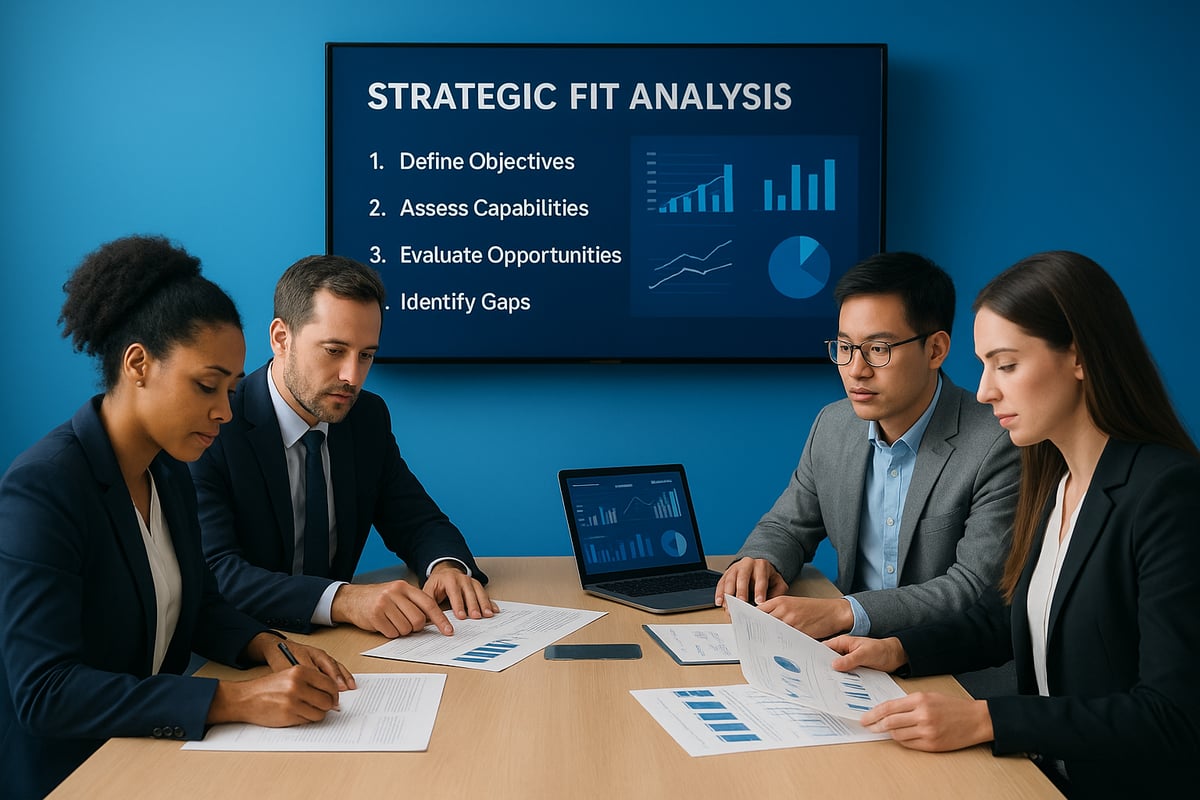
Step 1: Establish Clear Strategic Objectives
Begin by defining what a successful outcome looks like for your business. Are you seeking growth, succession, or industry expansion? Align your objectives with your long-term vision and current market trends.
For lower-middle market sellers, clarity here ensures a focused and efficient process. Buyers benefit by targeting only those opportunities that match their strategic goals.
Step 2: Identify Key Fit Criteria
List out specific attributes that matter most: industry sector, company size, values, growth trajectory, and operational models. Use checklists or a scoring system to objectively compare potential matches.
This stage is where strategic fit analysis starts to take shape. For example, a manufacturing firm might prioritize buyers with relevant sector expertise and a shared commitment to employee well-being.
Step 3: Gather and Analyze Data
Collect all relevant information, including financials, leadership structures, market positioning, and organizational culture. Use secure and confidential digital platforms to ensure data privacy.
A proprietary platform like Aligned IQ allows business owners to control access and maintain confidentiality, a significant advantage over traditional M&A processes.
Step 4: Evaluate Potential Partners or Targets
Score and rank each candidate using your defined criteria. Consider both qualitative and quantitative factors, such as cultural alignment and financial strength.
For a deeper dive into evaluation methods, you may find the insights in Acquisition Strategies for Growth particularly useful for building a robust scoring model.
Step 5: Conduct Scenario Planning and Risk Assessment
Model best- and worst-case integration scenarios. Identify red flags and clear deal-breakers early to avoid costly surprises.
Strategic fit analysis is critical at this stage to anticipate integration challenges and ensure readiness for any outcome.
Step 6: Engage Stakeholders and Validate Assumptions
Involve key decision-makers early in the process. Use interviews, surveys, or workshops to confirm your assumptions about fit and surface any hidden concerns.
Transparent communication helps maintain buy-in and reduces the risk of post-deal surprises.
Step 7: Make Informed Decisions and Document Learnings
Prepare a strategic fit report to guide negotiations and integration. Document lessons learned for future transactions, capturing what worked and what could be improved.
This disciplined approach ensures that strategic fit analysis remains a living process, continually refined as your business grows.
Tools and Frameworks for Effective Strategic Fit Analysis
Choosing the right tools and frameworks for strategic fit analysis can transform deal outcomes for lower-middle market businesses. With increasing competition and complexity in the M&A landscape, an effective approach ensures alignment, confidentiality, and long-term value.
Popular Strategic Fit Analysis Frameworks
Several frameworks support strategic fit analysis by helping businesses objectively assess alignment. The most widely used include:
| Framework | Purpose | Lower-Middle Market Benefit |
|---|---|---|
| SWOT | Evaluates strengths, weaknesses, opportunities, and threats | Reveals alignment gaps and synergies |
| Value Chain Analysis | Identifies core activities and integration points | Uncovers operational synergies |
| Strategic Fit Matrix | Visualizes degree of alignment across key factors | Aids in rapid decision-making |
Using these frameworks, organizations can compare potential partners, identify risks, and clarify priorities. Adopting a Strategy-First M&A Approach ensures strategic alignment is prioritized throughout the process.
Technology Solutions and Platforms
Technology has reshaped strategic fit analysis for lower-middle market M&A. Secure virtual data rooms enable confidential sharing of sensitive information, protecting both buyers and sellers. Proprietary matching algorithms, often found in industry-focused platforms, streamline the screening process and increase the likelihood of a successful match.
These solutions reduce manual workload, limit information leaks, and create a more controlled environment for evaluating fit. By integrating technology, businesses can focus on strategic priorities rather than administrative hurdles.
Aligned IQ: Transforming Strategic Fit in Lower-Middle Market M&A
Aligned IQ stands out with its proprietary matchmaking process, putting strategic fit analysis front and center. Unlike traditional M&A processes, Aligned IQ lets sellers remain confidential and in control while buyers benefit from targeted industry screening.
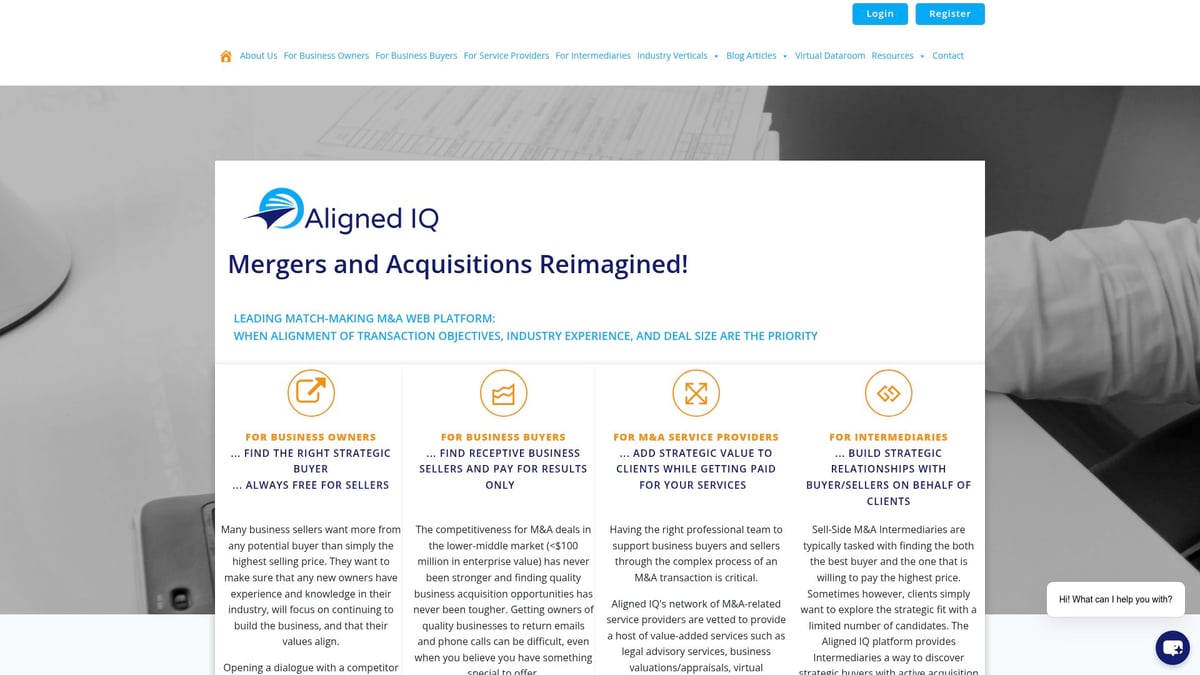
For example, a family-owned manufacturing business leveraged Aligned IQ to identify a buyer who shared their values and industry expertise, leading to a seamless transition and lasting success. Sellers can maintain privacy and reduce risk, while buyers only pay for results. Want to see how it works? Take a Tour to explore Aligned IQ’s platform features.
Practical Tips for Choosing the Right Tools
Selecting the best tools for strategic fit analysis requires careful consideration:
- Prioritize platforms that guarantee data security and confidentiality.
- Look for tools offering customizable frameworks and scoring systems.
- Ensure user control over information sharing and access levels.
- Favor technology that supports objective, data-driven decision-making.
- Seek out platforms with proven success in lower-middle market transactions.
By focusing on these criteria, business leaders can streamline strategic fit analysis and drive better outcomes for every deal.
Real-World Case Studies: Strategic Fit Analysis in Action
Real-world strategic fit analysis stories offer powerful lessons for business leaders navigating lower-middle market M&A. By examining both successes and failures, owners gain insight into how a thoughtful approach can unlock value, reduce risk, and lead to smoother transitions. These examples also highlight the critical differences between confidential, proprietary platforms like Aligned IQ and the traditional M&A process.

Successful Lower-Middle Market Transactions
Research shows that aligning capabilities between buyer and target can directly impact shareholder returns. For more on this, review Capabilities fit in M&A deals.
Lessons from Failed Strategic Fit Assessments
Not every transaction achieves its objectives. When strategic fit analysis is overlooked or rushed, costly problems can emerge:
- A technology services firm merged with a partner outside its industry niche. Despite promising financial metrics, the lack of shared expertise and market understanding led to integration challenges, customer attrition, and eventual value erosion.
- Another example involved a manufacturing company that prioritized deal speed over fit. Cultural misalignment surfaced during integration, resulting in key talent departures and operational setbacks.
Industry data consistently shows that poor strategic alignment is a leading reason for M&A failure. These cases reinforce the need to look beyond financials and assess fit holistically. For more insights, see Strategic fit beyond financials.
Key Takeaways for Business Leaders
Drawing from these examples, several actionable lessons emerge:
- Early, objective strategic fit analysis dramatically increases the odds of a successful outcome.
- Transparent communication and stakeholder involvement throughout the process are essential for buy-in and smooth integration.
- Leveraging confidential, proprietary platforms like Aligned IQ empowers both buyers and sellers to control risk and achieve better matches than traditional methods.
Are you ready to see how a tailored approach to strategic fit analysis can transform your next deal? Take a Tour of Aligned IQ’s platform to discover a more secure, effective way to achieve your business goals.
Future Trends: The Evolving Role of Strategic Fit Analysis in 2026 and Beyond
The landscape for strategic fit analysis is evolving rapidly, shaped by technology and changing deal dynamics. Digital transformation is front and center. Lower-middle market businesses now use AI and machine learning for predictive fit assessment, allowing for faster, data-driven decisions. These tools not only speed up the process but also help identify hidden risks and opportunities. For a deeper understanding of integrating risk management into your process, read The Role of Risk Management in Building Long-Term Business Value.
Confidentiality and control are also reshaping M&A. Traditional broker-driven deals are giving way to secure, seller-centric platforms. Proprietary solutions like Aligned IQ enable business owners to maintain privacy and minimize risk. These platforms let sellers and buyers manage information flow, reducing the chance of leaks or premature disclosure.
Industry specialization is another major trend. Instead of generalist marketplaces, more business owners are turning to vertical platforms tailored to specific sectors. For example, niche sites now exist for healthcare, industrial, and consumer goods businesses. This targeted approach leads to better matches and higher deal success rates, with strategic fit analysis at the core.
Service providers are expanding their roles in this environment. Legal, valuation, and advisory experts are now integrating early fit assessments into their offerings. Many digital platforms, including Aligned IQ, partner with these professionals to ensure a seamless, secure, and confidential experience for all parties.
Looking ahead, adaptability is key. As buyer priorities and market dynamics shift, strategic fit analysis must become a continuous, iterative process. Leaders who embrace these trends will be better positioned for success. Ready to see the future of M&A? Take a Tour of Aligned IQ and explore the tools transforming the lower-middle market.
As you’ve seen throughout this guide, unlocking real business success in 2026 starts with a clear, data-driven approach to strategic fit. Whether you’re planning your next move or exploring new partnerships, leveraging the right platform can make all the difference for confidentiality, control, and meaningful matches. If you’re curious how Aligned IQ puts these principles into action—prioritizing strategic fit before deep M&A dives and empowering both buyers and sellers—you don’t have to imagine it.
Take a Tour!
and see firsthand how this innovative platform can support your growth journey.
No responses yet