

Selling a business is one of the most significant decisions a lower-middle-market owner can make. The sell side process today brings both greater complexity and greater potential rewards, making expert guidance more crucial than ever. This guide is designed to help you navigate each step with clarity, from pre-sale preparation and building your advisory team to marketing, due diligence, negotiations, and post-closing essentials. You will discover proven strategies to maximize value, protect confidentiality, and ensure a smooth transition. Ready to gain a competitive edge? Take a tour through our owner-focused, step-by-step roadmap for a successful sale.
Understanding the Sell Side Process: Foundations for Success
Selling a lower-middle-market business is a significant milestone, yet the path to a successful exit is rarely straightforward. Understanding the sell side process from the outset helps owners maximize value, protect confidentiality, and avoid costly mistakes.

What Is the Sell Side Process?
The sell side process is a structured approach business owners use to prepare, market, and sell their companies. This process is designed to maximize value, maintain confidentiality, and ensure a strong fit between seller and buyer. Unlike the buy side, where buyers set the pace and priorities, the sell side process puts the owner in control.
For lower-middle-market companies, unique challenges arise, such as limited market visibility and the need for specialized expertise. For example, a regional manufacturing firm may seek a strategic acquirer with industry experience. Over 70% of lower-middle-market deals involve first-time sellers, making early education and preparation essential.
To explore the full range of steps and advisory support available, see the Sell Side Advisory Overview.
Key Roles in a Sell Side Transaction
Every successful sell side process relies on a well-aligned team. The business owner is the central decision-maker and vision carrier, while advisors provide critical expertise. This team often includes investment bankers, M&A advisors, legal counsel, tax specialists, and accountants.
Buyers fall into two categories: strategic (industry players) and financial (private equity or investors). For instance, a $30M distribution business may benefit from advisors with sector experience. Industry data shows the right advisory team can increase deal value by 10 to 20 percent. Alignment among all parties is crucial to keep transaction priorities clear and focused.
Timeline and Milestones
The typical sell side process spans 6 to 12 months and consists of several milestones: pre-sale preparation, engaging advisors, marketing, due diligence, negotiation, closing, and post-closing integration. For smaller deals, timelines may be shorter, but compressing steps risks value erosion and uncertainty.
Key milestones include launching to market, receiving offers, signing a Letter of Intent (LOI), and finalizing the closing. Owners who rush the process often face setbacks, so careful planning at each stage is essential for a smooth and rewarding outcome.
Step 1: Pre-Sale Preparation—Laying the Groundwork
Preparing for the sell side process begins with strategic groundwork. Success hinges on assembling the right team, setting realistic value expectations, organizing documentation, and crafting compelling materials. Each step positions your business to attract quality buyers and maximize outcomes.

Assembling Your M&A Team
The first step in any sell side process is building your advisory team. For lower-middle-market sellers, selecting investment bankers, legal counsel, tax advisors, and accountants with sector expertise is vital. Boutique or specialized advisors often provide tailored guidance and deeper market insights.
Team chemistry and open communication are just as important as credentials. For example, a healthcare services firm might benefit from advisors with direct deal experience in that field. According to Wilcox Investment Bankers, 80% of successful sales start with a strong advisory team. For further details on structuring your team, see Assembling Your M&A Team.
Business Valuation & Setting Expectations
A realistic valuation anchors the sell side process. Advisors use methods like market comps, discounted cash flow, and precedent transactions to assess worth. Accurate valuation helps prevent failed deals and wasted effort.
For instance, valuing a $20M technology integrator often involves EBITDA multiples and a detailed quality of earnings analysis. Overvaluation remains a leading cause of failed lower-middle-market sales. Quality of earnings reports can boost buyer confidence by up to 25 percent. Setting expectations early ensures smoother negotiations down the line.
Preparing Financials & Documentation
Well-prepared financials are a cornerstone of the sell side process. Clean, audited financial statements lend credibility and streamline buyer reviews. Key documents include tax returns, major contracts, customer lists, and intellectual property records.
Creating a virtual dataroom early helps organize these materials and signals professionalism. Buyers favor businesses with third-party audited statements. Early organization not only accelerates due diligence but also builds trust with prospective buyers.
Creating the Teaser & Confidential Information Memorandum (CIM)
Attracting the right buyers starts with a strong teaser and CIM. The teaser is an anonymous, high-level summary that generates initial interest without revealing sensitive details. The CIM provides a confidential, in-depth overview of operations, financials, and growth opportunities.
For example, a family-owned logistics company might highlight its market position and expansion potential in its CIM. Well-crafted CIMs can double the pool of interested buyers. Transparency here reduces renegotiation risk and sets a solid foundation for the sell side process.
Step 2: Marketing Your Business—Maximizing Buyer Interest
At this stage of the sell side process, your focus shifts to creating a competitive, confidential market for your business. A well-executed marketing phase can significantly increase buyer interest and maximize value. For lower-middle-market owners, success hinges on targeting the right buyers, protecting sensitive information, and leveraging modern matchmaking platforms for strategic fit.
Building and Qualifying the Buyer List
The first critical step in marketing your business within the sell side process is building a targeted buyer list. In the lower-middle-market, you will weigh the pros and cons of strategic buyers—such as direct industry competitors or supply chain partners—versus financial buyers like private equity firms or individual investors.
Key criteria for qualification include:
- Demonstrated acquisition history in your sector
- Sufficient financial capacity for your deal size
- Strategic alignment with your business model
For example, a $30M distribution company may target both regional competitors and investment groups. By approaching a broad yet carefully selected pool, sellers increase competition and often achieve premium pricing. According to industry data, 60% of lower-middle-market deals involve strategic buyers. To learn more about optimizing your outreach, see The Business Selling Process for practical guidance on buyer targeting within the sell side process.
Managing Confidentiality—NDAs and Sensitive Information
Maintaining confidentiality is essential throughout the sell side process. Protecting your business reputation, trade secrets, and customer relationships requires a disciplined approach to sharing information.
The standard procedure involves requiring all potential buyers to sign non-disclosure agreements (NDAs) before releasing detailed financials or arranging site visits. For instance, a manufacturing business may insist on digital NDAs before allowing plant tours or access to customer contracts.
A breach of confidentiality can reduce deal value by up to 15%. Digital NDA solutions now streamline this process, helping lower-middle-market sellers maintain control and minimize risk as they move through the sell side process.
Outreach and Buyer Engagement
Effective outreach is the engine driving interest during the sell side process. Traditional methods include direct emails, phone calls, and leveraging your advisory team’s industry connections. Today, investment bankers often contact dozens of pre-qualified buyers, as seen when marketing a SaaS firm to both strategic and financial players.
Multiple touchpoints—such as initial emails, follow-up calls, and in-person meetings—substantially increase response rates. Personalized outreach stands out in a crowded market, attracting serious buyers who understand your value proposition. This approach ensures your sell side process generates quality interest, not just quantity.
Take a Tour of Aligned IQ: A Modern Approach to Confidential M&A Matchmaking
Aligned IQ transforms the sell side process for lower-middle-market owners by offering a confidential, proprietary platform for connecting with pre-vetted buyers. Unlike traditional routes, sellers can privately screen buyers based on industry expertise and transaction priorities, all without upfront costs or premature data disclosures.
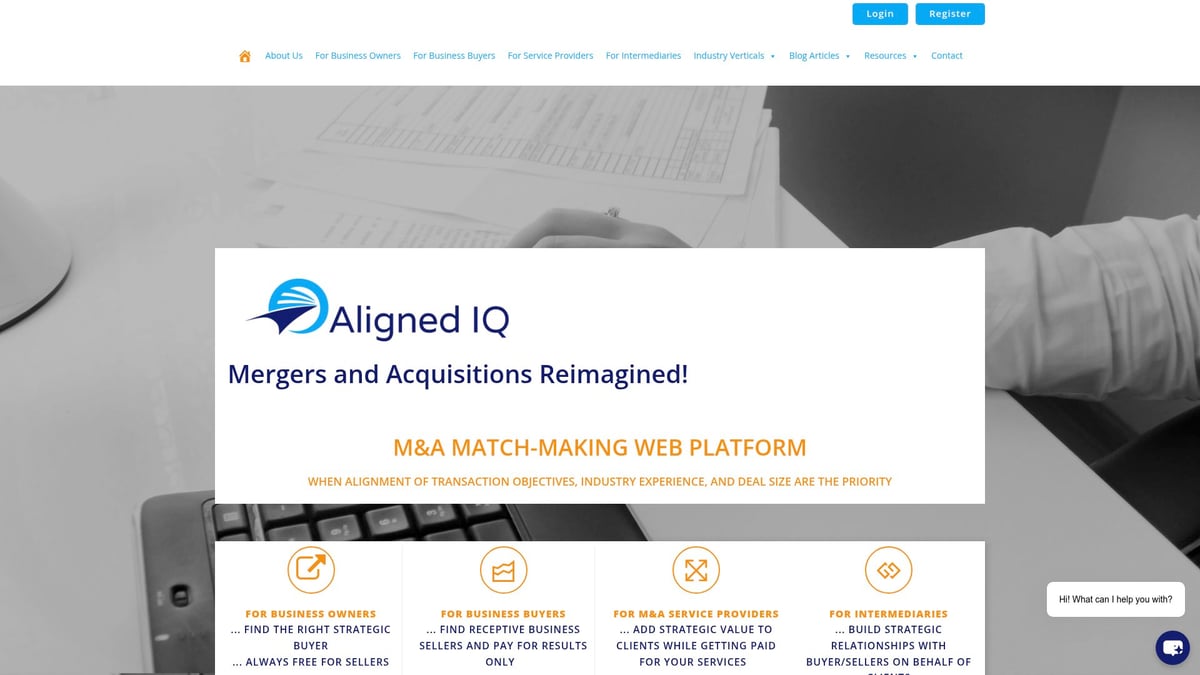
For instance, a $15M agribusiness owner used Aligned IQ to quietly explore exit options, receiving inquiries only from buyers with direct sector experience. This model empowers sellers to maintain control, protect sensitive information, and ensure that only serious, strategically aligned buyers engage in the process.
Ready to see a new standard for the sell side process? Take a Tour and discover how Aligned IQ gives you the advantage in today’s market.
Step 3: Due Diligence—Navigating Buyer Scrutiny
Due diligence is a critical stage of the sell side process, where buyers examine every aspect of your business. For lower-middle-market owners, this scrutiny can feel daunting, but with careful preparation, it becomes a manageable, even value-enhancing, phase. The right approach protects your interests and positions your company for a smooth, successful transaction.

Preparing for Buyer Due Diligence
The first step in the sell side process is organizing your financial, legal, tax, and HR documents. Addressing potential red flags early—like customer concentration or unresolved legal disputes—helps avoid surprises.
Common red flags include:
- Expiring contracts
- Pending litigation
- Inconsistent financials
For instance, a service business that renews key contracts before diligence gains buyer confidence. According to industry data, 90% of buyers cite poor preparation as a major hurdle. Proactively resolving issues can prevent last-minute deal breakers.
To deepen your understanding, consult the Pre-Sale Due Diligence Guide, which offers practical steps for this vital phase of the sell side process.
Virtual Data Rooms (VDRs) and Information Control
Using a secure Virtual Data Room (VDR) like the one offered by Aligned IQ VDR is now standard in the sell side process. VDRs allow sellers to share sensitive documents with buyers while controlling access.
Key advantages of VDRs:
- Granular permission settings
- Audit trails for all activity
- Easy document updates
For example, a distribution company can track which buyers have viewed key financials, ensuring only serious parties access confidential information. Studies show VDRs reduce diligence timelines by 20 to 30 percent.
Compared to traditional paper-based diligence, digital tools like VDRs increase transparency, streamline communication, and speed up the overall sell side process.
Coordinating Requests and Management Presentations
During due diligence, buyers will have questions and request meetings. Coordinating responses is vital to keep the sell side process on track.
A typical process includes:
- Responding to buyer inquiries
- Scheduling management presentations
- Organizing site visits
An example: A logistics firm’s leadership team presents its growth strategy to top bidders, building credibility and clarifying value drivers. Well-executed presentations can increase final offers by as much as 10 percent.
Direct engagement at this stage reassures buyers and helps highlight what sets your business apart in the sell side process.
Handling Earnouts and Contingent Payments
Earnouts are common tools in the sell side process, especially when bridging valuation gaps. These are payments based on future performance milestones, aligning buyer and seller interests.
Consider this scenario: A seller receives an additional payout if post-sale revenue exceeds targets. Around 30 percent of lower-middle-market deals include earnouts.
Key points for structuring earnouts:
- Define clear, measurable targets
- Set reasonable timelines
- Outline dispute resolution methods
Careful structuring is essential. Misunderstandings can lead to future disputes, so clarity in the sell side process is paramount for both parties.
Step 4: Negotiating and Closing the Deal
Navigating negotiations and closing is where the sell side process truly comes to life. At this stage, every decision impacts value, certainty, and your legacy. Lower-middle-market owners must balance speed, confidentiality, and strategic fit to secure the best outcome. Let’s break down each critical step.
Evaluating Offers and Selecting the Best Buyer
Choosing the right offer is more than just chasing the highest price. In the sell side process, owners assess not only financial terms but also speed, certainty, and cultural fit. A strategic acquirer may offer a lower price but a quicker close, while a financial buyer could bring more flexible terms.
Here’s a simple comparison:
| Criteria | Strategic Buyer | Financial Buyer |
|---|---|---|
| Price | Competitive | Often higher |
| Speed to Close | Fast | Varies |
| Certainty | High | Depends on funding |
| Cultural Fit | Strong | May differ |
According to the M&A Market Report: Q1 2025, deal certainty and alignment often outweigh marginal price differences in the lower-middle-market. Evaluate reputation and track record carefully during the sell side process.
Letter of Intent (LOI) and Exclusivity
After selecting a preferred buyer, the sell side process advances to the Letter of Intent. The LOI is a non-binding summary of key terms, including price, deal structure, and exclusivity period. Most LOIs grant the buyer 30 to 60 days to conduct in-depth diligence.
Key inclusions in the LOI:
- Purchase price and payment terms
- Due diligence timeline
- Exclusivity agreement
- Contingencies for closing
Negotiating LOI terms is crucial. Sellers should maintain leverage by clarifying what is binding and what is not. A well-structured LOI builds momentum in the sell side process, setting the tone for the final agreements.
Drafting and Negotiating Definitive Agreements
Once the LOI is signed, the sell side process enters the definitive agreement phase. Here, legal teams draft the purchase agreement, disclosure schedules, and ancillary documents. Sellers must focus on protecting their interests through clear representations, warranties, and indemnities.
Typical agreements include:
- Asset or stock purchase agreement
- Non-compete and non-solicit clauses
- Transition services agreement
Legal fees can reach 1 to 3 percent of deal value, so experienced M&A counsel is essential. Thorough negotiation ensures that risks are addressed, and the sell side process moves forward with clarity and confidence.
Closing Mechanics and Transition Planning
Closing brings the sell side process to its final stage. This involves executing agreements, transferring funds, and formally changing ownership. For lower-middle-market businesses, careful transition planning is vital to preserve value.
Key steps include:
- Coordinating fund transfers and documentation
- Communicating with employees and customers
- Managing IT and system handovers
Most post-closing issues stem from rushed or poorly planned transitions. By prioritizing smooth handover, sellers protect their legacy and ensure the sell side process delivers its full value. Ready to take the next step? Take a Tour to see how Aligned IQ can make your exit secure and confidential.
Step 5: Post-Transaction Essentials—Ensuring Lasting Success
Successfully reaching the end of the sell side process is a major achievement, but the work does not stop at closing. The post-transaction phase is critical for realizing value and ensuring long-term business success. Lower-middle-market owners who approach this stage with structure and foresight will maximize deal outcomes and safeguard their legacy.
Transition and Integration Planning
Thoughtful integration planning is vital for the sell side process, especially for lower-middle-market businesses where resources may be limited. Retaining key employees is often the first priority, with incentives and open communication fostering stability. Aligning IT systems and processes ensures business continuity, preventing operational hiccups during the transition.
A logistics firm, for example, can integrate with an acquirer’s ERP system within 60 days by mapping workflows early and prioritizing essential data migration. According to Global M&A industry trends: 2025 outlook, half of failed integrations are due to poor planning. Proactive transition management not only protects value but also sets the stage for future growth.
Seller’s Role After Closing
After the sell side process concludes, the seller often remains involved to support a smooth transition. Consulting agreements are common, allowing the former owner to advise on business operations and client relationships. Non-compete and non-solicit clauses help protect the buyer’s investment and maintain stability.
Consider a service business owner who stays on as an advisor for 12 months, supporting team morale and customer retention. Clear post-closing roles prevent misunderstandings and foster trust between buyer and seller. In lower-middle-market deals, 65% of sellers provide some form of post-closing support, reflecting the ongoing importance of the seller’s knowledge and relationships.
Evaluating Deal Success and Lessons Learned
Evaluating the outcomes of the sell side process is essential for continuous improvement. Success metrics include value achieved, cultural fit, and business continuity. Owners should review integration KPIs, employee retention, and stakeholder satisfaction six months after closing.
Lessons learned from the transaction can guide future investments or exits. Honest post-mortems help identify what worked and what could be improved, both for the seller and for their advisory team. For those interested in broader industry perspectives, M&A outlook 2025: Picking up momentum highlights the evolving benchmarks for deal success. Take a Tour to see how platforms like Aligned IQ support lasting value even after the deal closes.
As you consider the steps outlined in this guide—from assembling your advisory team to ensuring a smooth transition after closing—remember that successful M&A outcomes start with the right connections and a clear focus on strategic fit. If you’re ready to take the next step toward a confidential, people-first selling experience in 2025, I encourage you to see how Aligned IQ is reimagining the process for business owners like you. You can explore the platform firsthand and discover how it puts your priorities front and center.
Take a Tour!
No responses yet