

In today’s dynamic M&A environment, navigating the complexities of sell side advisory services is more crucial than ever for business owners planning an exit in the next 3-6 months. As competitive pressures and buyer expectations rise, having a robust strategy means the difference between a smooth, value-maximizing sale and a missed opportunity.
This guide will walk you through the latest strategies, best practices, and innovations transforming sell side advisory services. You’ll gain insights into the process steps, due diligence, emerging market trends, and the pivotal role of technology in modern transactions.
Ready to maximize value, minimize risk, and ensure a seamless sale? Take a Tour and discover how to gain an edge in your next transaction.
Understanding Sell Side Advisory Services
Sell side advisory services are crucial for business owners looking to navigate the complexities of selling a company, especially in today’s fast-moving M&A environment. These services provide expert guidance and structured support to ensure sellers maximize value and minimize risks throughout the transaction process.

Definition and Core Functions
Sell side advisory services refer to specialized support provided to business owners during the sale of their company. Advisors work closely with sellers to prepare the business for market, identify and engage qualified buyers, manage negotiations, and oversee the closing process. Unlike buy side advisors, who represent buyers, sell side advisors are fully aligned with the seller’s interests.
Core functions typically include:
- Business valuation and strategic positioning
- Marketing and buyer outreach
- Deal structuring and negotiation
- Confidential information management
For example, in the Healthcare sector, a sell side advisor may bridge the gap between a niche provider and well-matched buyers, using proprietary networks for targeted outreach. Over 70% of lower-middle market transactions now involve sell side advisory services, reflecting increasing demand for specialized expertise in competitive markets. This is particularly true for industries like Agribusiness and Environmental Services, where complex regulations and buyer pools require tailored strategies.
Key Stakeholders in Sell Side Transactions
A successful transaction relies on the alignment and collaboration of key stakeholders. The primary participants in sell side advisory services include:
- Business owners, who set the vision and goals for the sale
- Advisory teams (financial, legal, operational specialists)
- Potential buyers, ranging from strategic acquirers to private equity funds
- Legal and tax experts, who ensure compliance and optimal structuring
Clear communication and expectation management are vital. For instance, if a Food and Beverage company’s owner and advisor are not aligned on valuation or timeline, deals can stall or fail. In fact, 60% of failed deals cite misalignment among stakeholders as a primary cause, according to industry surveys.
To address this, many firms now assemble cross-functional teams, combining financial, legal, and technical expertise to provide holistic support. This approach is especially valuable in sectors like Biotechnology and Pet Care, where industry nuances demand a multidisciplinary perspective.
Typical Sell Side Advisory Process Overview
The process for sell side advisory services unfolds in structured stages:
| Stage | Advisor-Led Activities |
|---|---|
| Preparation | Readiness assessment, documentation, team setup |
| Marketing | Developing CIM, targeting buyers, outreach |
| Screening | Qualifying buyers, managing confidentiality |
| Negotiations | Structuring deals, leading discussions |
| Due Diligence | Facilitating information flow, addressing issues |
| Closing | Finalizing legal, financial, and operational steps |
Early planning is critical. Well-prepared sellers, such as those in the Industrial Products sector, often see faster, higher-value outcomes compared to reactive sellers. Engaging experienced advisors early can boost deal value by up to 20% (industry benchmark).
To understand how a structured, advisor-led approach works, explore the sell side M&A process for a step-by-step breakdown. Today, advisory models are shifting towards more process-driven and confidential frameworks, with platforms like Aligned IQ offering secure, proprietary solutions that protect sensitive information and enhance deal certainty.
Step-by-Step Guide to the Sell Side Advisory Process
Navigating a successful business sale requires a disciplined, stepwise approach. The following guide breaks down the core stages of sell side advisory services, making the process transparent, secure, and tailored for lower-middle market owners and their advisors.

Step 1: Pre-Sale Preparation and Exit Planning
The foundation of effective sell side advisory services is thorough preparation. Advisors begin with readiness assessments across operations, finance, and strategy, identifying strengths that drive value and weaknesses to address before going to market.
Key preparation steps include:
- Assembling a multidisciplinary advisory team (legal, tax, finance, operations). For guidance on building your team, see Assembling your M&A team.
- Preparing vital documents: Confidential Information Memorandum (CIM), up-to-date financials, and management presentations.
- Using digital tools to streamline exit readiness and maintain data security.
A well-prepared Food and Beverage business that invested in early planning attracted more qualified buyers and closed faster than reactive peers. Companies with formal exit plans typically achieve 30 percent higher valuations, underscoring the value of expert sell side advisory services from the outset.
Step 2: Business Valuation and Market Positioning
The next phase in sell side advisory services is accurate valuation and strategic positioning. Advisors select methodologies—such as EBITDA multiples or discounted cash flow—based on your business type and industry. Benchmarking against recent deals in sectors like Pet Care or Healthcare helps set realistic expectations.
To maximize appeal, advisors craft a compelling narrative highlighting growth potential and operational strengths. For example, a Biotechnology firm repositioned its IP portfolio for buyers, resulting in a premium offer.
Data-driven valuation models are increasingly favored. In fact, 80 percent of buyers cite transparent valuation as a leading selection factor, making this stage critical for securing optimal outcomes through sell side advisory services.
Step 3: Marketing and Buyer Identification
Effective marketing is central to sell side advisory services. Advisors create a targeted list of potential buyers—strategic, financial, or international—using proprietary databases, networks, and secure digital platforms. Confidentiality is paramount, especially for lower-middle market sellers seeking minimal disruption.
- Outreach is carefully managed to protect sensitive information.
- Buyers are qualified based on intent, financial capacity, and strategic fit.
A recent Environmental Services business leveraged innovative AI-driven platforms to identify global buyers, reducing time on market by 40 percent. This semi-proprietary approach differentiates modern sell side advisory services from traditional processes, ensuring a discreet and effective buyer search.
Step 4: Negotiations, Due Diligence, and Deal Structuring
Once buyers are engaged, sell side advisory services focus on structuring the deal. Advisors lead negotiations, balancing price, terms, and contingencies such as earnouts to preserve value and minimize risk.
Managing due diligence is critical. Advisors coordinate financial, legal, and operational reviews, proactively addressing potential issues before they threaten the deal. For example, a Chemicals and Materials company avoided delays by resolving tax questions early in the process.
Flexibility in deal structuring is essential as buyer needs evolve. Advisors who anticipate diligence challenges improve closing rates by 25 percent, reinforcing the benefit of a structured, expert-led approach to sell side advisory services.
Navigating Due Diligence and Risk Mitigation
Navigating due diligence is a defining stage in sell side advisory services. For business owners, mastering this process is critical to minimize risks, maintain deal momentum, and build buyer confidence. Each step, from document preparation to compliance, shapes the outcome of your business sale.
Preparing for Buyer Due Diligence
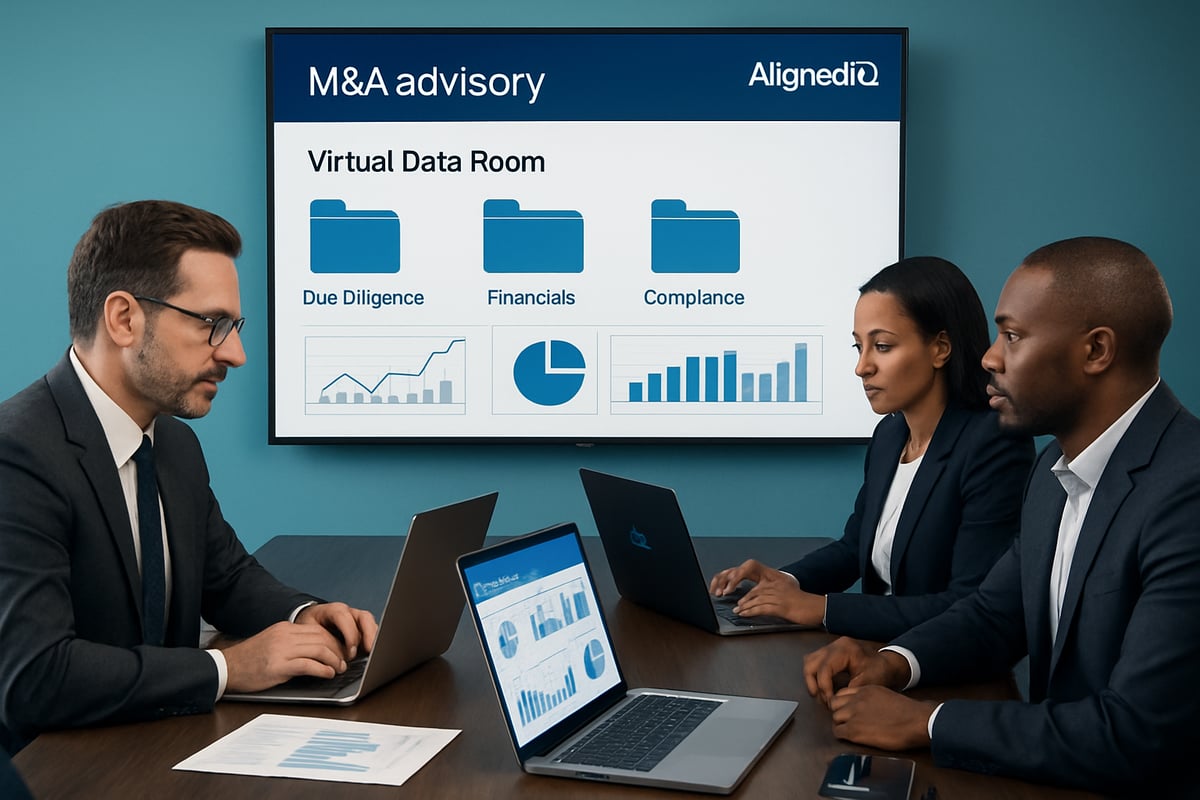
Thorough preparation is essential in sell side advisory services. Buyers typically scrutinize financials, operations, legal matters, HR, IT systems, and ESG practices. By assembling a secure virtual data room, sellers can streamline information sharing and maintain confidentiality.
Key diligence areas often include:
- Audited financial statements and forecasts
- Customer contracts and supplier agreements
- Regulatory and legal compliance documents
- HR policies and employee records
- IT infrastructure and cybersecurity protocols
Anticipating potential red flags, such as unresolved tax issues or missing documentation, helps avoid last-minute surprises. For example, a Pet Care business that identified and resolved a payroll tax discrepancy early saw their deal process move 30% faster. In fact, 50% of deals are delayed due to incomplete diligence materials. Advisors who coach sellers through readiness, as detailed in Pre-sale due diligence essentials, add significant value to the sell side advisory services process.
Common Risks and How to Mitigate Them
Every transaction faces risks that can derail a sale if not properly addressed. Sell side advisory services focus on identifying and mitigating these risks to protect value and ensure a smooth closing.
Common Deal Risks and Mitigation Strategies:
| Risk Type | Example | Mitigation Approach |
|---|---|---|
| Financial Misstatements | Overstated revenue | Quality of earnings review |
| Legal Disputes | Ongoing litigation | Disclosure, indemnities |
| Customer Concentration | Top client >30% of revenue | Diversification, warranties |
| Regulatory Issues | Non-compliance with industry rules | Proactive remediation |
A Food and Beverage company recently used reps and warranties insurance to limit seller liability after uncovering a minor compliance issue during diligence. Deals with clear risk mitigation measures close 35% faster. The rise of specialized risk advisory within sell side advisory services ensures sellers are well-equipped for today’s complex M&A environment.
Regulatory, Tax, and Compliance Considerations
The regulatory landscape is evolving, making compliance a top priority in sell side advisory services. Advisors help sellers navigate antitrust review, data privacy laws, and industry-specific reporting requirements. Tax structuring is also complex, with choices between asset and stock sales, and considerations for international tax exposure.
For example, a Healthcare company planning a cross-border sale faced challenges aligning with both domestic and foreign data privacy standards. Early involvement of compliance experts helped avoid regulatory delays, which affected 20% of deals in recent years. Advisors now play a larger role in managing ESG and compliance risks, especially in sectors like Biotechnology and Pharmaceuticals.
Today’s best practices in sell side advisory services include proactive compliance checks, tailored risk assessments, and support with post-closing obligations. Sellers who embrace these strategies gain a measurable advantage and greater peace of mind.
Emerging Trends and Strategies for 2025
Staying ahead in the evolving landscape of sell side advisory services demands an understanding of the latest trends shaping the market. As we look toward 2025, a blend of digital innovation, shifting buyer priorities, and sector-specific strategies is transforming how lower-middle market business owners approach successful exits.

Technology and Digital Transformation in Sell Side Advisory
Digital transformation is redefining sell side advisory services. Advisors are harnessing AI and analytics for smarter buyer targeting and more accurate valuation. Tools like virtual data rooms ensure secure, low-risk document sharing, while digital platforms streamline collaboration and expand deal reach.
For example, a recent food and beverage transaction on Aligned IQ benefited from AI-powered buyer matching, attracting strategic buyers globally. Key technology trends include:
- AI algorithms for buyer fit and valuation modeling
- Secure virtual data rooms for diligence
- Automated document management for compliance
According to industry data, 65% of advisory firms invested in new tech tools last year, highlighting the race to enhance efficiency. For a deeper look at how AI and automation are shaping M&A, review the top M&A trends for 2025. Sell side advisory services that prioritize technology offer a proprietary, confidential edge for sellers.
ESG, Cybersecurity, and New Due Diligence Priorities
Environmental, Social, and Governance (ESG) criteria, along with cybersecurity, are rising to the top of diligence checklists in sell side advisory services. Buyers increasingly require ESG disclosures and robust cyber protocols before moving forward. In a recent agribusiness deal, failure to meet ESG documentation standards led to a stalled transaction, demonstrating the real stakes.
Advisors are now assembling teams with ESG and cybersecurity specialists to meet buyer expectations and minimize transaction risk. These priorities are not just for compliance, but also for value creation—40% of buyers now demand ESG transparency as a condition for closing. Sell side advisory services that coach sellers through these evolving requirements can avoid costly delays and maximize deal certainty.
Market Dynamics and Sector-Specific Strategies
Market dynamics in 2025 favor sector-focused approaches within sell side advisory services. Active industries such as healthcare, biotechnology, environmental services, and industrial products are experiencing shifts in buyer preferences—strategic buyers are prioritizing growth potential, while financial buyers seek operational efficiency.
Tailored strategies are essential. For instance, a healthcare business utilizing Aligned IQ’s confidential matching platform attracted international buyers, securing a 15% valuation premium. The table below summarizes sector trends:
| Sector | Buyer Focus | Valuation Premium |
|---|---|---|
| Healthcare | Strategic, Global | 15% |
| Food & Beverage | Operational Growth | 10% |
| Industrial Products | Efficiency | 12% |
Industry-centric advisory teams, armed with proprietary data and secure outreach, are setting new standards. Sellers who leverage these specialized sell side advisory services are well-positioned to capture emerging opportunities.
Maximizing Value: Best Practices for Sellers and Advisors
Maximizing value in sell side advisory services requires a proactive, structured approach. Sellers and advisors who prioritize team expertise, buyer engagement, and seamless post-transaction support are best positioned to achieve optimal outcomes and minimize risks. Below, we outline proven best practices every business owner and advisor should follow.
Building a High-Performing Advisory Team
The foundation of successful sell side advisory services is a team with the right blend of industry expertise and transaction experience. For lower-middle market businesses in sectors like food and beverage, healthcare, or industrial products, specialized advisors bring critical insights and networks.
- Select advisors with proven results in your industry vertical.
- Assemble multidisciplinary teams spanning finance, legal, operations, and technology.
- Define clear roles and foster open communication for seamless execution.
A recent example in the pet care industry showed that a cohesive, well-aligned team accelerated the closing process by several weeks. Boutique advisory firms, which often focus on lower-middle market deals, are gaining traction for their tailored approach. Sellers who work with specialized teams report 25 percent higher satisfaction rates with their sell side advisory services.
Enhancing Buyer Engagement and Deal Certainty
Effective buyer engagement is a core driver of value in sell side advisory services. Crafting compelling marketing materials, maintaining competitive tension, and managing staged bidding rounds all help maximize offers. Advisors should ensure that data rooms and management presentations are clear and responsive to buyer concerns.
- Use staged bidding rounds to increase competitive offers.
- Leverage digital platforms for targeted outreach and secure communication.
- Address valuation gaps proactively to minimize negotiation friction.
Bridging valuation gaps is often the difference between a closed deal and a failed one. For practical strategies on this front, see Bridging valuation gaps in M&A. Notably, 70 percent of failed deals cite poor buyer engagement as a root cause, highlighting the importance of sustained, strategic interaction throughout the process.
Post-Transaction Support and Integration Planning
A successful sale does not end at closing. Post-transaction support is essential to protect value and ensure a smooth transition for employees, customers, and operations. Advisors who remain involved after the deal help address integration challenges and maintain business continuity.
- Begin integration planning early in the sale process.
- Provide structured support for employee and customer transitions.
- Leverage advisor expertise to anticipate and resolve potential issues.
For example, in a recent biotechnology transaction, early integration planning led to minimal disruption and high employee retention. The demand for comprehensive post-sale support in sell side advisory services continues to grow as 60 percent of sellers face integration challenges after closing.
The Future of Sell Side Advisory: Skills and Tools for Success in 2025
As the M&A landscape grows more complex, sell side advisory services are evolving rapidly. Success in the coming year will depend on adopting new skillsets and leveraging advanced digital platforms. Advisors and business owners must stay ahead of these changes to maximize value and minimize risk.
Evolving Advisor Skillsets and Roles
The future of sell side advisory services will be shaped by advisors who are adaptable, tech-savvy, and strategically minded. As technology and data analytics become standard, advisors must master digital tools while maintaining a strong grasp of sector trends.
Key skills for success include:
- Technology fluency, especially in AI and analytics
- ESG expertise, to meet evolving buyer expectations
- Strategic thinking and emotional intelligence for relationship-driven deals
For lower-middle market sectors like Food and Beverage or Healthcare, specialized industry knowledge is becoming a true differentiator. According to recent data, 80% of advisory firms are investing in upskilling their teams for 2025. This focus ensures that sell side advisory services remain relevant and valuable as the market changes.
Innovative Tools and Platforms Transforming the Process
Digital transformation is redefining sell side advisory services, especially for lower-middle market transactions. Advisors now rely on purpose-built platforms to streamline everything from buyer matchmaking to document management.
A quick comparison of leading M&A platforms:
| Platform Type | Key Features | Benefit for Sellers |
|---|---|---|
| Digital Deal Rooms | Secure document sharing | Faster, safer diligence |
| AI Matchmaking | Buyer targeting algorithms | Broader, qualified outreach |
| Industry-Specific | Sector-focused databases | Tailored buyer lists |
Aligned IQ stands out by offering a confidential, secure environment for business sellers, reducing risk compared to traditional M&A processes. For example, businesses in Biotechnology and Pharmaceuticals have used digital deal rooms to cut diligence time by 30%.
Automation also powers reporting, compliance, and communication, freeing advisors to focus on strategy. As highlighted in the Global M&A industry trends: 2025 outlook, 55% of lower-middle market deals now leverage digital M&A platforms, a trend set to accelerate.
For business owners, now is the time to take a tour of these innovative tools and platforms, ensuring that sell side advisory services deliver maximum value and certainty.
As you look ahead to selling your business in 2025, applying the right sell side advisory strategies can make all the difference. We’ve seen how early planning, sector expertise, and a strong advisory team help you maximize value and minimize risk. If you’re ready to see how a people and experience first approach can transform your M&A journey, I invite you to explore Aligned IQ’s unique platform for connecting with qualified buyers and industry experts. Take the next step toward a smoother, more strategic exit—Take a Tour!
No responses yet