

Deciding to sell my business myself represents one of the most significant financial decisions an owner will make. Many business owners in 2026 are exploring independent sale options to maintain control, reduce costs, and protect confidentiality throughout the transaction process. While traditional brokers and intermediaries have long dominated the middle-market M&A landscape, advances in technology and secure platforms have made owner-led transactions more accessible and practical than ever before. Understanding the complete process, from initial preparation through closing, enables owners to navigate this complex journey with confidence and achieve optimal outcomes.
Understanding the Independent Sale Process
When you choose to sell my business myself, you're taking on responsibilities traditionally handled by brokers, investment bankers, or M&A advisors. This approach requires understanding multiple disciplines simultaneously: valuation, marketing, buyer qualification, negotiation, due diligence, and legal documentation.
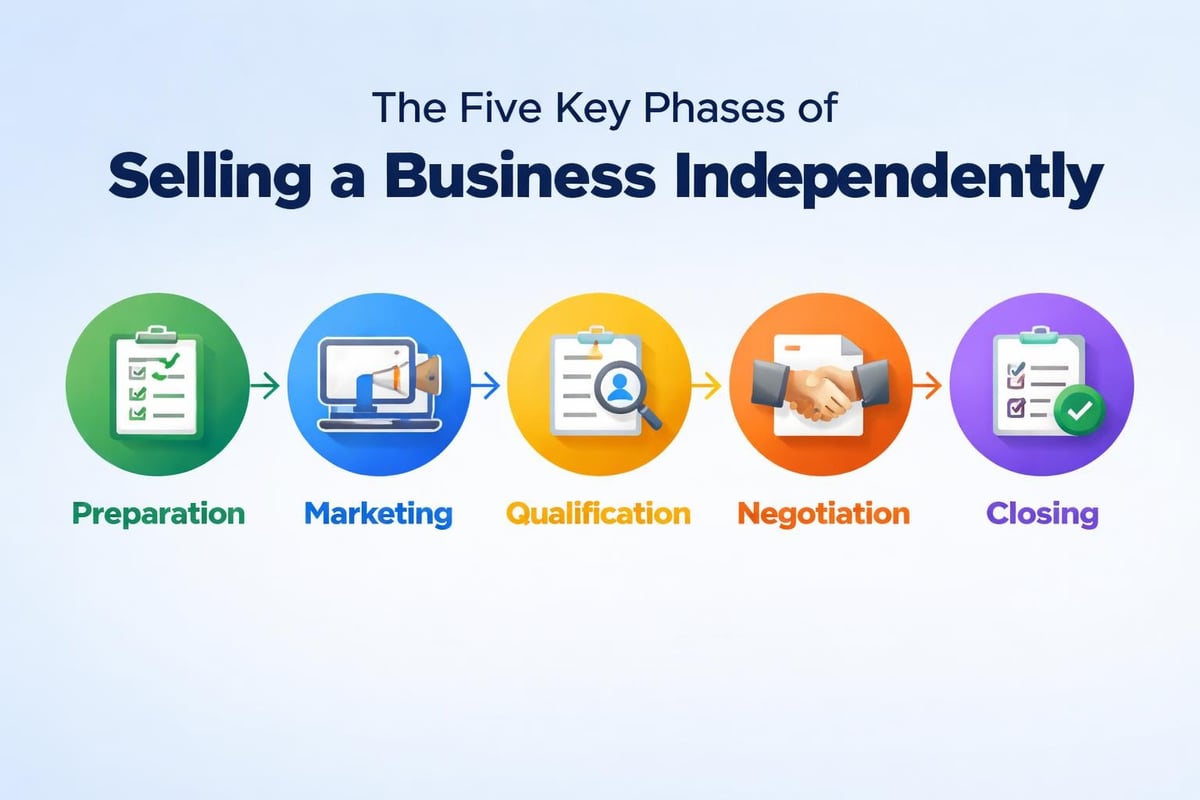
The independent sale journey typically unfolds across several distinct phases. Preparation involves gathering financial records, organizing operational documentation, and determining a realistic valuation range. Marketing requires identifying and reaching potential buyers while maintaining strict confidentiality. Qualification separates serious acquirers from casual inquiries. Negotiation establishes deal structure, price, and terms. Due diligence allows buyers to verify representations and validate assumptions. Closing finalizes legal documentation and transfers ownership.
Each phase presents unique challenges for owners attempting to sell my business myself. According to guidance on legal steps to sell independently, comprehensive preparation and systematic execution are critical success factors that separate successful transactions from deals that stall or fail.
Why Owners Choose Independent Sales
Several compelling motivations drive the decision to sell my business myself rather than engaging traditional intermediaries:
- Cost savings: Broker commissions typically range from 10-15% for lower middle-market transactions, representing substantial capital that owners prefer to retain
- Control maintenance: Direct involvement in every conversation and decision point ensures alignment with personal priorities
- Confidentiality protection: Limiting the number of people aware of sale intentions reduces employee uncertainty and competitive intelligence leaks
- Timeline flexibility: Owner-directed processes avoid pressure to accept suboptimal offers within broker-imposed timeframes
- Strategic alignment: Direct buyer interaction enables assessment of cultural fit and strategic vision before extensive resource investment
The benefits of selling without a broker extend beyond immediate financial considerations. Many owners report greater satisfaction with transactions where they maintained direct control over counterparty selection and negotiation dynamics.
However, independent sales also carry risks. Time investment can become overwhelming for operators managing daily business responsibilities. Lack of M&A expertise may result in unfavorable deal structures or missed tax optimization opportunities. Limited market access might prevent discovery of optimal buyers.
Preparing Your Business for Sale
Successful efforts to sell my business myself begin months before engaging any potential buyers. Preparation determines how efficiently the process unfolds and significantly influences ultimate valuation and terms.
Financial documentation forms the foundation of buyer confidence. Compile three to five years of complete financial statements, tax returns, and management reports. Organize records to demonstrate revenue consistency, margin stability, and growth trajectory. Address any accounting irregularities or non-standard practices that might trigger buyer concerns during due diligence.
| Preparation Category | Key Documents | Purpose |
|---|---|---|
| Financial Records | P&L, Balance Sheet, Cash Flow Statements | Demonstrate financial performance |
| Tax Documentation | Business and Personal Returns | Verify reported income |
| Operational Materials | Customer Contracts, Supplier Agreements | Show business stability |
| Legal Documents | Articles of Incorporation, IP Assignments | Confirm clean ownership |
| Employee Information | Org Chart, Compensation Summary | Illustrate human capital |
Beyond documentation, operational preparation enhances attractiveness. Reduce owner dependency by documenting processes, cross-training staff, and systematizing decision-making. Address deferred maintenance on equipment or facilities. Resolve pending litigation or regulatory issues. Strengthen customer concentration by diversifying revenue sources where possible.
The importance of comprehensive documentation cannot be overstated when attempting to sell my business myself. Unlike broker-managed transactions where intermediaries guide preparation, independent sellers must proactively identify and address potential buyer concerns.
Valuation Considerations
Establishing a realistic valuation range prevents wasted time with misaligned buyers. Lower middle-market businesses typically transact at 3-6x EBITDA, though multiples vary significantly by industry, growth rate, customer concentration, and competitive position.
Consider engaging a professional appraiser for formal valuation, even when choosing to sell my business myself. The investment typically ranges from $5,000-$15,000 but provides defensible justification for asking price and identifies value drivers versus detractors.
Understand that valuation represents only a starting point. Deal structure, earnouts, seller financing, employment agreements, and non-compete provisions all influence total consideration and risk allocation. Flexibility on structure can facilitate agreement when price gaps emerge.
Finding and Screening Potential Buyers
Identifying qualified buyers while maintaining confidentiality presents perhaps the greatest challenge when you sell my business myself. Traditional broker networks provide market access that individual owners cannot easily replicate independently.
Modern platforms have emerged to address this gap. Aligned IQ M&A offers a proprietary match-making environment where potential buyers and sellers connect privately based on transaction priorities, deal size, and industry expertise. Unlike public listing services that broadcast availability broadly, Aligned IQ's approach prioritizes strategic fit before extensive information sharing, protecting confidentiality while increasing alignment probability.
Buyer categories each present distinct advantages and challenges:
Strategic Acquirers operate in related industries and seek synergies, operational improvements, or market expansion. They often pay premium valuations but may eliminate redundant positions or alter business direction.
Financial Buyers including independent sponsors and search funds prioritize cash flow stability and growth potential. They typically maintain existing management and operations but expect aggressive return targets.
Individual Buyers seek owner-operator opportunities and often require seller financing. They provide cultural continuity but may lack capital for growth investment.
Platform Investments by private equity groups establish industry consolidation vehicles. They offer liquidity events with potential ongoing equity participation but impose institutional governance requirements.

Maintaining Confidentiality During Outreach
Premature disclosure that you plan to sell my business myself can trigger employee departures, customer uncertainty, and competitor opportunism. Implement strict confidentiality protocols throughout buyer identification and initial engagement.
According to strategies for maintaining confidentiality, limiting information access through tiered disclosure prevents premature exposure of sensitive details. Start with high-level, non-identifying summaries. Require signed confidentiality agreements before sharing identifying information. Reserve detailed operational and financial data for serious, qualified candidates only.
Aligned IQ M&A's semi-proprietary platform structure inherently protects confidentiality. Matches occur based on criteria alignment rather than public listings. Both parties maintain anonymity until mutual interest is established, reducing exposure risk compared to traditional methods.
Negotiating Terms and Structure
When you sell my business myself, negotiation responsibility falls entirely on your shoulders. Unlike broker-mediated discussions where intermediaries buffer emotional reactions and propose creative solutions, independent sellers must simultaneously advocate for their interests and maintain productive buyer relationships.
Successful negotiation begins with understanding your priorities beyond headline price. Consider:
- Cash at closing versus earnout or seller financing portions
- Employment agreements requiring continued involvement post-transaction
- Non-compete provisions limiting future business activities
- Indemnification caps and baskets determining post-closing risk exposure
- Working capital adjustments affecting final consideration
- Asset versus stock purchase structure impacting tax liability
A typical scenario might involve a buyer offering $4.5 million for a business the owner values at $5 million. Rather than rejecting the offer outright, explore whether structure modifications might bridge the gap: seller financing a portion at attractive rates, earnouts tied to performance milestones, or continued employment at competitive compensation.
The importance of effective negotiation when attempting to sell my business myself cannot be overstated. Consider engaging a specialized M&A attorney to review proposed terms and identify potential issues before accepting letters of intent.
Letter of Intent Considerations
The Letter of Intent (LOI) or Term Sheet establishes the framework for detailed negotiations and due diligence. While typically non-binding except for confidentiality and exclusivity provisions, LOI terms heavily influence final purchase agreements.
Key LOI provisions include purchase price and structure, due diligence timeline and conditions, exclusivity period, employment and consulting arrangements, and closing conditions. Resist pressure to agree to unreasonable exclusivity periods that prevent engagement with alternative buyers if negotiations stall.
| LOI Element | Seller-Favorable Terms | Buyer-Favorable Terms |
|---|---|---|
| Exclusivity Period | 30-45 days | 90-120 days |
| Due Diligence Scope | Defined categories | Unlimited access |
| Material Adverse Change | Narrowly defined | Broadly interpreted |
| Financing Contingency | None or limited | Extended timeline |
| Indemnification Cap | 10-15% of price | 25-50% of price |
Review LOI terms carefully with legal counsel. Once signed, psychological momentum typically drives parties toward closing even when due diligence reveals issues. Ensuring favorable LOI terms from the outset protects your interests when you sell my business myself.
Managing Due Diligence Efficiently
Due diligence represents the buyer's opportunity to validate assumptions, verify representations, and identify potential risks. When you sell my business myself, organizing and managing this process efficiently demonstrates professionalism and accelerates closing timelines.
Modern virtual data rooms have revolutionized due diligence management. Aligned IQ VDR provides secure, organized repositories for confidential documents with granular access controls and activity tracking. The platform is complimentary for Aligned IQ M&A sellers after a match is completed, eliminating a significant transaction cost while providing institutional-grade security.
For sellers working with buyers sourced through other channels, Aligned IQ VDR’s competitive pricing makes professional data room infrastructure accessible even for lower middle-market transactions where cost control is critical.
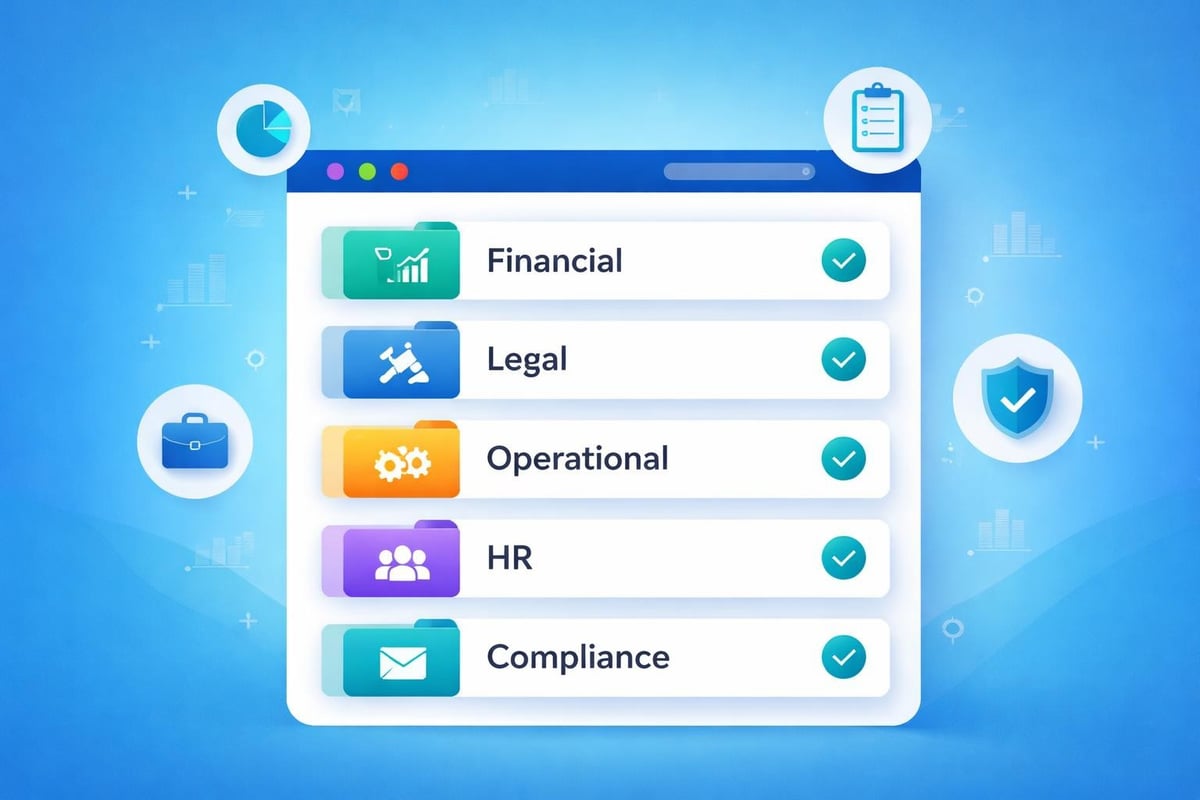
Organize due diligence materials into logical categories that buyers can navigate efficiently:
- Financial Information: Historical statements, projections, capital expenditure history, debt schedules
- Legal Documents: Formation documents, material contracts, intellectual property registrations, litigation records
- Operational Data: Customer lists and contracts, supplier agreements, facility leases, equipment inventories
- Human Resources: Employee census, compensation summaries, benefit plan documents, key personnel agreements
- Compliance Materials: Permits and licenses, environmental assessments, regulatory correspondence, insurance policies
Respond promptly to buyer information requests. Delays suggest either disorganization or attempts to hide problems, either of which erodes confidence. According to tax and legal considerations when selling independently, maintaining momentum through responsive due diligence participation significantly increases closing probability.
Common Due Diligence Issues
Anticipating typical buyer concerns allows proactive mitigation when you sell my business myself. Frequent issues include:
Revenue concentration where a small number of customers represent disproportionate income. Document relationship stability and contractual commitments that reduce key customer dependency risk.
Undocumented processes that rely on owner knowledge create transition concerns. Systematize and document critical operational procedures before marketing the business.
Inconsistent financial reporting between management accounts, tax returns, and financial statements raises integrity questions. Reconcile discrepancies and provide clear explanations for any variations.
Outstanding legal or regulatory issues including pending litigation, environmental concerns, or compliance gaps must be disclosed proactively with mitigation plans.
Challenged intellectual property ownership when agreements with developers, contractors, or employees don't clearly assign IP rights to the company requires legal remediation.
The feasibility of selling without a broker depends significantly on your ability to address these common issues before they derail negotiations. Professional advisors including attorneys and accountants provide valuable guidance navigating complex technical matters even when you handle overall transaction management yourself.
Legal and Tax Optimization
Legal and tax considerations when attempting to sell my business myself require specialized expertise that most operators don't possess. While managing the overall process independently, strategic engagement of professional advisors for specific technical matters optimizes outcomes and prevents costly mistakes.
Asset sales versus stock sales carry dramatically different tax implications. Asset sales allow buyers to step up asset basis and maximize future depreciation but often trigger higher seller tax liability. Stock sales provide sellers with potentially favorable capital gains treatment but transfer historical liabilities to buyers who cannot depreciate acquired assets.
The optimal structure depends on entity type, asset composition, holding period, and state tax considerations. Investment in competent tax advice typically saves multiples of professional fees through optimized structure.
Essential Legal Support
Even when choosing to sell my business myself, specialized M&A legal counsel provides critical value in several areas:
- Purchase agreement drafting and review ensuring balanced terms and enforceable provisions
- Representation and warranty negotiation allocating risk appropriately between parties
- Indemnification structure establishing caps, baskets, and survival periods
- Escrow arrangement securing funds for potential post-closing claims
- Employment and non-compete agreements protecting buyer interests while preserving seller flexibility
According to guidance on working with specialized M&A lawyers, legal support focused specifically on transaction mechanics differs significantly from general business counsel. M&A specialists understand market terms, identify unusual provisions, and negotiate from experience with comparable transactions.
Legal fees for lower middle-market transactions typically range from $15,000-$50,000 depending on complexity. This represents a fraction of broker commissions while providing essential protection for the largest financial transaction most owners complete.
Leveraging Modern Deal Sourcing Platforms
Technology has fundamentally transformed how owners can sell my business myself effectively. Modern platforms address traditional barriers including limited buyer access, confidentiality concerns, and process management complexity.
Aligned IQ M&A exemplifies this evolution through its match-making approach that prioritizes strategic fit. Rather than broadcasting business availability publicly, the platform connects buyers and sellers based on transaction criteria including deal size, industry focus, geographic preferences, and strategic priorities. This proprietary matching process increases alignment probability while reducing exposure risk.
The platform provides several advantages over traditional independent sale methods:
Expanded buyer access beyond personal networks through a curated database of qualified acquirers actively seeking acquisition opportunities matched to your criteria.
Enhanced confidentiality through anonymous initial engagement that reveals identity only after mutual interest is established and confidentiality agreements are executed.
Strategic prioritization that evaluates cultural fit and vision alignment before extensive financial and operational disclosure, reducing time investment in misaligned opportunities.
Professional infrastructure including secure messaging, document exchange, and data room software that facilitates efficient information sharing without technology investment.
For buyers, Aligned IQ M&A provides a platform to showcase acquisition criteria, demonstrate operational expertise, and establish credibility as an attractive exit option for business owners. This dynamic creates a more collaborative M&A process compared to traditional adversarial positioning.
Deal sourcing platforms have become essential infrastructure for modern M&A participants. The most effective platforms combine technology efficiency with human insight, using algorithms to identify potential matches while enabling personal relationship development that drives successful transactions.
Common Pitfalls and How to Avoid Them
Despite careful planning, owners who sell my business myself frequently encounter predictable challenges that derail transactions or result in suboptimal outcomes. Understanding these common pitfalls enables proactive mitigation.
Inadequate preparation represents the most frequent mistake. According to common errors when selling a business, owners who fail to invest sufficient time organizing documentation, addressing operational weaknesses, and establishing realistic valuations waste buyer time and damage credibility.
Start preparation at least six months before engaging buyers. Address identified weaknesses systematically. Develop organized data room materials before receiving first information requests.
Emotional attachment clouds judgment during negotiation. The business represents years of effort, sacrifice, and identity. Buyers view it purely as a financial and strategic opportunity. This perception gap creates tension when buyers criticize operations or propose changes.
Engage advisors who can provide objective perspective during emotional moments. Remember that buyer criticism often reflects diligence rather than disrespect. Focus on achieving financial and personal objectives rather than defending past decisions.
Poor buyer qualification wastes time with unqualified prospects who cannot ultimately close. Establish financial capacity early through proof of funds letters or financing pre-approvals. Assess strategic rationale and industry experience that increase success probability.
The importance of screening potential buyers increases when you sell my business myself without broker expertise evaluating prospect quality. Develop systematic qualification criteria and apply them consistently before extensive engagement.
Unrealistic timelines create pressure that leads to concessions. Most lower middle-market transactions require 6-12 months from initial engagement through closing. Attempting to compress this timeline rarely succeeds and often results in deal fatigue that kills transactions.
Neglecting ongoing operations during sale process reduces business performance and undermines buyer confidence. Maintain operational focus throughout the transaction. Declining results during due diligence trigger price reductions or deal termination.
Dealing with Transaction Fatigue
The extended timeline and emotional intensity of attempting to sell my business myself creates psychological strain that affects judgment. Transaction fatigue emerges when months of negotiation, due diligence, and documentation erode enthusiasm and cloud decision-making.
Combat fatigue through structured breaks, delegating administrative tasks to advisors, maintaining regular exercise and stress management practices, and remembering long-term objectives when short-term frustrations emerge.
Many owners find that modern platforms like Aligned IQ M&A reduce transaction fatigue by streamlining matching, improving initial alignment, and providing professional infrastructure that minimizes administrative burden. The complimentary virtual data room for matched sellers eliminates both cost and setup complexity that typically falls on independent sellers.
Alternative Structures and Creative Solutions
Beyond traditional all-cash transactions, creative deal structures can bridge valuation gaps and align incentives when you sell my business myself. Understanding available alternatives expands negotiation flexibility and increases closing probability.
Seller financing involves the seller providing a loan to the buyer for a portion of the purchase price. This demonstrates confidence in the business, reduces buyer capital requirements, and potentially generates interest income. Typical seller notes range from 20-40% of purchase price with 3-5 year terms at market interest rates.
Earnouts tie a portion of consideration to future performance metrics. They allow buyers to pay for growth they're acquiring while giving sellers opportunity to participate in post-acquisition upside. Structure earnouts with objective, easily measurable metrics and reasonable timeframes to minimize future disputes.
Equity rollovers enable sellers to retain minority stakes in the acquired business, participating in future value creation. This approach works particularly well with platform investment strategies where sellers continue operating the business as part of a larger entity.
Management buyouts involve existing leadership acquiring the business, ensuring operational continuity and cultural preservation. These transactions often require creative financing including seller notes, SBA loans, and private equity sponsorship.
Understanding SBA 7(a) Loan Programs
Small Business Administration 7(a) loans provide acquisition financing up to $5 million with favorable terms that facilitate transactions when buyers lack full cash consideration. The program guarantees up to 85% of loans to approved lenders, reducing lender risk and increasing approval rates.
SBA 7(a) transactions typically require 10% buyer equity injection plus seller standby financing of 5-10% of purchase price. Understanding these financing mechanics helps sellers evaluate buyer capability and structure transactions that qualify for SBA support.
According to financing options including SBA 7(a) loans, familiarity with buyer financing alternatives increases transaction success when you sell my business myself. Sellers who accommodate SBA requirements through appropriate deal structure access a broader buyer pool than those insisting on all-cash terms.
Technology Tools for Independent Sellers
Successfully choosing to sell my business myself in 2026 requires leveraging technology that was unavailable to previous generations of independent sellers. Strategic tool selection streamlines processes and provides professional capabilities without corresponding professional fees.
Virtual data rooms secure confidential information while tracking buyer engagement. Aligned IQ VDR offers institutional-grade security with intuitive interfaces designed for lower middle-market participants. For Aligned IQ M&A sellers, the complimentary access after matching eliminates both cost and technology barriers. Other sellers can access competitive VDR pricing that makes professional infrastructure affordable even for smaller transactions.
Financial modeling software helps develop projections and analyze different deal structure scenarios. Tools ranging from Excel templates to specialized M&A modeling platforms enable sophisticated analysis without investment banking fees.
Project management platforms organize the complex workstreams involved in selling a business: due diligence requests, document preparation, advisor coordination, and timeline management. Systematic organization prevents missed deadlines and demonstrates professionalism.
Secure communication tools protect confidential discussions with potential buyers, legal counsel, and other advisors. End-to-end encrypted messaging and video conferencing prevent information leakage that could undermine confidentiality.
Electronic signature platforms facilitate remote execution of confidentiality agreements, letters of intent, and closing documents without geographic constraints or shipping delays.
The key is selecting tools appropriate to transaction complexity. A $2 million business sale requires less sophisticated infrastructure than a $20 million transaction. Evaluate technology investment against both the absolute cost and the percentage of expected transaction value.
The Role of M&A Service Providers
Even when you sell my business myself, selective engagement of specialized service providers adds value that exceeds professional fees. The question isn't whether to use any advisors, but rather which advisors provide the highest return on investment for your specific situation.
M&A attorneys provide essential legal protection through purchase agreement drafting, representation and warranty negotiation, and closing coordination. This investment is non-negotiable for transactions of any size.
Tax advisors optimize deal structure, minimizing tax liability and maximizing after-tax proceeds. The value typically exceeds fees by orders of magnitude through proper entity structuring and timing strategies.
Quality of earnings consultants validate financial representations, identify normalization adjustments, and provide buyers with confidence in historical performance. While typically a buyer expense, proactive seller engagement can accelerate due diligence.
Valuation professionals establish defensible value ranges that anchor negotiations and justify asking prices through comparable transaction analysis and income approach modeling.
Aligned IQ M&A accommodates M&A service providers through referral arrangements that enable them to generate sell-side referral fees while showcasing professional services to platform participants. This creates aligned incentives where advisors can recommend independent sale approaches knowing they maintain economic participation and provide valuable expertise.
The optimal advisor engagement strategy when choosing to sell my business myself involves legal and tax professionals for technical matters while handling buyer identification, initial negotiations, and overall process management independently. This hybrid approach captures cost savings and control benefits while mitigating technical complexity risk.
Successfully choosing to sell my business myself requires careful preparation, systematic execution, and strategic use of modern platforms that overcome traditional independent sale barriers. While the approach demands significant time investment and carries inherent complexity, owners who develop proper processes and leverage appropriate technology can achieve outcomes comparable to broker-managed transactions while retaining control and reducing costs. Aligned IQ transforms the independent sale process through proprietary matching that prioritizes strategic fit, secure infrastructure including complimentary virtual data rooms for matched sellers, and a collaborative environment where buyers and sellers connect privately to explore opportunities aligned with their specific M&A goals. Take a tour to discover how our platform can support your transaction objectives while maintaining the control and confidentiality that independent sellers value.
No responses yet