

Mergers and acquisitions can unlock new growth, but true success comes only when companies master post-merger integration solutions. Many deals fail to deliver value because integration is more complex than it first appears.
This guide is designed for lower-middle market business owners, buyers, and advisors who want to avoid common pitfalls and maximize deal value. You will discover proven strategies, frameworks, and tools that make integration manageable and effective.
We will explore the fundamentals of integration, examine frequent challenges, and guide you through each step of planning and execution. You will also learn how technology, cultural alignment, and the right solutions can make all the difference.
The stakes are high, but with the right approach, you can achieve a smooth transition and lasting results. Ready to capture the full value of your next deal? Take a tour through this comprehensive guide.
Understanding Post-Merger Integration: Fundamentals and Importance

What is Post-Merger Integration?
Post-merger integration solutions refer to the structured process of combining people, processes, and systems after a merger or acquisition. For the lower-middle market, this means aligning teams, standardizing workflows, and merging technologies to form a unified business.
Integration occurs on several levels:
- Operational: Streamlining production, logistics, and customer service.
- Financial: Merging accounting, reporting, and cash management.
- Cultural: Blending leadership styles and workplace values.
- Technological: Unifying software, databases, and IT infrastructure.
Why does this matter? Effective post-merger integration solutions are critical for realizing synergies and capturing the true value of any deal. Lower-middle market businesses often face unique challenges, such as limited resources and a need for speed. Competitor research highlights that value, organization, and direction are key focal points for successful integration.
For example, a $30M manufacturing company may consolidate overlapping finance and HR functions to reduce costs and boost efficiency. To avoid costly pitfalls, it’s essential to prioritize robust planning. As detailed in the Value of Post-Merger Integration Planning, a thoughtful approach can make or break the outcome.
Key Stages of the Integration Process
The journey of post-merger integration solutions unfolds in distinct stages. Early, thorough planning sets the foundation for success.
Core stages include:
- Pre-close planning: Identify key risks, draft a high-level integration blueprint, and outline priorities.
- Day 1 readiness: Ensure business continuity, assign integration leaders, and communicate with stakeholders.
- 100-day plan: Focus on quick wins and harmonizing core processes.
- Ongoing optimization: Monitor progress, adjust strategies, and foster collaboration.
Leadership and dedicated integration teams are vital. Communication and change management must be prioritized at every step. For a lower-middle market transaction, a clear timeline—such as weekly check-ins and monthly reviews—keeps integration on track and stakeholders aligned.
Common Challenges in Post-Merger Integration (and How to Overcome Them)
Successfully implementing post-merger integration solutions often requires navigating a complex web of obstacles, especially for lower-middle market businesses. Cultural, operational, and technological differences can quickly unravel even the most promising M&A deals if left unaddressed.

Cultural, Operational, and Technological Barriers
Cultural misalignment is one of the most common hurdles in post-merger integration solutions. When two companies come together with different values, leadership styles, and work habits, friction can arise quickly. For example, a family-owned distributor joining forces with a private equity-backed buyer might resist new reporting structures or decision-making processes.
Operational challenges often emerge as companies try to harmonize workflows, customer service standards, or supply chains. Disparate IT systems or incompatible software further complicate the path to seamless integration. Talent retention can also suffer, as employees may feel uncertain about their roles or fear redundancy.
These barriers are particularly pronounced in lower-middle market deals, where resources for integration planning and execution are often limited.
Data-Driven Insights on Integration Failure
The stakes are high: studies reveal that up to 70% of M&A deals fail to deliver the intended value, largely due to poor post-merger integration solutions. This failure rate is even more acute for smaller companies, which may lack experienced integration teams and robust processes. According to Post-Merger Integration Failure Rates, both hard and soft factors contribute to these outcomes.
Consider the case of a $20M services firm that lost nearly a third of its sales staff after a merger. The main culprits were unclear communication, lack of cultural onboarding, and confusion about new expectations. Such losses can erode the very value the deal was meant to create.
Proactive Solutions for Each Challenge
To overcome these obstacles, lower-middle market leaders should prioritize targeted post-merger integration solutions. Some proven strategies include:
- Early cultural assessment and facilitated alignment workshops
- Building cross-functional integration teams with clear mandates
- Conducting IT due diligence and planning phased technology rollouts
- Launching transparent communication plans to address uncertainty
Regular town hall meetings can also keep employees informed and engaged, reducing fear and rumors. By focusing on these proactive steps, companies can retain key talent, streamline operations, and build a unified culture that supports long-term success.
Step-by-Step Guide to Effective Post-Merger Integration Planning
A successful merger does not end at the closing table. Lower-middle market businesses realize true value when post-merger integration solutions are planned and executed with precision. Here is a step-by-step guide to ensure your integration is structured, collaborative, and built for long-term success.

Pre-Deal Preparation and Due Diligence
Comprehensive pre-deal preparation sets the stage for effective post-merger integration solutions. Begin by conducting cultural, operational, and IT due diligence. Identify potential synergies, such as overlapping customer contracts or redundant software platforms. Use a readiness checklist to flag integration risks early.
For example, in a tech company acquisition, a checklist may reveal duplicate CRM systems, allowing for early planning. This stage is critical, as it helps shape your integration blueprint and ensures no surprises post-close. Focus on understanding both organizations’ strengths and areas for alignment.
Day 1 Planning: Setting the Foundation
Day 1 planning is about creating stability and building trust. Define clear priorities, such as ensuring payroll continuity, uninterrupted customer support, and secure IT access. Assign integration leaders and teams, clearly outlining roles and responsibilities.
Resources like Assembling your M&A team offer practical advice on building a cross-functional group to drive Day 1 execution. Prepare communication materials for employees, customers, and vendors, addressing common questions and setting expectations. For instance, a healthcare provider may guarantee EMR system access for all staff on Day 1 to prevent workflow disruption.
The First 100 Days: Executing the Integration
The first 100 days are crucial for momentum. Implement quick wins, such as unified branding or joint sales calls, to build confidence in your post-merger integration solutions. Launch process harmonization in finance, HR, and sales, focusing on eliminating redundancies and aligning procedures.
Monitor progress with defined KPIs and schedule weekly integration meetings to address challenges promptly. For example, integrating purchasing systems in a regional manufacturer can lead to better supplier terms and cost savings. Clear communication and accountability are vital throughout this period.
Ongoing Optimization and Value Capture
Integration does not stop after initial milestones. Regularly review progress, adjusting your post-merger integration solutions as needed. Foster collaboration and knowledge sharing between legacy teams to unlock additional value. Establish feedback loops, such as quarterly surveys, to measure employee satisfaction and customer retention.
A $25M service firm, for instance, uses quarterly surveys to identify gaps and successes, allowing for continuous improvement. This iterative approach ensures integration delivers lasting results. Ready to see how a structured approach can work for your business? Take a Tour.
The Role of Technology and Digital Solutions in Post-Merger Integration
Technology has become the backbone of successful post-merger integration solutions, especially for lower-middle market companies. Efficient integration is no longer just about merging systems but about creating a seamless platform for growth. For many business owners and advisors, the right digital approach can mean the difference between capturing deal value and facing costly setbacks.
Leveraging Technology for Seamless Integration
Post-merger integration solutions rely on technology to ensure operational continuity and data integrity from Day 1. Lower-middle market firms, often with limited in-house IT resources, benefit from using Virtual Data Rooms (VDRs) for secure document sharing and due diligence. A well-chosen VDR centralizes HR, finance, and compliance records, making data access efficient for integration teams.
Cloud-based collaboration tools, such as Microsoft 365 and Google Workspace, enable remote teams across different locations to work together without friction. For example, a $25M regional distributor used a cloud-based project tracker to align its HR and finance teams after a merger, speeding up integration and reducing manual errors.
Key technologies for post-merger integration solutions include:
- Virtual Data Rooms (for document control)
- Cloud collaboration suites (for communication)
- Workflow automation platforms (for onboarding, reporting)
- Cybersecurity tools (for secure access)
Selecting the right mix of these tools ensures that integration is not just fast but also secure and compliant.
Selecting and Implementing Integration Tools
Choosing the best software for post-merger integration solutions involves balancing scalability, security, and usability. Lower-middle market businesses need platforms that are easy to deploy and manage, yet robust enough to support complex workflows.
A comparison of leading integration tools is shown below:
| Platform | Use Case | Strengths |
|---|---|---|
| Microsoft 365 | Collaboration | Scalability, security |
| Salesforce | CRM Integration | Customization, reporting |
| DocuSign | Document Workflow | Compliance, automation |
| Slack | Team Communication | Real-time updates |
Workflow automation, such as integrating payroll systems or onboarding new employees, reduces manual effort and ensures consistency. Consulting expert resources like Four Keys to Merger Integration Success can help identify critical elements for tool selection and implementation, ensuring momentum is maintained throughout the process.
Even with the best tools, a structured rollout plan is essential. Integration teams should pilot new platforms with key functions first, gather feedback, then expand usage based on lessons learned.
Data Security and Compliance Considerations
Data security and regulatory compliance are non-negotiable in post-merger integration solutions. Lower-middle market companies must address privacy laws such as GDPR and CCPA when migrating sensitive data. Secure migration between legacy systems reduces the risk of data loss or breaches, especially in industries like healthcare and financial services.
An IT audit and cybersecurity assessment should be part of every integration plan. Below is a sample IT audit checklist for post-merger integration:
- Inventory all systems and data sources
- Identify sensitive data and compliance requirements
- Assess current cybersecurity controls
- Plan secure data migration steps
- Schedule regular post-migration reviews
For example, a healthcare provider merging with a regional competitor performed a cybersecurity gap analysis before integrating electronic medical records, ensuring patient data remained protected at every stage.
Prioritizing data security in post-merger integration solutions builds trust with employees, customers, and regulators. Take a Tour to see how confidential, secure platforms like Aligned IQ can support seamless integration with minimal risk.
Strategic Alignment: Cultural Integration and Change Management
A successful merger is about more than financials or systems. For lower-middle market businesses, the real test of post-merger integration solutions comes in aligning people, values, and day-to-day behaviors. Cultural integration is often underestimated, yet it is the foundation for long-term synergy and employee buy-in.
Building a Unified Culture
Early cultural assessment sets the stage for effective post-merger integration solutions. Leadership must champion the effort, modeling desired behaviors and values. Start by mapping both organizations’ cultures and identifying similarities and friction points.
Blend company traditions through joint team-building events, shared rituals, and onboarding sessions for legacy employees. For example, a regional distributor that merged with a family-owned competitor hosted quarterly lunches and cross-company workshops. This approach fostered inclusion and accelerated trust. Structured onboarding ensures new hires and existing staff feel connected to the evolving culture. Addressing cultural alignment early helps minimize resistance and smooths the overall integration journey.
Communication and Change Management Best Practices
Transparent, consistent communication is vital for post-merger integration solutions to succeed. Adopting a structured change management framework, like ADKAR or Kotter’s 8 Steps, provides a roadmap for guiding employees through uncertainty. Leaders should deliver clear, frequent updates about progress, expectations, and next steps.
Use CEO-led Q&A sessions, regular newsletters, and open forums to address concerns and dispel rumors. Proactive communication helps manage expectations and reduces anxiety. According to Measuring Post-Merger Success, human factors significantly influence integration outcomes, making leadership presence and feedback loops crucial. By embedding communication into your post-merger integration solutions, you build trust and maintain momentum throughout the process.
Retaining and Engaging Key Talent
Talent retention is a core pillar of post-merger integration solutions. Identify critical employees and high performers early, then offer retention bonuses or career advancement opportunities tailored to individual goals. Creating cross-functional project teams allows staff from both legacy companies to collaborate on integration initiatives.
For instance, a $50M service company merger reduced turnover by 15 percent by launching a targeted retention program and mentorship opportunities. This not only preserved institutional knowledge but also motivated employees to contribute to the new organization’s success. Engaged talent accelerates value capture and ensures the integration delivers on its intended promise.
Essential Post-Merger Integration Solutions for 2025 Success
Navigating post-merger integration solutions is central to maximizing deal value for lower-middle market businesses. The right mix of professional expertise, digital tools, and tailored strategies can turn integration from a risk into a driver of lasting success. Below are the most effective approaches, tools, and platforms for 2025.
Professional Services and Advisory Support
Professional guidance is often the cornerstone of successful post-merger integration solutions. Lower-middle market firms benefit from hiring M&A integration specialists who streamline back-office consolidation and ensure compliance with regulations. Advisors bring experience in identifying potential pitfalls and guiding leadership through complex transitions.
For example, a $25M distributor engaged a legal and financial advisory team to harmonize contracts and payroll systems, minimizing operational hiccups. These services are especially critical when internal resources are limited, providing structure and accountability. By leveraging outside expertise, businesses reduce risk and avoid costly missteps.
Technology Platforms and Tools
Technology has become indispensable in post-merger integration solutions. Tools like secure Virtual Data Rooms, project management software, and workflow automation platforms enable real-time collaboration while safeguarding sensitive data. Choosing tools that scale with business growth and are user-friendly is crucial.
A lower-middle market manufacturer, for instance, used a cloud-based project tracker to manage integration milestones and ensure every department met its targets. Table 1 below summarizes the key features of leading integration tools:
| Tool Type | Key Benefit | Example Use Case |
|---|---|---|
| Virtual Data Room (VDR) | Secure document sharing | HR & finance record centralization |
| Project Management Software | Task and milestone tracking | Integration team coordination |
| Workflow Automation | Reduces manual errors | Automated payroll integration |
For more on aligning technology with growth, see Acquisition strategies for growth.
Industry-Specific Integration Approaches
Every industry faces unique hurdles during integration, making it vital to tailor post-merger integration solutions. Healthcare mergers require strict compliance with privacy laws, while manufacturing deals demand process harmonization to avoid production delays.
In a recent example, a $30M healthcare provider focused on EMR system interoperability and regulatory filings, while a tech services firm prioritized rapid onboarding of engineering teams. Industry-specific playbooks and checklists help address these nuances, streamlining the process and reducing risk.
How Confidential M&A Platforms Like Aligned IQ Support Strategic Fit in Integration
Confidential platforms like Aligned IQ are redefining post-merger integration solutions for the lower-middle market. Unlike the traditional sell-side M&A process, Aligned IQ enables buyers and sellers to align on culture, vision, and deal priorities before the transaction closes. This minimizes post-merger misalignment and accelerates integration.
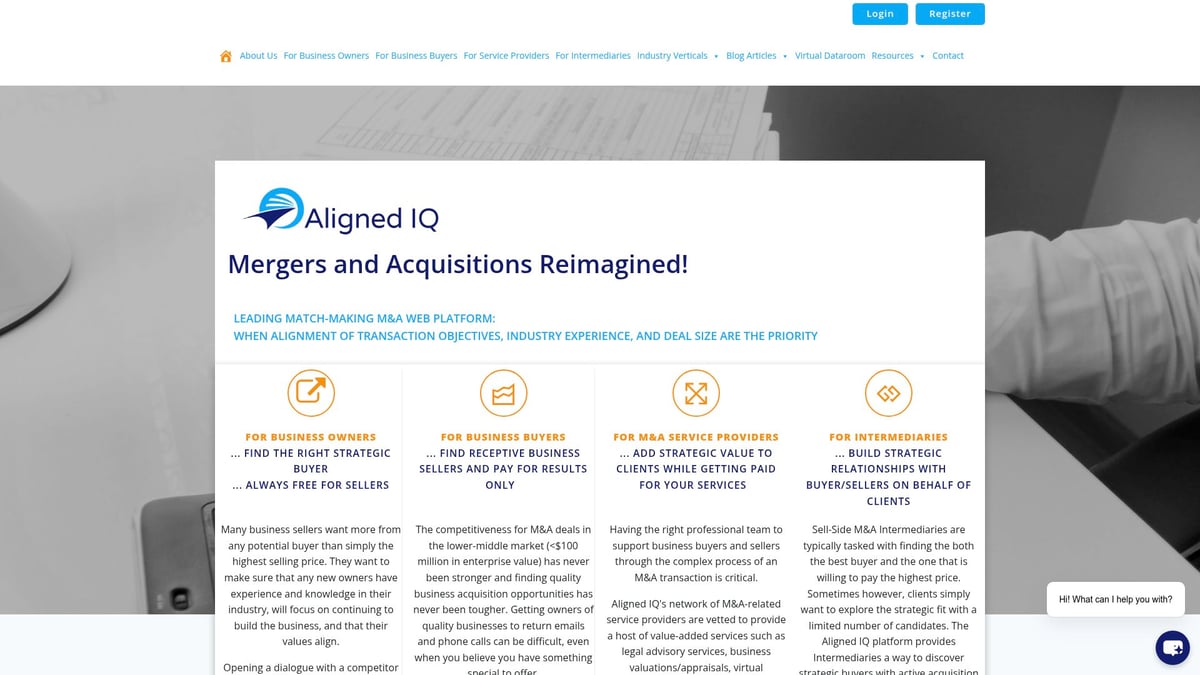
The platform’s secure, confidential matchmaking and free VDR for sellers post-match simplify documentation, giving integration teams a head start. Its pay-for-results model lowers risk, making it ideal for buyers seeking a strategic fit without upfront commitment. Ready to see the difference? Take a Tour of Aligned IQ and discover how a proprietary, confidential approach can set your integration up for success.
Measuring Integration Success and Continuous Improvement
Measuring the success of post-merger integration solutions is essential for lower-middle market businesses aiming to capture deal value and drive sustainable growth. Without clear visibility into progress, even the most thorough integration plan can fall short.
To track the impact of post-merger integration solutions, organizations should establish specific, measurable KPIs. These typically include financial targets, customer retention rates, employee engagement scores, and synergy realization metrics. Using integration scorecards and real-time dashboards allows leadership teams to monitor progress, quickly address gaps, and keep stakeholders informed.
| KPI Category | Example Metric | Frequency |
|---|---|---|
| Financial | Revenue growth, cost savings | Monthly/Quarterly |
| Customer Retention | Churn rate, NPS | Quarterly |
| Employee Satisfaction | Engagement survey scores | Quarterly |
| Synergy Realization | Achieved vs. projected synergies | Ongoing |
For example, a $40M software firm recently used quarterly scorecards to measure integration milestones, employee satisfaction, and customer retention after a merger. This approach enabled leadership to identify issues early and celebrate wins, keeping teams motivated throughout the process.
Continuous improvement is vital. Post-integration reviews and lessons-learned sessions ensure that feedback is collected and applied to future deals. Leveraging insights from Bridging valuation gaps in M&A can help teams not only track but also maximize value realization, a core goal for post-merger integration solutions.
To set your integration up for long-term success, prioritize measurable outcomes and regular reviews. Ready to unlock the full potential of your next deal? Take a Tour.
As you think about your own post merger integration plans for 2025 remember that finding the right strategic fit early on can make all the difference in achieving lasting success. We’ve walked through the key stages challenges and proven solutions to help you avoid costly missteps and capture real value. If you want to see how a confidential platform like Aligned IQ can help you match with the best buyers or sellers and set the stage for a smoother integration I invite you to Take a Tour!
No responses yet