

Selling shares of your company represents one of the most significant financial decisions you'll make as a business owner. Whether you're looking to cash out equity, bring in strategic partners, or execute a full exit, understanding how do you sell shares of your company requires careful planning, proper valuation, legal compliance, and finding the right buyer. The process differs substantially between publicly traded companies and private businesses, with private share sales demanding more sophisticated approaches to buyer discovery, due diligence, and transaction management. In 2026, modern platforms and virtual data rooms have transformed how business owners connect with qualified buyers while maintaining confidentiality throughout the process.
Understanding Share Sale Structures and Options
When considering how do you sell shares of your company, you must first understand the different transaction structures available. A share sale transfers ownership of the corporate entity itself, meaning buyers acquire both assets and liabilities.
Direct Share Sales vs. Asset Sales
Share sales differ fundamentally from asset sales. In a share sale, buyers purchase equity ownership in your company, assuming all existing obligations and contracts. This structure often proves simpler for complex businesses with numerous contracts, licenses, or permits that would require transfer approval in an asset sale.
Key advantages of share sales include:
- Simplified transfer of contracts and agreements
- Preservation of corporate identity and licenses
- Potential tax benefits for sellers
- Cleaner transaction structure for established entities
Asset sales, conversely, allow buyers to cherry-pick specific assets while leaving liabilities behind. Understanding the differences between these structures helps determine your optimal exit strategy.
Partial vs. Complete Share Transfers
You're not limited to all-or-nothing transactions. Partial share sales allow you to:
- Raise capital while maintaining control
- Bring in strategic partners with specific expertise
- Test the relationship before full commitment
- Structure phased exits over multiple years
Complete share transfers represent traditional acquisitions where buyers assume full ownership and control. Your choice depends on retirement goals, capital needs, and desire for continued involvement.
Valuation Methods for Private Company Shares

Determining fair market value stands as a critical step when figuring out how do you sell shares of your company. Private companies lack public stock prices, requiring alternative valuation approaches.
Common Valuation Methodologies
| Valuation Method | Best For | Key Considerations |
|---|---|---|
| EBITDA Multiples | Profitable, established businesses | Industry-specific multiples vary widely |
| Discounted Cash Flow | Companies with predictable revenue | Requires accurate financial projections |
| Asset-Based Valuation | Asset-heavy businesses | May undervalue intangible assets |
| Comparable Transactions | Businesses with recent peer sales | Data availability can be limited |
In typical scenarios, lower middle-market companies use EBITDA multiples ranging from 3x to 7x, depending on industry, growth trajectory, and competitive positioning. However, unique circumstances like proprietary technology, recurring revenue models, or dominant market positions can command premium valuations.
Professional business appraisers provide formal valuations that support pricing negotiations and satisfy regulatory requirements. Understanding legal and tax considerations when selling company shares ensures compliance throughout the valuation process.
Factors That Impact Share Price
Beyond basic financial metrics, multiple factors influence what buyers will pay:
- Revenue predictability and recurring income streams
- Customer concentration and retention rates
- Competitive moat and market positioning
- Management team depth and transferability
- Growth trajectory and scalability potential
- Working capital requirements and cash flow characteristics
Strategic buyers often pay premiums for companies that complement their existing operations or provide entry into new markets. Financial buyers focus more on standalone cash flow generation and return on investment metrics.
Legal and Regulatory Requirements
Navigating legal complexities represents a critical component of how do you sell shares of your company. Private share sales involve securities regulations, transfer restrictions, and compliance obligations.
Securities Law Compliance
Private company shares qualify as securities under federal and state laws, triggering specific registration requirements or exemptions. Most private transactions rely on exemptions like:
- Regulation D offerings for accredited investors
- Rule 144 for restricted securities sales
- State blue sky law exemptions
Understanding Form 144 requirements becomes essential when selling restricted or control securities. This SEC form must be filed when selling substantial positions, with specific triggers based on share volume and seller status.
Corporate Governance and Shareholder Agreements
Your company's governing documents directly impact how do you sell shares of your company. Review these critical items:
- Shareholder agreements may grant existing shareholders rights of first refusal
- Buy-sell agreements can mandate specific sale processes
- Charter provisions might restrict share transfers
- Drag-along and tag-along rights affect partial sale options
Violating these provisions can invalidate transactions or trigger legal disputes. Experienced M&A attorneys review all governing documents before initiating sale processes.
Due Diligence Documentation
Buyers conduct extensive due diligence before purchasing shares. Prepare comprehensive documentation including:
- Three to five years of audited or reviewed financial statements
- Corporate formation documents and amendments
- Material contracts and customer agreements
- Intellectual property registrations and licenses
- Employee agreements and benefit plan documents
- Litigation history and regulatory compliance records
Secure virtual data rooms facilitate organized document sharing while maintaining confidentiality. Aligned IQ VDR provides lower middle-market participants with competitively priced, secure virtual data room solutions, with pricing options designed for businesses of all sizes.
Finding Qualified Buyers for Your Shares

Identifying the right buyer separates successful exits from disappointing outcomes. Understanding how do you sell shares of your company includes knowing where to find buyers and how to evaluate their qualifications.
Traditional Buyer Search Methods
Conventional approaches include:
- Investment bankers who maintain buyer networks and manage auction processes
- Business brokers focusing on smaller transactions
- Industry contacts through personal and professional networks
- M&A advisors providing comprehensive transaction support
These intermediaries provide valuable services but often work best for larger transactions or sellers with established relationships. Understanding the role of deal sourcing platforms reveals modern alternatives that complement traditional methods.
Modern Platform-Based Approaches
The 2026 M&A landscape includes sophisticated matching platforms that transform how do you sell shares of your company. Aligned IQ M&A offers a proprietary B2B web platform where potential buyers and sellers meet privately to explore transactions.
The platform's unique match-making process prioritizes strategic fit before diving deep into financial details. Matches occur based on:
- Transaction priorities and objectives
- Deal size parameters and financial capacity
- Industry experience and sector expertise
- Cultural alignment and integration compatibility
This approach differs fundamentally from traditional broadcast listing services. Rather than publicly advertising your business for sale, you maintain confidentiality while connecting with pre-qualified buyers who match your specific criteria.
Buyers benefit from platform visibility by showcasing themselves as attractive exit options for business owners. This creates a more balanced marketplace where sellers evaluate buyers just as rigorously as buyers evaluate sellers.
Evaluating Buyer Qualifications
Not all interested parties make suitable buyers. In typical scenarios, thorough buyer qualification examines:
- Financial capacity through proof of funds or financing commitments
- Industry experience relevant to your business sector
- Strategic rationale explaining their acquisition thesis
- Cultural compatibility matching management philosophies
- Transaction track record demonstrating successful integrations
Working with private equity platforms and qualified strategic buyers reduces transaction risk and increases closing probability. Aligned IQ M&A's matching process filters for these qualifications before connections occur, saving time and protecting confidentiality.
Structuring the Share Sale Transaction
How do you sell shares of your company involves numerous structural decisions affecting tax treatment, risk allocation, and post-closing obligations.
Purchase Price Components
Share purchase agreements typically include multiple consideration elements:
| Component | Purpose | Typical Range |
|---|---|---|
| Cash at Closing | Immediate liquidity | 60-80% of total |
| Earnouts | Performance-based payments | 10-25% of total |
| Seller Notes | Deferred payment | 10-20% of total |
| Rollover Equity | Continued ownership | 10-30% for partial sales |
The optimal mix depends on buyer financing capabilities, seller tax planning, and risk tolerance. Understanding tax implications of different structures helps minimize tax liabilities while achieving liquidity goals.
Representations, Warranties, and Indemnification
Sellers make specific representations about the company's condition. Common representations cover:
- Financial statement accuracy
- Litigation and contingent liabilities
- Regulatory compliance
- Intellectual property ownership
- Material contracts and relationships
Breaches can trigger indemnification obligations, requiring sellers to compensate buyers for losses. Representation and warranty insurance has become increasingly common, transferring this risk to insurance carriers.
Escrow and Holdback Provisions
Buyers typically require portions of purchase price held in escrow to secure indemnification claims. Standard terms include:
- Escrow amounts ranging from 10-20% of purchase price
- Holdback periods lasting 12-24 months
- Claim thresholds before escrow funds become accessible
- Release schedules returning funds to sellers over time
These provisions protect buyers while ensuring sellers have incentive to facilitate smooth transitions.
Tax Optimization Strategies
Minimizing tax liability represents a crucial aspect of how do you sell shares of your company. Thoughtful planning can save substantial amounts.
Capital Gains Treatment
Share sales typically receive capital gains treatment, taxed at preferential rates compared to ordinary income. In 2026, federal long-term capital gains rates remain:
- 0% for taxpayers in lowest income brackets
- 15% for most middle and upper-middle income sellers
- 20% for highest income earners
- Additional 3.8% net investment income tax for high earners
Holding shares for more than one year qualifies for long-term rates. Understanding tax classifications and liabilities helps structure transactions efficiently.
QSBS Exclusion Opportunities
The Qualified Small Business Stock (QSBS) exclusion offers extraordinary tax benefits for eligible share sales. QSBS provisions allow founders and early employees to exclude up to 100% of capital gains taxes, subject to specific requirements:
QSBS eligibility criteria include:
- C-corporation stock acquired at original issuance
- Qualified small business with gross assets under $50 million
- Active business conducting qualified trades
- Five-year minimum holding period
These provisions can save millions for eligible sellers, making early planning essential. Tax advisors specializing in M&A transactions identify QSBS opportunities and structure deals to preserve benefits.
Installment Sale Elections
Sellers receiving deferred payments can elect installment sale treatment, spreading tax recognition over payment periods. This approach:
- Defers tax payments until cash received
- Reduces current year tax burden
- Aligns tax obligations with liquidity
- Requires careful documentation and election filing
Combining installment sales with other strategies creates comprehensive tax-efficient exit plans.
Managing the Transaction Process
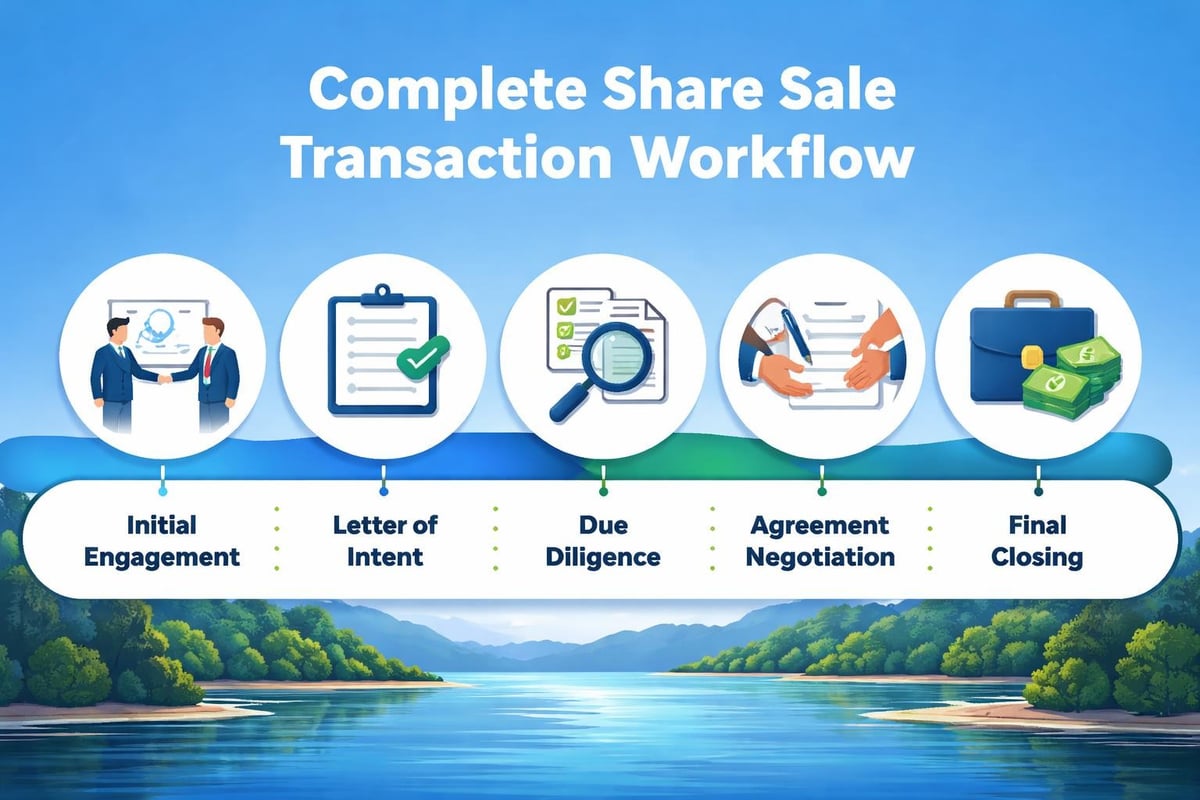
Successfully executing how do you sell shares of your company requires managing a complex, multi-month process with numerous stakeholders and deadlines.
Letter of Intent and Exclusivity
Serious buyers submit letters of intent (LOIs) outlining proposed terms:
- Purchase price and structure components
- Due diligence scope and timeline
- Exclusivity period preventing other negotiations
- Key conditions precedent to closing
- Target closing date and process milestones
LOIs typically remain non-binding except for exclusivity, confidentiality, and expense provisions. Sellers should negotiate favorable exclusivity terms, limiting duration to 60-90 days while maintaining flexibility if buyers fail to progress.
Due Diligence Coordination
Buyers conduct comprehensive due diligence examining every aspect of your business. Organized sellers expedite this process through:
- Virtual data room setup with categorized documents
- Management presentation preparation explaining operations
- Response team coordination addressing buyer questions
- Site visit scheduling showcasing facilities and operations
Aligned IQ VDR offers complimentary virtual data room access for Aligned IQ M&A sellers after completing a match, providing secure document sharing without additional cost. This streamlines due diligence while maintaining confidentiality and organization.
For sellers not using Aligned IQ M&A or buyers, advisors, and intermediaries involved in other transactions, Aligned IQ VDR pricing remains competitively positioned for lower middle-market participants.
Purchase Agreement Negotiation
Definitive purchase agreements contain extensive legal provisions. Key negotiation points include:
| Agreement Section | Seller Priorities | Buyer Priorities |
|---|---|---|
| Purchase Price | Maximum certainty, minimal adjustments | Working capital adjustments, earnout protections |
| Representations | Narrow scope, knowledge qualifiers | Comprehensive coverage, no qualifiers |
| Indemnification | Caps, baskets, short survival periods | Broad indemnity, long survival, minimal thresholds |
| Conditions to Close | Limited conditions, seller control | Extensive conditions, financing contingencies |
Experienced M&A attorneys negotiate terms protecting seller interests while maintaining deal momentum. Understanding restrictions on selling shares ensures agreements comply with applicable limitations.
Closing and Post-Closing Obligations
Transaction closing involves simultaneous exchange of consideration for shares. Typical closing activities include:
- Executing final purchase agreement and ancillary documents
- Transferring funds through escrow agents
- Delivering stock certificates or electronic share transfers
- Resignations and appointments of directors and officers
- Regulatory filings and notifications
Post-closing obligations often require seller cooperation during transition periods, earnout measurement, and indemnification claim resolution. Clear documentation of these responsibilities prevents disputes.
Confidentiality and Risk Management
Maintaining confidentiality represents a critical concern when exploring how do you sell shares of your company. Premature disclosure can damage employee morale, customer relationships, and competitive positioning.
Protecting Sensitive Information
Implement multi-layered confidentiality protections:
- Non-disclosure agreements before sharing any business information
- Code names for the transaction in all communications
- Limited information release matching transaction stage
- Secure communication channels for all deal-related discussions
- Need-to-know restrictions limiting internal awareness
Aligned IQ M&A's proprietary platform provides a confidential environment where sellers control information disclosure timing and scope. The semi-proprietary nature ensures only qualified, matched buyers gain access to detailed business information.
Managing Transaction Risks
Share sales involve inherent risks requiring active management:
Common risk categories include:
- Deal failure after investing significant time and expense
- Information leakage damaging business value
- Key employee departures during transition
- Customer uncertainty affecting revenue
- Competitor exploitation of transition period
Experienced advisors help sellers navigate these challenges while maintaining business momentum. The confidential matching process available through platforms prioritizing strategic fit reduces these risks compared to traditional broadcast marketing approaches.
Working with M&A Service Providers
Professional advisors enhance outcomes when determining how do you sell shares of your company. Different providers offer specialized expertise.
Investment Bankers and M&A Advisors
Full-service advisors manage the entire transaction process, including:
- Business valuation and positioning
- Marketing materials and buyer identification
- Process management and negotiation support
- Due diligence coordination
- Closing facilitation
M&A service providers using Aligned IQ M&A can receive compensation for sell-side referrals while showcasing their professional services to a qualified buyer and seller community. This creates aligned incentives where advisors focus on finding optimal matches rather than simply completing transactions.
Legal and Tax Professionals
Specialized attorneys and CPAs provide essential guidance on:
- Corporate and securities law compliance
- Purchase agreement drafting and negotiation
- Tax planning and structure optimization
- Regulatory approval processes
- Post-closing integration support
Their expertise protects against costly mistakes while ensuring transactions achieve intended objectives.
Platform and Technology Solutions
Modern M&A platforms transform how buyers and sellers connect. Understanding platform investment approaches reveals how technology creates more efficient markets.
Aligned IQ M&A differs from traditional listing services by emphasizing strategic fit before financial details. This approach creates more collaborative processes where both parties work toward mutually beneficial outcomes rather than adversarial negotiations.
The platform serves lower middle-market participants who may lack access to traditional investment banking services or prefer maintaining control over their exit process while leveraging technology to find optimal buyers.
Timing Your Share Sale
Market timing significantly impacts outcomes when considering how do you sell shares of your company. Multiple factors influence optimal sale timing.
Market Cycle Considerations
M&A activity fluctuates with economic cycles. Favorable conditions include:
- Low interest rate environments improving buyer financing availability
- Industry consolidation trends creating strategic buyer demand
- Strong public market valuations supporting private company multiples
- Favorable regulatory conditions reducing transaction friction
Conversely, economic uncertainty, rising rates, and industry disruption can depress valuations and reduce buyer activity. Monitoring lower middle-market PE activity provides insight into current market dynamics.
Company-Specific Readiness Factors
Beyond market conditions, internal readiness determines success:
Optimal timing indicators include:
- Three consecutive years of revenue and profit growth
- Diversified customer base reducing concentration risk
- Strong management team capable of continuing operations
- Clean financial records and reporting systems
- Resolved legal or regulatory issues
- Updated equipment and infrastructure
Selling from strength commands premium valuations and attracts qualified buyers. Rushed sales driven by personal circumstances or business distress typically yield disappointing outcomes.
Personal and Financial Readiness
Sellers must prepare emotionally and financially for life after the sale. Consider:
- Post-sale financial planning and wealth management
- Personal identity beyond business ownership
- Non-compete restrictions limiting future opportunities
- Transition period commitments and time requirements
- Estate planning and wealth transfer objectives
Comprehensive preparation ensures the sale achieves both financial and personal objectives.
Alternative Liquidity Options
Understanding how do you sell shares of your company includes exploring alternatives to traditional acquisitions.
Secondary Market Platforms
Private company shareholders increasingly access liquidity through secondary markets. Platforms like Alta Exchange facilitate share sales between investors, though these options work best for companies with existing investor bases and established valuations.
Partial Recapitalizations
Rather than full sales, recapitalizations allow owners to:
- Extract significant capital while maintaining control
- Partner with financial sponsors providing growth capital
- Benefit from future appreciation on retained equity
- Test the partnership before full exit commitment
These structures suit owners seeking liquidity without complete exit or businesses requiring capital for growth initiatives.
Dividend Recapitalizations
Companies with strong cash flow can distribute special dividends funded by debt, providing liquidity without ownership transfer. This approach:
- Preserves full ownership and control
- Provides immediate cash to shareholders
- Increases financial leverage and risk
- Works best for stable, predictable businesses
Each alternative carries distinct advantages, risks, and tax implications requiring careful evaluation.
Selling shares of your company requires careful planning across valuation, legal compliance, buyer identification, and transaction execution. Success depends on understanding your options, preparing thoroughly, and working with qualified advisors and platforms that prioritize your objectives. Aligned IQ transforms M&A into a more collaborative process by emphasizing strategic fit first, helping business owners connect confidentially with qualified buyers through our proprietary matching platform while providing complimentary virtual data room access after matches are completed. Ready to explore your exit options? Take a tour of Aligned IQ to discover how our unique approach can help you find the perfect counterparty for your transaction goals.
No responses yet