

In today’s business world, secure collaboration and data protection are more critical than ever. Organizations now depend on digital data room platforms to manage due diligence, mergers, acquisitions, and the sharing of sensitive documents.
The risks of data breaches continue to grow, making the choice of a robust yet user-friendly digital data room essential for business owners, advisors, and buyers.
This article serves as a comprehensive guide to digital data rooms for secure collaboration in 2025. We will explore what digital data rooms are, examine emerging trends, discuss security essentials, review collaboration features, outline implementation steps, showcase industry applications, and look ahead to future innovations.
Understanding Digital Data Rooms: Definition and Core Functions
A digital data room is a secure online platform designed for storing, managing, and sharing confidential documents during critical business transactions. Companies increasingly rely on digital data rooms for mergers and acquisitions, fundraising, and other scenarios where sensitive information must be shared with multiple parties while maintaining strict confidentiality.
Traditional data rooms were physical spaces where buyers or advisors reviewed stacks of paper documents under supervision. In contrast, a digital data room eliminates physical boundaries, providing 24/7 access from anywhere while retaining robust security and auditability. This shift has made deal-making more efficient, especially for lower-middle market businesses that need flexibility and speed.
Core functions of a digital data room include:
- Secure document storage: Files are encrypted and stored in protected digital environments.
- Controlled access: Administrators set precise user permissions, ensuring only authorized parties access specific materials.
- Activity tracking and audit trails: Every action—view, download, edit—is logged for accountability and compliance.
- Confidentiality and compliance: Features support industry-specific regulations and international standards such as GDPR and CCPA.
Here is a quick comparison of traditional vs digital data rooms:
| Feature | Physical Data Room | Digital Data Room |
|---|---|---|
| Access | On-site, limited hours | Remote, 24/7 |
| Security | Physical supervision | Encryption, multi-factor auth |
| Auditability | Manual sign-in sheets | Automated audit trails |
| Scalability | Limited by space | Unlimited, cloud-based |
In lower-middle market M&A, a digital data room streamlines the sale process by allowing business owners to share financial statements, contracts, HR files, and operational records securely with qualified buyers. Sellers benefit from confidentiality controls, while buyers and advisors gain efficient access and transparency.
Proprietary and semi-proprietary platforms like Aligned IQ’s Secure VDR have emerged, offering tailored solutions for specific industries and deal sizes. The Aligned IQ match-making platform prioritizes confidentiality and relationship-building in lower-middle market transactions, reducing risk and cost for sellers compared to traditional approaches. Typical documents managed within a digital data room include financial reports, customer contracts, intellectual property records, and employee agreements.
As industry regulations and deal structures evolve, digital data room providers continue to develop specialized features for sectors such as healthcare, manufacturing, and fintech. This adaptability ensures that every transaction, regardless of size or industry, can be conducted securely and efficiently. Take a Tour to experience how a modern digital data room can transform your next transaction.

Key Trends Shaping Digital Data Rooms in 2025
The digital data room is rapidly evolving, shaped by a surge in demand for secure, efficient, and industry-tailored collaboration tools. As lower-middle market businesses increasingly seek confidential, low-risk solutions, providers are investing in advanced features. According to Virtual Data Room Market Growth & Trends, this sector is expected to see continued innovation and adoption, with a focus on security, usability, and automation.

Enhanced Security Protocols
Security remains the top priority for any digital data room. Providers now deploy AI-driven threat detection, enabling real-time monitoring that helps catch suspicious activity before it becomes a risk. Multi-factor authentication, including biometric controls, ensures only authorized users gain access.
End-to-end encryption and zero-knowledge architecture are becoming standard to guarantee data privacy. Compliance with global data regulations, such as GDPR and CCPA, is built into most platforms. For lower-middle market M&A, these advances mean confidential documents stay protected throughout the deal process, reducing the risk of breaches and legal complications.
Data Analytics and Automation
Automation is redefining how digital data room platforms support transactions. Automated document indexing and smart search streamline the organization and retrieval of files. AI-driven analytics provide real-time insights into who is viewing, downloading, or editing documents.
Advanced features like contract analysis and automated redaction save valuable time during due diligence. Workflow automation tools accelerate deal timelines, giving small business buyers and sellers a competitive edge by reducing manual processes and oversight delays.
Industry-Specific Customization
Providers now offer digital data room solutions tailored for sectors such as healthcare, fintech, and manufacturing. These platforms include built-in regulatory compliance modules, ensuring that specific industry requirements are met.
For the lower-middle market, industry-focused customization enables businesses to address sector regulations and unique workflows with greater confidence. Proprietary and semi-proprietary data rooms, like those from Aligned IQ VDR, offer a relationship-first approach that prioritizes confidentiality and strategic fit, differing from traditional M&A processes. These innovations collectively drive secure, efficient collaboration across industries.
Security Essentials for Digital Data Rooms
Protecting sensitive information is the foundation of any digital data room. Lower-middle market business owners, buyers, and advisors depend on advanced security to ensure every transaction remains confidential and compliant. Let us break down the essential features that make a digital data room truly secure.

Access Controls and User Permissions
A digital data room must provide strict access controls to safeguard confidential deal materials. Role-based access lets administrators assign precise permissions to each participant, whether they are a business seller, buyer, or advisor. Customizable permission levels help restrict sensitive folders to only those who need them.
Temporary access is often required for external experts or potential buyers. Watermarking and document expiry features add another layer of protection, discouraging unauthorized sharing. Audit logs track every user action, supporting regulatory compliance and providing a clear record in case of disputes.
For example, during a lower-middle market business sale, managing who can view financials or contracts at each stage is crucial. By leveraging these robust controls, a digital data room keeps sensitive information secure while enabling efficient collaboration.
Encryption Standards and Data Protection
Encryption is the backbone of digital data room security. Leading platforms use encryption both at rest and in transit, ensuring documents are unreadable to unauthorized parties. Zero-knowledge providers go a step further, storing data without even platform administrators being able to access the content.
Secure document viewing features allow users to review files without downloading, reducing exposure. Regular data backups and disaster recovery protocols protect against loss, while real-world statistics show that breaches are far less frequent in environments with these safeguards.
Adopting a Zero Trust approach, as described in this Zero Trust Architecture: A Systematic Literature Review, further strengthens a digital data room by verifying every user and device before granting access. This model is increasingly vital as cyber threats evolve, especially during confidential due diligence.
Compliance and Legal Considerations
Every digital data room must help users comply with regulations like GDPR and CCPA. This includes setting clear retention policies, ensuring secure deletion after deals close, and offering legal hold features for ongoing litigation.
Certification standards provide assurance that the platform meets strict security benchmarks. For cross-border M&A, a compliant digital data room can streamline transactions by meeting legal requirements in multiple jurisdictions.
For instance, a business seller in the lower-middle market can confidently share sensitive documents, knowing the platform enforces retention and deletion policies that match legal obligations.
Secure Collaboration Best Practices
Effective digital data room collaboration relies on secure features. Built-in Q&A modules let participants communicate without exposing information outside the platform. Limiting document printing and blocking screen captures adds further protection.
Training users on security protocols is a must. By fostering a culture of awareness, business owners and advisors can maximize the benefits of secure digital data room collaboration while minimizing risk.
Collaboration Features That Drive Deal Success
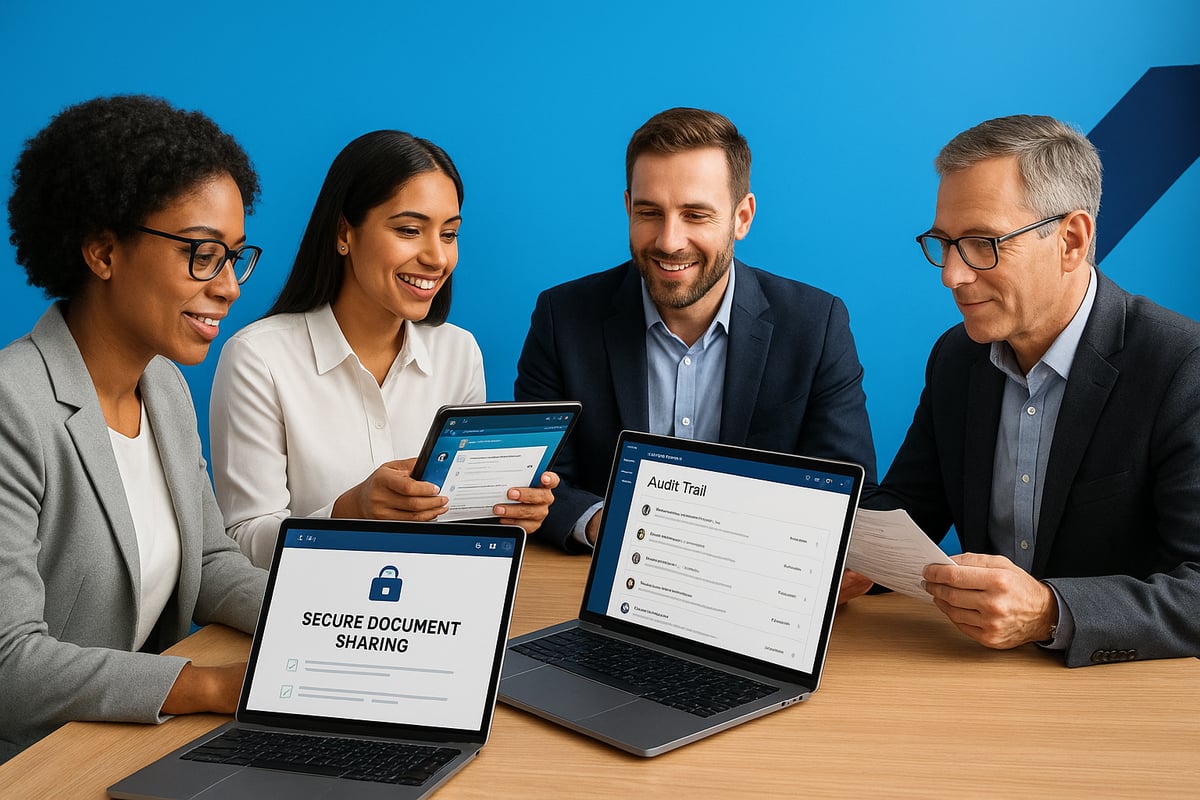
Secure, efficient collaboration is the lifeblood of any successful transaction. A modern digital data room transforms complex business deals by streamlining communication, document handling, and transparency. These features are essential for lower-middle market business owners and buyers who demand confidentiality and control without sacrificing usability.
Real-Time Communication and Q&A
A digital data room enables seamless real-time communication between buyers, sellers, and advisors. Integrated Q&A modules let participants ask questions directly within the platform, eliminating the need for scattered email threads. Every question and answer is tracked and archived, providing a clear record for future reference and regulatory review.
Role-based workflows ensure that questions reach the right subject matter experts. For example, in a lower-middle market M&A deal, a seller’s advisor can respond to financial queries while the owner addresses operational concerns. This transparency speeds up negotiations and builds trust.
By centralizing discussion, the digital data room supports faster, more secure dealmaking. Participants can resolve issues quickly, reducing bottlenecks and keeping sensitive details within a controlled environment.
Document Management and Version Control
Managing multiple document versions is a common challenge during due diligence. A digital data room offers robust version control, letting users track changes, compare revisions, and revert to previous versions if needed. Collaborative editing and annotation tools allow teams to work together efficiently, even across different locations.
Automated alerts notify participants when documents are updated or require approval. This is especially valuable for lower-middle market sellers who may not have dedicated deal teams. During pre-sale due diligence, the digital data room ensures that sensitive files, from financial statements to HR records, are organized and accessible without risk of unauthorized access.
By using these features, business owners maintain control and confidentiality, supporting a low-risk, relationship-first approach to secure transactions.
Activity Tracking and Audit Trails
Transparency is critical in any transaction. A digital data room provides comprehensive activity tracking and audit trails, recording every user action—views, downloads, edits, and more. These logs help resolve disputes, clarify misunderstandings, and demonstrate compliance during regulatory or legal reviews.
For lower-middle market deals, audit trails are particularly valuable. They give business owners peace of mind, knowing that every document interaction is recorded and can be reviewed if questions arise. This level of oversight is often missing from informal file-sharing solutions.
Ultimately, activity tracking in a digital data room supports accountability, builds trust, and ensures that all parties remain aligned throughout the process. Take a Tour to see how these features drive deal success.
Implementing a Digital Data Room: Step-by-Step Guide
Adopting a digital data room for your transaction is a strategic move that can simplify complex processes and keep sensitive information protected. Whether you are a business owner preparing for a sale or a buyer seeking transparency, following the right steps ensures a smooth, secure experience. Here’s a practical guide to implementing your digital data room for lower-middle market deals.
Step 1: Assess Your Needs and Select a Platform
Begin by evaluating the unique requirements of your transaction. Consider the size of the deal, your industry, and the level of confidentiality required. For lower-middle market M&A, proprietary or semi-proprietary digital data room solutions like Aligned IQ offer advantages over generic platforms.
Compare features such as role-based access, audit trails, and compliance tools. Make sure your chosen digital data room fits your workflow and security needs.
Step 2: Structure and Organize Your Data Room
Once you have selected your digital data room, create a clear and logical folder structure based on the stages of your transaction. Pre-populate folders with essential documents like financial statements, contracts, and HR files.
Use indexing and tagging features to make navigation easy for all participants. A well-organized digital data room streamlines due diligence and reduces confusion, especially for first-time sellers or buyers in the lower-middle market.
Step 3: Set Up User Permissions and Security Controls
Defining user roles is a critical step in managing your digital data room. Assign permissions based on each participant’s function—buyer, seller, advisor, or external consultant. Leverage granular controls to restrict access to sensitive folders and enable multi-factor authentication for added security.
Features like watermarking and document expiry can further protect confidential information. These controls are essential for maintaining trust in a digital data room and ensuring regulatory compliance.
Step 4: Invite Participants and Provide Training
Invite all deal participants to your digital data room with clear instructions and training resources. Make sure everyone understands how to access documents, collaborate securely, and use integrated Q&A tools.
Support non-technical users with step-by-step guides or short training sessions. Emphasizing secure collaboration practices in your digital data room reduces the risk of accidental data leaks and builds confidence among buyers and sellers.
Step 5: Monitor Activity and Manage Q&A
Ongoing monitoring is vital for maintaining control over your digital data room. Track who accesses documents, review audit logs, and respond to questions promptly using built-in Q&A modules.
Adjust permissions as the transaction progresses to ensure only the right people see sensitive information. This proactive approach helps resolve issues quickly and supports a smooth, transparent process for all parties.
Digital Data Room Applications Across Industries
In today’s business landscape, the digital data room has become an essential tool for secure document sharing and collaboration across a range of industries. Organizations value these platforms for their ability to protect sensitive data, streamline workflows, and support regulatory compliance during complex transactions.
For lower-middle market M&A, a digital data room supports sellers and buyers by providing a confidential, structured environment for due diligence. Proprietary platforms like Aligned IQ VDR offer industry-specific features, such as role-based access and secure Q&A, that differ from traditional M&A processes. This approach lowers risk for sellers and ensures strategic fit before deeper engagement.
Other industries have unique requirements. Fundraising teams use digital data room platforms to share financials and legal documents with potential investors, maintaining control over access and visibility. Legal professionals rely on these solutions for managing case files, evidence, and privileged communications in a secure, trackable manner. Healthcare organizations depend on HIPAA-compliant data rooms to facilitate medical record transfers during mergers or acquisitions, ensuring patient data remains protected. Real estate brokers and private equity firms utilize digital data room technology for property transactions and ongoing portfolio management.
Industry-specific digital data room solutions address sector regulations and specialized workflows. For instance, healthcare and fintech data rooms integrate compliance modules for HIPAA or financial regulations. Adoption rates continue to rise, with an increasing number of lower-middle market firms turning to platforms designed for their unique needs. To explore how various industries leverage data rooms for secure collaboration, visit Industry-specific M&A data room needs.
Innovations and the Future of Secure Collaboration
The digital data room is rapidly evolving, embracing powerful innovations that are reshaping secure collaboration for business transactions. As more lower-middle market firms adopt proprietary and semi-proprietary platforms, the focus is on reducing risk, increasing efficiency, and making complex deals feel seamless.
Artificial intelligence is at the forefront of digital data room innovation. AI-driven contract review and risk analysis tools scan thousands of documents in seconds, highlighting red flags for buyers and sellers. Smart automation accelerates due diligence by indexing, tagging, and even redacting sensitive data without human intervention, saving valuable time and minimizing errors.
Blockchain technology is introducing tamper-proof audit trails and document verification. Every action within a digital data room can be immutably recorded, ensuring that deal participants have a transparent, verifiable record for compliance or dispute resolution. Advanced authentication protocols, such as those explored in Next Generation Authentication for Data Spaces, are making access controls even more secure, further protecting confidential business information.
Predictive analytics are transforming how deals progress. Integrated dashboards now use historical data to forecast bottlenecks, flag unusual behavior, and recommend next steps. Enhanced integrations with CRM and deal management systems allow for seamless workflow, reducing manual data entry and improving visibility across teams. According to the Virtual Data Room Market Report: Trends, Forecast and Competitive Analysis to 2030, these capabilities are driving rapid adoption of digital data room solutions across industries.
User experience is also reaching new heights. Self-service digital data room platforms empower small business owners to launch, manage, and monitor deals without technical expertise. Features like voice search, mobile-first design, and intuitive dashboards make secure collaboration accessible to everyone, even in high-stakes lower-middle market transactions.
Proprietary data rooms like Aligned IQ are leading this shift by prioritizing confidentiality and relationship-first dealmaking. Their low-risk, secure approach helps business owners and buyers focus on strategic fit, not just compliance. Ready to see these innovations in action? Take a Tour and experience the future of digital data room collaboration.
If you’re ready to experience the future of secure collaboration in M&A and business transactions, I encourage you to see firsthand how a modern digital data room can transform your workflow. We’ve explored how robust security, intuitive design, and tailored features make all the difference—especially as we move into 2025. With Aligned IQ, you can prioritize strategic fit, protect sensitive information, and simplify every step of your deal process. Curious about how these innovations come together in a real platform?
Take a Tour!
Discover what secure, seamless collaboration really looks like.
No responses yet